
Around the Senior School
A Selection of Readings from Year 10 English Scholars
From Mrs Kate Callaghan, Head of English
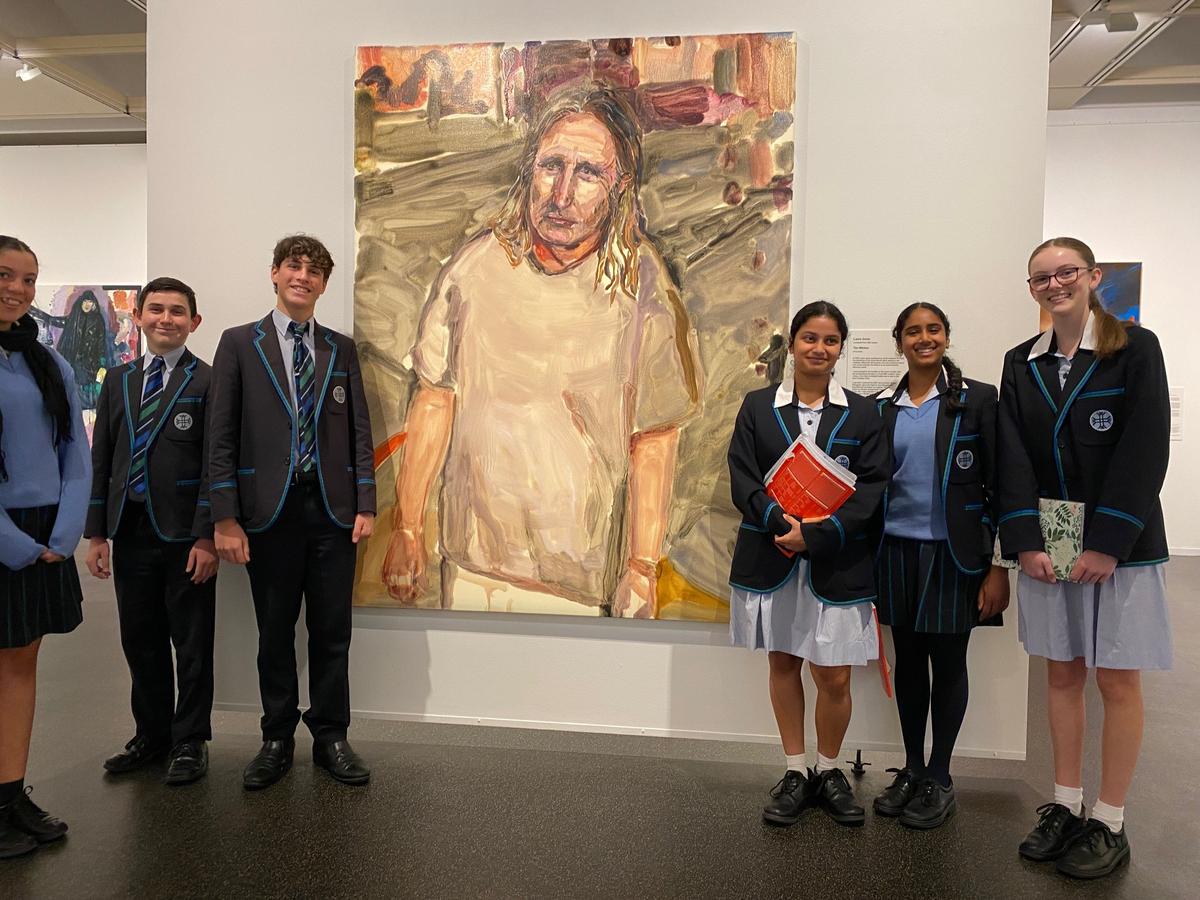
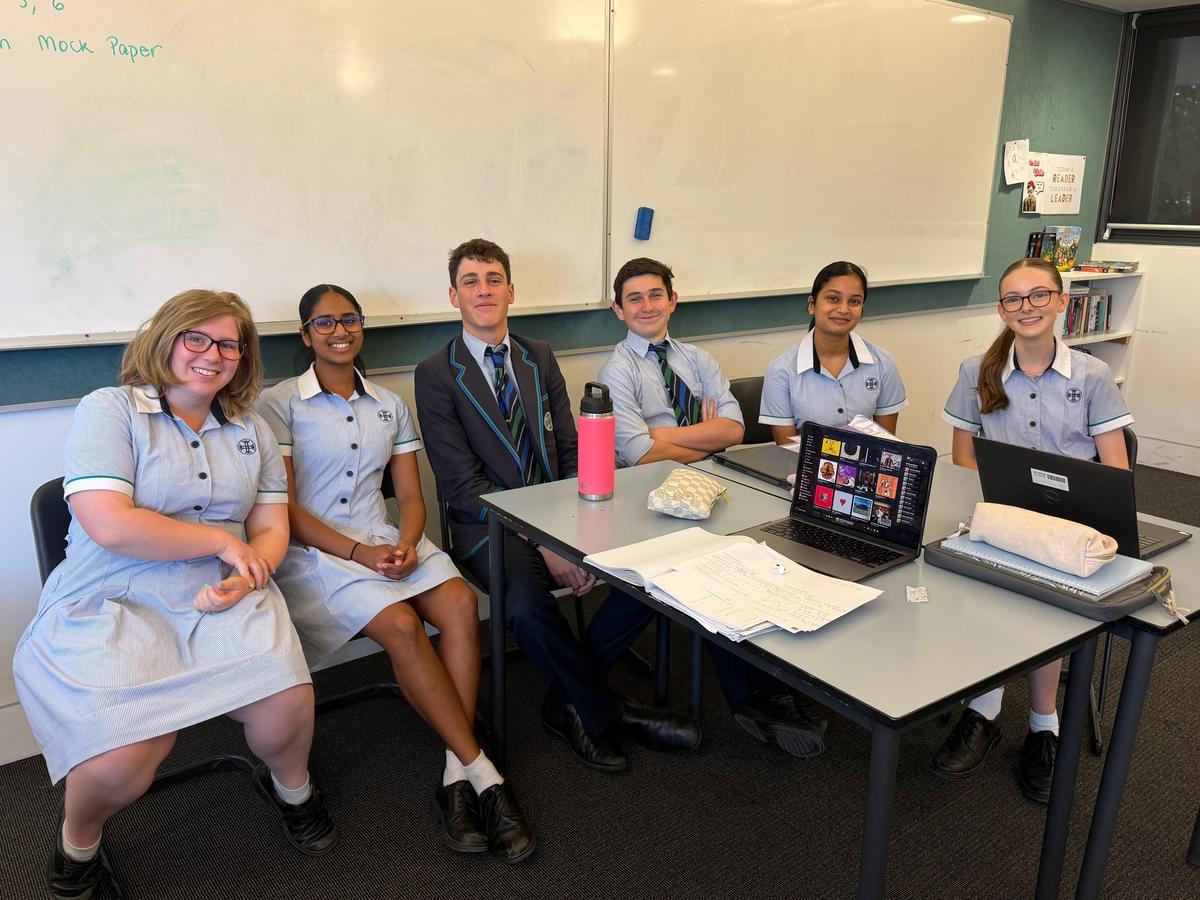
Year 10 English Scholars are nearing the end of their two-year course, culminating in a Major Work. Students have been working on an extended piece of writing over the last Semester, where they are required to research, write and edit a piece in the form of their choosing. We had some exceptional narratives, discursive articles and even a beautiful suite of poetry produced.
Throughout the course, students have explored literature from the Gothic and Romantic periods and have discovered the influence of biblical stories and Greek myths on modern literature. A course largely grounded in the students’ passion for exploring literature and experimenting with their own words, the classroom discussions and peer collaboration has made this a wonderful experience for students, and an opportunity for growth in all facets of English.
Here are some select extracts from some of the students’ Major Work masterpieces:
Extracts:
“The information presented before me was a combination of the least expected revelations. To think that the perfect were racked with such preposterous accusations is like vandalising a flawlessly depicted painting. It was as though the whole world had been tilted on its axis.
It is so sensitive in nature, revealing substantial information about many people. Sharing this web of secrets and lies would tear these people apart, tear the world apart. They are perceived as the best of best, the cream of the crop, the part of society everyone longs to be accepted into. Who knew that it was shrouded in such evil secrets?
What does one do when in possession of such information? Must I present it to the Justices?
A decision must be made before it is too late. If the letter can end up in my hands, who else could become privy to it?
Watching the flames go up, I am convinced I have made the right decision. Somethings are best left a secret”
Chaitra Avirneni
“My first recollection of Australia was the roads. They were so much wider, so much
smoother, so much prettier than the ones we had back home. My eyes lit up as the cars wound around the meandering streets, like an army of ants. The Romantics called that feeling the sublime, the way it was near impossible for me to grasp how majestic this part of the world was, how wealthy it all looked. There was magic in the air: it was in the strides of businessmen walking the streets, in the skips of little preschoolers on a field trip – magic like that was unbeknownst to me, privilege like that was so unfamiliar.”
Nethuli Pathirana
“Take the bodies of your children from the body of your house,
from the body of your marriage,
From the body of your life and make your own destiny.
Make your own destiny and then
make everyone else's too,
It goes like this.”
Saphira Ladbrook
“Like Freud, I’ve come to think of literature, particularly that of the Gothic genre, as a kind of imagined psychological case study. Whilst writing an essay on Wuthering Heights for my English Scholars course, I realised just how deeply mental instability permeates the novel.
Although Cathy and Heathcliff’s turbulent romance, the wild Yorkshire Moors, and the eerie supernatural make the novel a classic Gothic tale, Wuthering Heights is really an exploration of the human condition. Brontë’s understanding of psychological inheritance and childhood trauma seem startingly ahead of her time, exploring concepts that wouldn’t be formally theorised until decades later.
Catherine’s volatility and tendency toward self-destruction doesn’t exist in isolation – rather echoing the mental instability of her father, Mr. Earnshaw, whose own decline into madness becomes almost like the genetic seed of her breakdown. It’s as though Brontë traces mental illness as something that runs in the Earnshaw blood; a concept we now comprehend through hereditary predisposition, but which she intuited through narrative. Heathcliff, meanwhile,
fascinated me the most as his character evolved. His journey from a neglected foundling to an obsessive, vengeful man mirrors Freud’s later theories regarding childhood trauma shaping adult behaviour. Wenshuo Cao suggests that Heathcliff’s lack of a ‘favourable childhood’ and emotional deprivation most definitely become the roots of his ‘unsound and twisted’ personality. As a modern reader, it seems Brontë diagnoses the psychological consequences of both nature and nurture long before psychology had the language for it.”
Georgia Philippe
442
August 3rd, 1942
“The sound of gravel crunching under tires gradually slowed as the air filled with the screech of unoiled brakes. We sat there, waiting for ages for the gate to open, baking in the greenhouse they called a bus. Finally, we rolled through the gate, past the guards, their uniforms clean and freshly pressed, and into our new home. They looked at us with such disdain, like we were stains on American soil.
I shuffled over to my left and peaked out the windscreen to see the camp. Lines and lines of identical buildings, long, dark outlines against a bleak grey sky. Home. I looked over at father, and I was taken aback slightly by how sullen faced he was. It was an odd occurrence when father was anything but bright and cheery. The last time I saw him like that was when Uncle Hiroshi died.”
Fraser Johnstone
“As I read through Frankenstein, I could see warnings of creation and ambition – how the temptation of playing God has gaps in its morality. But after reflection, Frankenstein also incorporates themes of love, communication and emotional isolation. The deeper I delved into this story of monstrosity, the more I found hidden beneath. The creature, whilst born in the body of a grown man, is without the knowledge of much of the world. And so, like a baby left on a doorstep, the creature is left to fend for himself. As gathered from the Myth of Orpheus and Eurydice, language sometimes hinders more than it helps. Language fails the creature, similar to our modern world of shallow, screen-addicted communication, he becomes isolated the more he tries to reach out. Although the creature may be able to speak with fluency and grace, he is not heard or considered. As with Orpheus, no matter how poetic or with sophistication the expression, you can feel powerless to love. Continuing on, even his own creator, is not able to muster the words of welcome to the creature, instead resorting to silence as he withdraws away from his creation. It’s a strong reminder that communication is useless without the empathy of both parties. It makes me ponder how different we truly are from this hideous monster, always speaking without meaning, whilst never really hearing each other. Looking back on the structured definition of language – Shelly highlights that our language has no depth without the human characteristic of emotion to ignite them. Victor should be accountable for his monster, as would any mother to a newborn baby. Creation, similar to language, is void of warmth without compassion.”
Thomas Nelson
Outstanding English Extension 2 Major Works
Our English Extension 2 students worked incredibly hard during 2025 to produce some outstanding Major Work pieces that were submitted for external NESA marking in Term 3. We celebrated their success at the end of last term with a showcase evening where students had an opportunity to read an extract of their finished work and take questions from a highly engaged audience of staff, students, and their families. We had eight students complete the Extension 2 course in 2025 and they produced a range of works including creative compositions, critical responses, poetry and creative non-fiction. All students worked extremely hard on their pieces, and it was evident that they had invested huge amounts of time, care and thought into the creation of their Major Works. A full list of students and the titles and form of their works is below:
- Hannah Jones – Memorandum (Short Fiction)
- Isabella Llyod George – A Terrible Beauty (Short Fiction)
- Kajan Kandeepan – The Ethics of Anarchy: A Critical Study of Albert Camus’ Political Absurdism (Critical Response)
- Krishan Kandeepan – The Shadow In-Between (Short Fiction)
- Lex Carter – Stitched Together Through Thorns (Poetry)
- Lulu Clinton – Method to the Madness (Short Fiction)
- Pranav Srikanth – A Lonely Ballad (Short Fiction)
- Sala Orme-Smith – Swallow Song (Creative Non Fiction)
In very exciting news, Kinross Wolaroi has recently received notification that Krishan Kandeepan’s short fiction piece, The Shadow In-Between has been nominated for inclusion in Young Writers which is the HSC Showcase publication for English Extension 2. This is a significant achievement and we wish Krishan all the very best and hope for his imminent publication!
English Extension 2 is a highly conceptual and difficult course. Kinross Wolaroi is so proud of all students who undertook this rigorous course in 2025, and we look forward to reading your published works in the years ahead.


'Changing Places' with Year 9 Geography
Ms Sarah O'Gorman
Social Science Dept
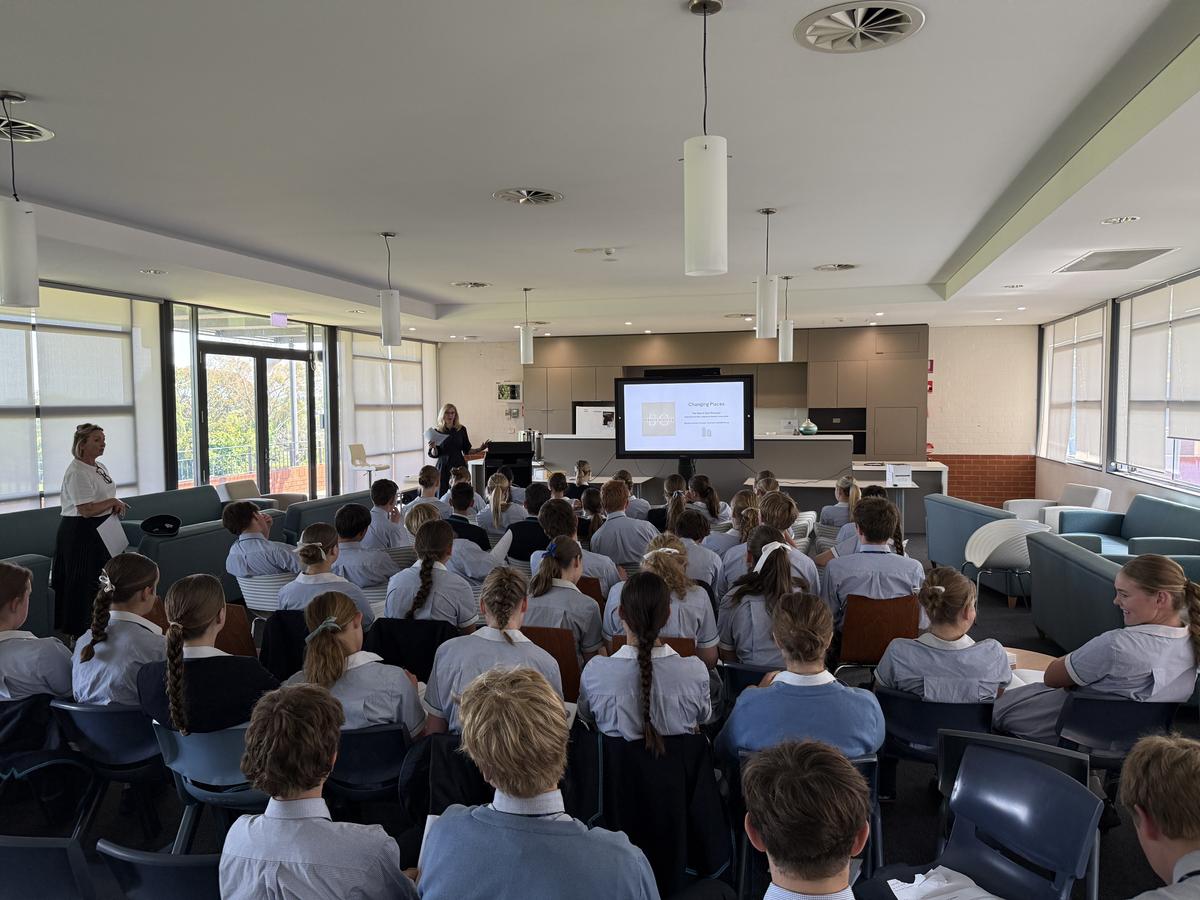
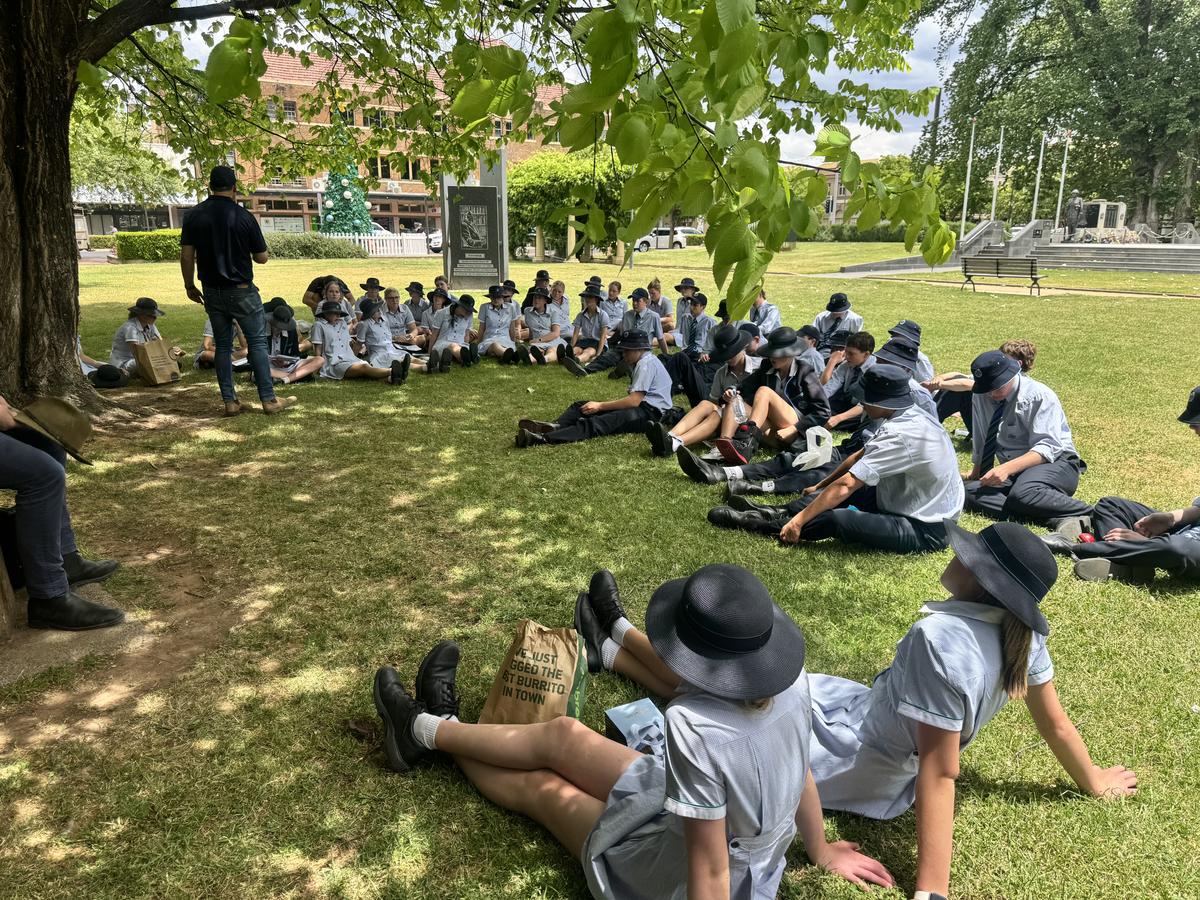
Our Year 9 Geography excursion gave us a better look at what makes Orange a liveable place, aligning with our syllabus on Changing Places and helping us explore the push and pull factors of internal and international migration.
We started the day by listening to guest speakers including Charlotte Gundry (tourism), Phil Donato (MP for Orange and proposing the “Fast Train” to increase connectivity), Summer Commins (town planning, zoning for businesses, and issues with town growth), and Anthony O’Gorman (real estate from Sydney, discussing patterns in why people sell and move). They talked about their roles in supporting the growth of Orange and other cities, and how they manage different challenges in their communities to increase liveability.
After that, we walked into town to interview locals about why they live in Orange. Most people mentioned the relaxed lifestyle, great schooling, job opportunities, and how easy it is to get around.
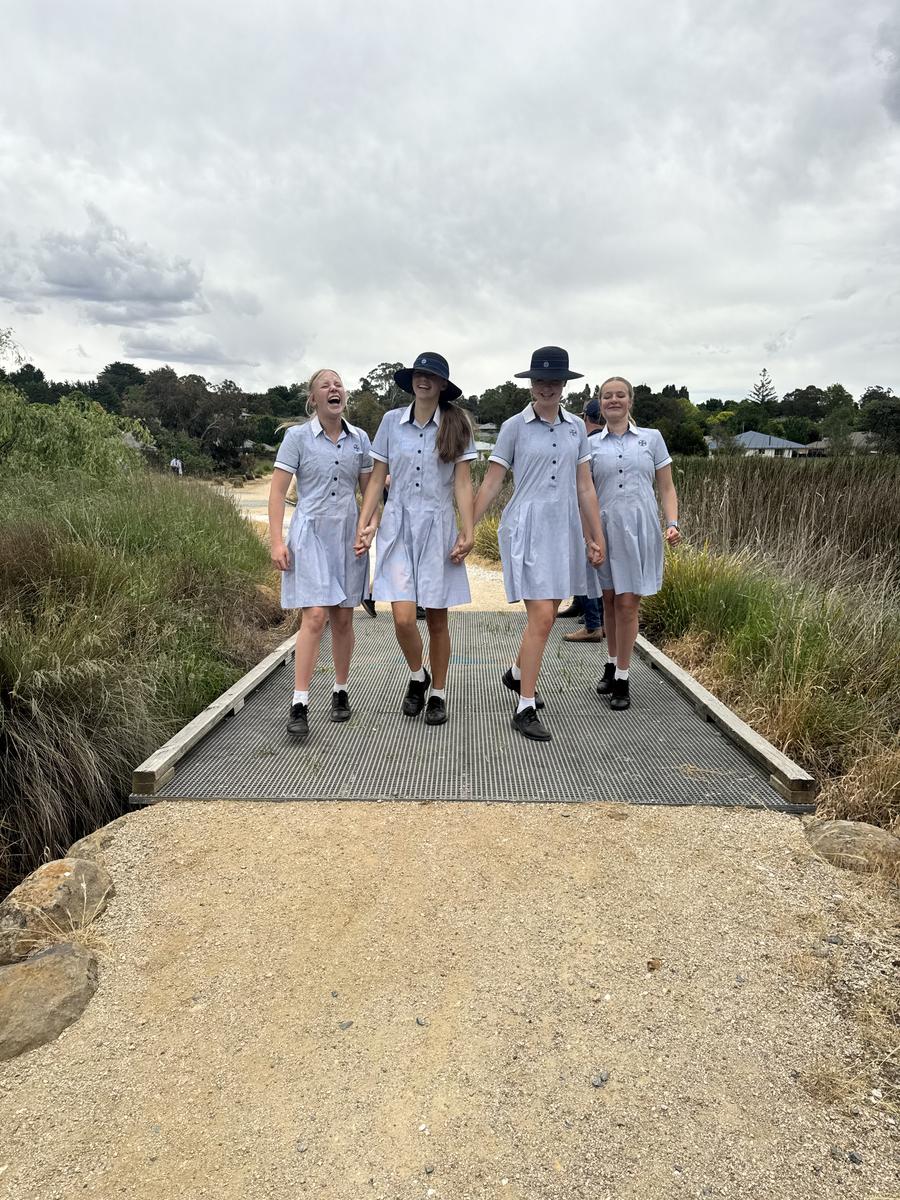
We then grabbed some food before going on a bus tour around Orange, visiting places like Ploughman Lane Wetlands and Cook Park to see how natural and built environments shape the area and work together to improve sustainability.
Overall, the excursion helped us understand liveability and Changing Places in a real-world way, while still giving us a fun and enjoyable day.
From students Georgie Simpson and Annabelle Maslin
Our Year 9 Geography excursion gave us a better look at what makes Orange a liveable place, aligned with our syllabus on ‘Changing Places’ by exploring the push and pull factors of internal and international migration. We started the day by listening to guest speakers including Charlotte Gundry (specialising in tourism), Phil Donato (MP of Orange and proposing the "Fast Train" to increase connectivity) , Summer Commins (town planning, regulating zoning for businesses and issues with town growth) and Anthony O’Gorman (Real Estate from Sydney and patterns in why people sell and move), they talked about their role in supporting the growth of Orange and other cities, and how they mitigate different challenges in their community by increasing the liveability. After that, we walked into town to interview locals about why they live in Orange, and most people mentioned their opinions surrounding the relaxed lifestyle, great schooling, job opportunities, and how easy it is to get around. We then grabbed some food before going on a bus tour around Orange, visiting places like Ploughman Lane Wetlands and Cook Park to see how natural and built environments shape the area and work together to improve sustainability. Overall, the excursion aided in our understanding of liveability and “Changing Places” in a real-world way while still providing a fun and enjoyable day.


Around the Campus
Is there anything better than a sausage sizzle and the cricket on the TV? Last Friday in the Senior School, that was exactly what we had at lunchtime.
