
Wellbeing
Wellbeing Leader: Mrs Cheryl Schwab
Chaplan: to be appointed

Wellbeing
Wellbeing Leader: Mrs Cheryl Schwab
Chaplan: to be appointed
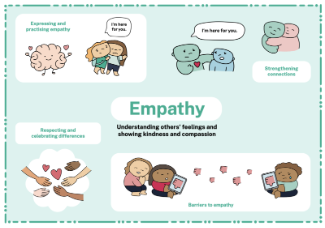
Empathy involves understanding others’ feelings and perspectives and is practised through kindness, compassion and curiosity. Developing empathy fosters deeper connections, increase our likelihood of acting kindly, and helps us experience positive emotions.
At our school, we are committed to nurturing a community where children learn to relate to one another with both strength and gentleness. Part of this commitment is helping students recognise when behaviours in friendships or peer groups become controlling rather than caring. Controlling behaviour can limit a child’s confidence, independence, or sense of safety, and we take a proactive approach to teaching students what healthy, respectful relationships look like. By working closely with families, we aim to ensure every child feels empowered to speak up, seek help, and build connections grounded in kindness and mutual respect.
🚦 Examples of controlling behaviour that is not considerate of others
Controlling behaviour can appear in many forms, especially when a child is trying to dominate a situation or another person without thinking about their feelings or rights. This may include:
We are noticing some controlling behaviour among some students at the moment, and we are actively supporting all children to understand why cooperation and respect matter.
One way we are doing this is by helping students learn to share spaces fairly in the yard. This might look like taking turns on the oval — for example, football one break and soccer the next — or rotating activities in the pavilion, such as basketball one break and netball the next. There are plenty of spaces to play a variety of games.
Compromise is a skill that grows with practice, and just like reading or counting, if children haven’t yet learned how to compromise or share spaces, it becomes our responsibility to teach and guide them.
In Learning Conversations, your child's teacher speaks to you about how attendance is linked to progress in learning.

Please consider the following which will help your child progress in their learning: