
Wellbeing
Mental Health and Wellbeing at St Joseph’s
When we look at mental health in young people, research shows that half of all adult mental health conditions begin before the age of 14. This highlights just how important it is that we take a proactive and preventative approach to supporting children’s wellbeing from an early age. Teaching students about mental health and wellbeing from a young age gives them strategies that they can carry with them throughout their lives, supporting them well into adulthood.
A new initiative that has been introduced across all primary school sectors is the Mental Health and Wellbeing Leader role. In this role, I will be working closely with staff and students to strengthen the ways we support student mental health and wellbeing here at St Joseph’s.
An important part of my role is also supporting and up-skilling staff, helping to build a shared understanding of what mental health concerns might look like in children, and how we can respond in supportive and effective ways.
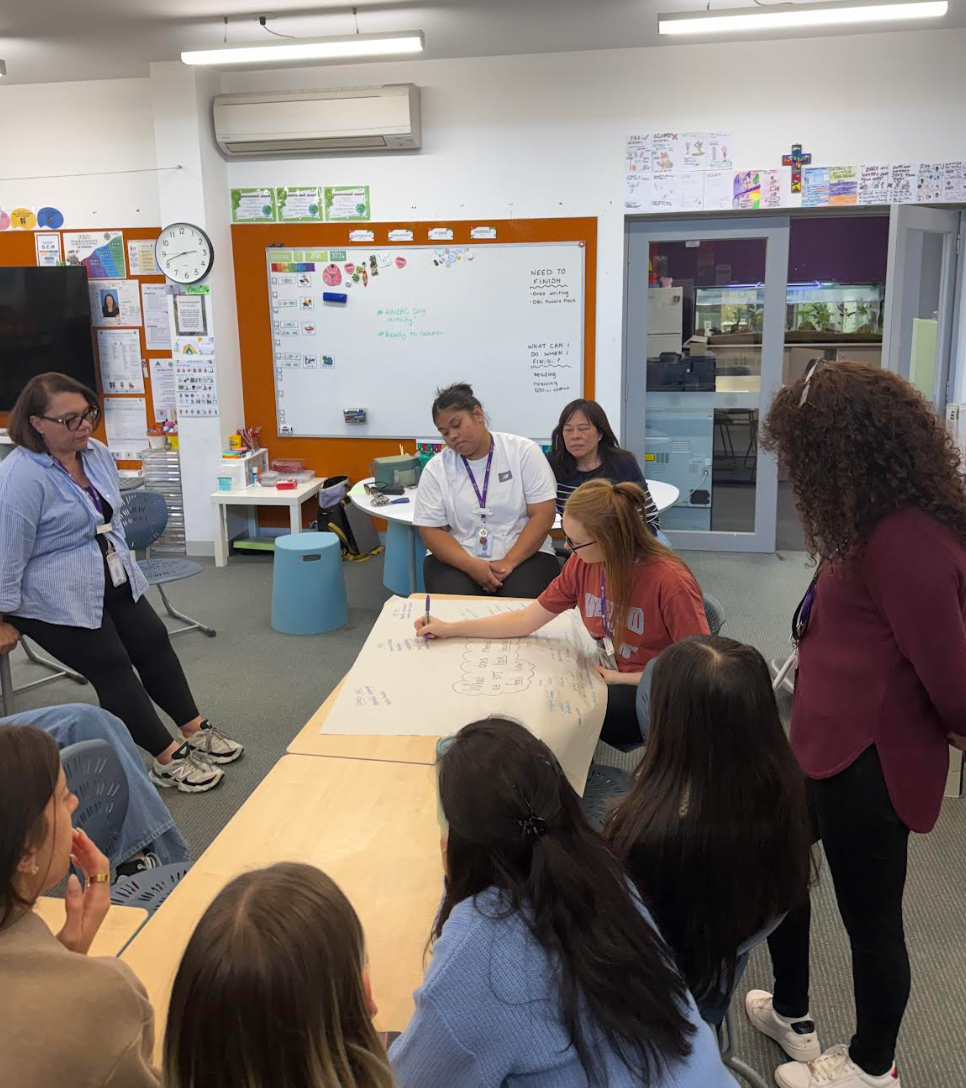
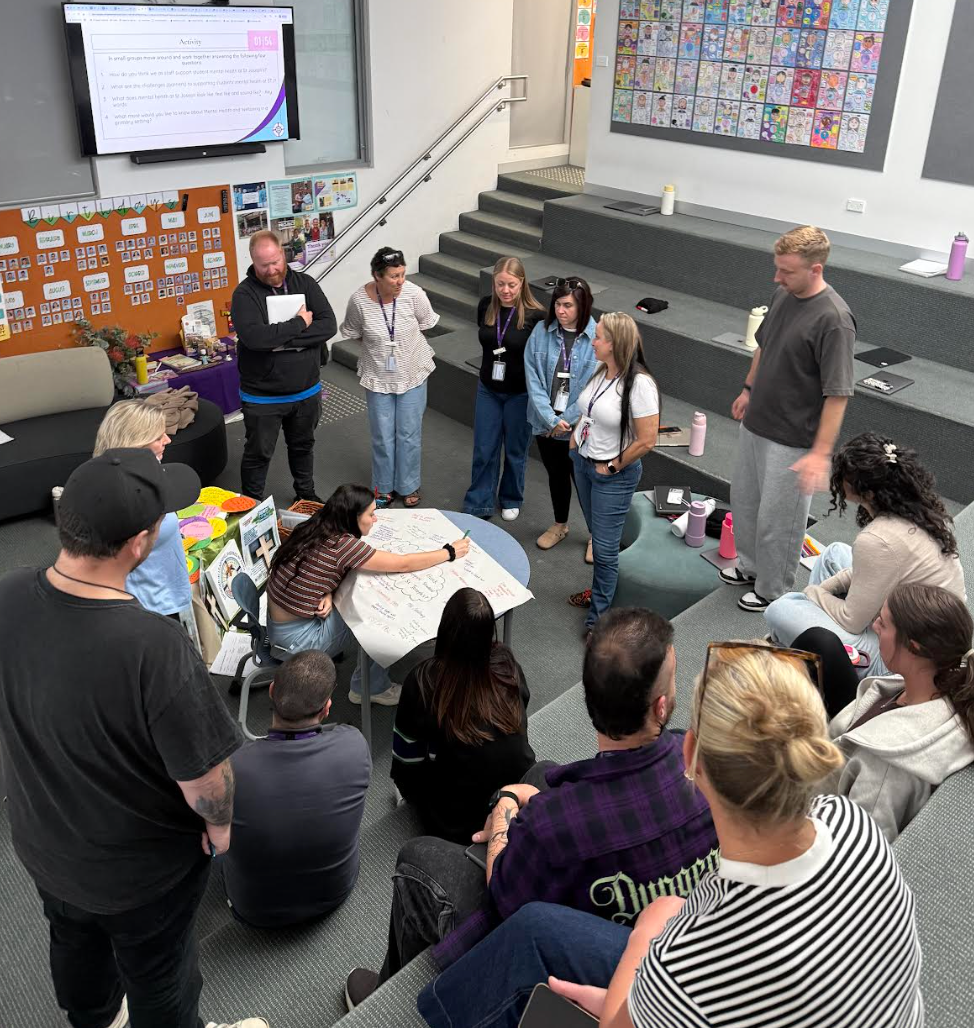
During our recent school closure day, staff spent time exploring what positive mental health looks, feels and sounds like at St Joseph. We also introduced the Mental Health Continuum — a simple and child-friendly framework that helps us understand and track student wellbeing. This continuum includes four stages:
Good, Coping, Struggling, and Overwhelmed.
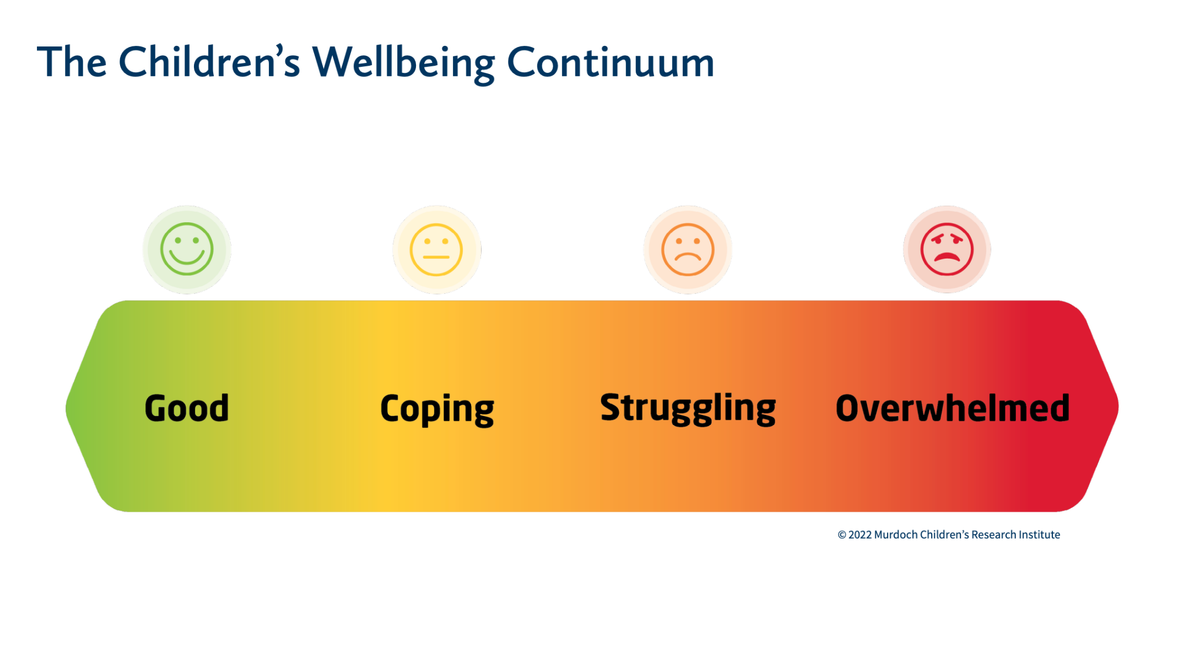
What’s important to understand is that students can move between these stages over time—just like we do. Mental health is not fixed; it changes depending on what is happening in a child’s life. This shared language helps both staff and families have clearer, more supportive conversations about wellbeing with children.
I have attached a relevant website that provides more support on how you can talk about this with your child and how you can use the continuum at home with your child:
https://www.ccch.org.au/our-work/project/childrens-wellbeing-continuum/
I look forward to continuing this important work alongside our staff, students and families to support the wellbeing of every child at St Joseph's.
Zoe Georgiou (Mental Health & Wellbeing Leader)
PBL at St Joseph’s
St Joseph’s Mernda implements the Positive Behaviour for Learning (PBL) framework, a whole-school, evidence-based approach that promotes safe, supportive, and consistent student engagement and wellbeing. It includes the explicit teaching of behavioural expectations, data-informed support, and strong home–school partnerships, underpinning positive and respectful relationships across the community.
Consistency is central to PBL. A clear and fair approach enables staff to teach, model, and reinforce expected behaviours while responding to challenges in a predictable and supportive way. This provides students with clarity and security, supporting engagement, self-regulation, and responsibility.
These guidelines are grounded in Catholic Social Teaching, upholding the dignity of every person and promoting the common good. They foster respect, inclusion, and shared responsibility, supporting students to build compassionate relationships and live out Gospel values.
We are very proud to present our updated PBL (Positive Behaviour for Learning) Matrix to the wider school community:
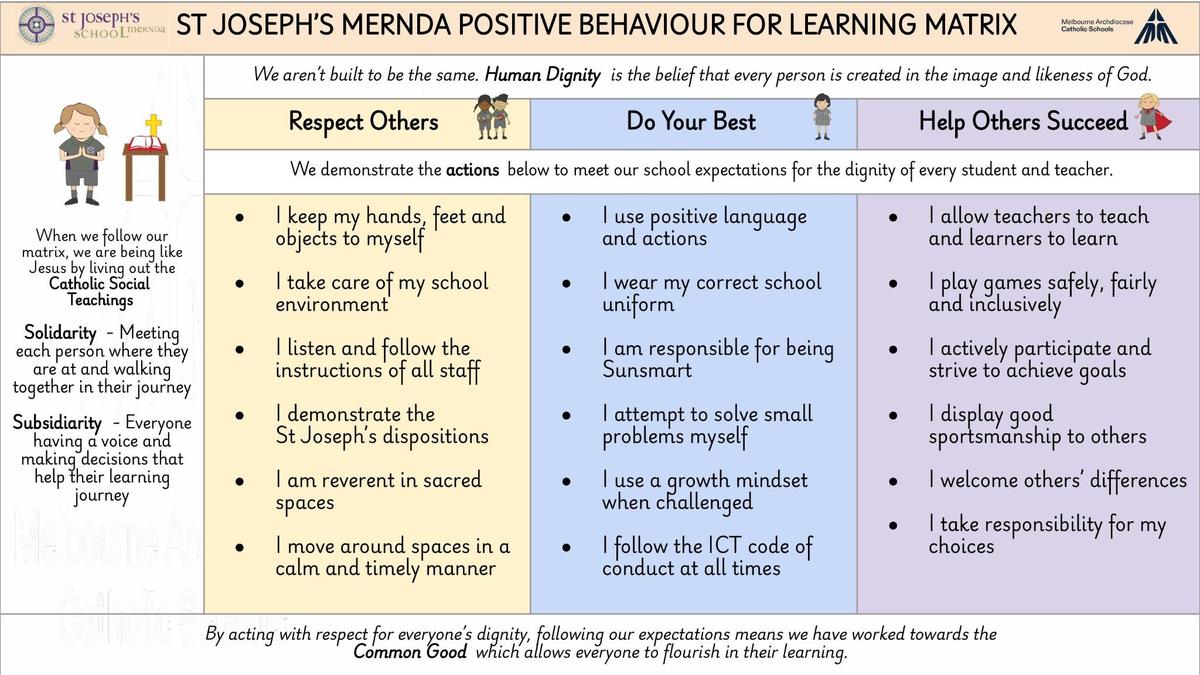
Please take the time to review the changes with your child (these have been introduced to them at school). We have worked to combine feedback from staff, students and teachers to refine the positive actions, linking these to the three school expectations as well as the Catholic Social Teachings.
We would also really appreciate your time to fill out a very short and anonymous survey about PBL at St Joseph's. This will help to inform our future steps.
Please click the link below to access the survey:
https://forms.gle/LG3szsEFFnambgmH7
Alternatively, please feel free to ask any questions or give feedback directly here as a comment on this post.
As always, your input and collaboration is very important to us and we thank you for your time.
- Ellen O'Brien (PBL Leader)