
Mathematics

Unlocking Mathematical Success: The Method Behind Our Workbooks
Mathematics is more than just finding the right answer; it is about training the brain to think logically, systematically, and critically. You may have noticed that our students follow a highly specific, structured routine in their mathematics workbooks. Every margin, date, and line of working out is intentional.
Here is the educational research behind why we structure our math workbooks this way, and how it helps your child learn.
1. Dedicated Math Workbooks

The Research: Cognitive science shows that keeping a single, dedicated space for a specific subject reduces "cognitive load" (mental clutter).
The Benefit: A separate workbook creates a mental boundary, helping students switch into a focused mathematical mindset the moment they open it. It also allows teachers and parents to track progress and skill growth over time without distractions.
2. Margins, Dates, and Question Numbers
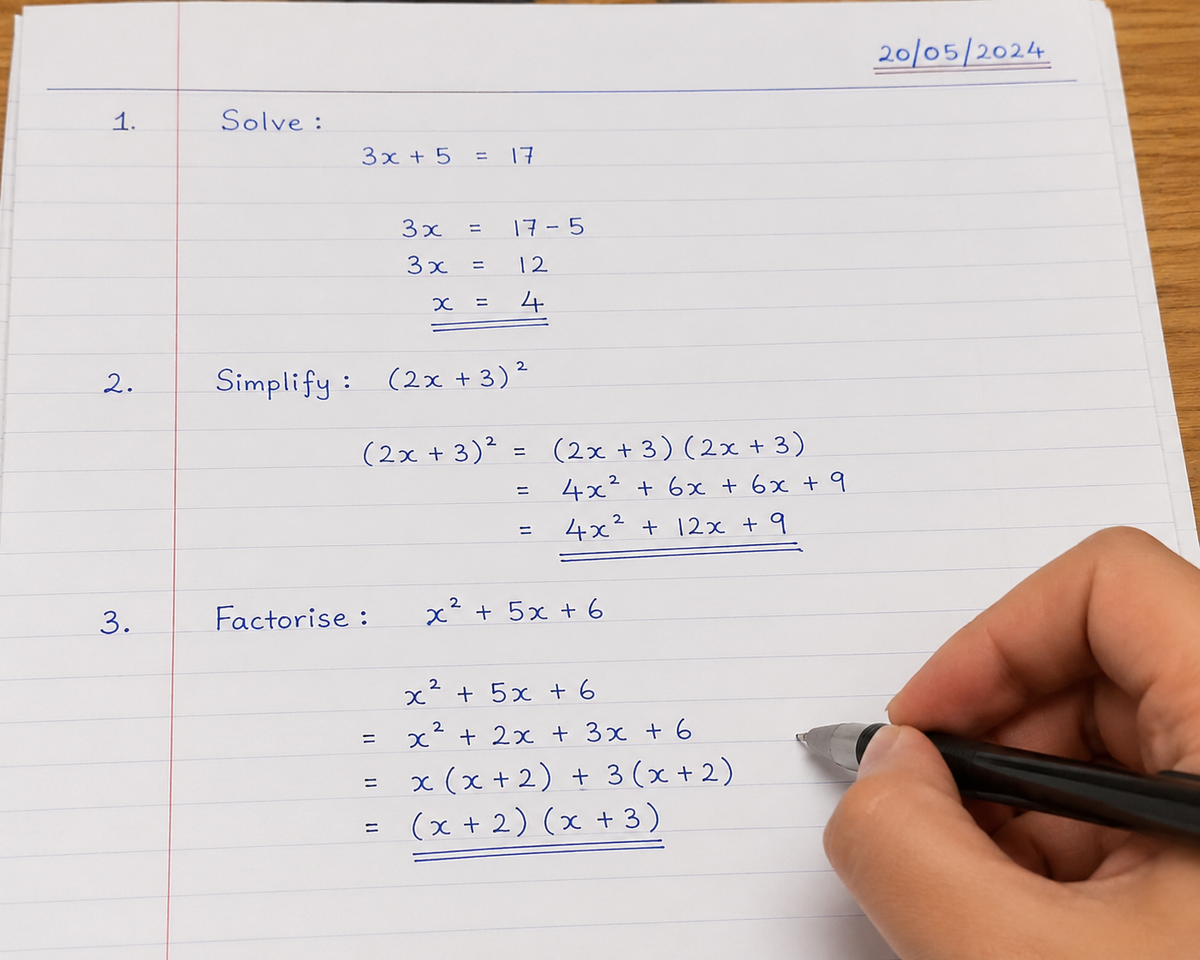
The Research: Spatial organisation and physical sequencing are directly linked to working memory efficiency.
- The Benefit:
Dates teach time management and help students reference past lessons during revision.
Margins and question numbers create visual anchors. When a page is organised, the brain can focus entirely on solving the problem, rather than searching for where the question starts or ends.
3. Writing Out the Question
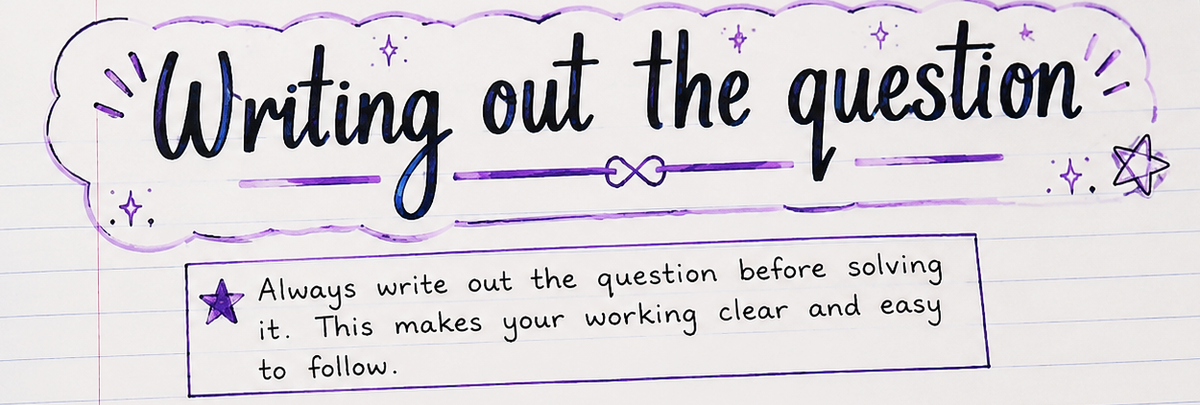
The Research: Active processing beats passive reading. Research in literacy and numeracy highlights that transcribing text forces the brain to engage with the vocabulary and data.
The Benefit: Writing the question prevents students from skimming past critical clues. It helps them identify exactly what the problem is asking before they begin calculating.
4. Showing Full Working Out

The Research: Metacognition - or "thinking about thinking"- is one of the most powerful tools in education.
The Benefit: Math is a process, not a destination. When students show their steps, they map out their logic. This allows teachers to pinpoint the exact moment a misunderstanding occurs, rather than just marking an answer wrong. It also teaches students that mistakes are just steps in learning.
5. Correcting All Answers
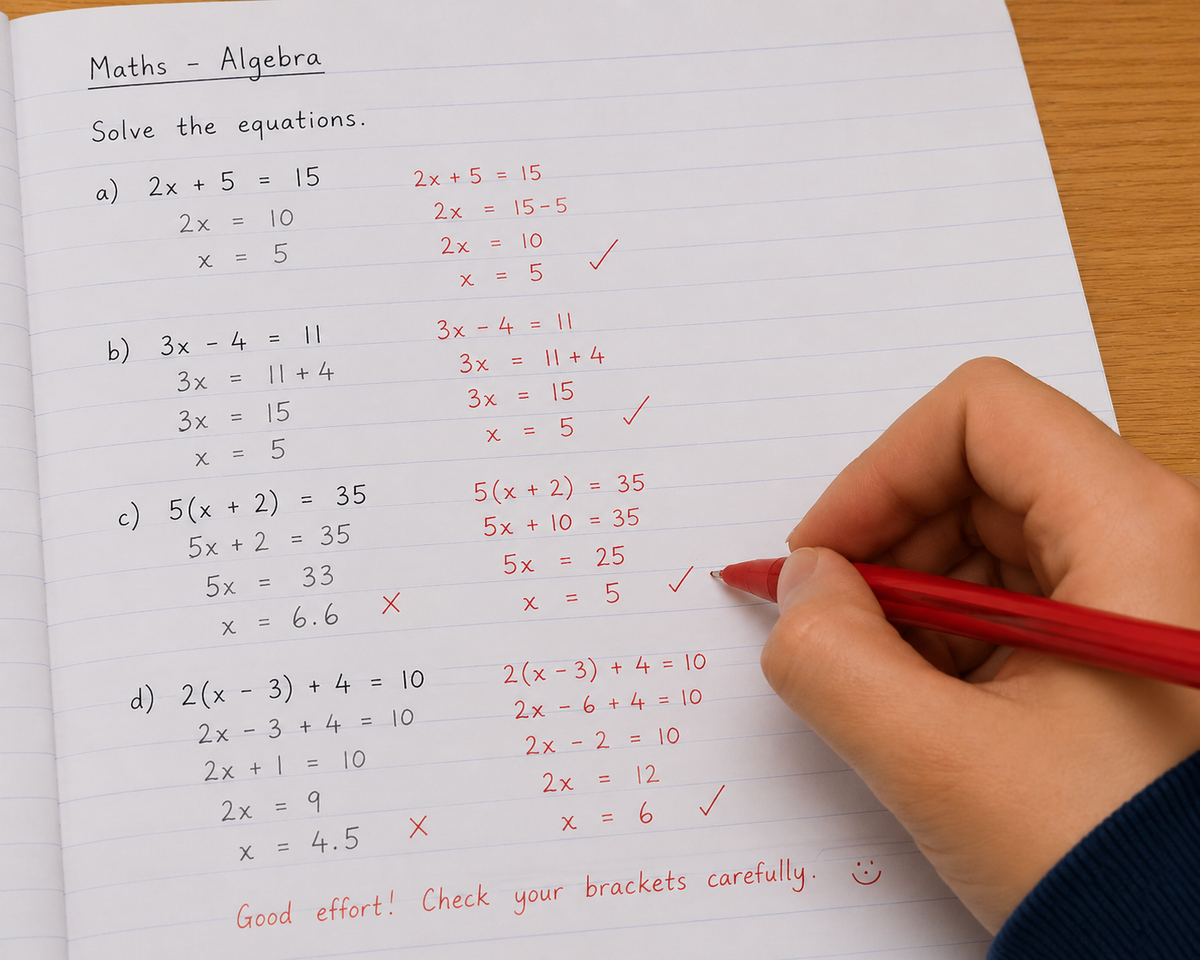
The Research: The "Feedback Loop" is essential for moving information from short-term to long-term memory. Delayed or ignored feedback reinforces mistakes.
The Benefit: Immediate correction ensures that errors do not become permanent habits. Rewriting a corrected answer trains the brain to recognize the right pathway, turning a mistake into a powerful learning moment.
By mastering these habits in their workbooks, our students are not just learning how to do math—they are learning how to organize their thoughts, analyze problems, and persevere through challenges. Thank you for supporting these standard routines at home during homework and revision.
Mr Kurt McPherson | KLA Leader of Mathematics