In focus: Careers in the future

Key careers resource My Future has a helpful section which contains a wealth of information on this topic including emerging occupations, where the jobs will be, skills in demand, and work predictions for the future via the 8 part series #Work 2030. https://myfuture.edu.au/career-articles/future-of-work
“The future of work looks dynamic and exciting. New careers and ways of working are opening up as new technology is introduced and we adjust to challenges. These changes will reshape the nature of work itself. The resources on this page will help you to understand what the future of work could look like. By equipping yourself with this information, you will be better prepared to make informed career decisions. This will not only help you to manage future risks, but also help you to maximise future opportunities.”
Recent research suggest you will also need to commit to lifelong learning to have up to date skills to be competitive in the job market.
The research also encourages individuals to consider a role within a job neighbourhood or cluster which has corridors built on transferrable or soft skills. Reflecting the fact that job titles will change but key personal and non-technical skills will endure and provide opportunities for pivoting to a new or different role.
Whilst in school, it is crucial that you engage in your studies, and view every lesson and school experience as an opportunity to build your skills.
Keep an open mind about the future. What you aim to be doing in even 5 years, may not be what you will actually be doing. There is no longer a need to ‘know what you want to do’ but consider your next step in terms of its value add to your overall ‘bigger picture career and pathways plan’. There is no right or wrong way of doing things, but you need to be flexible and adaptable when it comes to change, because if there is one thing you can be 100% sure of, there will be lots of it. While at school access your allies to help navigate subject, program and career decisions.
After school, be prepared to complete any range of the following: on-the-job and virtual training, micro-credentials, a university degree, a TAFE qualification, short courses, and a graduate university course and you can expect courses will evolve and develop as technology and our society evolves.
The following articles are just some of the interesting ideas and concepts relating to work, careers and pathways in the future.
National Skills Commission: State of Australia’s Skills 2021
Outlines some big future trends and forces in skills and the labour force. The summary documents are particularly interesting. Here is the link https://www.nationalskillscommission.gov.au/SOAS
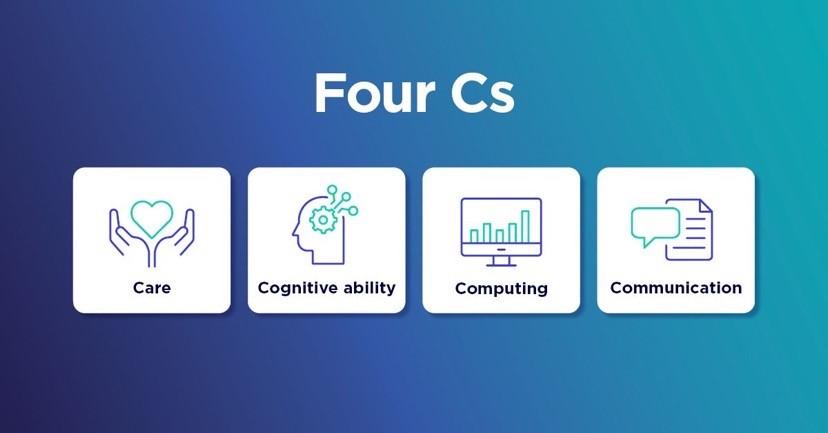
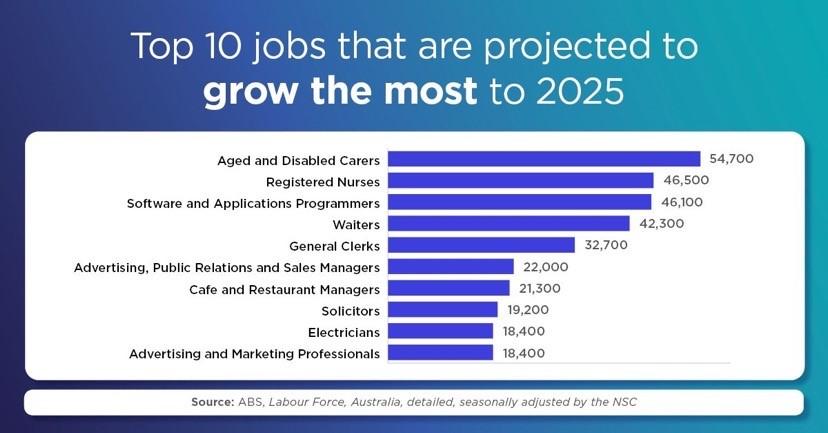
The following key images summarise some of the findings:
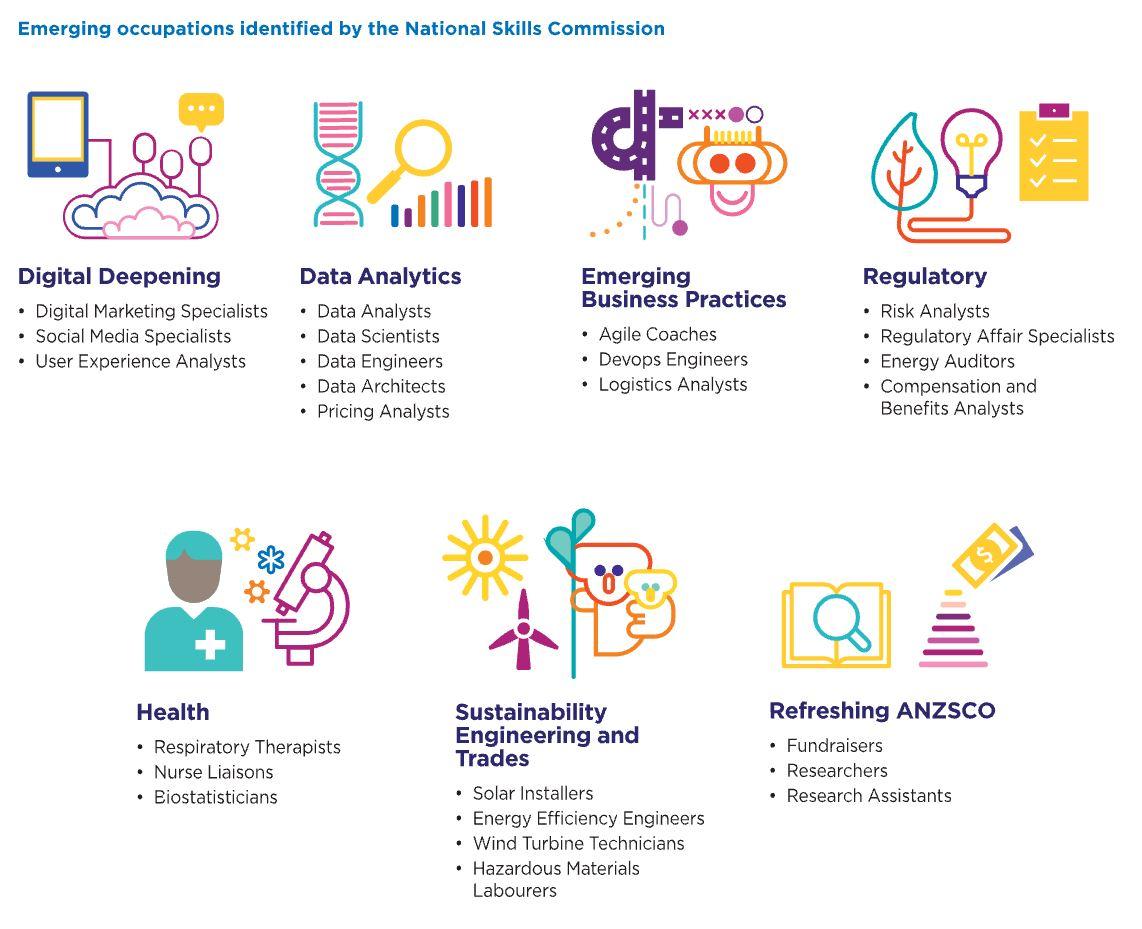
Australian Jobs: Emerging Occupations
Emerging occupations are defined as new, frequently advertised jobs which are substantially different to occupations already defined in the Australian and New Zealand Standard Classification of Occupations (ANZSCO). The National Skills Commission has identified and validated 25 emerging occupations within seven categories in the Australian labour market. https://www.nationalskillscommission.gov.au/emerging-occupations-1
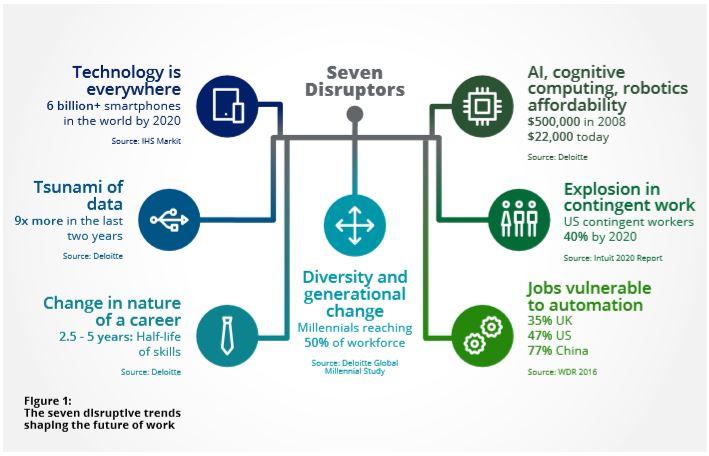
Future of work is Here 2021, a report from Deloitte, reflecting on the acceleration of changes to future careers and the workforce and identifies key areas for consideration, disruptors, challenges and ways forward in the future. Read the full report here
A key point mentioned relates to the need for individuals to take the opportunities provided and ensure their skills remain relevant. So an open-mind, willingness for life-long learning and skills acquisition as demanded by the labour market will be essential to employability.
The 10 most in-demand skills globally and the 10 most in-demand hard skills for 2023
Source: LinkedIn Data, as summarised in The Most In-Demand Skills for 2023 | LinkedIn
The Most In-Demand Skills
1. Management
2. Communication
3. Customer service
4. Leadership
5. Sales
6. Project management
7. Research
8. Analytical skills
9. Marketing
10. Teamwork
The Most In-Demand Hard Skills
1. Software development
2. SQL
3. Finance
4. Python
5. Java
6. Data analysis
7. JavaScript
8. Cloud computing
9. Operations
10. Customer relationship management