Be Kind- The Power of Kind Words
Why Kind Words Matter
In our school community, words are powerful tools. Kind words help build trust, foster friendships, and make our school a safer, more welcoming place for everyone. When we choose words that are caring, respectful, and thoughtful, we give others confidence, encouragement, and belonging.
When we all, students and adults speak kindly, especially when someone is upset or frustrated, it can calm a tough situation. Instead of fueling conflict, gentle words help us solve problems together. Using respectful communication during conflict like pausing, choosing words carefully, and using “I” statements — helps students feel heard and understood.
Using the THINK strategy
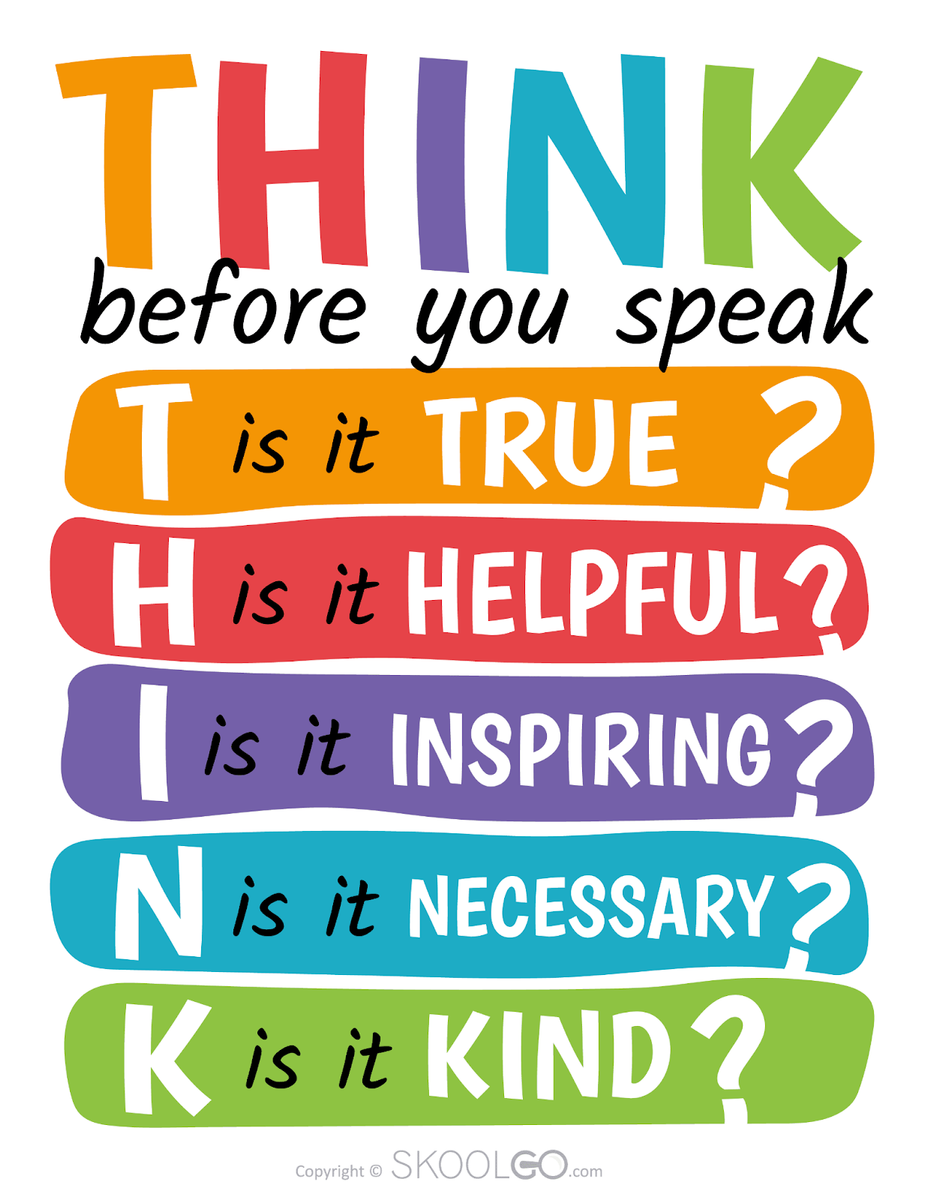
One practical way for us all — students, teachers, and parents — to choose kind words is by using the THINK framework. THINK is a simple acronym to guide thoughtful communication:
- T – Is it True? Before you speak, check: is what you’re about to say accurate and honest? Spreading untrue information or exaggerating can damage trust.
- H – Is it Helpful? Ask yourself: will these words support or improve the situation? Sometimes silence or a gentle question is more helpful than a blunt statement.
- I – Is it Inspiring? Could your words encourage, uplift, or motivate? Inspiring words can turn a frustrating moment into an opportunity for growth or understanding.
- N – Is it Necessary? Do we really need to say this right now? Not every thought needs to be spoken aloud. Pausing can help us avoid saying things we might regret.
- K – Is it Kind? Finally, is what you’re going to say gentle and respectful? Kindness in communication is not just polite — it’s powerful.
If the answer to all five questions is “yes,” then chances are, your words are ready.
Kind Words When We're Upset or Frustrated
It’s especially important to use kind words when emotions are high. When someone is upset or frustrated, thoughtful communication can make all the difference. Here are some ways students can put the THINK strategy into action during difficult moments:
- Pause and Breathe When we feel angry or frustrated, taking a moment to breathe gives us space to think. That pause helps prevent impulsive reactions.
- Use “I” Statements Rather than accusing or blaming, say something like: “I feel hurt when…,” or “I’m frustrated because….” This helps others understand how you feel without feeling attacked.
- Listen Actively While pausing, also listen. Active listening means really hearing the other person — not just waiting for your turn to speak.
- Choose Kind but Honest Words Even when you need to express dislike or disappointment, you can do it respectfully: “I was upset when that happened, can we talk about it?” or “I don’t like how that made me feel, can we find a better way next time?”
- Repair if Needed If we say something we regret, we can always apologise. Saying “I’m sorry, I didn’t mean to hurt you” shows maturity and kindness.
Why This Matters for SMPPS
When every member of our school students, staff and family members, uses the THINK strategy, we create a kinder culture. Here’s how it helps:
- Stronger Relationships: Thoughtful communication builds trust and respect.
- Better Conflict Resolution: Using “I” statements and kind words helps resolve disagreements calmly.
- Emotional Growth: Children learn to recognise their feelings, express them, and handle frustration in a healthy way.
- A Positive Example: When adults model thinking before speaking, children learn by watching.
Words are powerful. They can hurt or heal, divide or unite. By using the THINK strategy, our school community can choose words that are not only true and helpful — but, most importantly, kind. When we speak from the heart with care, we make our school a more supportive, understanding place for everyone.
Let’s all commit to thinking before we speak — because kind words matter.