Term Two Learning
Reflection on Last Term
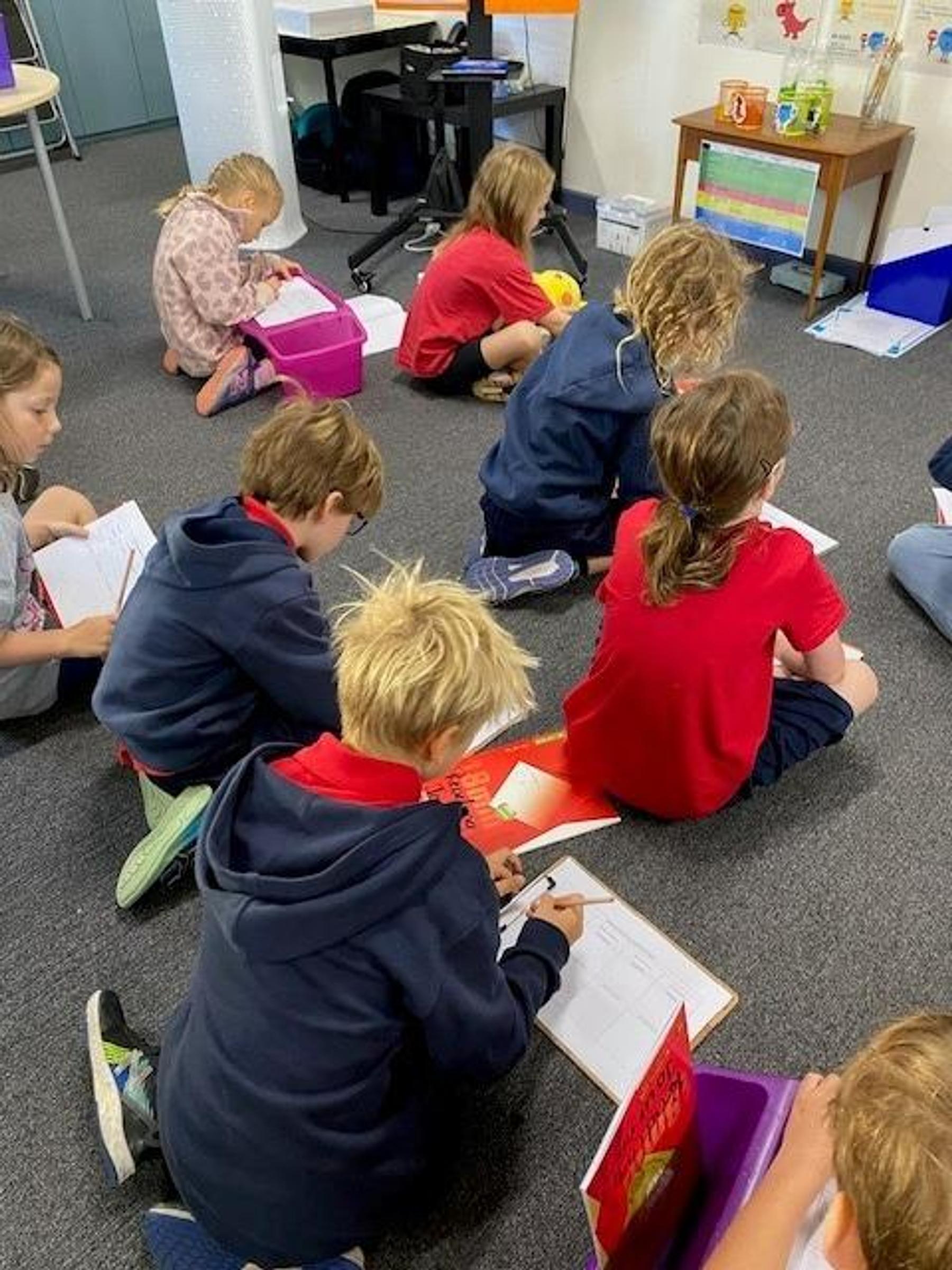
Our students settled in quickly to the new class routines in term one. They adapted well to the entering and exiting the classroom processes, and have been perfecting how to work independently, and asking for teacher assistance.
They had a wonderful time attending the Toys Over Time incursion. They demonstrated respectful listening skills and cooperated well with each other when playing with the toys.
The Year Two students enjoyed learning about the changes in technology and how it improved people’s lives as part of History. They refined their communication skills by developing questions and interviewing an older adult about their life, about when they were in Year Two. Students listened avidly as their peers shared the responses.
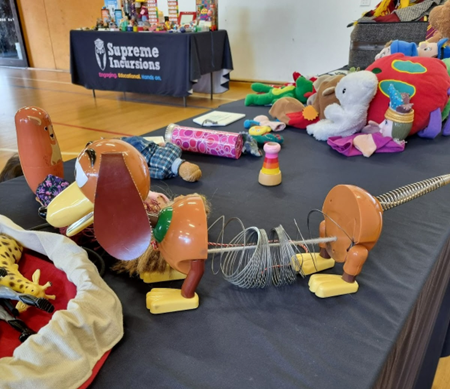
Toys Over Time incursion
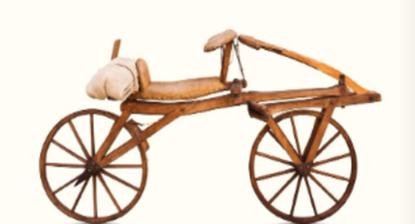
Old versus new technology
Toys Over Time incursion
Old versus new technology
Reading
As a part of our literacy program, we study phonics, learning about the sound parts in words. Students interact in several activities which strengthen their phonemic awareness, spelling, recognition of high frequency words, fluency, and decoding skills. The Sound Waves program is used to support these sections of literacy.
Students begin each reading session by reading or viewing a mentor text as a class. Through this shared reading, we focus on vocabulary and comprehension. Students will be introduced to subject-specific words, starting with Health as a topic, and will learn the definition of these words, and how to use them independently in sentences.
Students will also review the reading comprehension strategies of predicting, connecting, questioning, and visualising. Students will be presented with the reading skills of the Main Idea, and Fact or Opinion. To develop fluency, students read the same text over a few days, to a partner, focusing on fluency, expression, accuracy, and paying attention to punctuation.
To support this learning at home:
- Encourage your child to read a book at home (both fiction and nonfiction) and remember to change the book regularly.
- Keep track of new vocabulary in books and look up the word’s meaning (notice if the word has a prefix, suffix, is a verb or an adjective).
- Utilise the local library for additional books.
- Focus on suffixes such as the ‘ing’ in running or the ‘ed’ in jumped', and make sure that your child is reading the end of the word.
- Ask your child questions about the story they have just read, or stories that you have read to them such as:
- Prior Knowledge: Before reading, ask, ‘Do you already know anything about [the topic of the book]?’
- Summarising: What was the story about? What happened first, second, third?
- Connecting: Did it remind you of any other stories you know? Has a similar thing happened to you? Do you have knowledge of a similar thing happening in the world?
- Questioning: I wonder why the character…? ‘I wonder what is going to happen next?
- Ask your child what new words they have learned in vocabulary lessons. Can they remember the definition and use it correctly in a sentence?
- Any time that you are practising spelling or handwriting, you are also helping to build their reading skills.
- Practise forming lower-case letters, and using spaces between words as well as identifying words that need capital letters. Students should be developing a correct pencil grip.
- When writing with your child, celebrate plausible attempts at spelling and give feedback on one goal at a time e.g., using the ‘ch’ over ‘tr’ in some words.
Writing
This term we are focusing on writing persuasive and procedural texts. We will develop the students' understanding of text types by exploring the language and structural features.
Persuasive writing is writing to convince the reader to their point of view. Features of persuasive writing include emotive language, use of adjectives, and sequencing words.
Persuasive texts have the following structure:
- An introduction
- The body of the text which includes at least three arguments with explanation.
- A conclusion
Procedural writing is writing that provides text-to-text instructions of how to do or make something. Procedural texts explored in class include recipes, instructions and rules for games, directions and manuals. Procedural writing often incorporates both visual and written components.
The structure of procedural texts are:
- Heading
- Goal
- List of materials or equipment provided
- A sequence of steps to follow
Features of procedural writing include using sequencing words or numbers, action verbs, adverbs and sentences that combine ideas.
Spelling
We will be using the Sound Waves program to explicitly teach spelling. Students will explore consonant digraphs (g, gg), blends (gr, gl, sm, mp, lt, lp, lf, ld), graphemes (o,g,ay,ll,y) and review and extend their understanding about suffixes (ed, ing, es). Students will also explore contractions, compound words, and homophones.
Syntax and Handwriting
As part of syntax, students will examine sentence structure and types, and focus on using full stops, capital letters, and exclamation marks consistently. They will expand simple sentences using adjectives, verbs, adverbs and revise using capital letters for proper nouns.
Students will also practise forming lowercase and uppercase letters correctly using Victorian Modern Cursive Script. Students should be using lower and upper case letters correctly by Year 2.
To support this learning at home:
To encourage a passion for writing you can:
- Discuss topics that they are passionate about that they might like to persuade or convince someone to watch/read/explore, etc.
- Create a special ‘writing box’ to store your child’s pens and pencils to help them see writing as an important activity.
- Encourage your child to read their writing aloud.
- Create an ‘ideas bag’ or ‘ideas folder’ to use as a writing prompt. To inspire writing ideas, collect objects such as photographs, pictures cut from magazines, brochures, movie tickets, or any other found item.
- Encourage your child to create a picture, drawing or collage that visually represents their ideas.
- Monitor and correct the pencil grip your child is using. Remind them to use lower and upper case letters accurately.
Mathematics
This term our focus in number is addition and subtraction. Students will be exploring the connection between addition and subtraction and solving addition and subtraction problems using a range of strategies.
These strategies will include:
- Fact families, e.g. 3, 7, 10. (3+7=10, 7+3=10, and 10-3 =7, 10-7=3)
- Friends of tens (9 + 1, 8 + 2, 4 + 6, 3 + 7, 5 + 5)
- Doubles facts e.g., 6+6 =12 4+4=8
- Near doubles e.g., 8 + 7 is the same as 7 + 7 + 1 = 15
- Count on, add from the largest number
- Build to ten e.g., 8 + 7 is the same as 10 + 5 which equals 15
- Split strategy e.g., 12 + 15 is the same as (10 + 10) + (2 + 5)
- Jump and hop (adding ones, then tens)
To support this learning at home:
- Play board and card games such as Monopoly or Snakes and Ladders.
- Add everyday collections at home, e.g.; the total number of cutlery items on the table.
- Dominoes can be used to produce fact families. For example, the following dominoes are used to show 6 + 4 = 10 and 4 + 0 = 4.
- Skip counting the letter box numbers as you walk along the street.
- Add or subtract 10 or 100 to a letter box number you walk past.E.g., 24, 24 + 10 = 34 or 24 - 10 = 14.
- Practise adding money together by building to the nearest dollar.
- Encourage your child to learn their doubles up to 10 first, and then up to 20. e.g., 5 + 5 = 10
Specialist Subjects
Performing Arts
Students will continue to learn various chords on the ukulele and reading traditional music notation on other Orff instruments. Students will also use process drama to learn about creating tension and comedic moments on stage and create choreography for their peers to copy.
Physical Education
Students will continue to practise their gross motor skills while doing movement activities. They will also practise fundamental motor skills such as underarm and overarm throwing and catching.
Science
Students are continuing with their work on materials, using their knowledge from last term to discover how materials can be physically changed by different actions.
Visual Arts
Students will continue to focus on hot and cold colours, adding print and pattern-making to extend their work. They will be channelling Albert Namatjira’s obsession with Australian gum trees, as they head outside to sketch their own. A range of drawing tools and watercolours will be explored.
Here's to another fabulous term of learning and fun!
Elise, Michele, Brendan, Emily & the Specialist teachers