
Wellbeing
Fiona Dandie & Robert Pain
Wellbeing
Fiona Dandie & Robert Pain
House Token & Golden Ticket Update
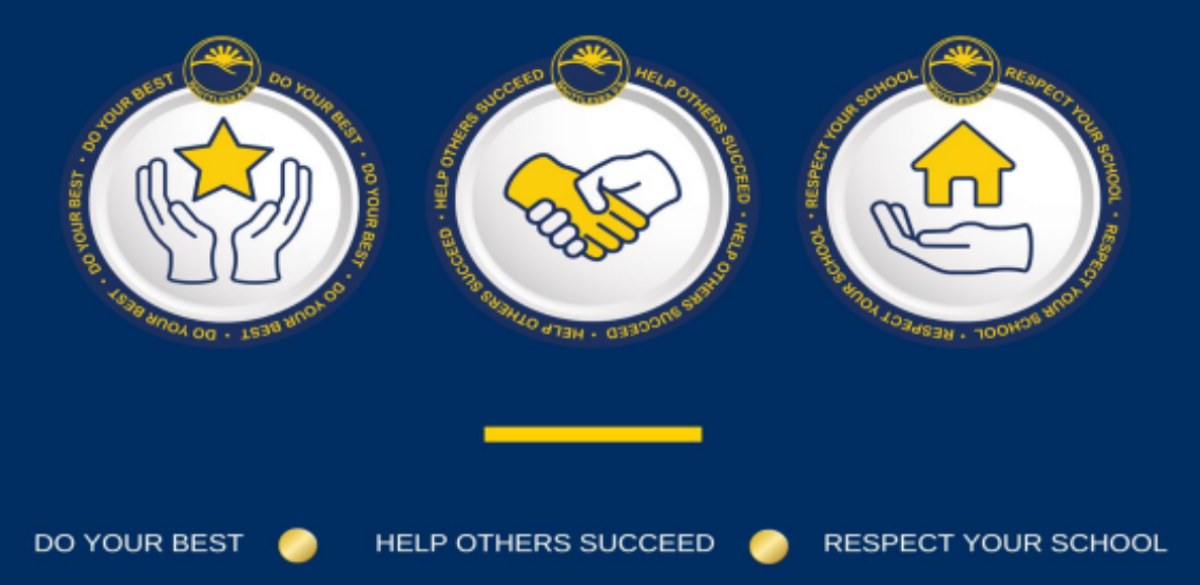
As you are aware, our school's whole-school reward system, which is used by all staff, consists of House Tokens and Golden Tickets. It has been amazing to see all the staff giving out so many House Tokens and Golden Tickets throughout Term 1.
The current total of House Tokens earned by all WPS students this term currently sits at 5,422. That is a fantastic effort by all students after just 6 weeks in term 1! We will announce the winning team for House Tokens earned in Week 10, followed by the winning House prize.
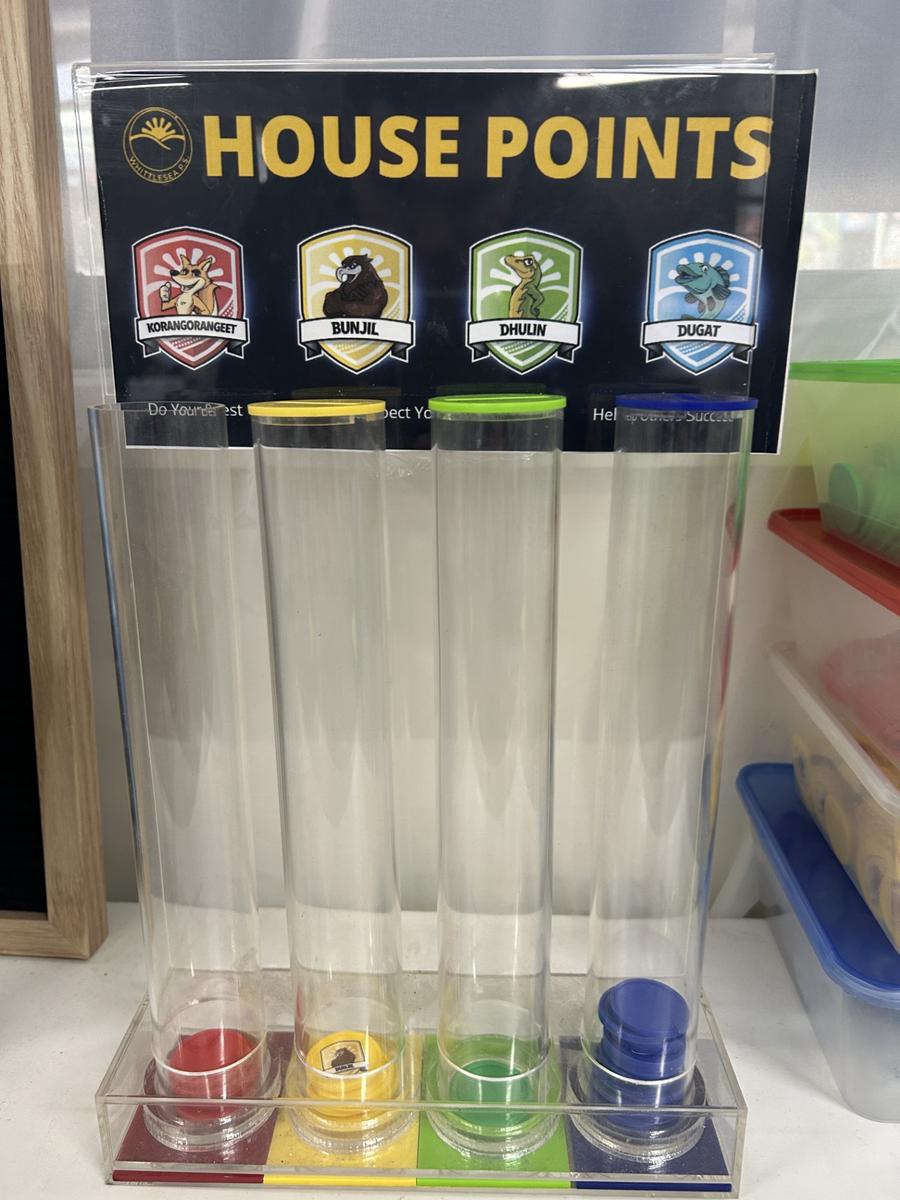
So far, students across Term 1 have earned a total of 1,460 Golden Tickets. This is a phenomenal effort by all students, as we are only just past the halfway point of the term. Continue earning Golden Tickets, as Whittlesea World is fast approaching in a few weeks' time.

We are intentional about supporting students to be ready for learning; not just academically, but emotionally and physically as well. One of the simple yet powerful strategies we use throughout the day is brain breaks.
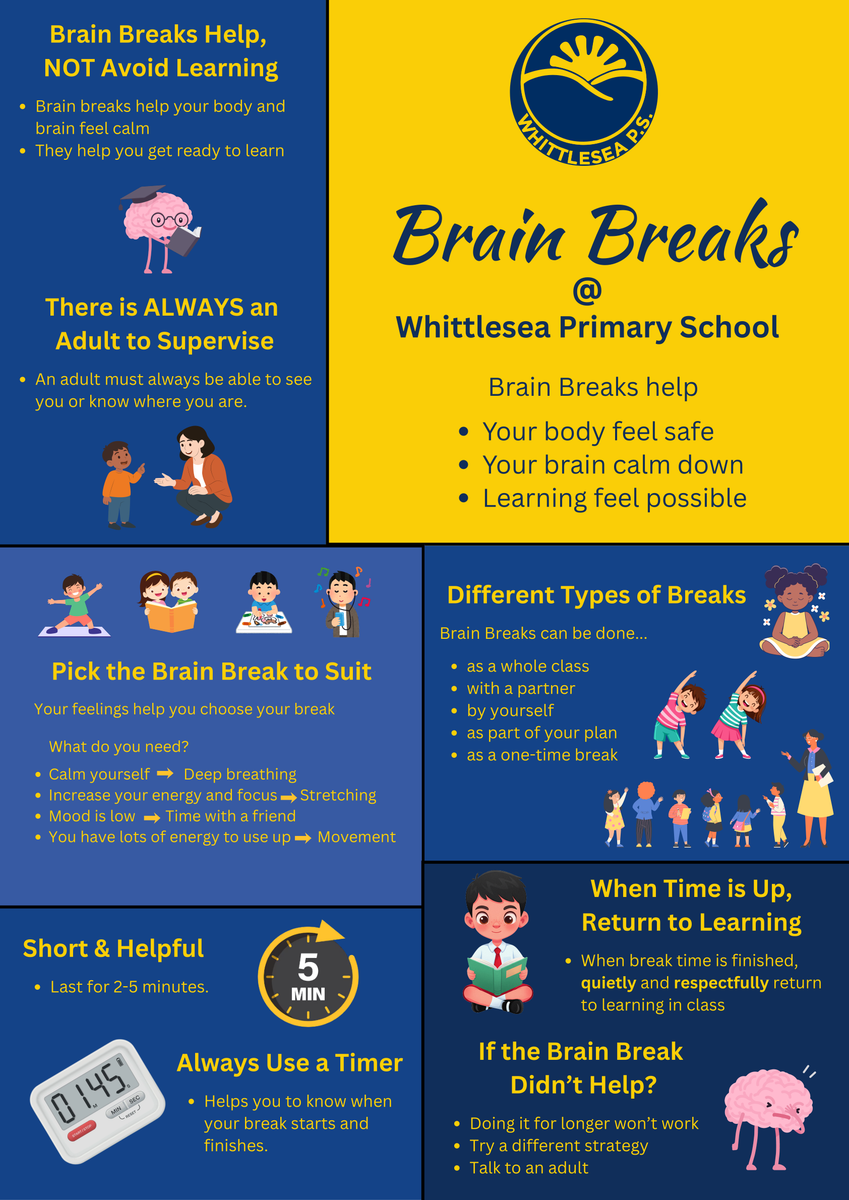
Brain breaks are short, structured pauses in learning that allow students to reset their bodies and minds. They are not “time off” from learning — they are an important part of learning. Research in child development, including insights from experts such as Dan Siegel, shows that when children feel regulated and calm, the thinking part of the brain is more able to focus, problem-solve and retain new information. When students are overwhelmed, restless, tired or emotionally heightened, it is much harder for them to access their “wise thinking brain.” Brain breaks help students return to a calm, alert state so they can re-engage successfully.
Brain breaks help students to:
Ultimately, the goal is simple: to be ready for learning.

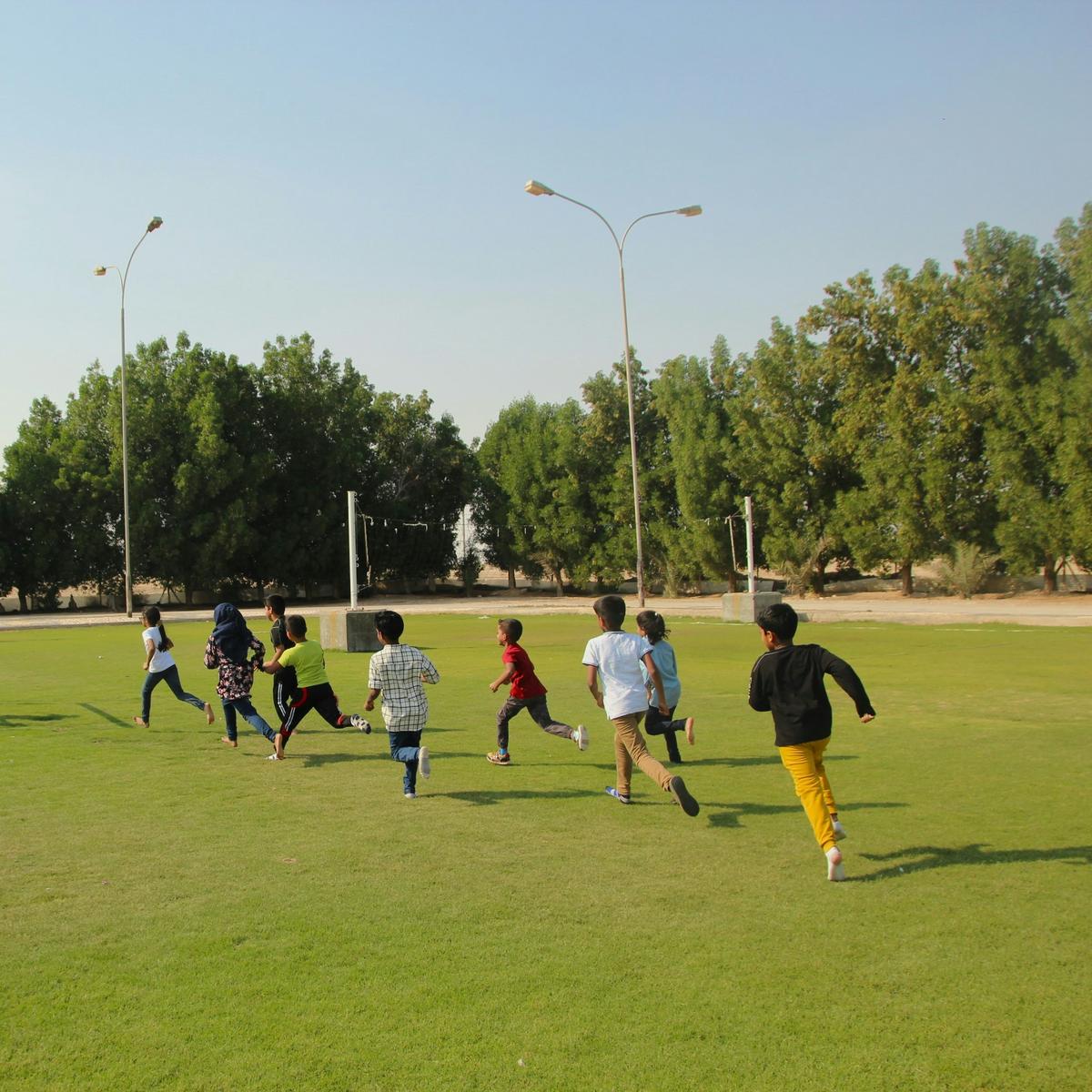
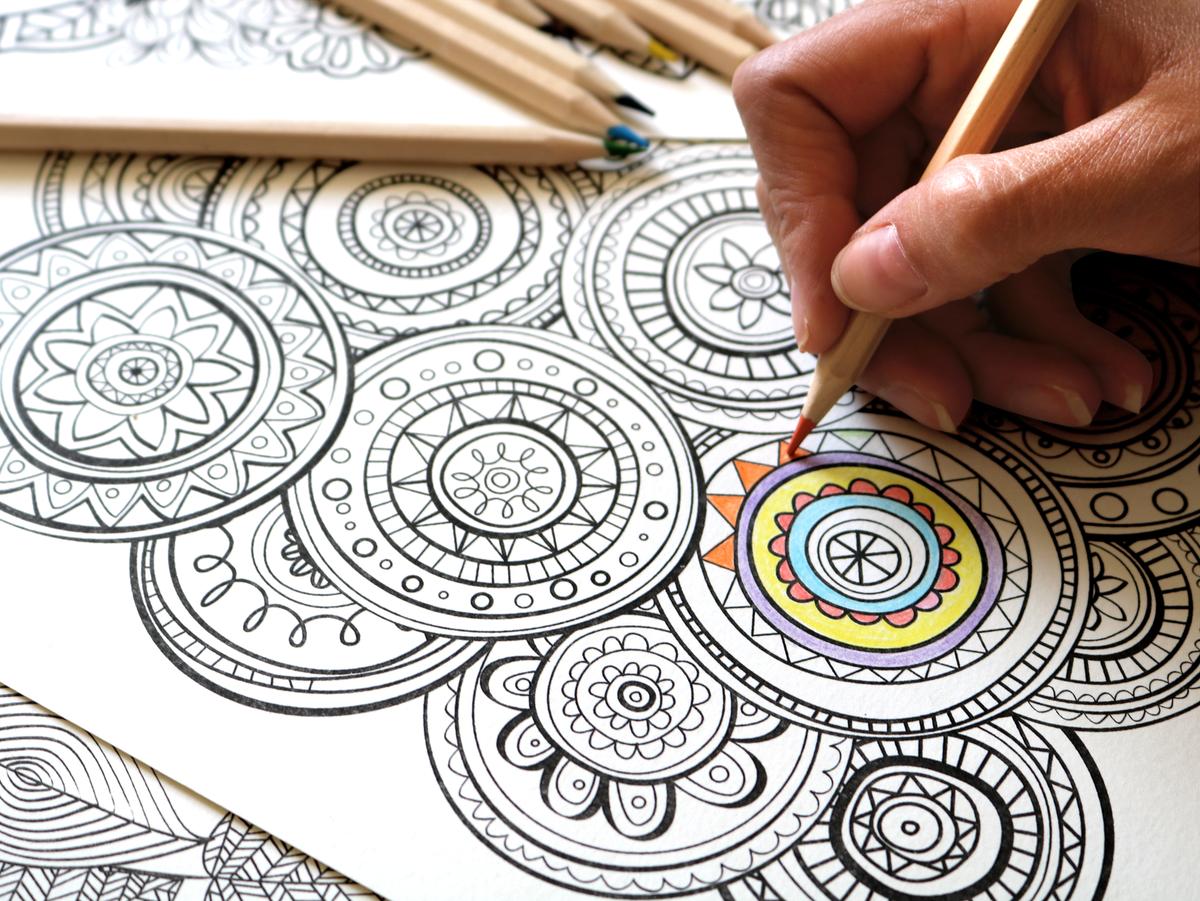
Not all brain breaks look the same — and that’s intentional. Students experience different emotional and physical states throughout the day, so we teach them that different breaks serve different purposes.
By explicitly teaching these options, we empower students to begin recognising:“What state am I in? What does my brain need right now?”

To ensure brain breaks are helpful and not distracting, we follow clear guidelines:
When brain breaks are predictable and consistent, students feel safe and supported.
Brain breaks are more than a classroom strategy; they are part of teaching children lifelong self-regulation skills. Students are learning to notice their emotional and physical cues and respond in healthy, productive ways. By pausing, resetting and returning to learning with intention, students strengthen their ability to manage themselves, a skill that supports wellbeing, relationships and academic growth. Because when our brains are calm, alert and regulated, we are truly ready to learn.