
Philosophy
Why are we doing this?
Philosophy with children, done through Communities of Inquiry, is a powerful way for our students to:
- develop their critical thinking skills, including logic and reasoning;
- build their capacity to clearly express their thinking to others;
- become comfortable disagreeing with others, and having our own ideas challenged, in a respectful way;
- try to understand different perspectives even if they don't agree with them, and in the process build empathy;
- build a deeper and more common understanding of a concept or issue through a collaborative approach;
be a part of sustained and meaningful dialogue with others.
In an age of polarisation, mis- and dis-information, shortening attention spans, and countless crises, Philosophy provides crucial opportunities to equip our students with the thinking skills and social or behavioural norms required to engage with and navigate this complex world as compassionate and intelligent humans. I have been loving this role so much and I have found it to be really meaningful and fulfilling - it is a pleasure and privilege to be running this program with your children this year. Thanks for all of your support and enthusiasm.
1/2s
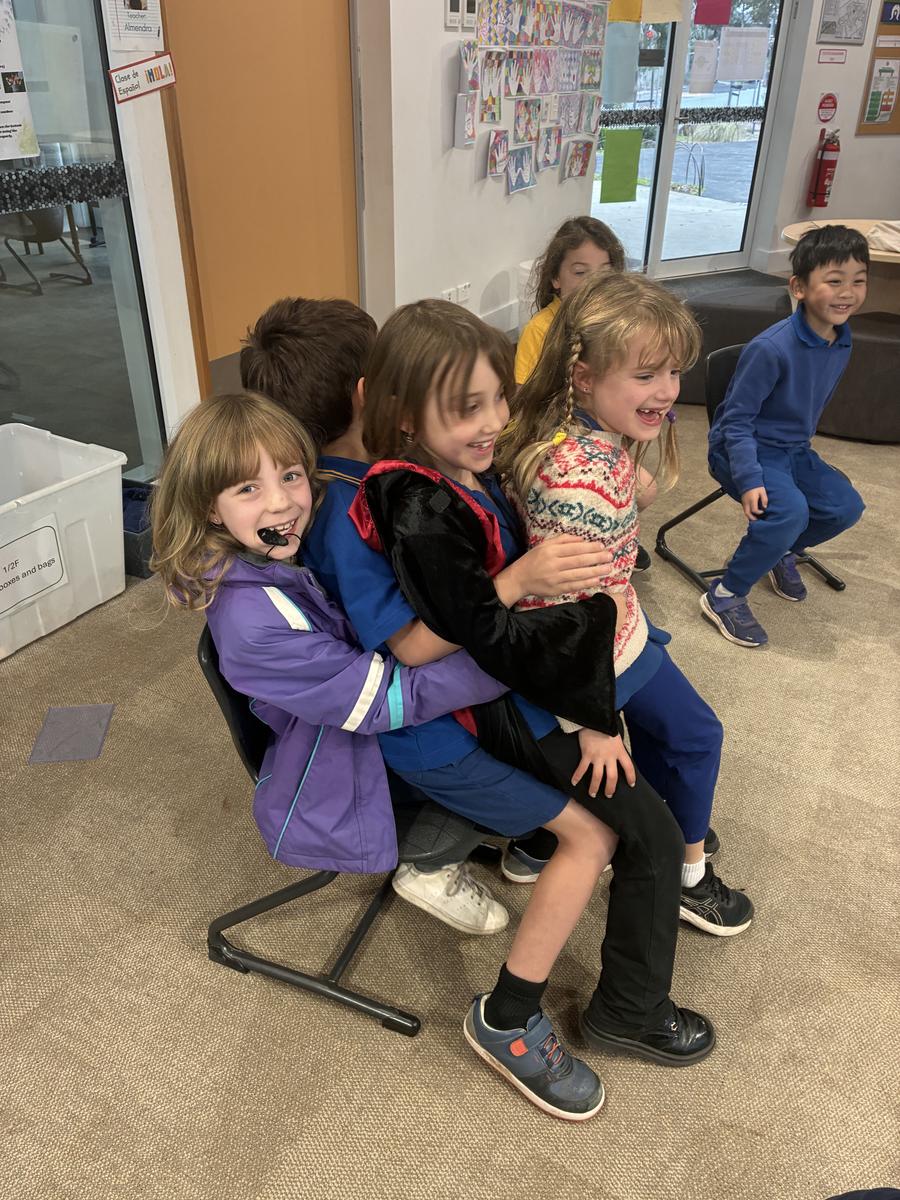
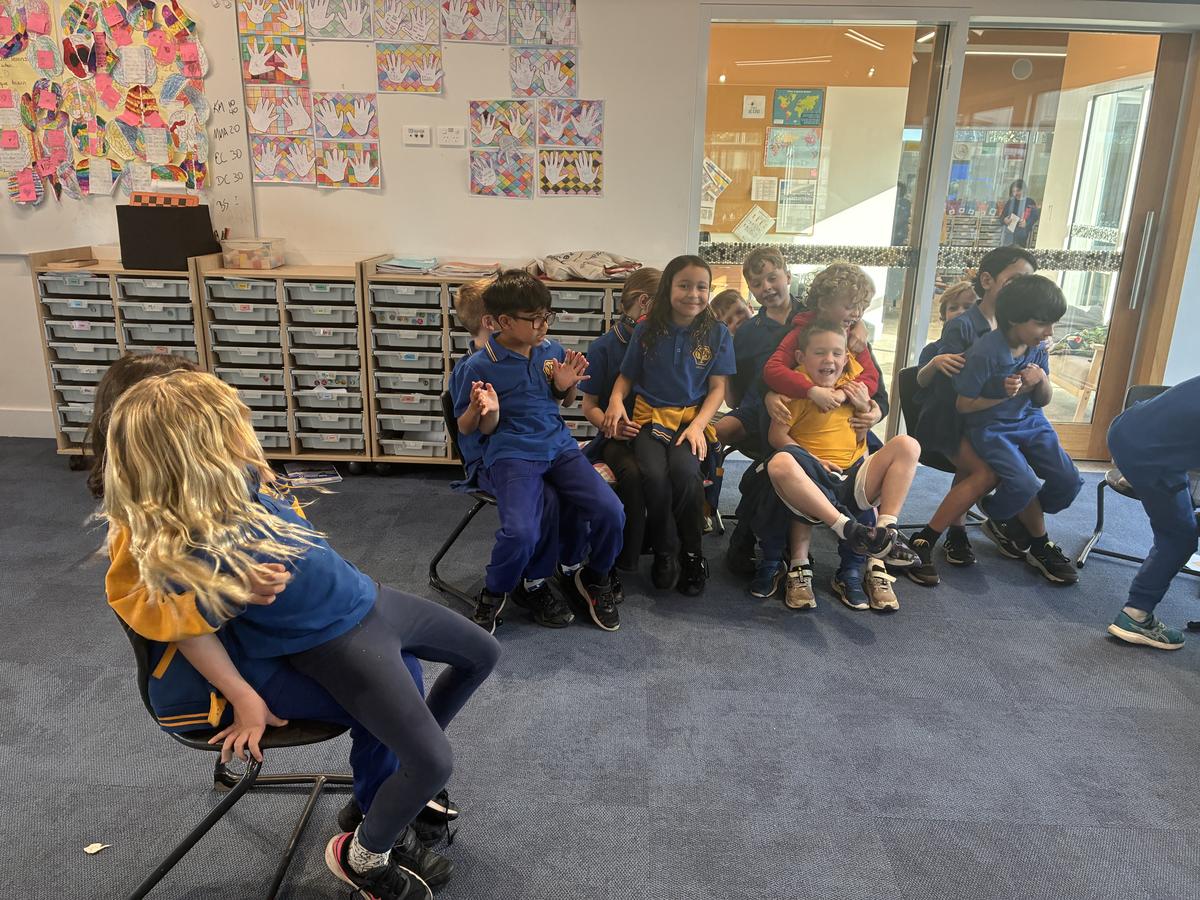
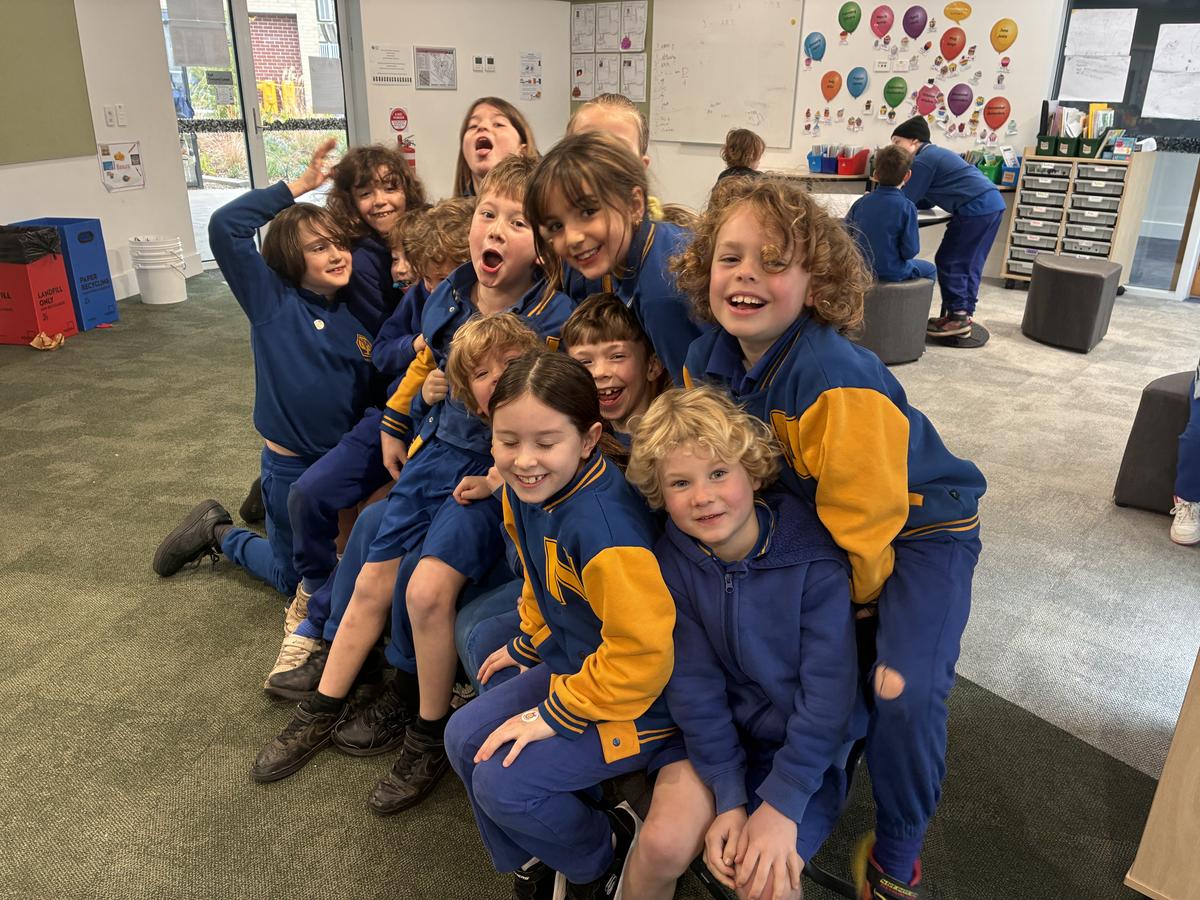
This term we've continued with ethics, exploring:
- moderation (having enough/sufficient, vs wanting more)
- will power
- self-interest vs the common good
- the greater good and personal sacrifice
- lower order pleasures and higher order pleasures
pleasures that require effort or pain of sorts
We almost always use a picture story book to begin our exploration of a new concept and an activity to help us experience or practise the behaviour or mindset that we're exploring, as well as discussions in our philosophy circle.
This all happens after our initial conversation to recap our previous focus, and it's always wonderful to hear students use the vocabulary that we've learned and reflect upon and share with the group the experiences in their lives that connect to the concepts.
3/4s
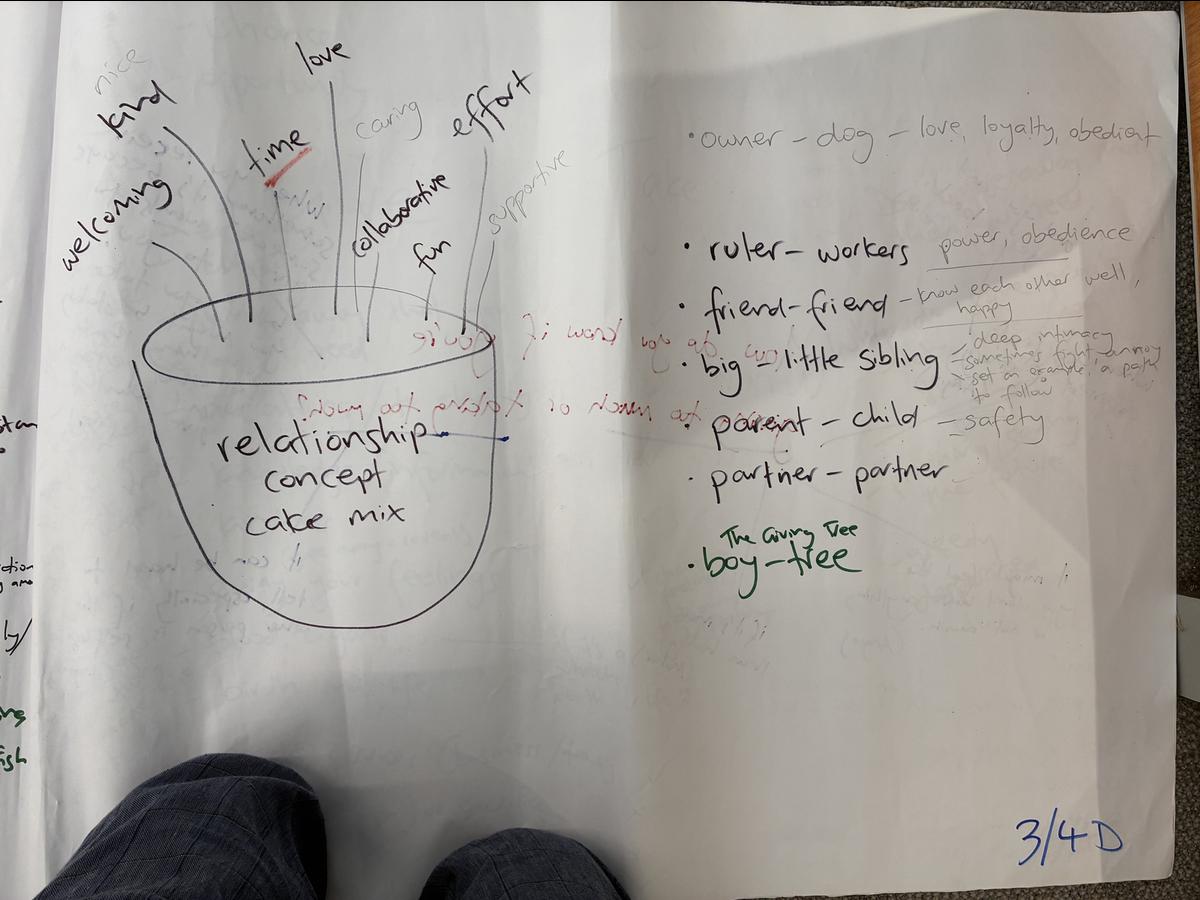
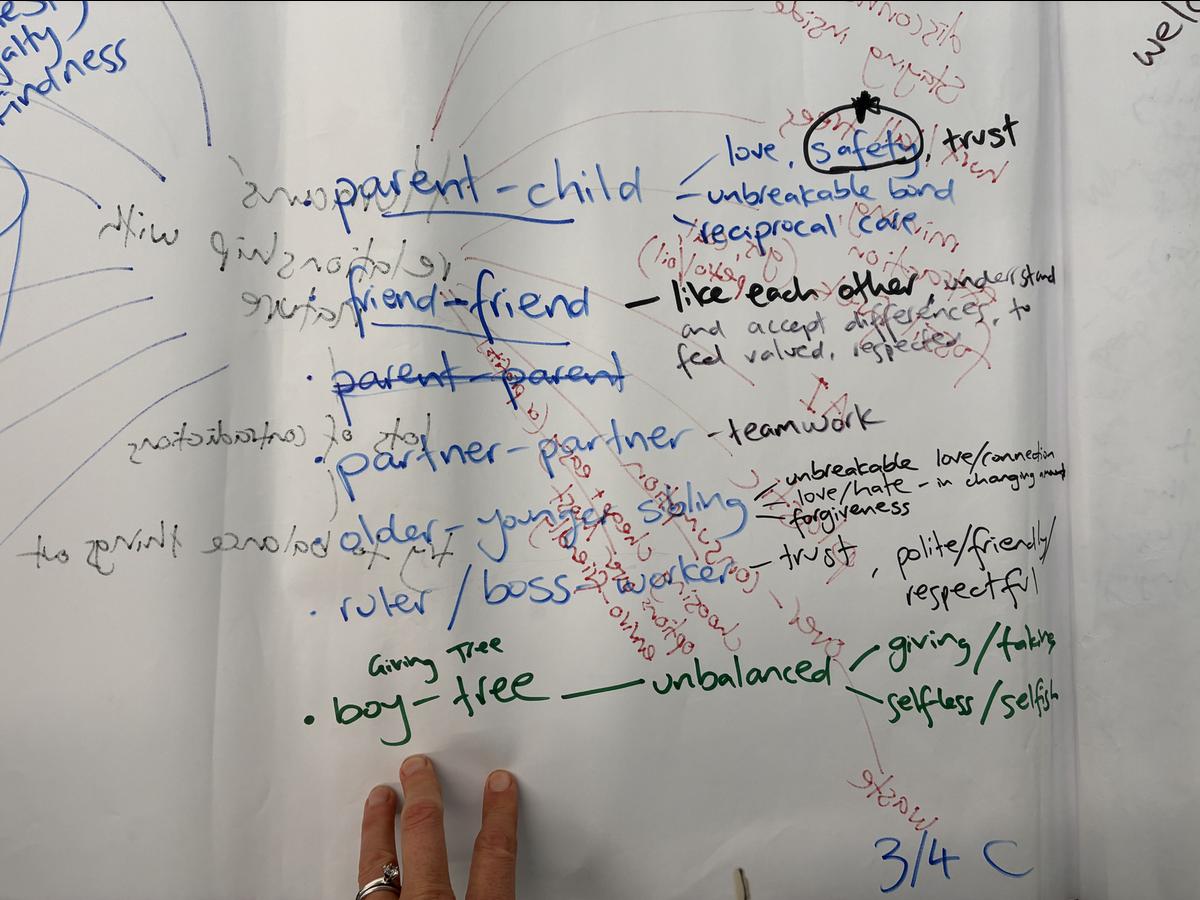
The 3/4s have been exploring the concept of relationship. We began by looking at relationships though a Confucian lens, and then by looking at the 'ingredients' of relationships in general and then looking at what particular 'ingredients' or qualities define certain relationships, or that make them distinct. We briefly thought about what would happen to one of these relationships if it no longer contained that defining quality.
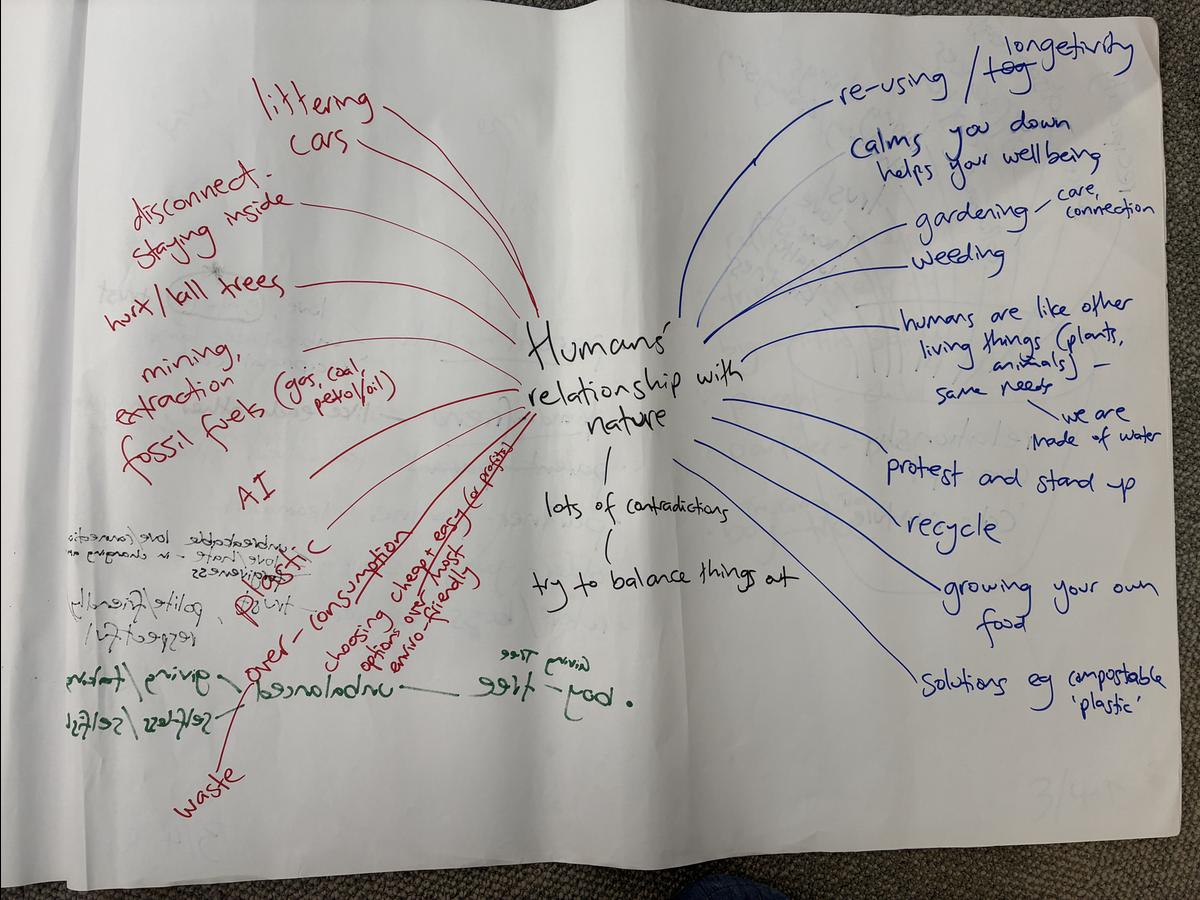
We're now back to considering our relationship with nature, including all of the ways that are positive and negative, and we'll have a go at coming up with ways that define our relationship with nature.
5/6s
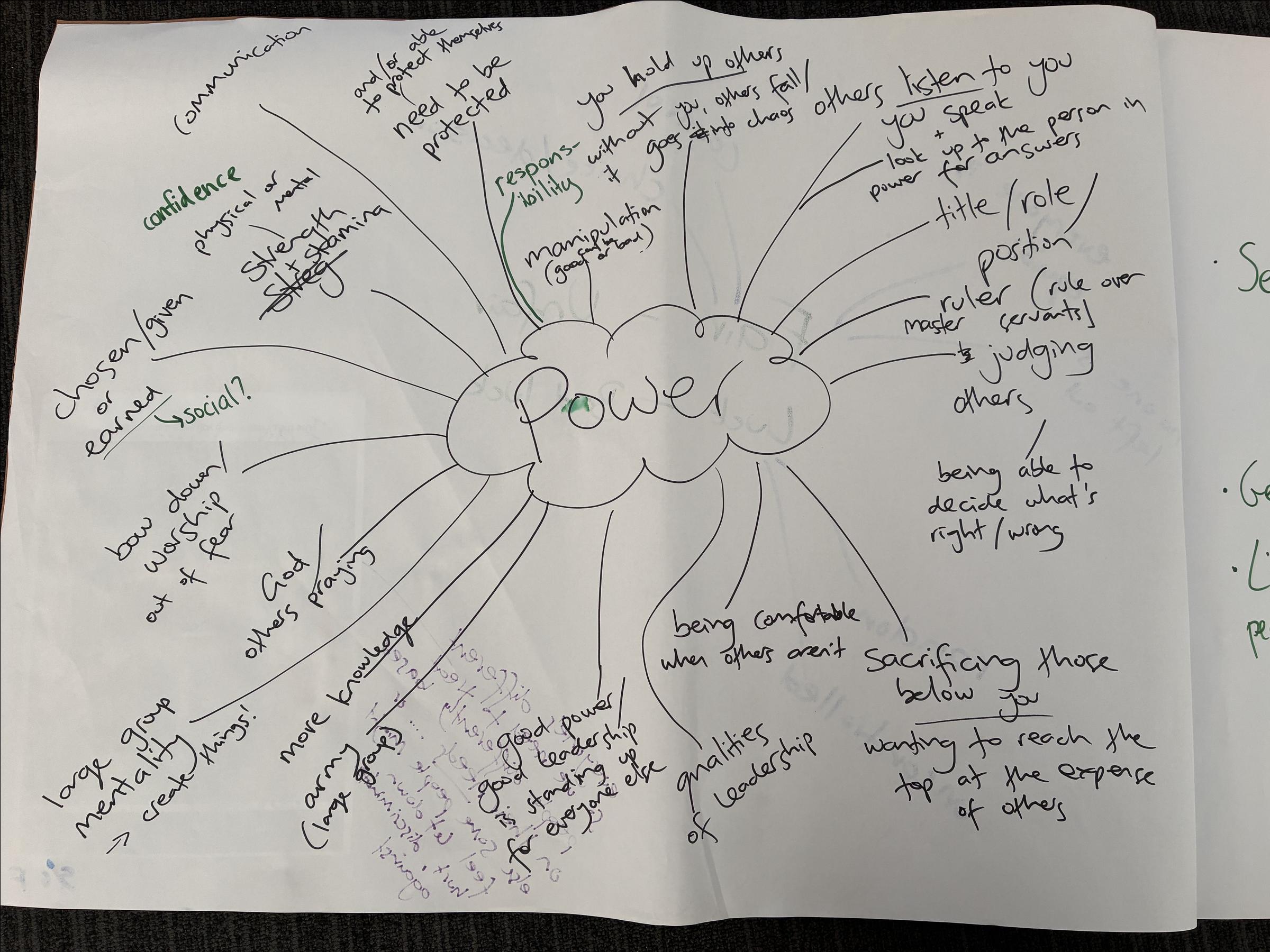
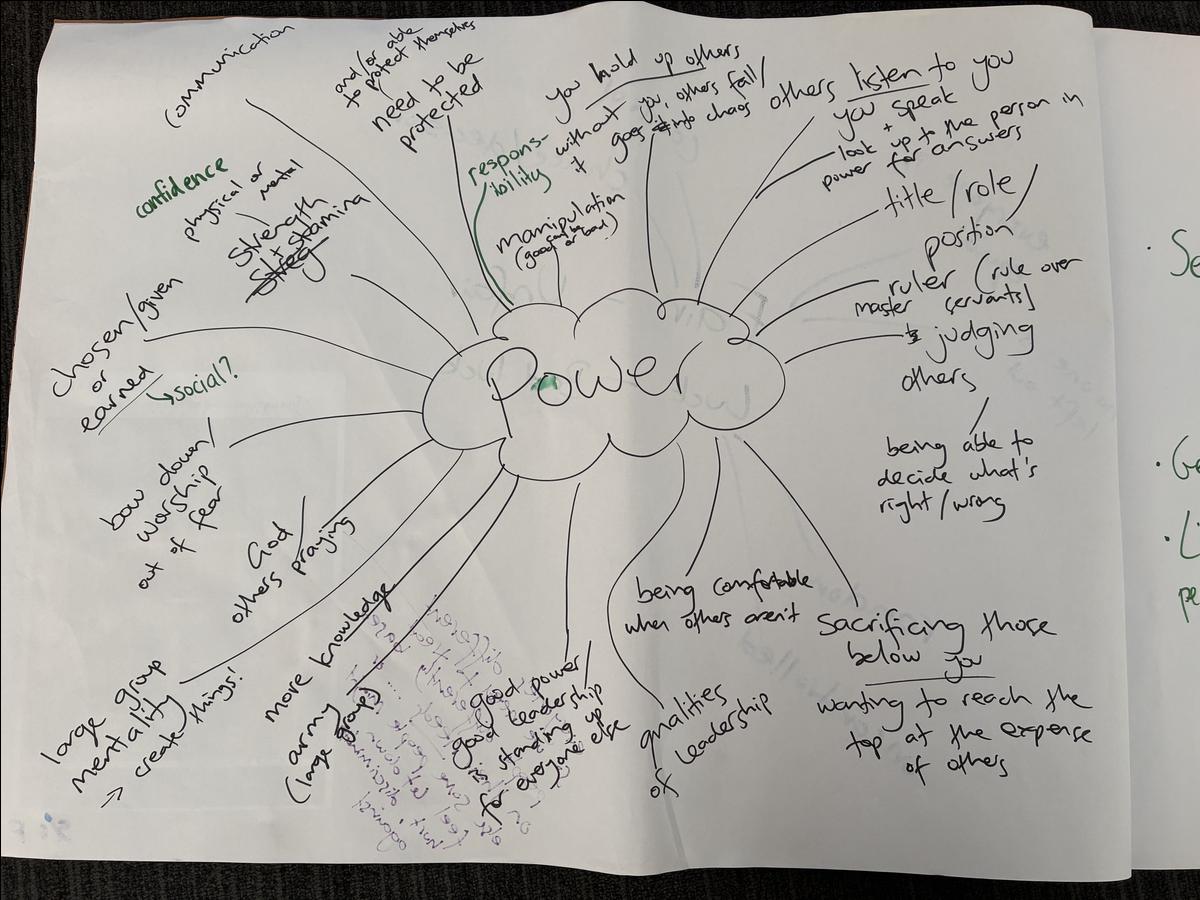
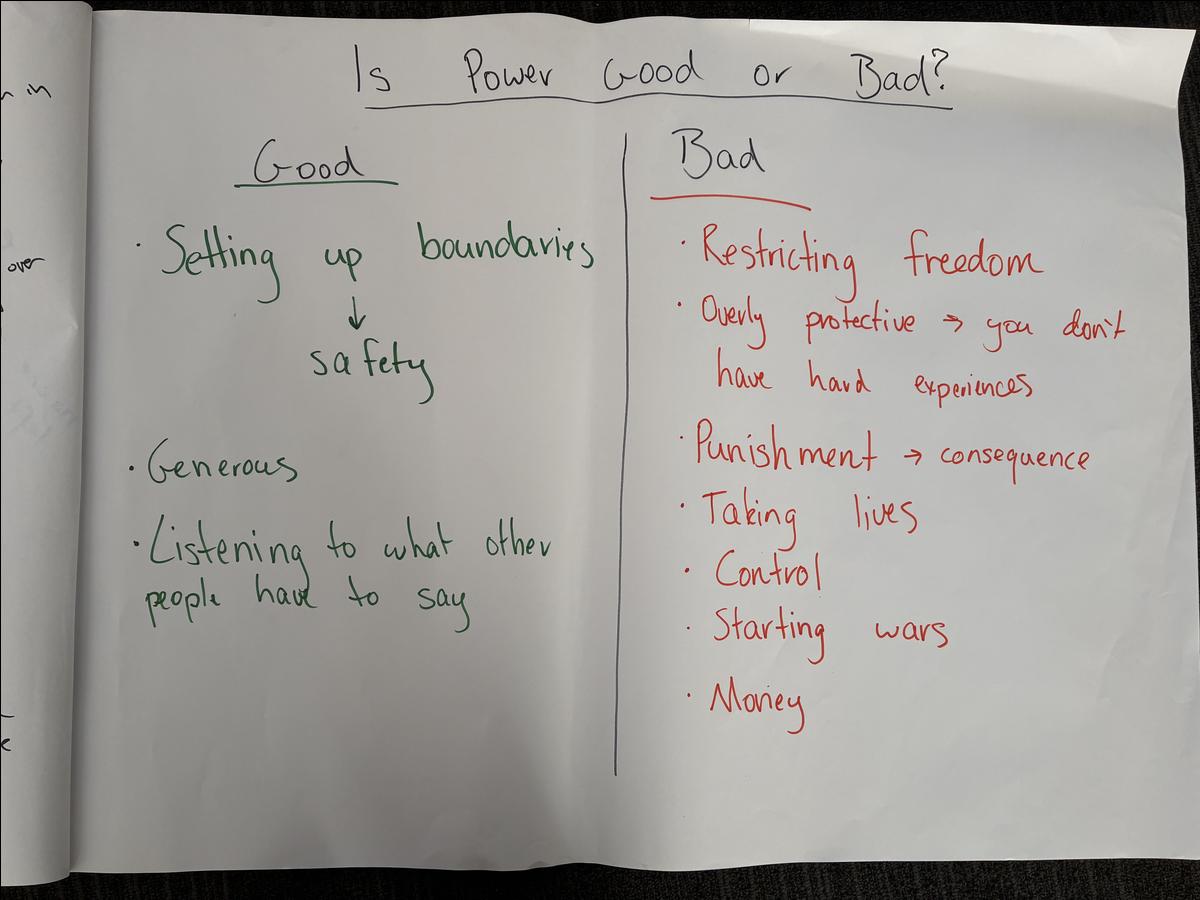
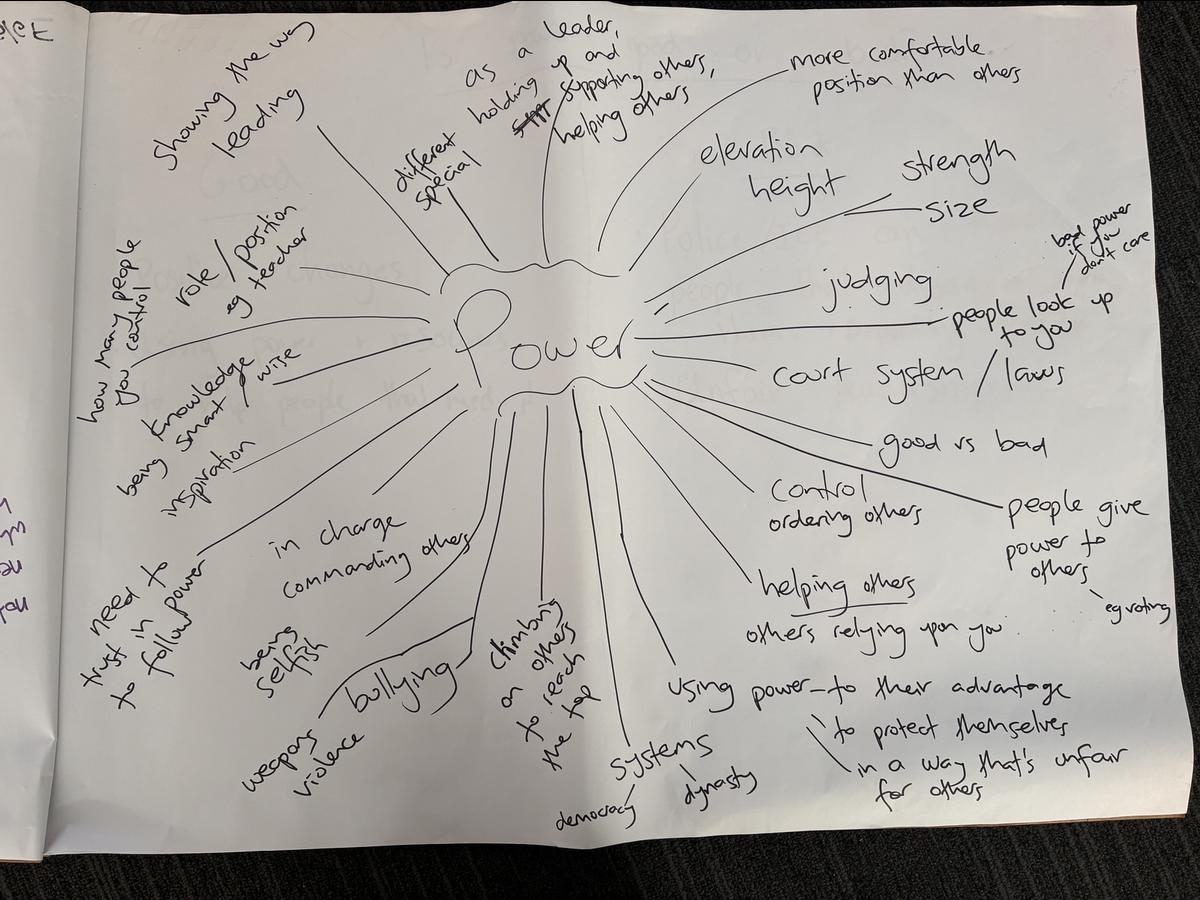
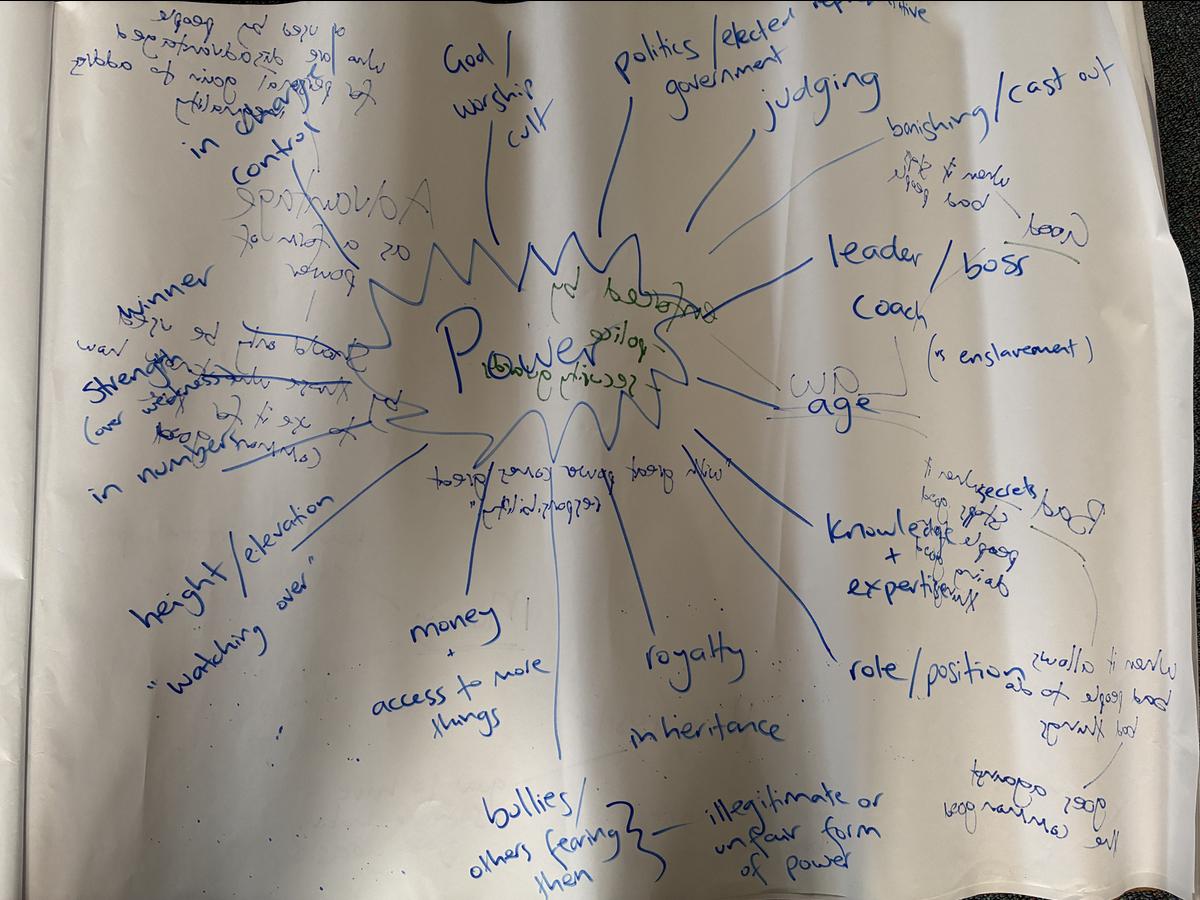
I just love sitting in a circle with the 5/6s having amazing discussions! Since the production finished, we have begun exploring the concept of power. We began with an activity in which students took in turns to arrange five chairs in a way that represents one chair having more power than the other four. The rest of us then had to guess, giving our reasons and different ways to interpret the arrangement. Sometimes we flipped it around, thinking of ways that it could represent four chairs having power over one. As students spoke, I wrote down the key ideas.
The following week (last week), we read a version of The Ring of Gyges from Plato's Republic, and then answered three questions:
- what would you do if you had the ring/the power of invisibility?
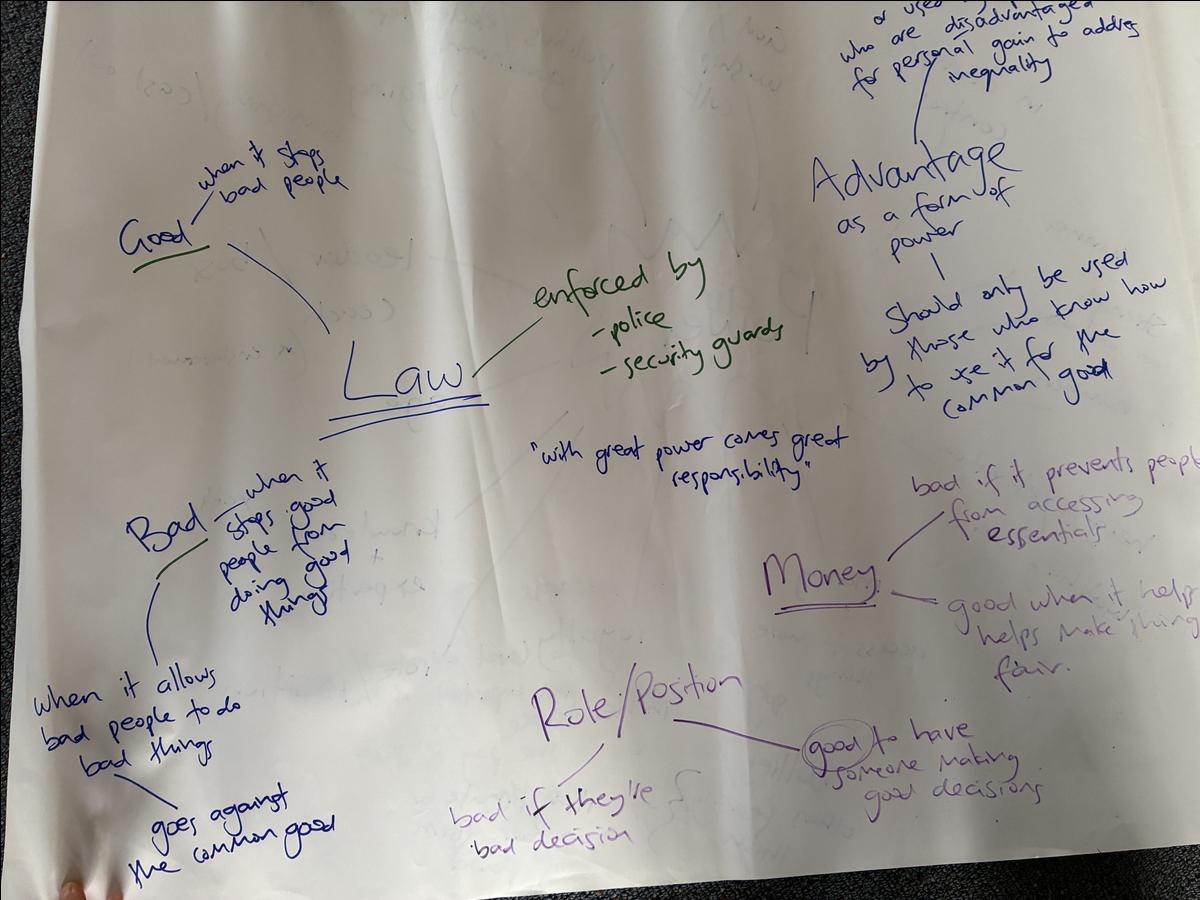
- What is preventing/stopping you from doing that anyway? (As a form of power)
- Is that power (the one preventing you from doing it) good or bad, and why?
This week, we have been further exploring students' responses as well as coming up with questions in response to the picture story book "One" by Kathryn Otoshi.
We'll continue to develop our shared, communally-constructed understanding of power and then look at student leadership as a form of power and what kind of student leadership is deemed 'good' in our opinions. I look forward to continuing these amazing conversations with the 5/6s!
Philosophy in Public Spaces (PIPS) event at Melbourne Zoo - 5/6AB - September 9th
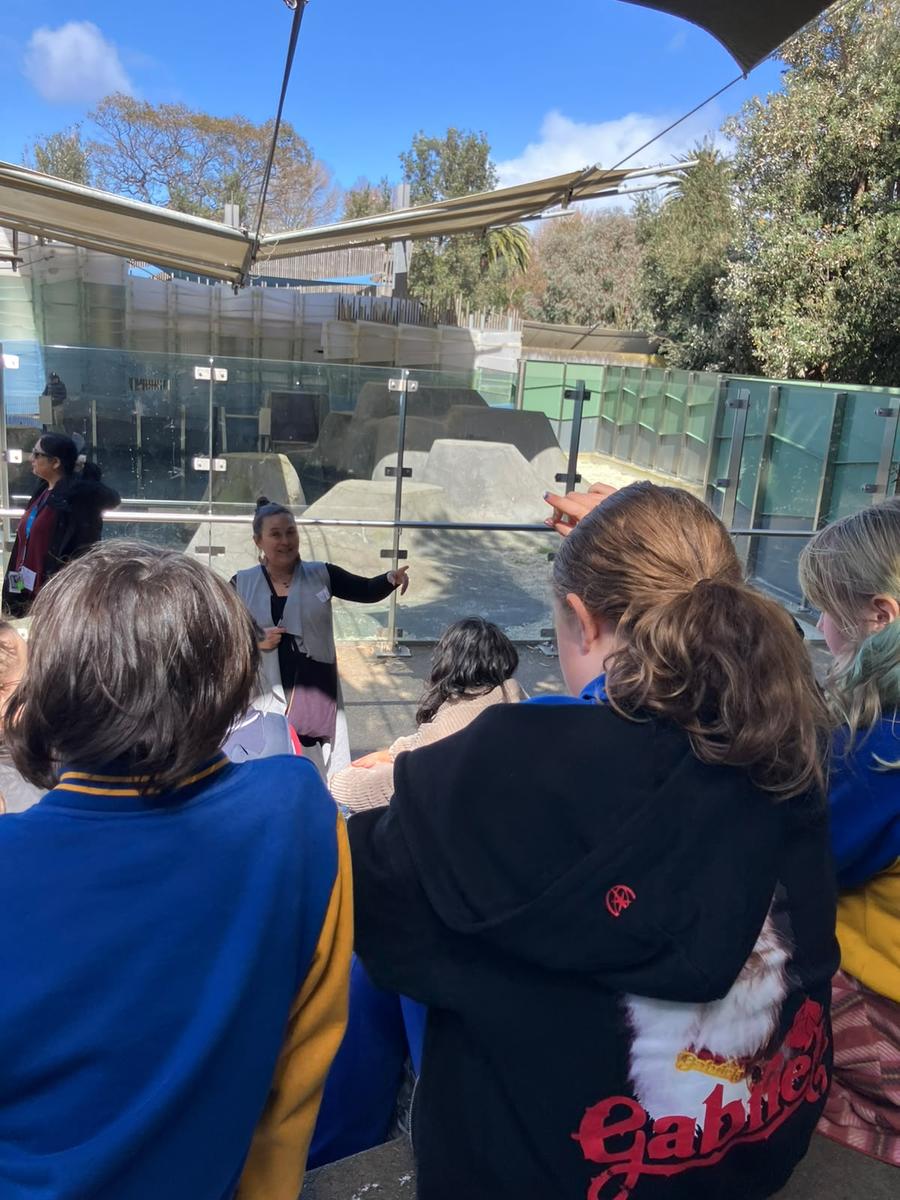
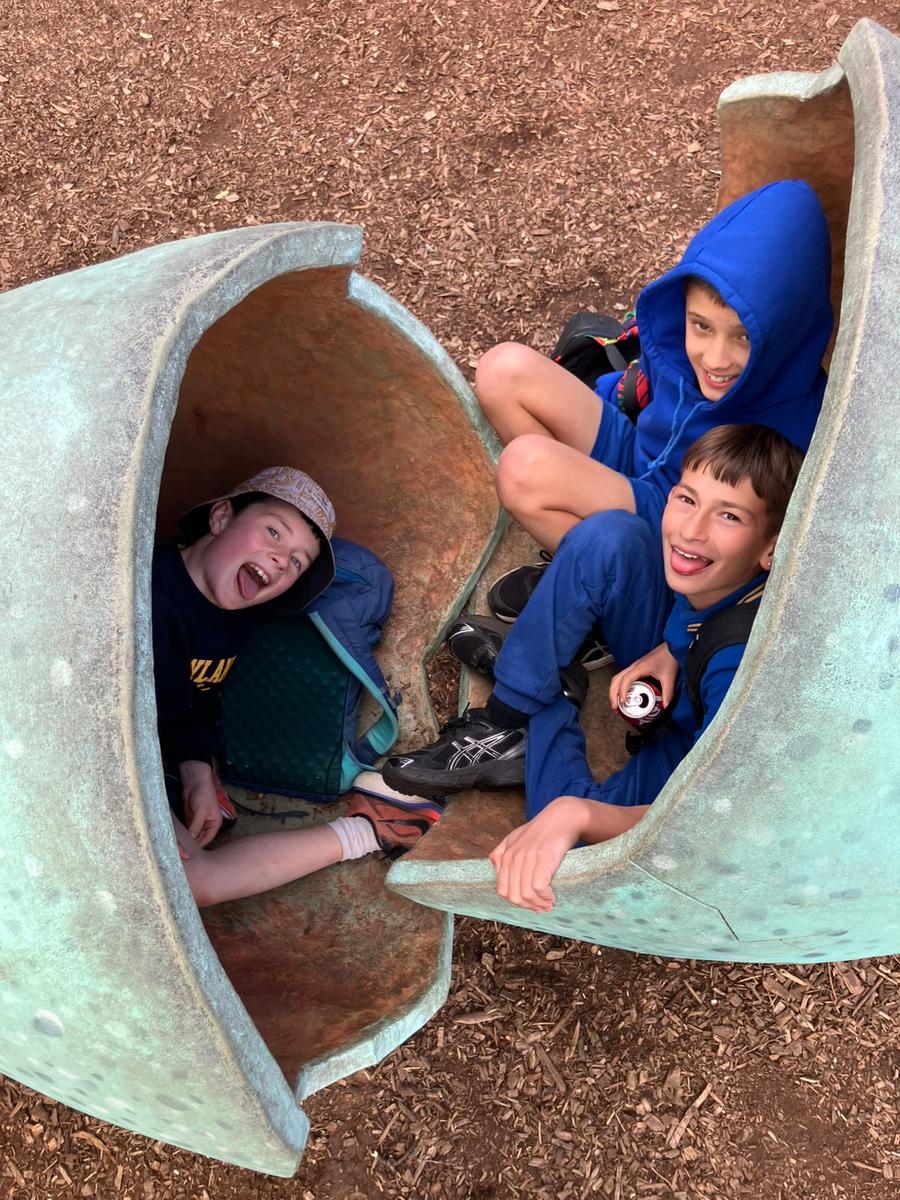
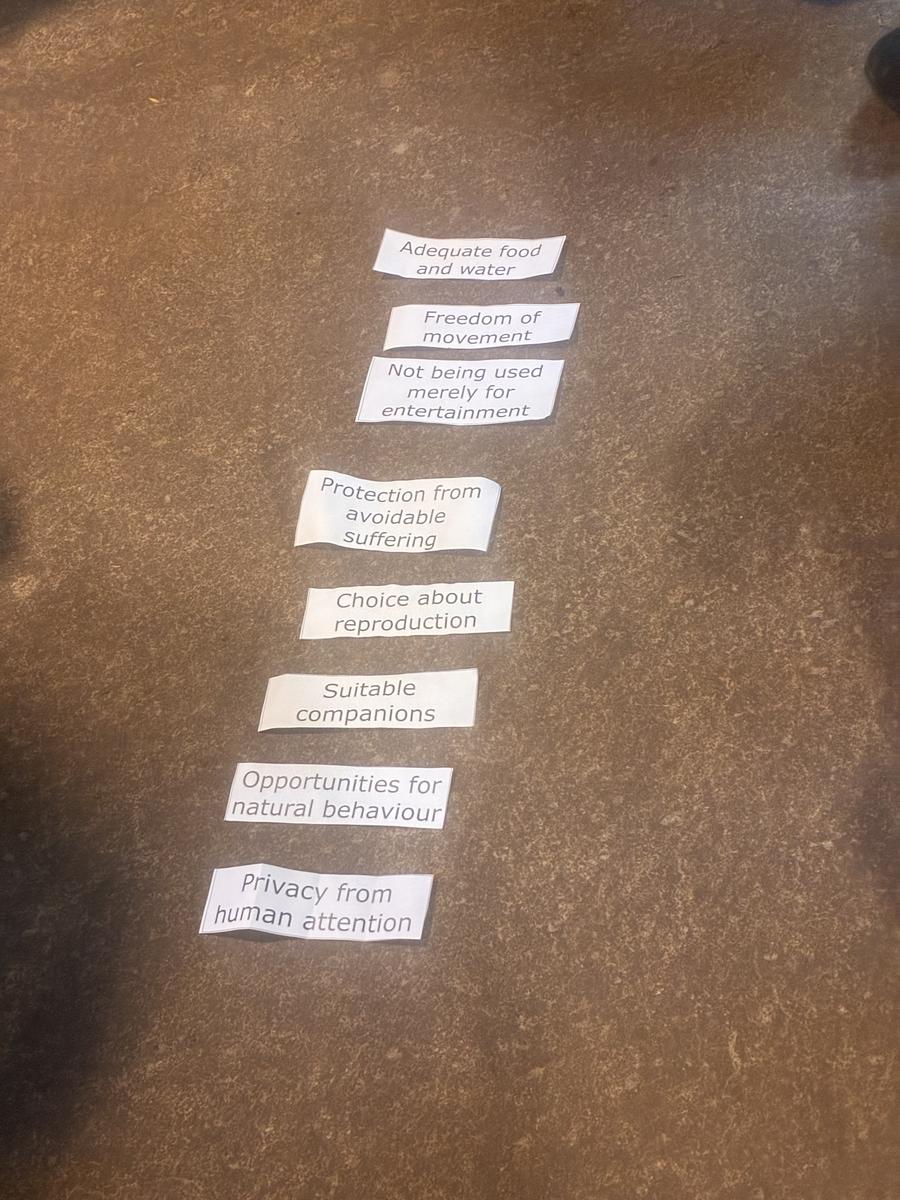
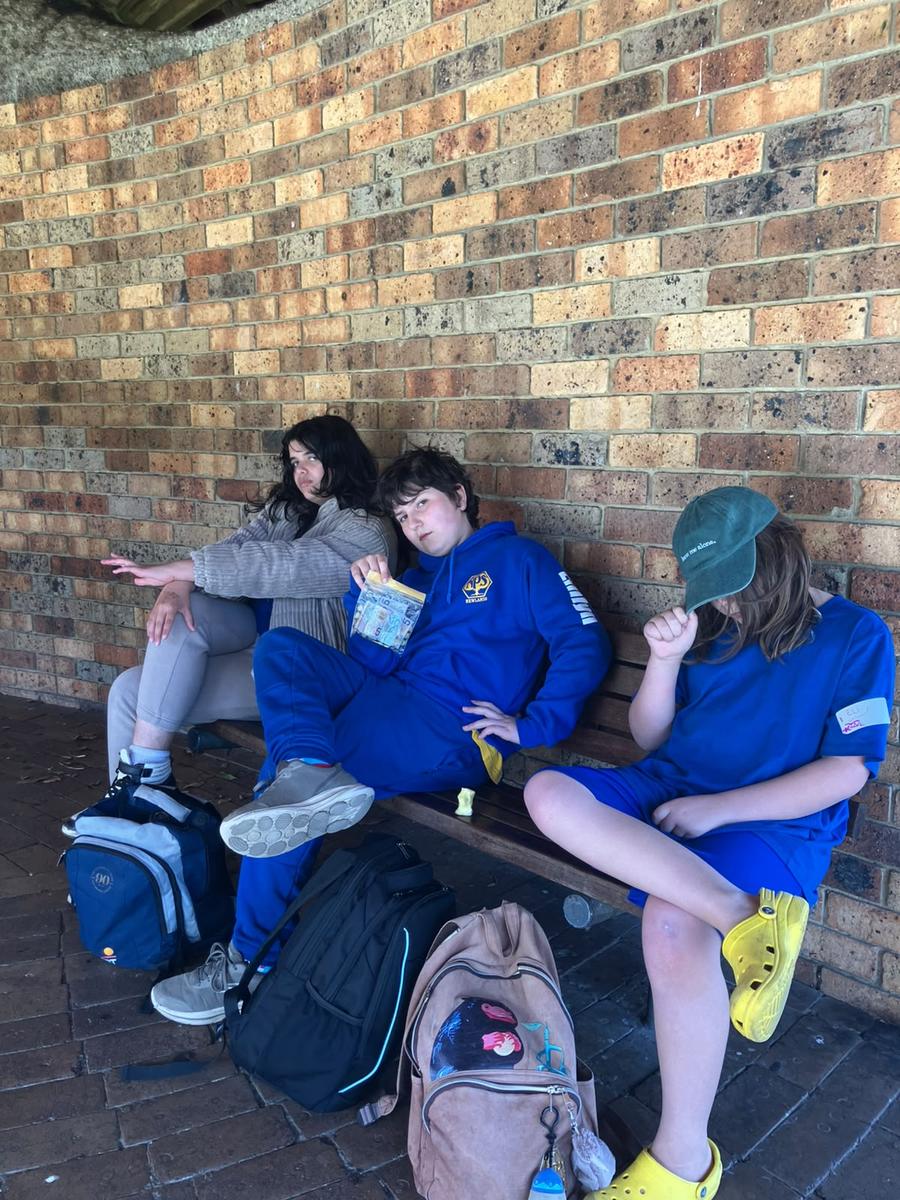
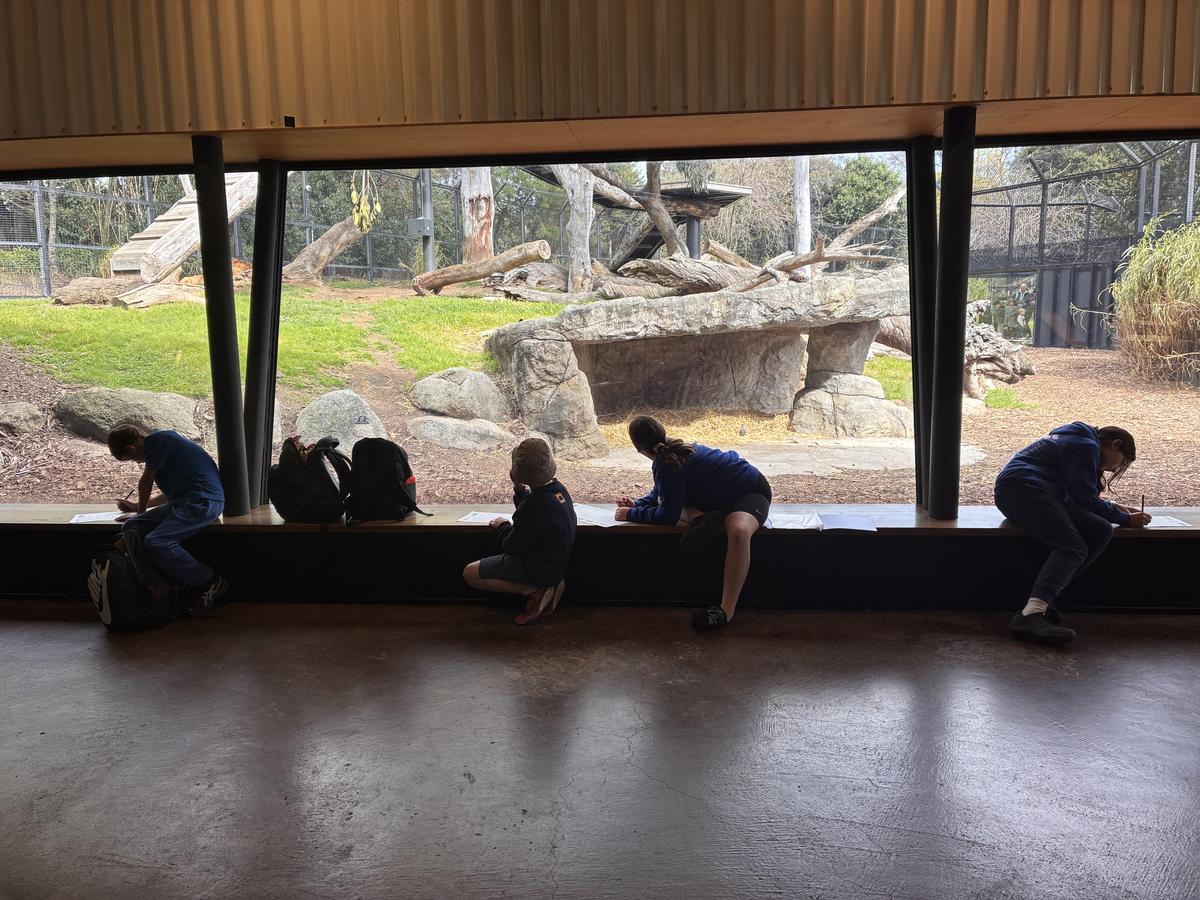
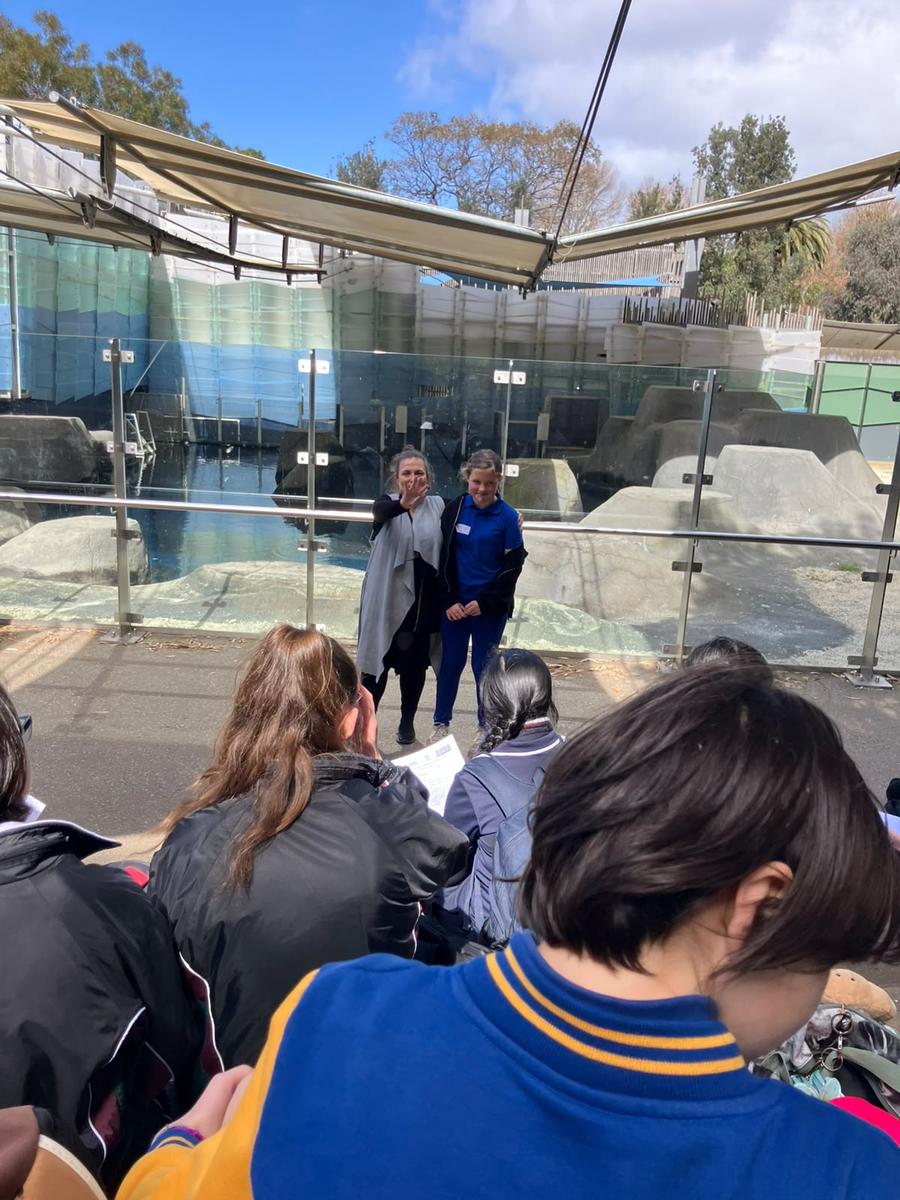
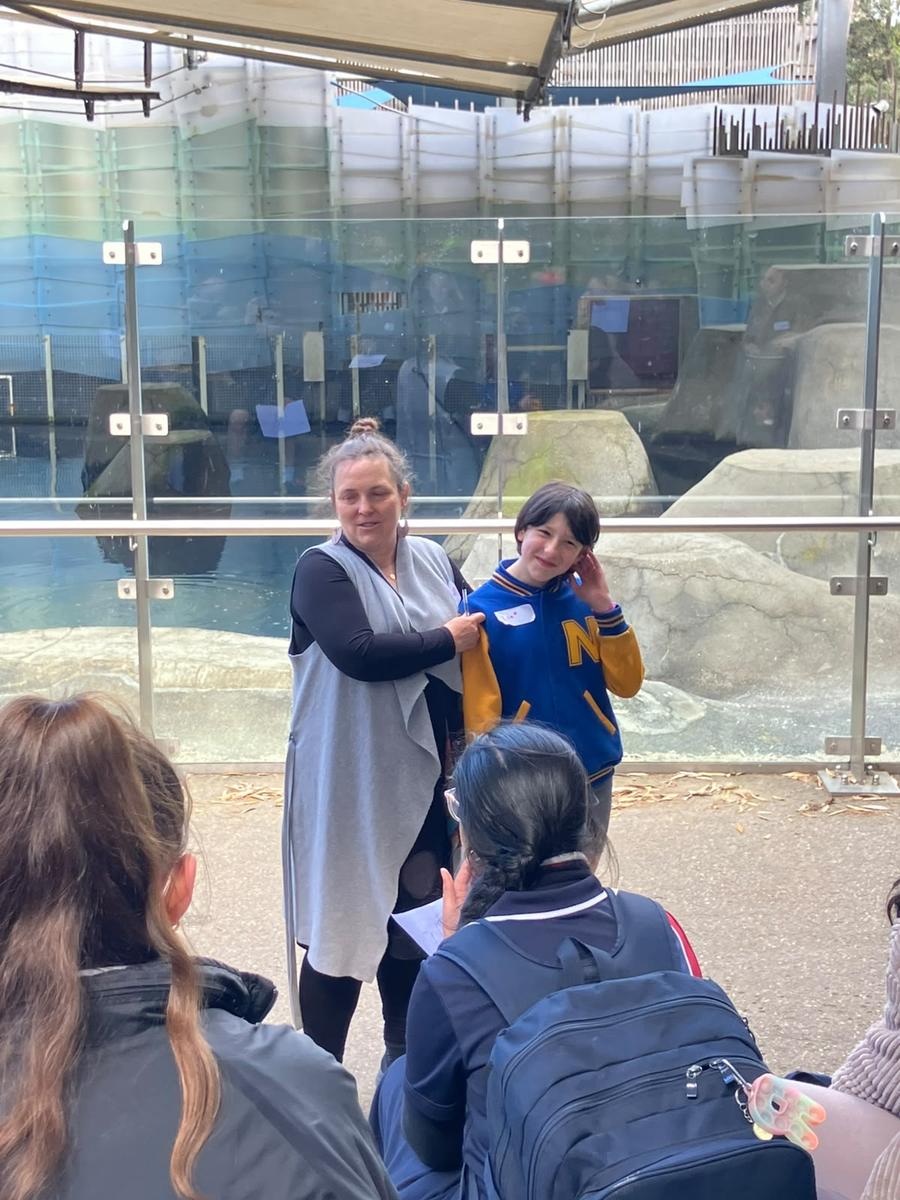
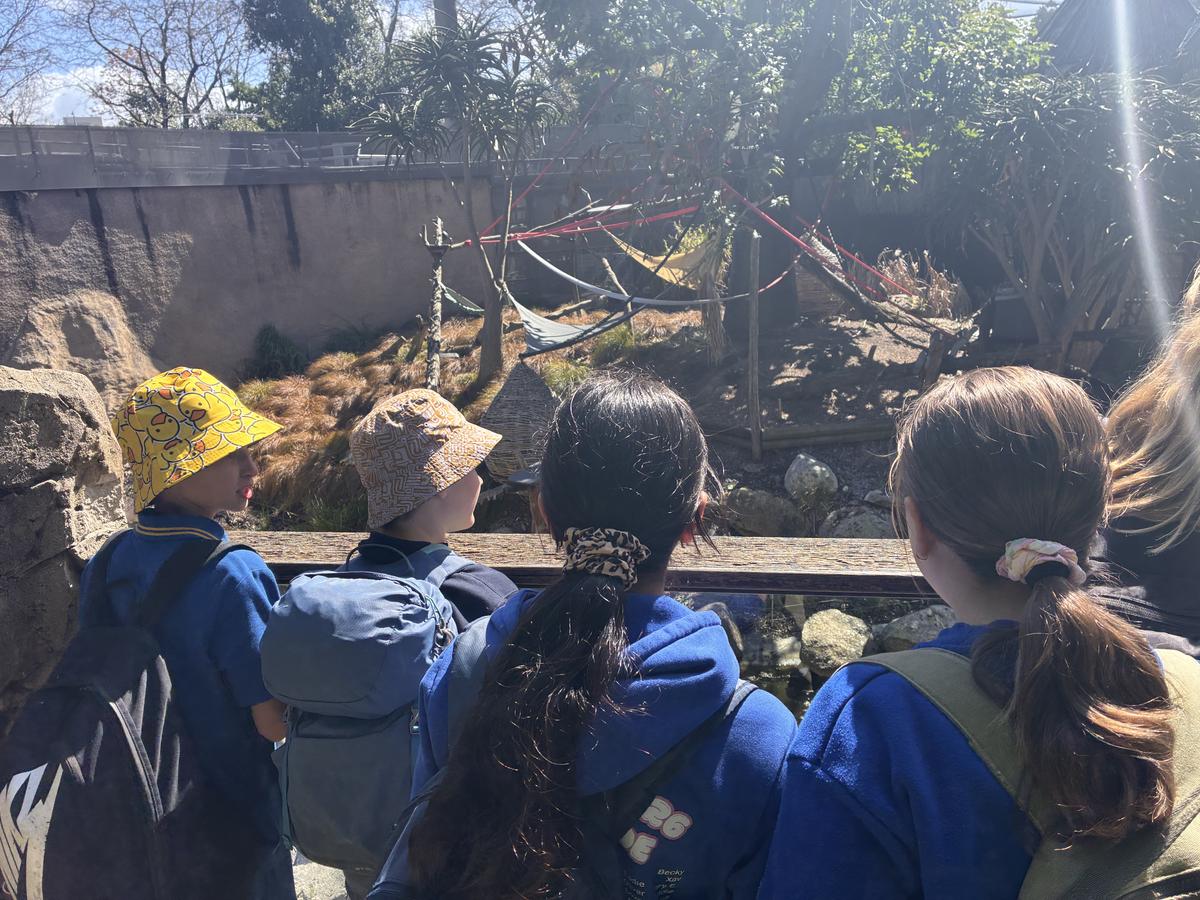
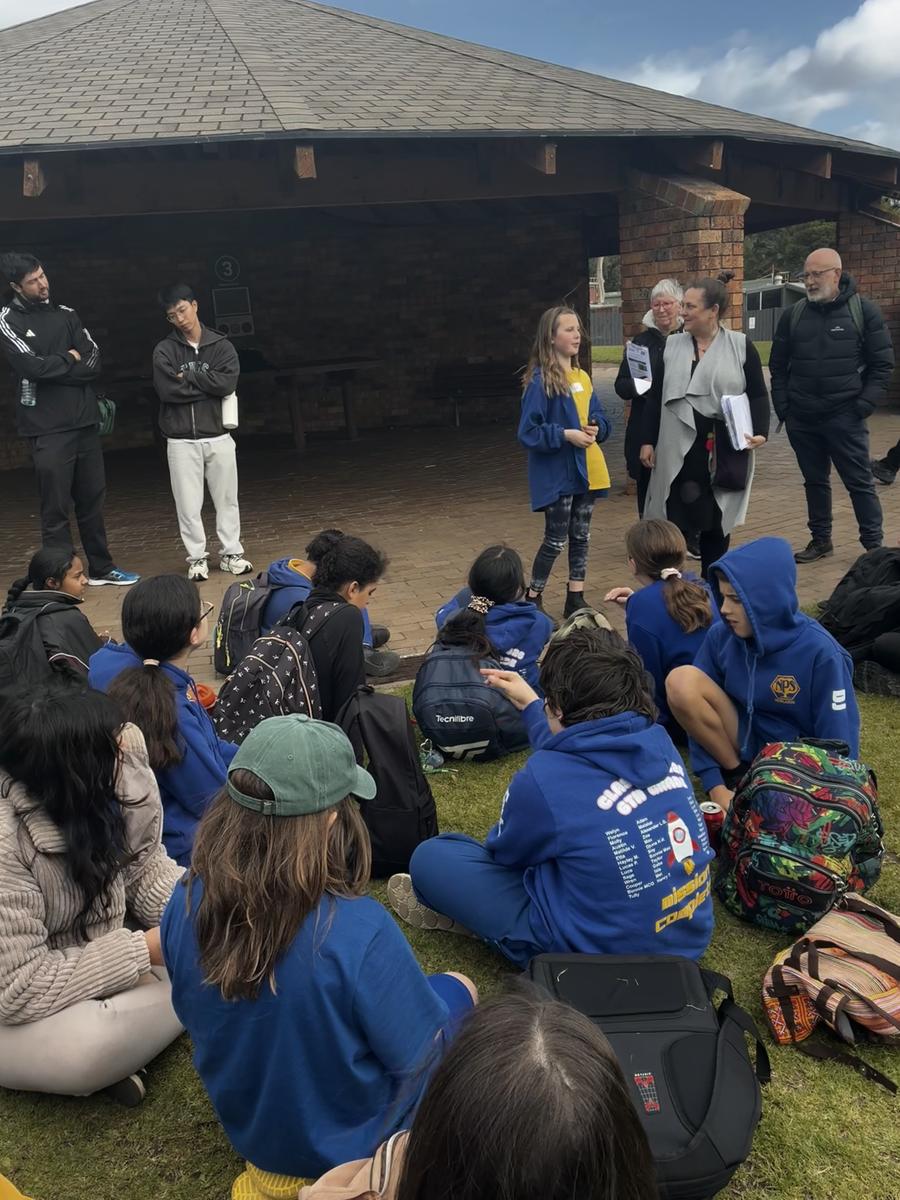
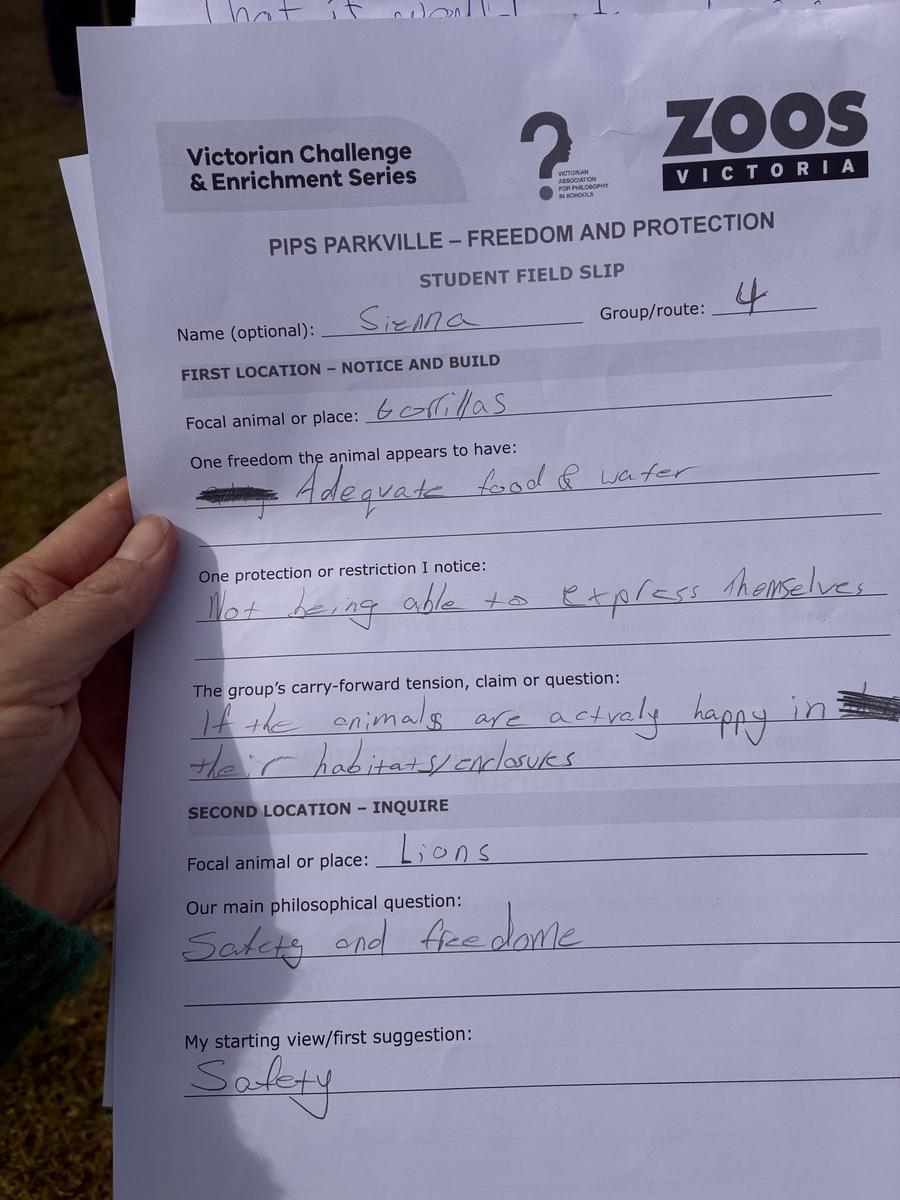
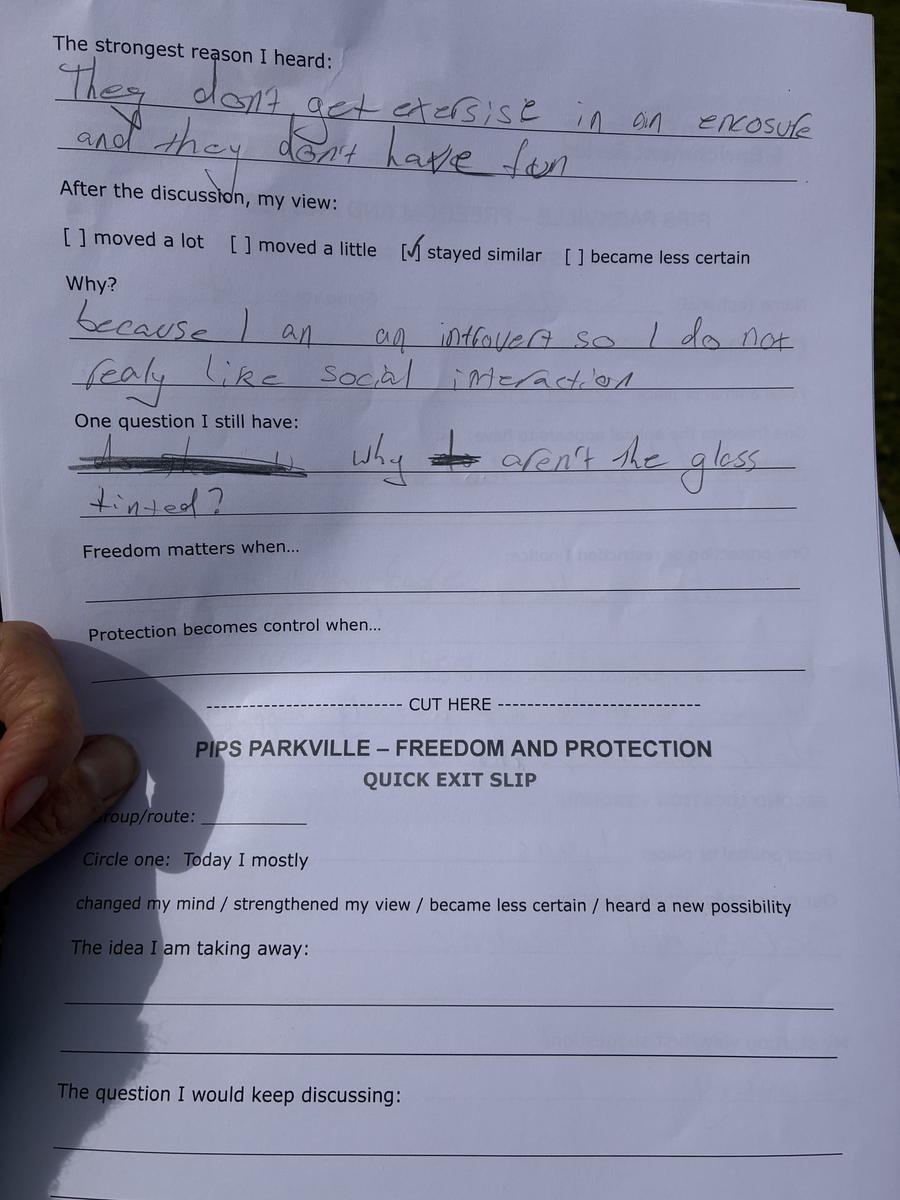
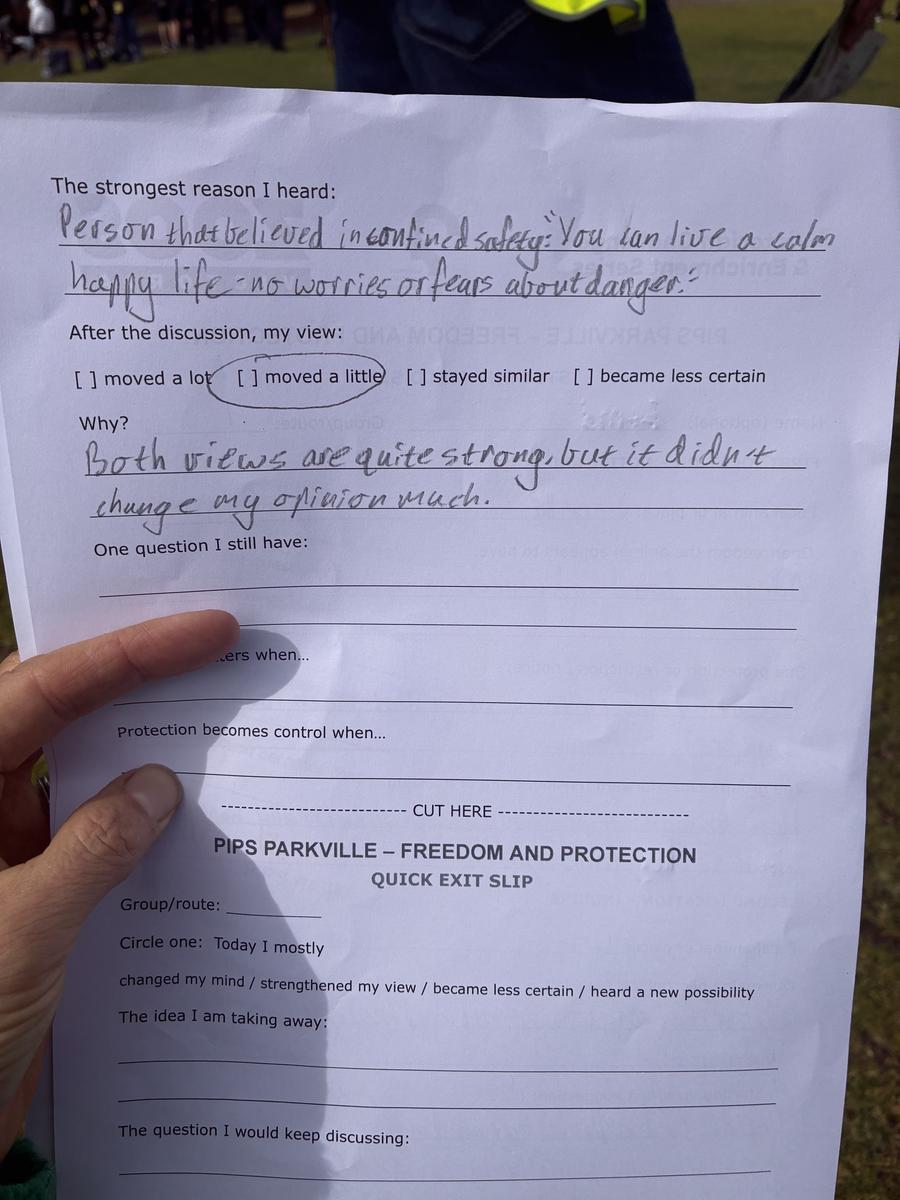
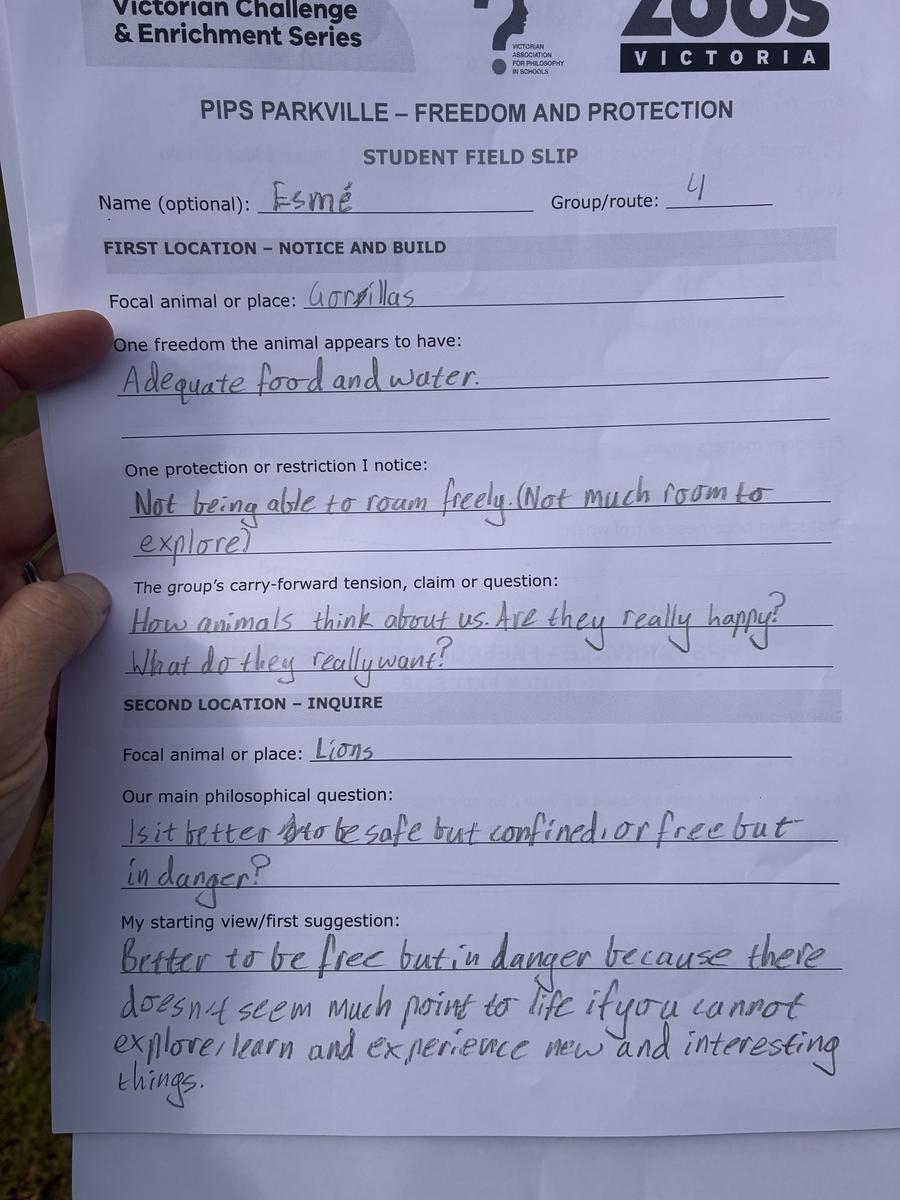
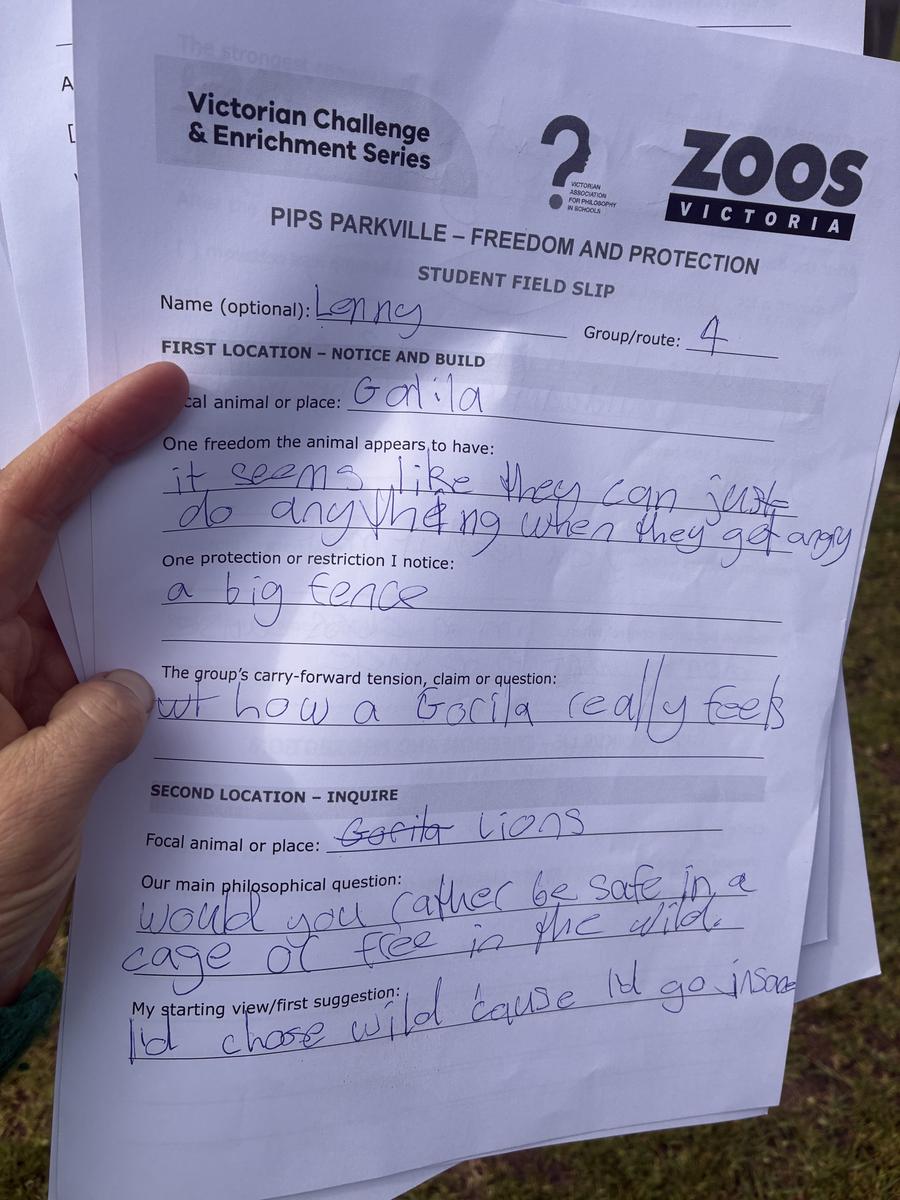
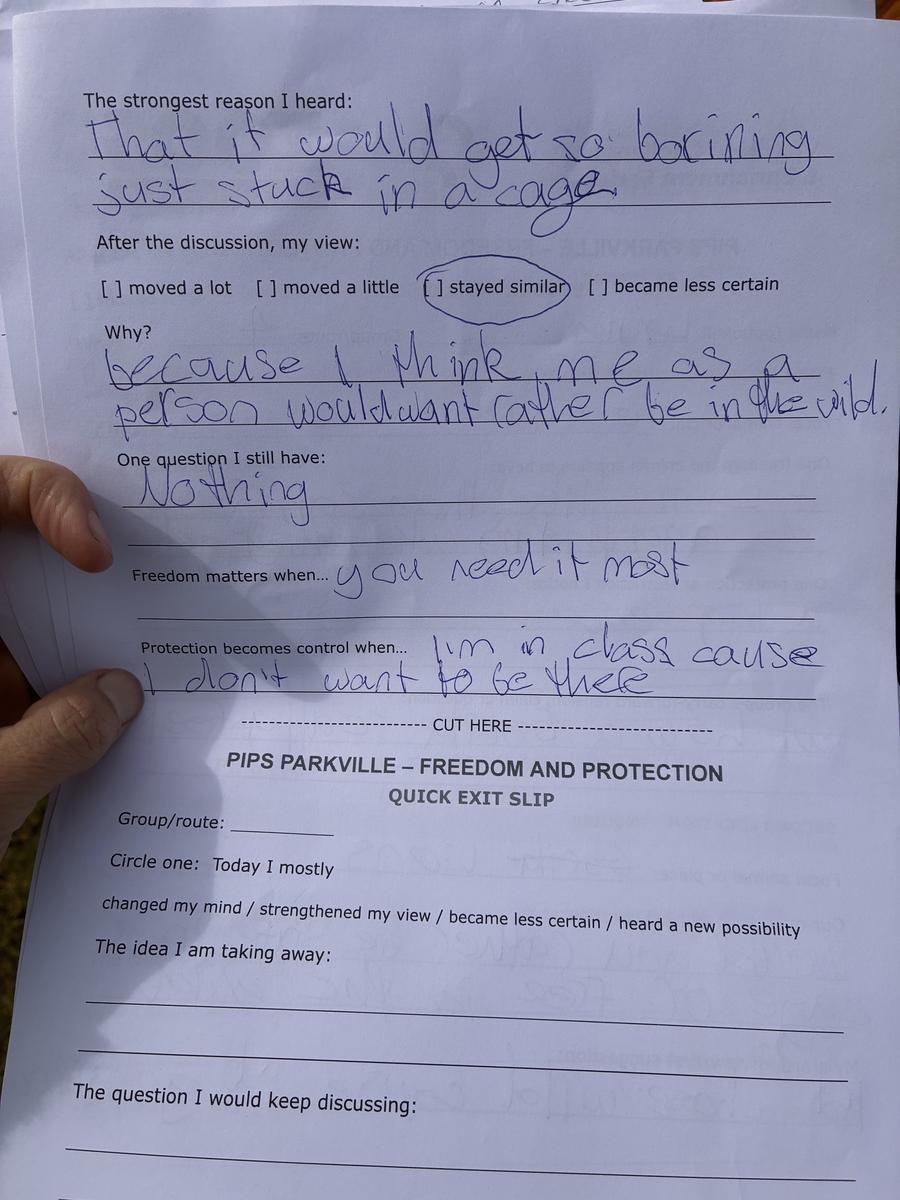
PIPS events are run by the Victorian Association for Philosophy in Schools and this year are subsidised by the state government. They are run in mixed groups with students from grades 5-8 from other schools.
In term 2, I took students from 5/6EF; this term I took 5/6AB, and next term it will be open to 5/6CD. It's an optional excursion with a cap of 20 students. All students who have opted into the excursion so far have been able to join us.
For this PIPS event, we went to the Melbourne Zoo and explored the concepts of freedom and protection, and what happens when these come into conflict, and the rights of animals and humans, amongst other big questions. I was so impressed with our students, engaging in philosophical discussions with students from high schools, and also for their conduct in public. It was a delight to take them on this special excursion along with teacher Emma. Here are some students' reflections:
Lennox: The biggest and hardest question was: Are we free? I think we have freedom, but we're not free because there are laws to keep us from doing anything we want, but we're not in prison or enforced to do things.
Sienna: I really liked the philosophy excursion because I was able to hear lots of other people's theories, opinions and questions, and I got to meet people from other schools, and I'm really proud of myself for standing up and speaking in front of everyone at the end when I wasn't expecting it.
Billy D: The biggest question was: Do humans have freedom? If you're programmed to be free, you can't be free because you've been programmed to be free. If God is real, then is he free? His job is to create us, and was he programmed to do that or was he free to do that? If he was programmed, who programmed him?
Ines: "Are you free" was the hardest question, because you're free to do things that you want but you're also not free because you have to go to work because there are consequences if you don't.
Emlyn: I didn't know that if a person falls into a deadly person's habitat, the animal gets shot immediately. It's not really fair.
Eli: It was interesting to learn about the gorilla that used to be in the zoo and people gave it cigarettes and soft drinks. I don't think it's right - they shouldn't let people be so close to the animals like they used to.
Ariana: I think zoos should only be for endangered species.
Esme: The biggest question for me was: Are zoos ethical. I think they are because they're beneficial for humans and animals - they help us learn more, and we get to see animals that we wouldn't usually see; and for animals, it's good because they get to not go extinct and they get to be fed and cared for.
Elsa: Do the animals fully comprehend that they're trapped?
Leyla: Would you rather have more freedom (like more space to roam around), but be alone, or have less freedom with more people? I'd probably choose less freedom, more people.
Dejan: The best part about today was that a stranger bought me a drink*, and we had a good time learning different people's perspectives. (*This was when some students and the teacher were in line to buy snacks, and some students pooled their money but were a bit short - a kind mum, with their child, offered to buy something for them and students were very polite in their interactions, all under the supervision of a teacher. Students were so moved by the generosity of a stranger).
Lia: It was really fun and I liked talking about the animals and seeing them. And I have a question: why are the enclosures so small?
Derya: It was really cool how we got to see one of the old cages where the orangutan Molly was kept. We got to go back where only the staff were allowed.