
Learning & Teaching News

Learning Snapshots
As part of our continued Family Engagement focus, this term we are implementing Learning Snapshots. Our school leaders will be hosting a series of engaging 15-minute presentations designed to showcase the rich learning experiences taking place at OHR and how you can support learning at home. These sessions will offer families valuable insights into current classroom practices, key focus areas, and the ways students are developing their skills and understanding. Importantly, the presentations will also provide practical ideas and strategies to support your child’s learning at home, helping to strengthen the connection between school and family learning environments. We warmly encourage all parents and carers to attend and take advantage of this opportunity to deepen their understanding of your child’s educational journey.
We also invite you to have input into the topics that will support you at home with your child. Please feel free to fill in this brief survey that will help us to tailor our presentations to your needs.
The first 15 minute snapshot will take place in Week 5 between 8:45-9:00am. More information about this will follow.
Penny Hansen
Learning and Teaching Leader
Public Speaking Competitions FAQ
We are excited to commence this year’s OHR Public Speaking Competition which will culminate in the final on Monday 22 June. We warmly encourage parents and carers to be actively involved in supporting their child’s participation. This task is designed to be completed at home, providing a valuable opportunity for families to engage in the learning process together. While the speeches should remain the students’ own work, your guidance, encouragement, and feedback play an important role in helping them develop confidence and refine their ideas. To support your child at home, you might like to:
Brainstorm topics together
Review the rubric and discuss which elements your child could include
Listen as they read their draft aloud and offer constructive feedback
Revise and refine the speech together
Encourage multiple drafts as part of the writing process
Practise delivery to build flow and confidence
Support students to type up their speeches onto cue cards that comfortably fit in the palm of their hand.
Most importantly, listen and enjoy the experience together
Our students, your children, are incredibly talented. For some, this task may feel daunting, while for others it may spark a genuine passion. Either way, it is a valuable opportunity for growth in public speaking and self-expression. We are consistently proud of the confidence our graduating students demonstrate, and experiences like this play an important role in that development.
We hope that your involvement in learning at home, and your connection to what is happening at school, is both meaningful and enjoyable.
Frequently Asked Questions
How will the speeches be assessed?
Speeches are assessed using a rubric that is shared with students and families. The focus is on growth and effort as well as the final performance.
How much help can I give my child?
You are encouraged to support your child by discussing ideas, listening to drafts, and offering feedback. However, the speech should remain your child’s own work. Think of your role as a coach, guiding, prompting, and encouraging rather than writing or heavily editing the speech for them. The rubric is a great place to start with support.
Does my child need to memorise the speech or can they use notes?
Students are encouraged to become very familiar with their speech, but full memorisation is not always required. Cue cards are an essential tool in supporting the students’ presentation. (See rubric) Foundation students may use graphics to assist them as well.
Will time be given in class to work on the speech?
Yes, in the classroom, teachers will be focusing on the skills of presenting to an audience and the features of great speeches. They will also be given some practice time. However, completing and refining the speech at home is an important part of the process.
What should my child do if they feel nervous?
Feeling nervous is completely normal. Encourage your child to practise regularly in front of family members, start with small audiences, and focus on speaking clearly rather than perfectly. Remind them that confidence grows with practice, and that everyone is supportive.
Will parents be invited to watch?
Families are warmly invited to attend final presentations of the competition. More details will be shared closer to the event.
What support is available for students who find public speaking challenging?
Teachers provide scaffolds such as planning templates, model speeches, and guided practice opportunities. Students may also practise in smaller, supportive groups before presenting to a larger audience.
What happens if my child is away for the final?
The Final will be on Monday 22nd June. For those families planning early Winter Getaways, please be aware that if your child makes the Final, they must be at school on
this day. Please advise your classroom teacher. Online submissions will not be accepted.
Public Speaking Tips - #1 Exploring a Topic
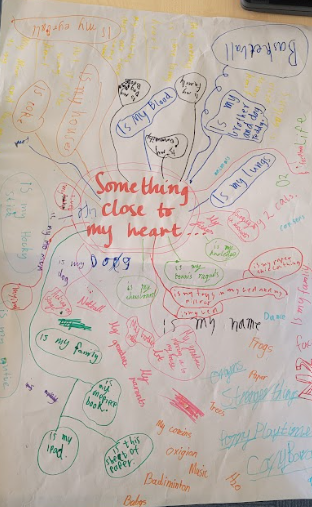
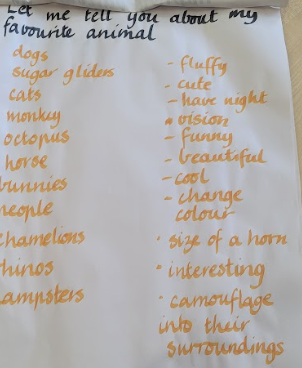
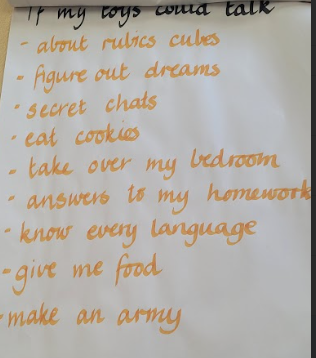
When assisting your child with their speech, explore the topic to direct development of ideas. You can scribe for your child if that is appropriate. Here are some examples of topic development created by students.
Once you have a topic or idea, write dot points together of some ideas to flesh out the topic. Three main ideas is a great way to give your speech structure and interest.
2026 Parent Information
Click the button below to access the Term 2 Overviews for each Year Level.