
Respectful Relationships
Respectful Relationships at Karoo Primary School
The school values of Kindness, Personal Excellence, and Tenacity, along with the Respectful Relationships curriculum, provide a strong foundation for the way we learn, play, and care for one another at school.
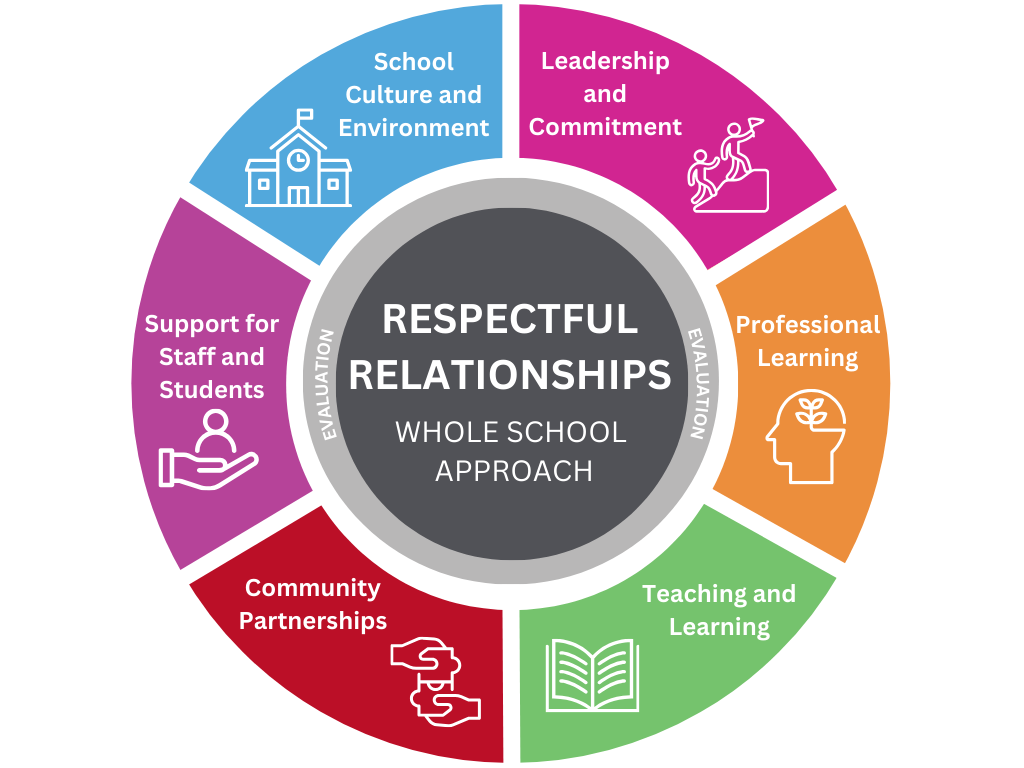
This is a timely reminder as we celebrate Harmony Day on March 21 internationally. Importantly, Respectful Relationships extends beyond the classroom. It is a whole-school approach, meaning we work in partnership with students, staff, families, and the wider community to embed respect and equality into our everyday interactions, policies, and practices.

RRRR information is available on the Arc platform. Please scan the QR code above.
In the classroom
Across each year level, students participating in Resilience, Rights and Respectful Relationships (RRRR) have been exploring Topic 2 – Personal and Cultural Strengths. Please read below for the aims for each year level.
In Foundation, student activities within this topic area will assist students to:
• identify and describe personal and cultural strengths
• explain how these personal and cultural strengths help them to contribute to family and school life
• identify ways to use their strengths to care for others, including ways of making and keeping friends
• connect their use of strengths to acts of respect that demonstrate care for self, others and the environment.
In Year 1 and Year 2, student activities within this topic area will assist students to:
• identify and describe personal and cultural strengths
• explain how these strengths contribute to family and school life
• identify ways to care for others, including ways of making and keeping friends.
In Year 3 and Year 4, student activities within this topic area will assist students to:
• describe personal and cultural strengths
• identify some personal and cultural strengths they can use to respond to challenges and opportunities
• describe factors that contribute to positive relationships with people at school, at home and in the community
• identify communication skills that enhance relationships
• describe characteristics of cooperativeand respectful behaviour and identifyevidence of these in group activities
• identify ways they can encourage peers to treat others with respect, regardless of their differences in gender identity,ethnicity, abilities, sexuality or family background.
In Year 5 and Year 6, student activities within this topic area will assiststudents to:
• describe the range and influence of personal and cultural qualities and strengths
• monitor their awareness of the various ways they call on their personal and cultural strengths
• assess the situations where it may be useful to draw on particular strengths to deal with challenging situations.
Respectful Relationship Myths
Myth: The resources are seeking to make children gay, non-binary or trans
Fact: This is not true. Longstanding evidence is clear that children develop their understanding of gender from a young age, and that by the age of 4 they largely adhere to gender norms.
The point of primary prevention is that it prevents problems before they emerge. Respectful Relationships as primary prevention seeks to ensure that children and young people are not forming the attitudes that evidence shows are the core drivers of family violence.
This is developmentally appropriate, and this initiative is not seeking to make children gay, non-binary or trans.
Myth: It is inappropriate to teach young children about consent
Fact: For younger children consent education includes an age-appropriate focus on what it can look or sound like to ask for permission or consent, to refuse permission or consent and to understand that consent can’t be obtained by pressuring people to do something they don’t want to do. For example, giving or denying permission to borrow a pencil.
Consent education also includes learning activities that support prevention of child sexual abuse, by teaching about bodily autonomy, body boundaries, the difference between ‘safe’ and ‘unsafe’ secrets and the importance of seeking help from trusted adults if children’s ‘early warning signals’ are sending a message that they might not be safe.
Research shows significant increases in knowledge and improved self-protective behaviours occurs when students are taught their rights to be safe from abuse and their right to say no or to tell, even when someone in authority over them abuses them.
Keep an eye on future newsletters to learn more about what your child’s year level is exploring through the RRRR curriculum.
Mrs. Karen Corrales