
Year 1 News
Learning Celebrations
Literacy
Students have been busy strengthening their phonics knowledge and are showing great progress in applying their skills to both reading and spelling. Having developed confidence with CVCC (consonant-vowel-consonant-consonant) words, they are now ready to focus on CCVCC (consonant-consonant-vowel-consonant-consonant) words.
This next step will help students continue to refine their blending and segmenting abilities as they work with increasingly complex word structures.
Alongside this new learning, we are revisiting familiar spelling patterns to ensure they become firmly embedded. Students are reviewing the digraphs ‘ck’, ‘sh’, ‘ch’ and ‘ng’, with regular opportunities to read, write and manipulate words containing these sounds.
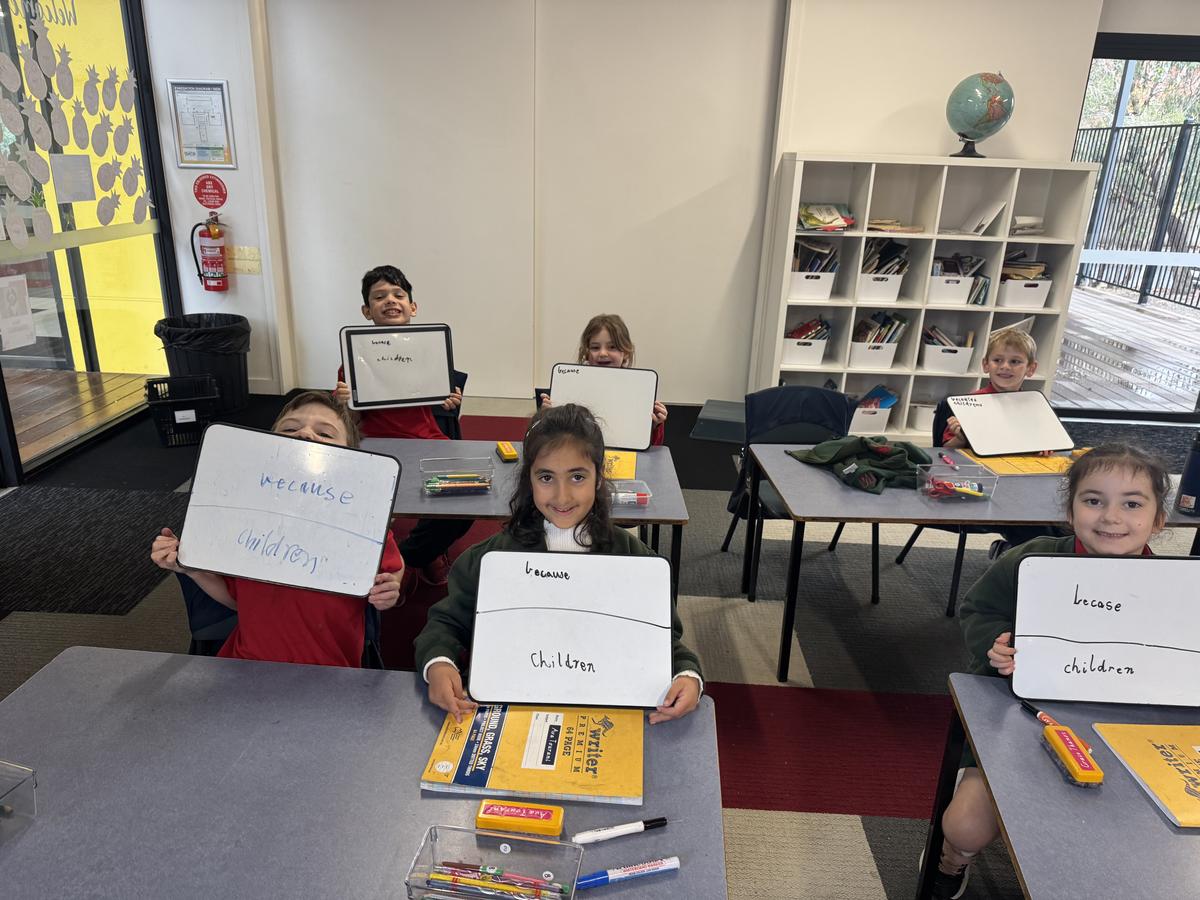
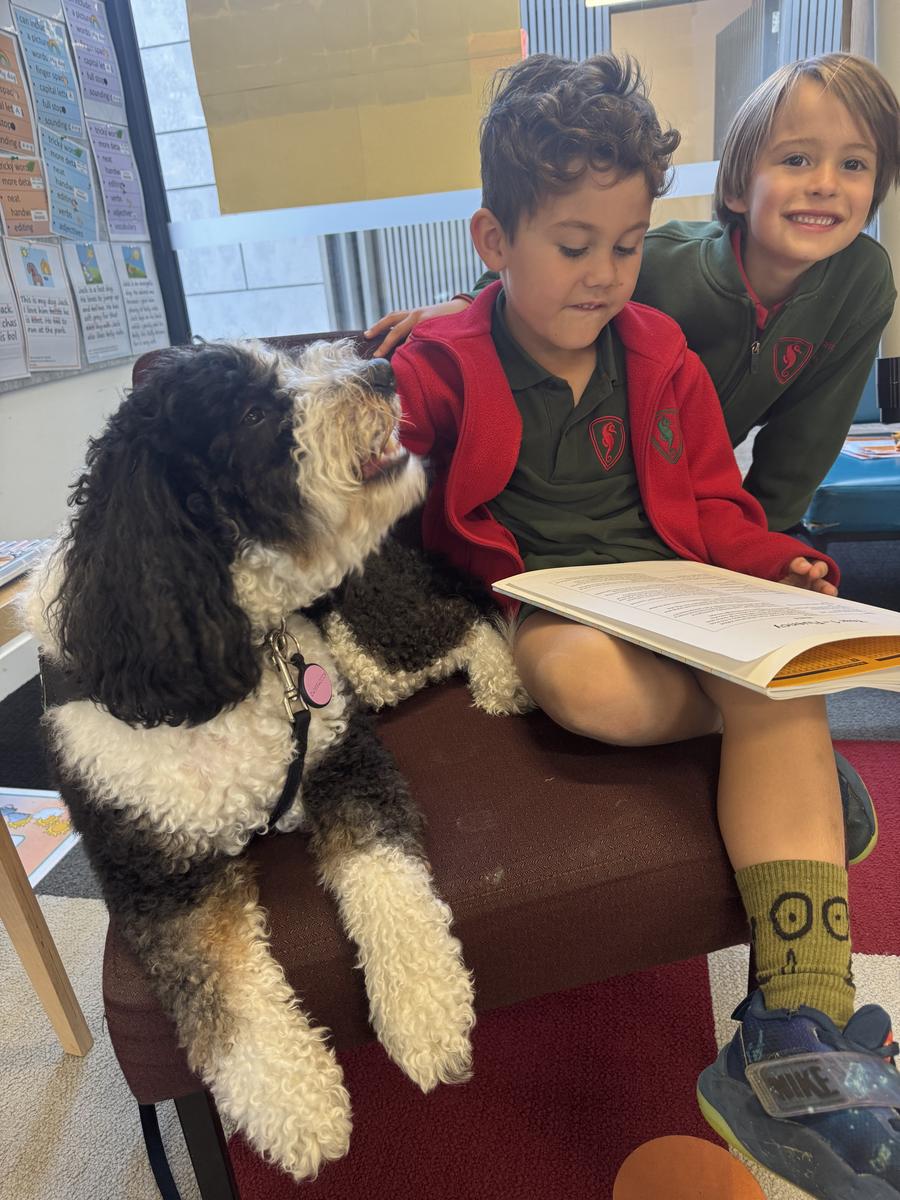
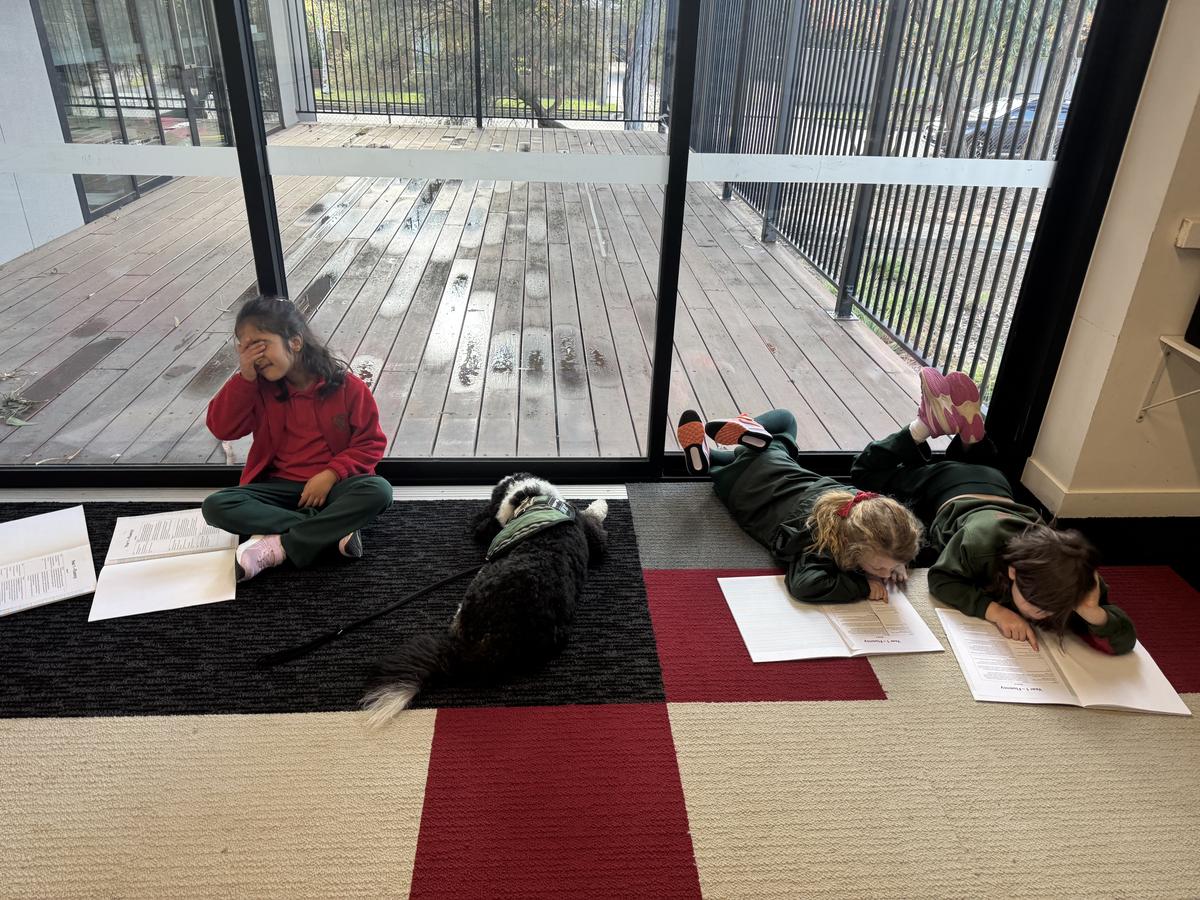
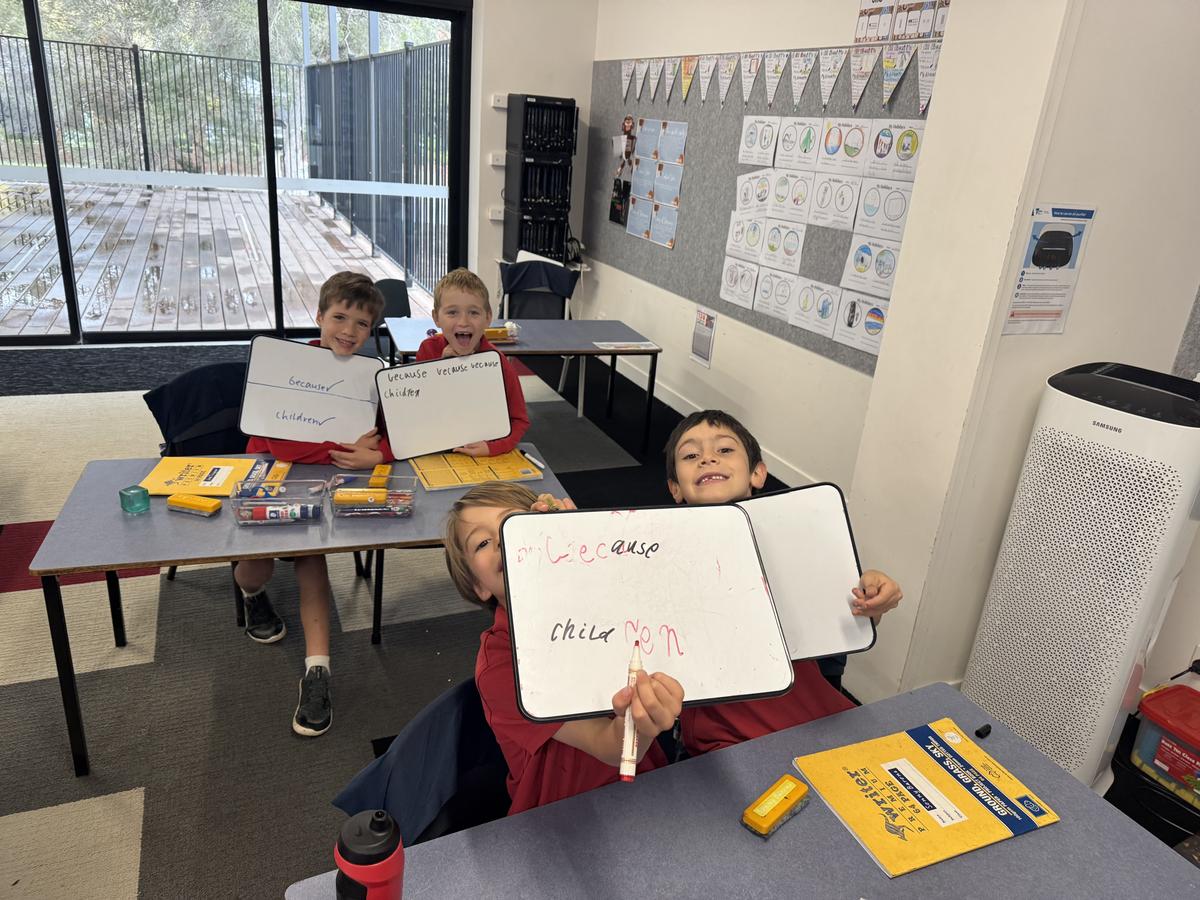
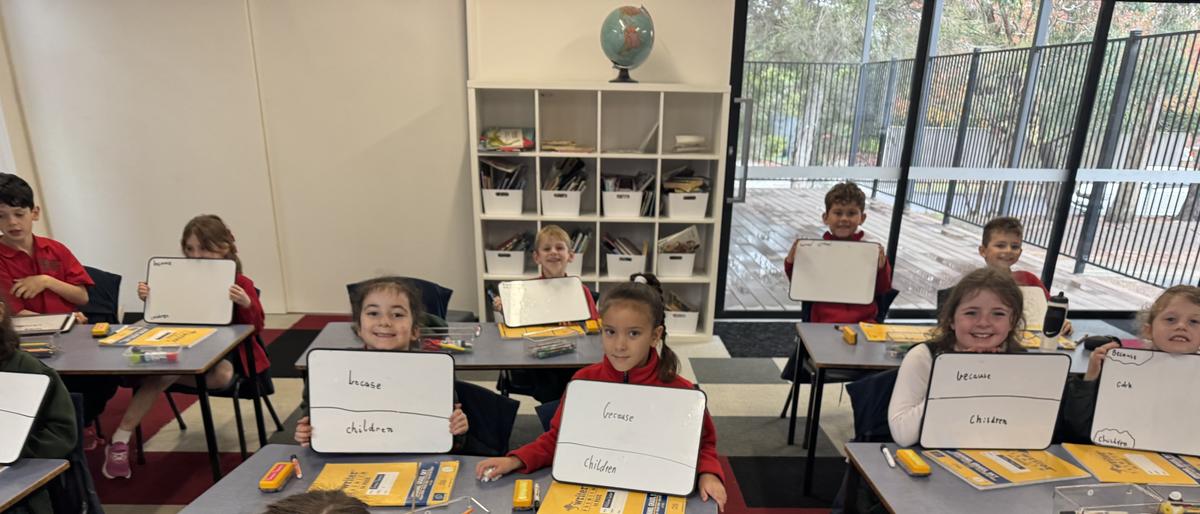
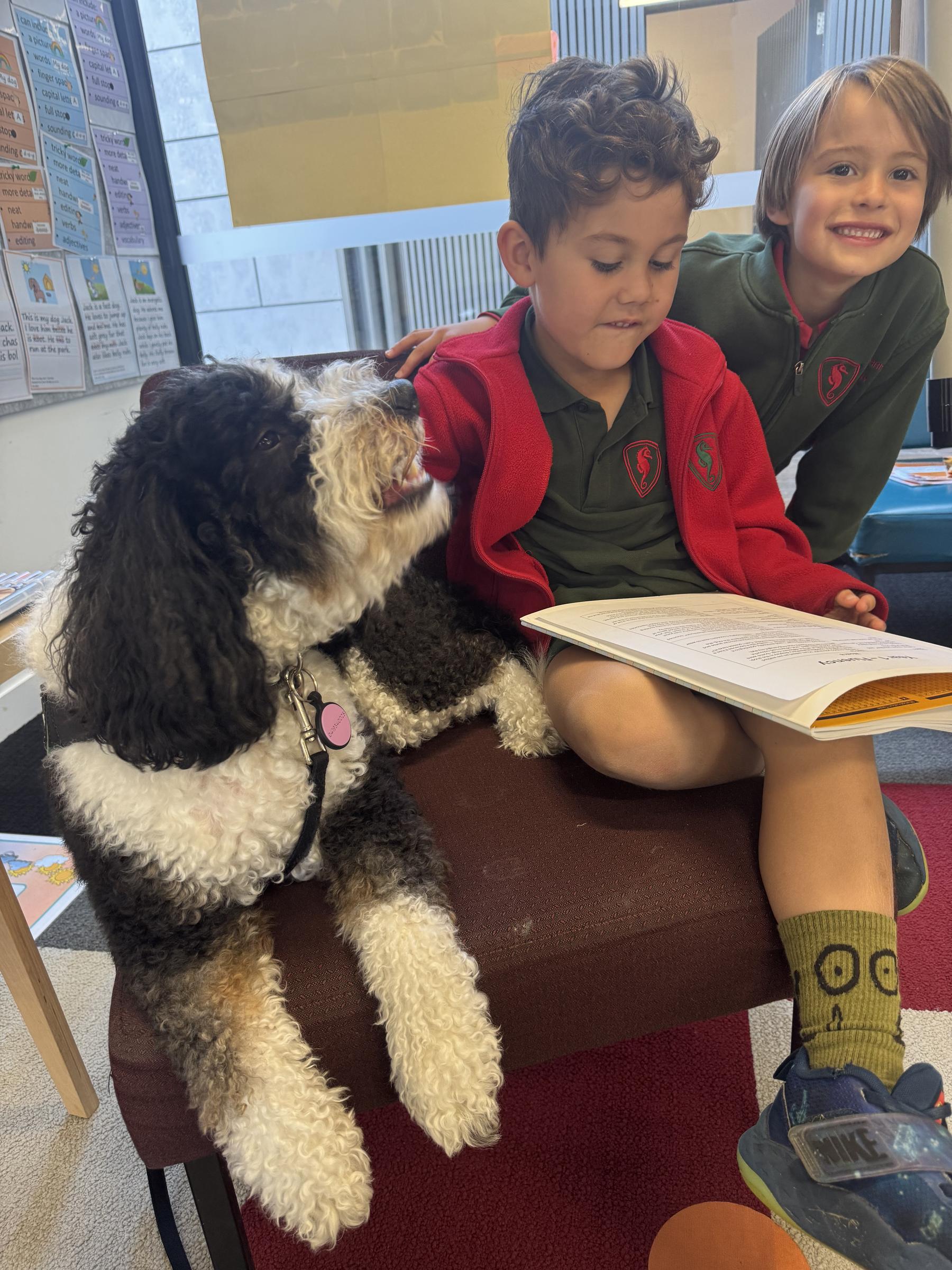
Phonics lessons are designed to be active, engaging and responsive. Students participate in a variety of ways, including writing on mini whiteboards, discussing ideas with a partner, responding as a whole class, sharing individual answers, using movement and gestures, air writing, and completing written tasks in their books. Additional challenge activities are available to extend students who are ready to apply their skills in more complex contexts.
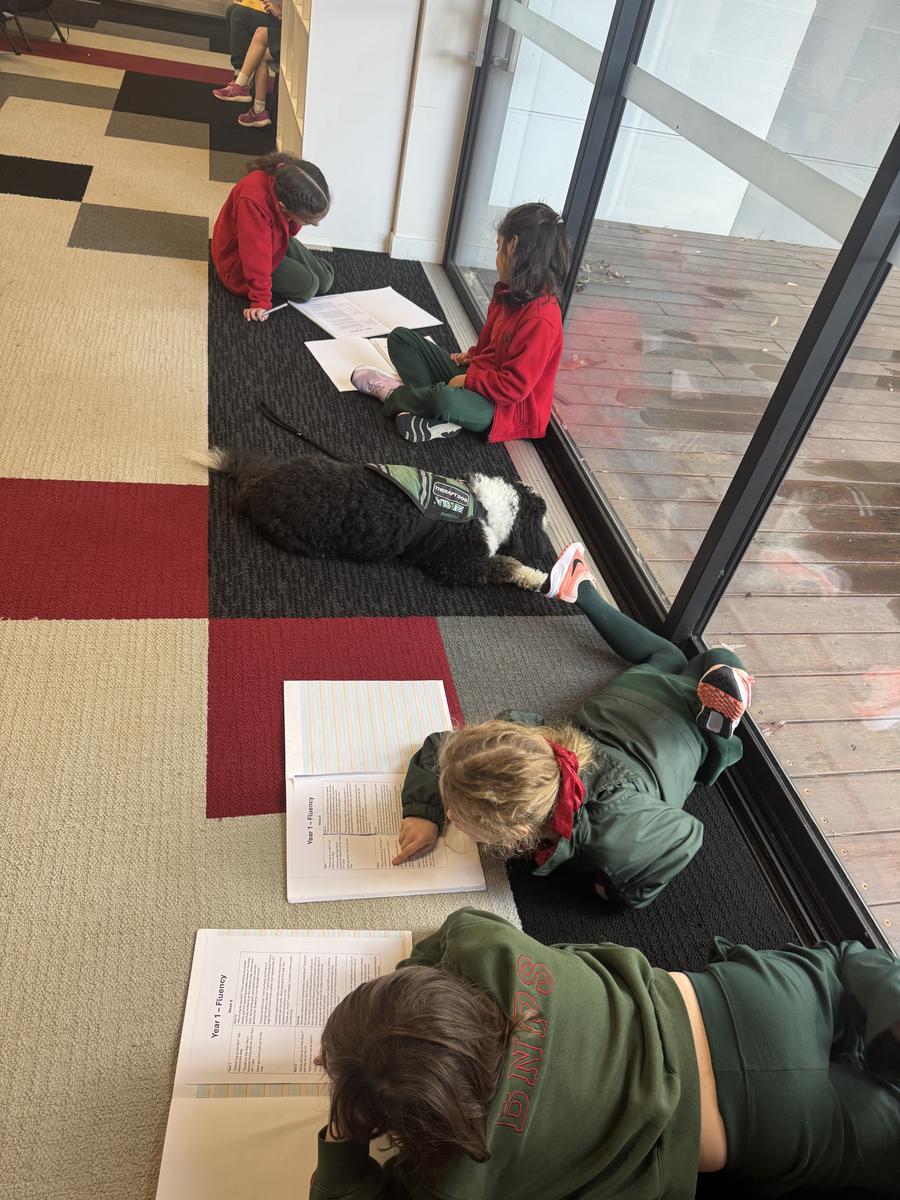
To support reading development, students continue to practise dictation and fluency activities. These experiences help build accuracy, speed and expression, all of which contribute to stronger reading comprehension. Regular re-reading of familiar texts and passages is encouraged, as repeated practice is one of the most effective ways to develop fluent and confident readers.
High Frequency Words remain an important focus in our literacy learning. The ability to recognise these words automatically allows students to read more smoothly and efficiently. Families can support this learning by spending a few minutes each day reviewing focus words through games, flashcards, sentence writing, shared reading, or word hunts. Consistent practice at home can have a powerful impact on students' confidence and success as readers.
Our current High Frequency Words (HFW) focus includes:
into, now, came, oh, about, their, these, people, put, could, house, too, by,day, made, called, asked, saw, make, who and where.
As part of the morphology component of our Phonics program, students have been exploring how suffixes can change the meaning of words. They have recently been introduced to and reviewed the suffixes:
• -s (indicating more than one) • -ed (indicating an action that has already happened)
Over the next two weeks, students will learn about the suffix -ing, which is used to describe actions that are happening now or are ongoing. They will explore words such as jumping, lifting, packing, munching, fixing and thanking, while developing their understanding of how suffixes help us communicate meaning.
Students will also continue to build their handwriting skills using the "sky, grass, dirt" dotted thirds format. This supports correct letter formation, size, spacing and placement, helping students develop neat and consistent handwriting habits.
Text Study
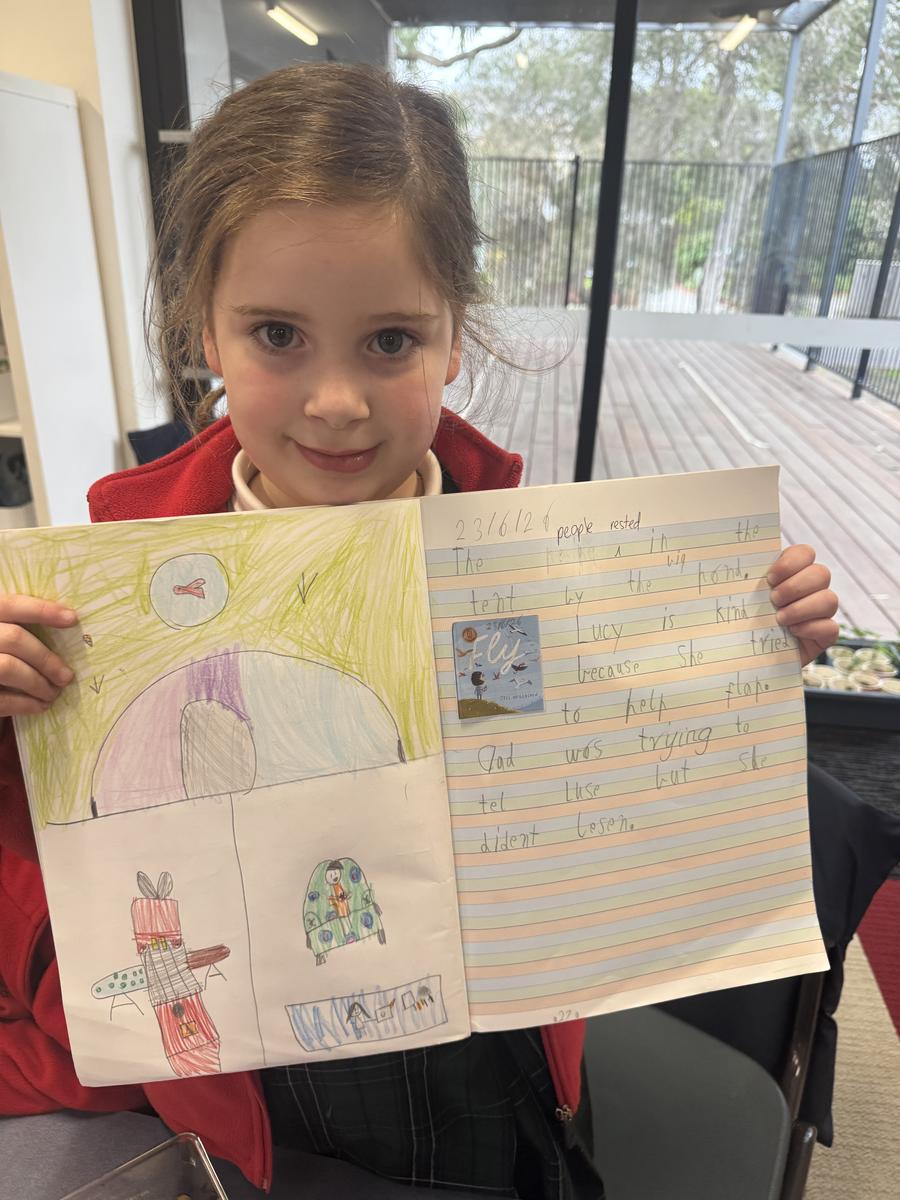
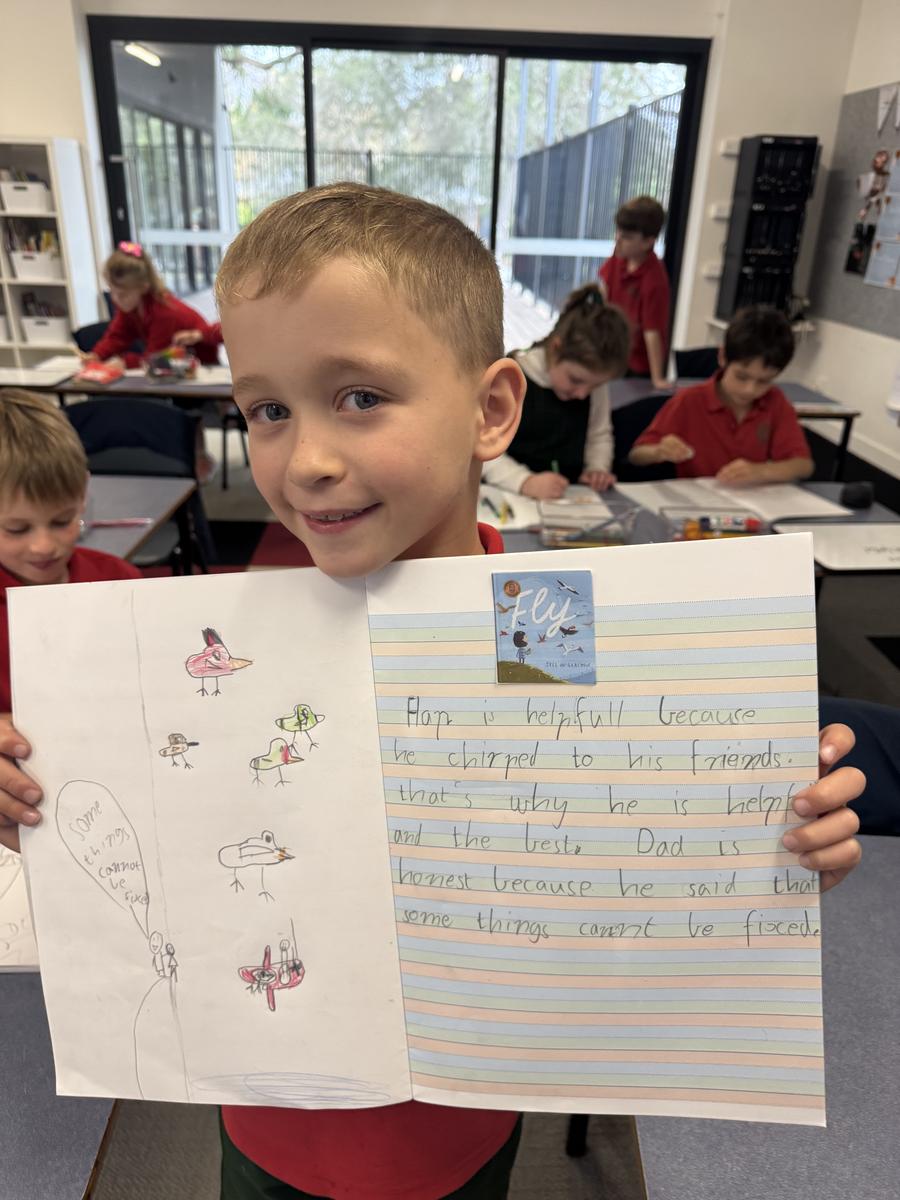
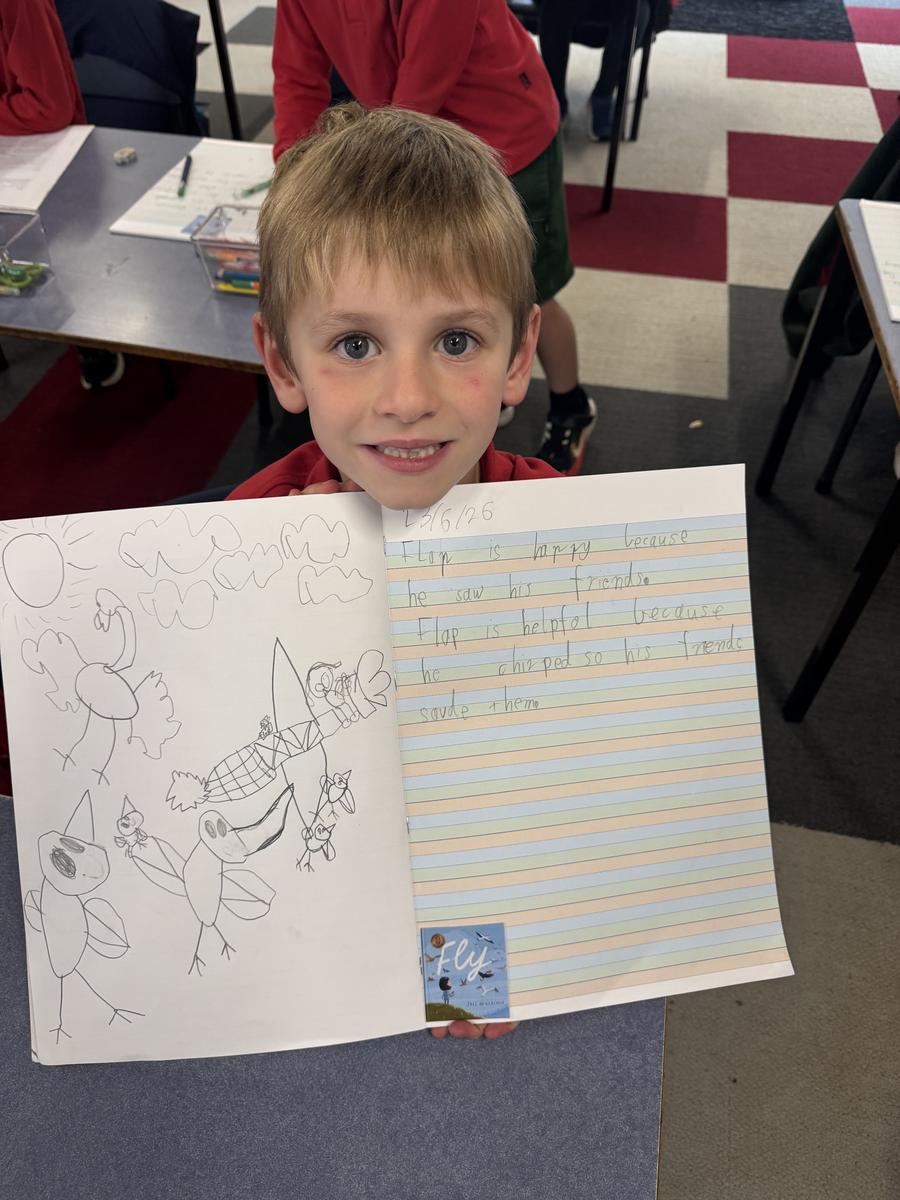
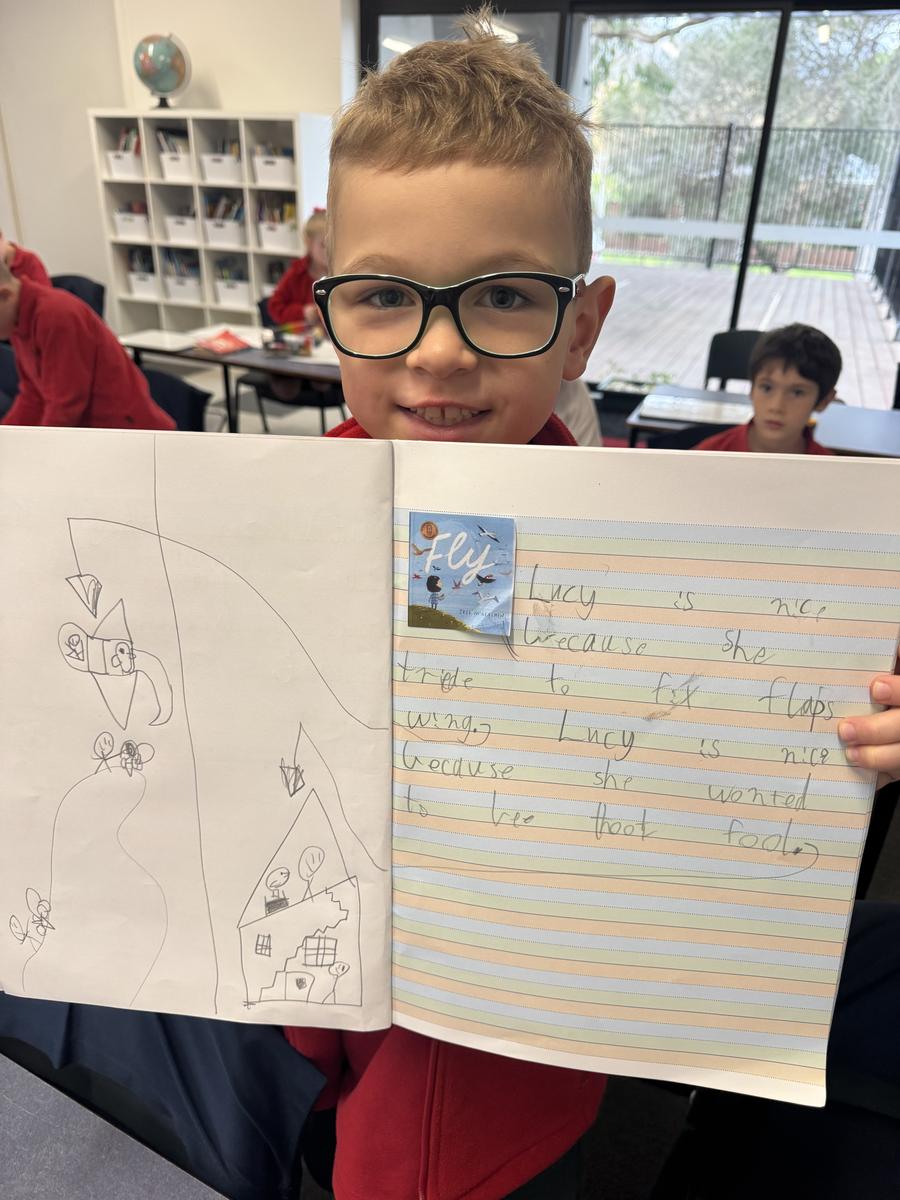
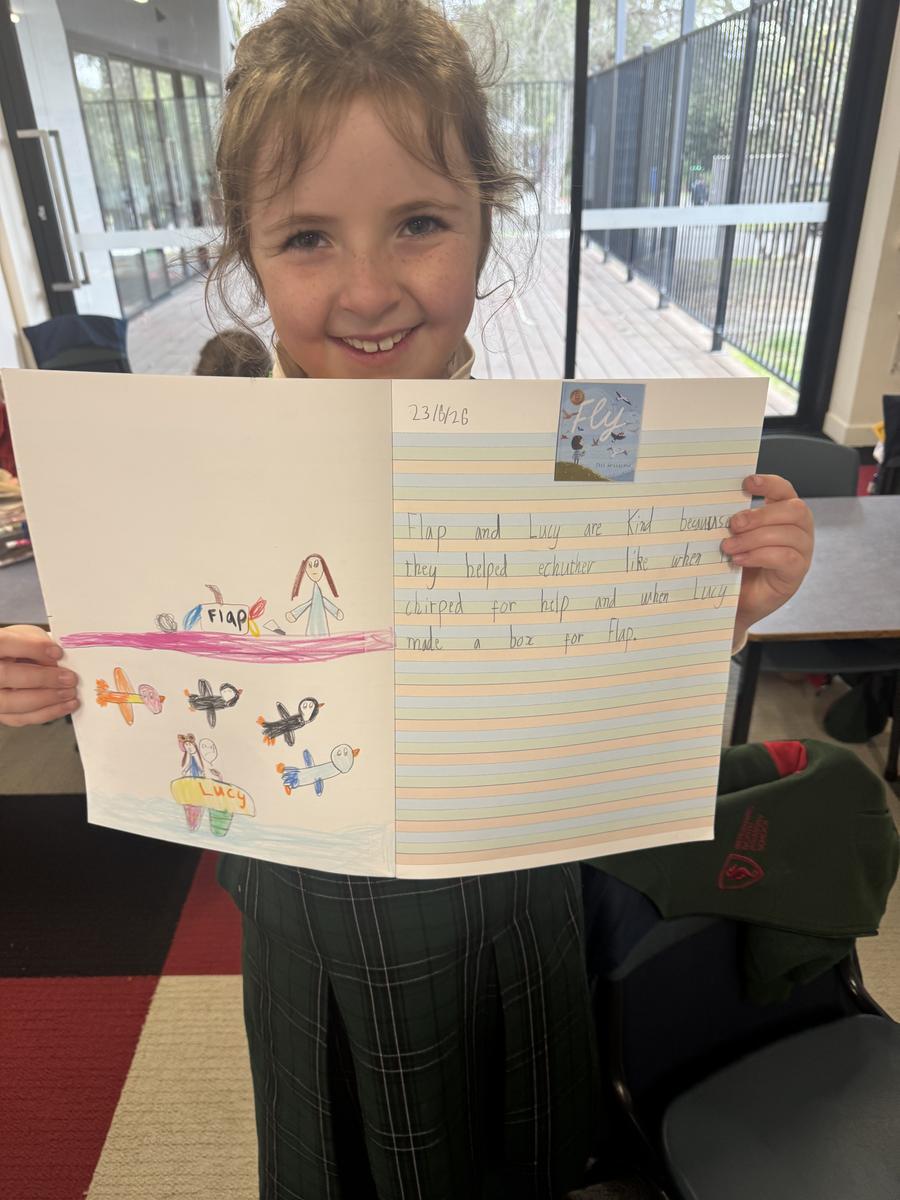
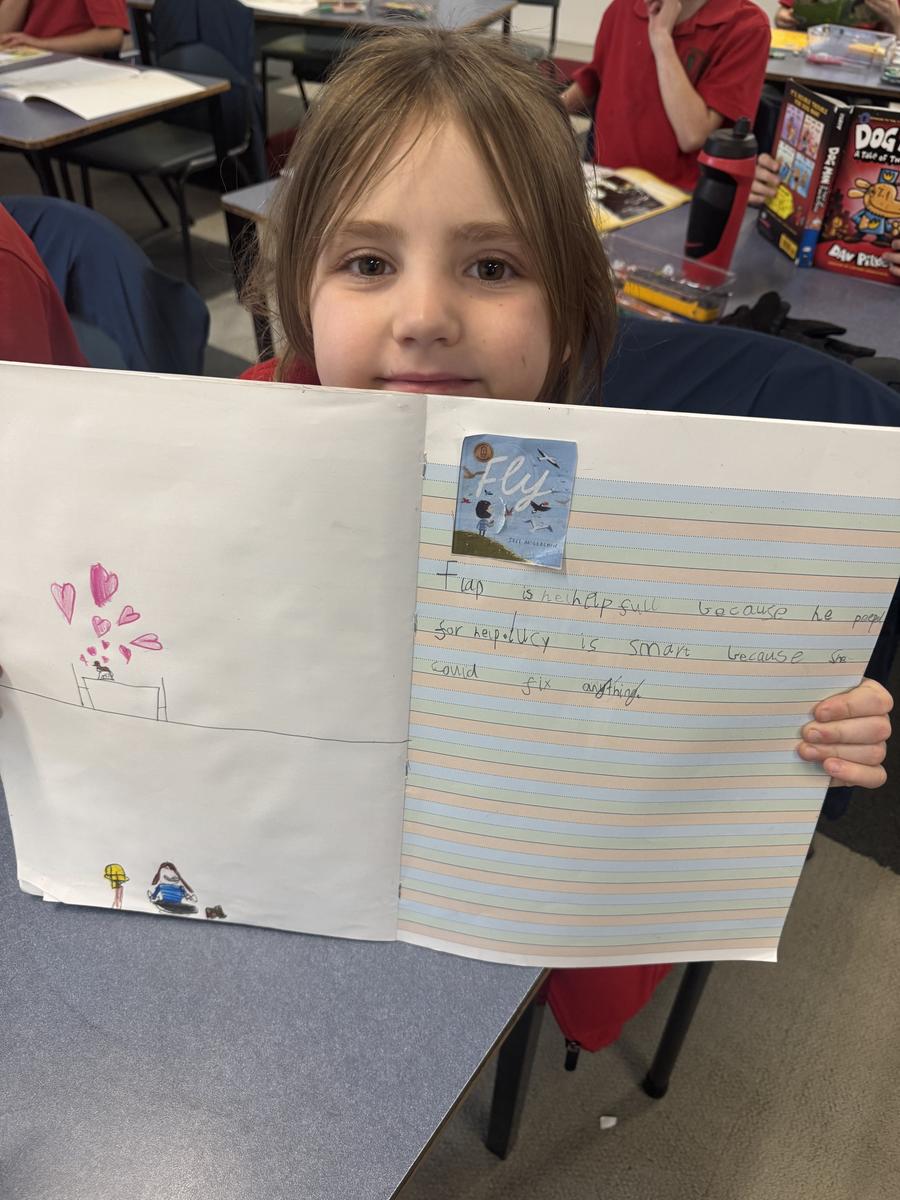
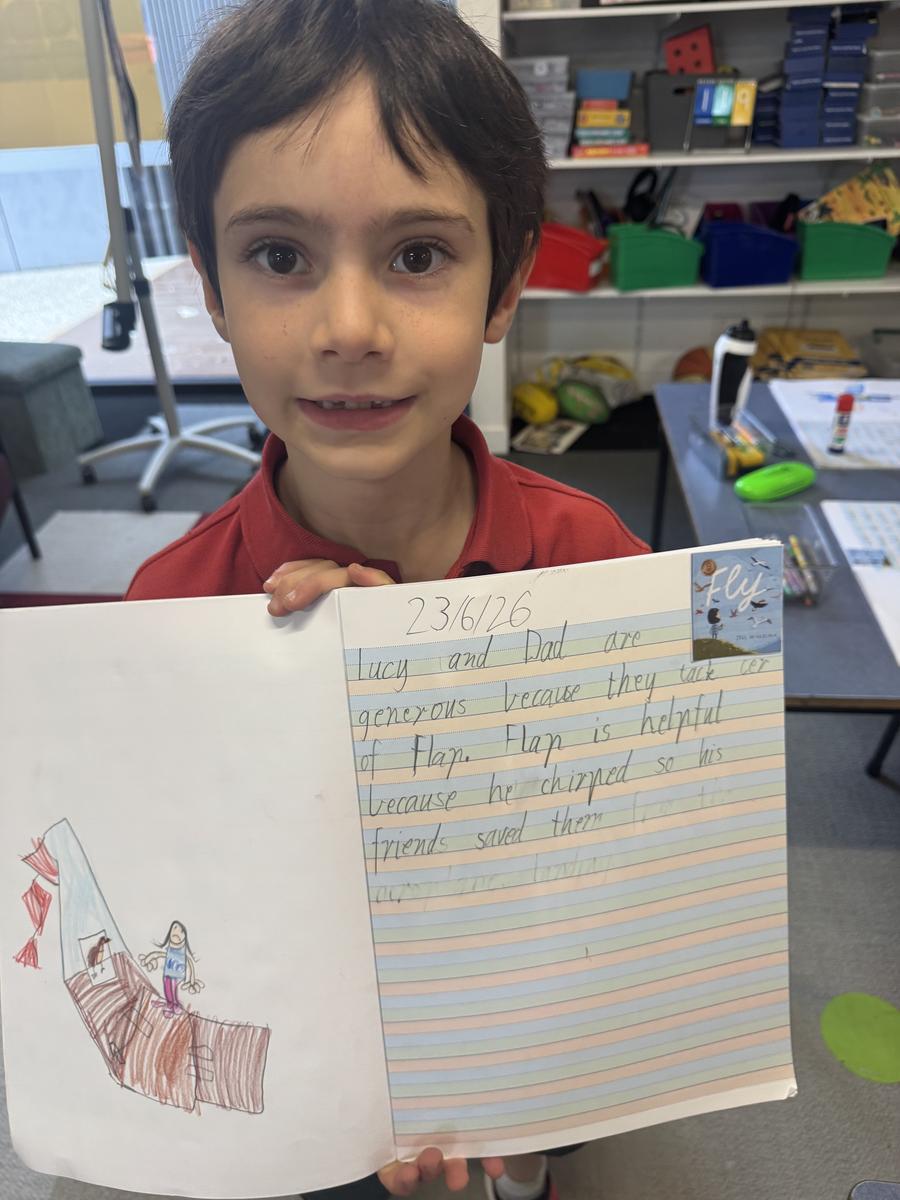
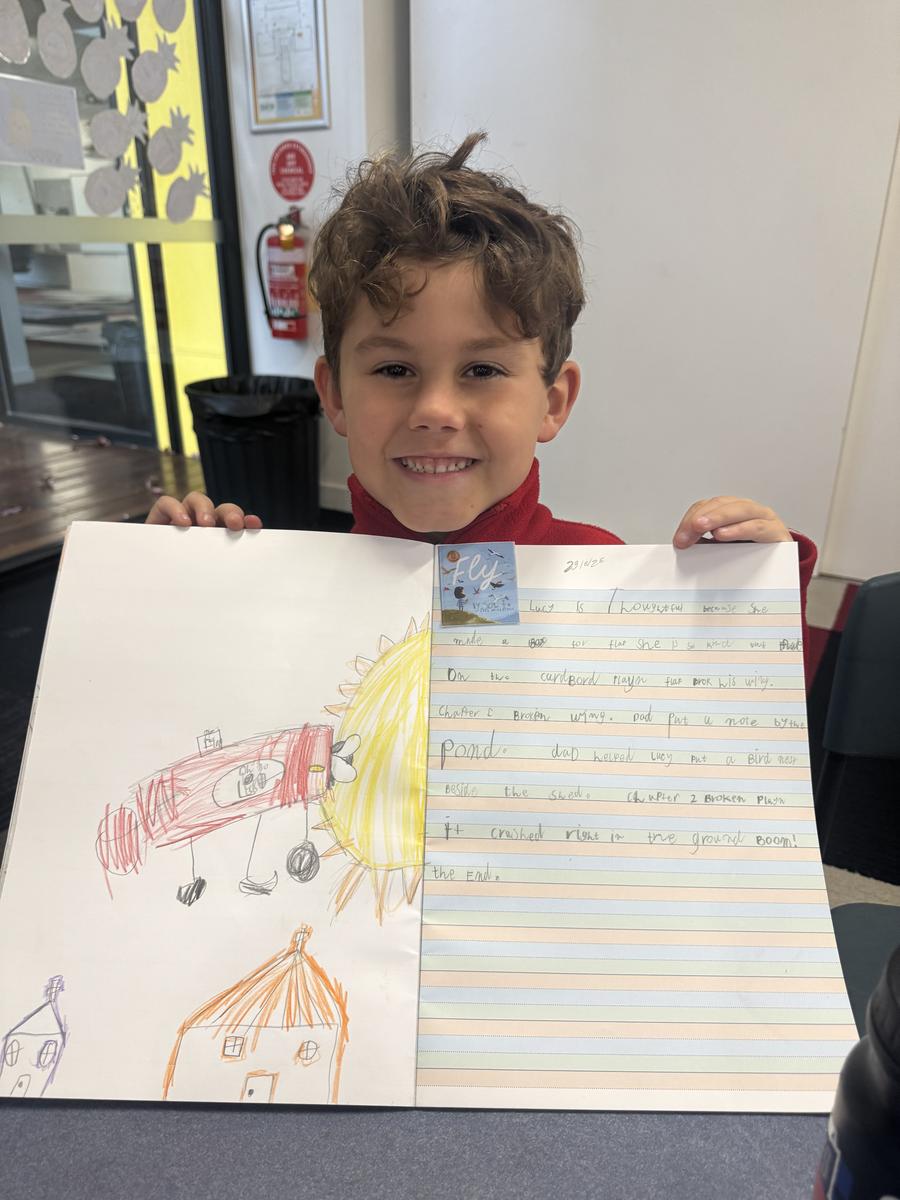
This week we will be introducing the book Fly by Jess McGeachin.
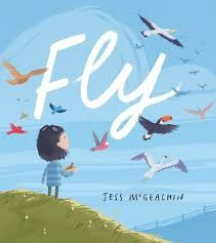
In this exciting unit, our Year 1 students will explore the heartwarming picture book Fly by Jess McGeachin. The story follows Lucy, a curious and determined girl who loves fixing things. When she finds a little bird with a broken wing, she sets out to help it fly again. Armed with imagination, perseverance, and a homemade flying machine, Lucy embarks on an unforgettable adventure that teaches her about friendship, hope, and learning to let go.
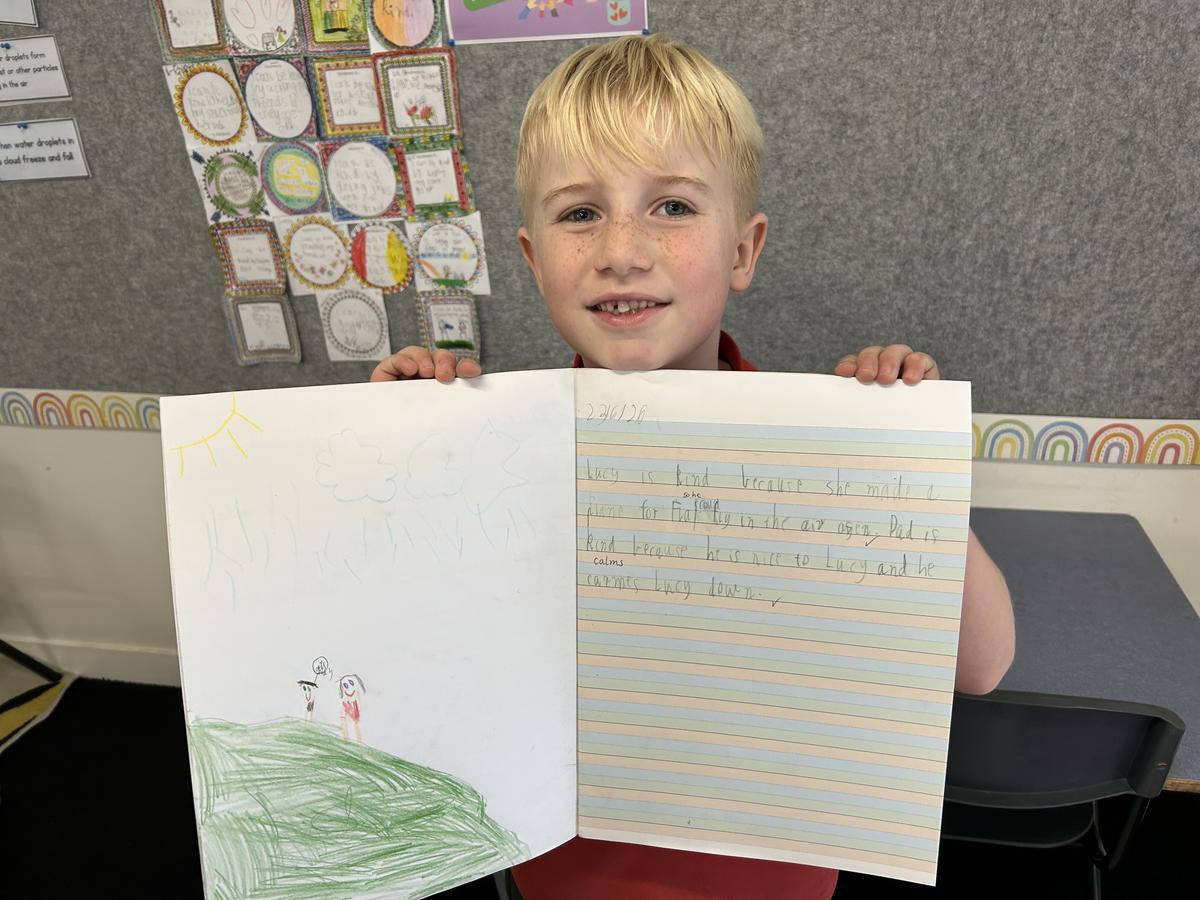
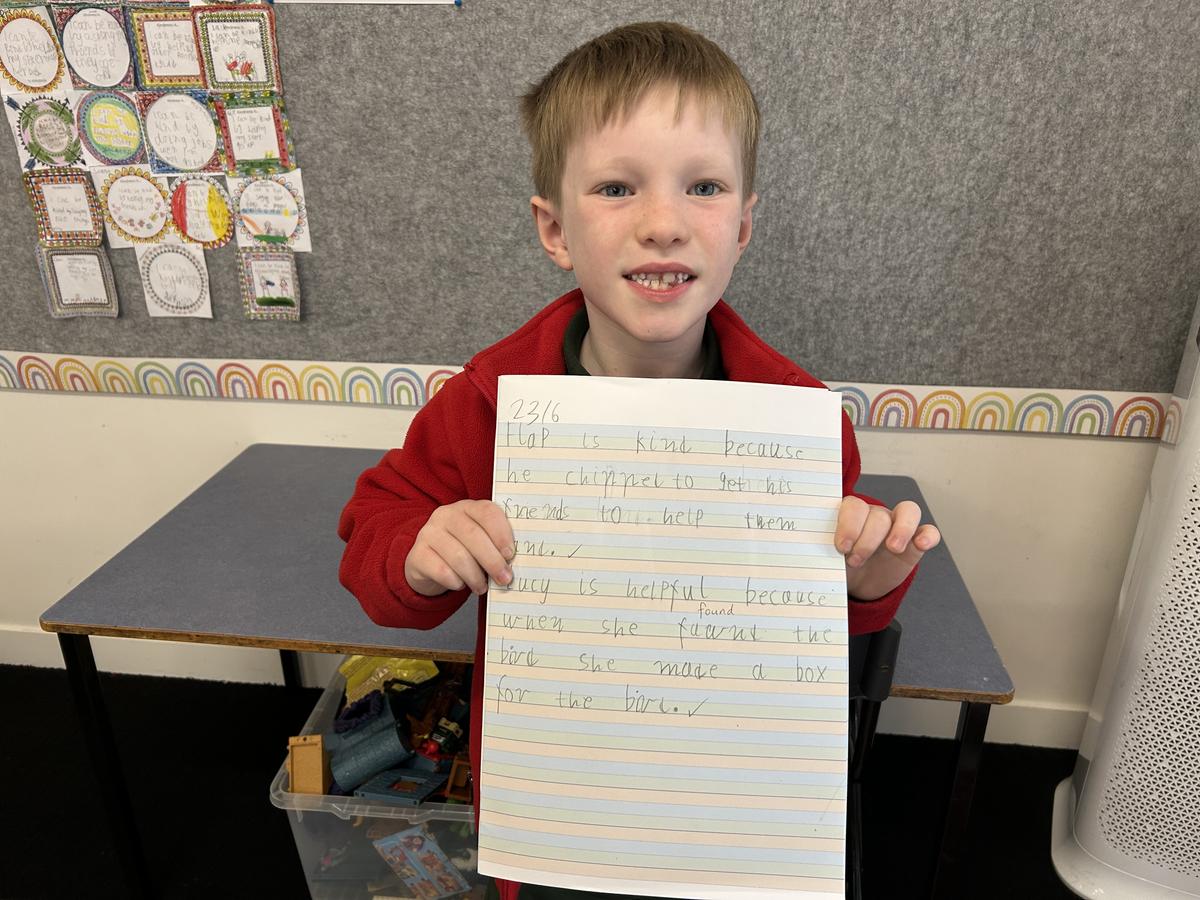
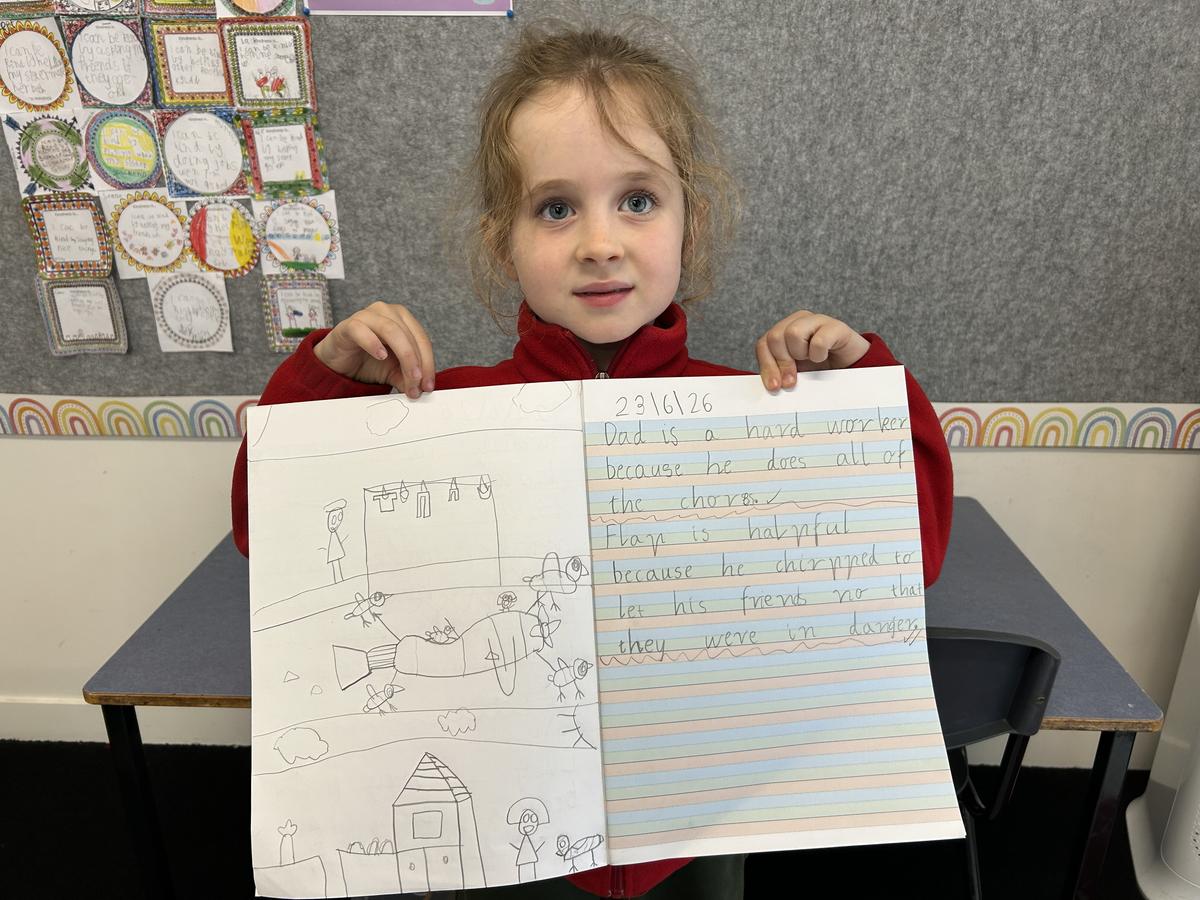
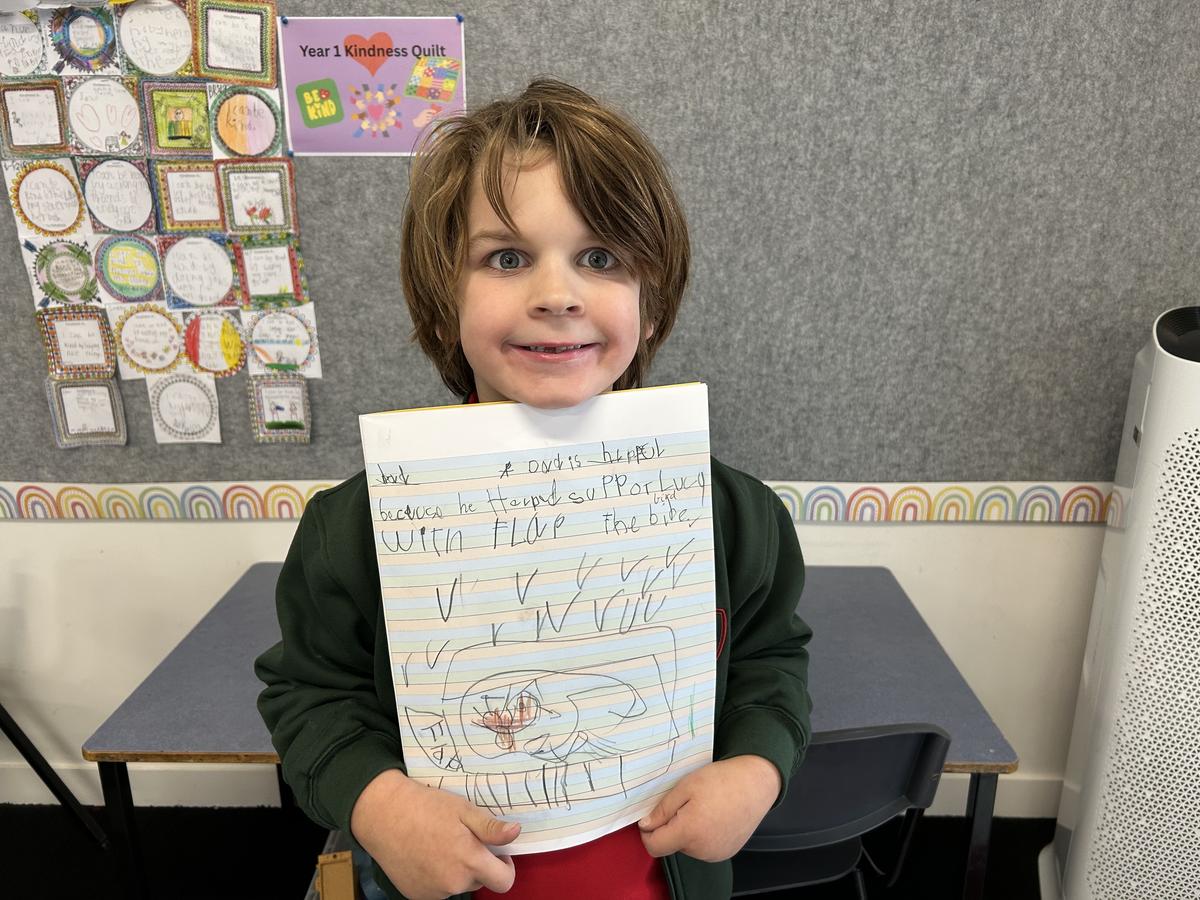
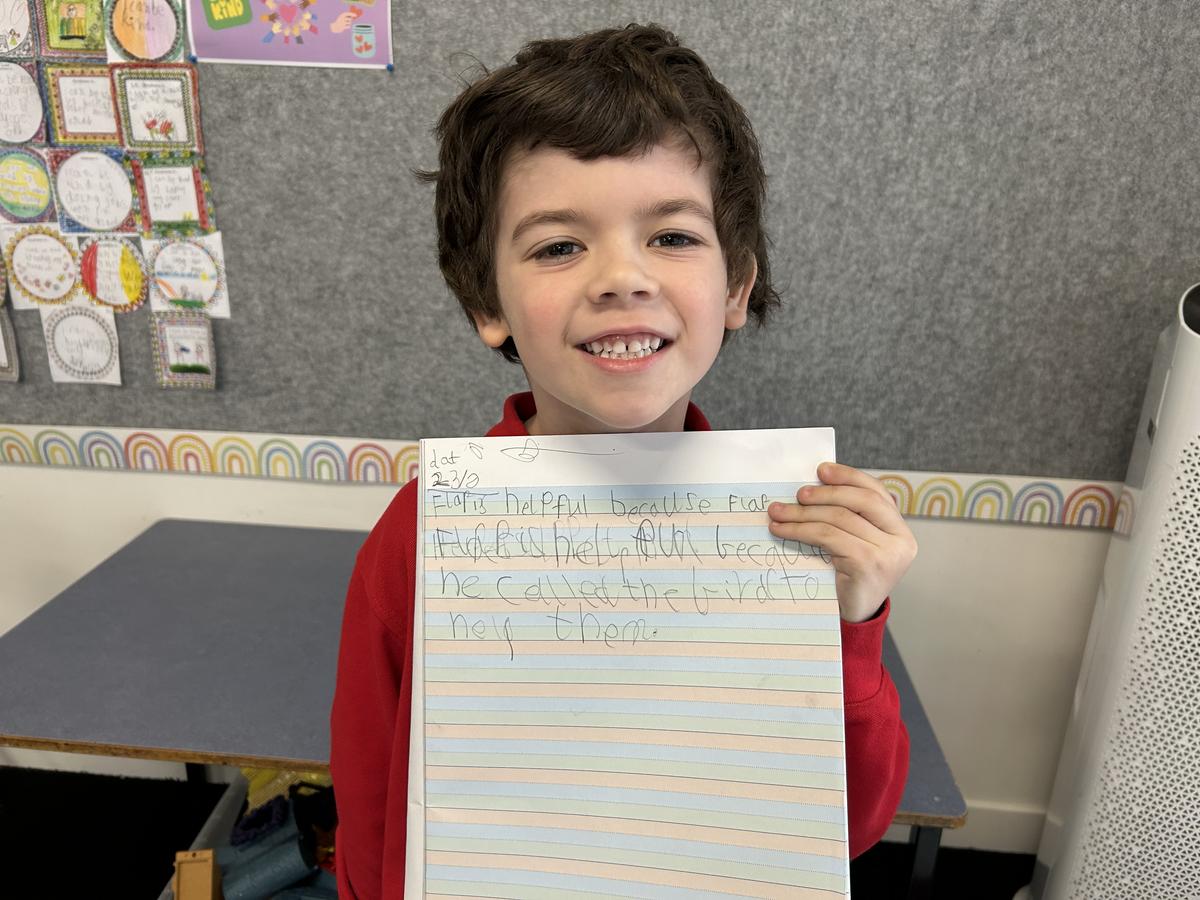
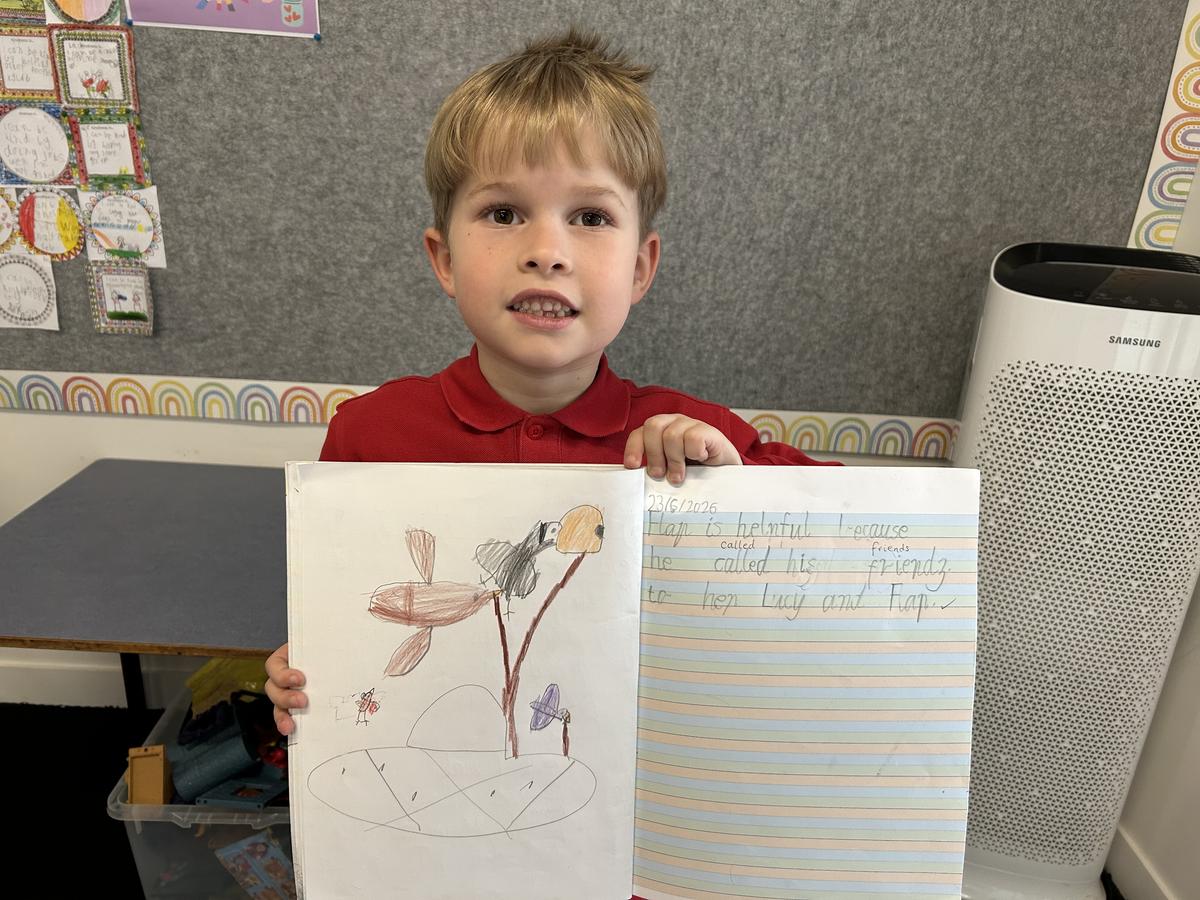
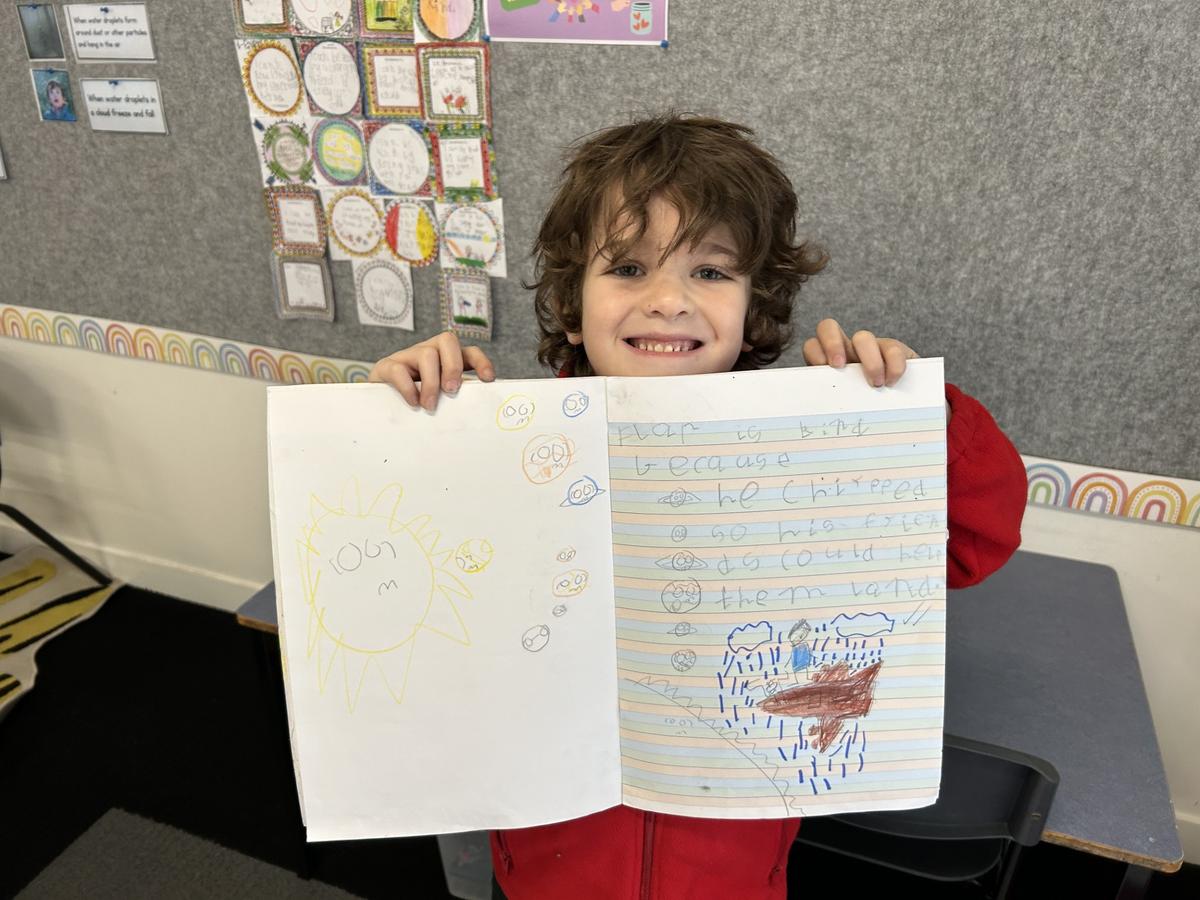
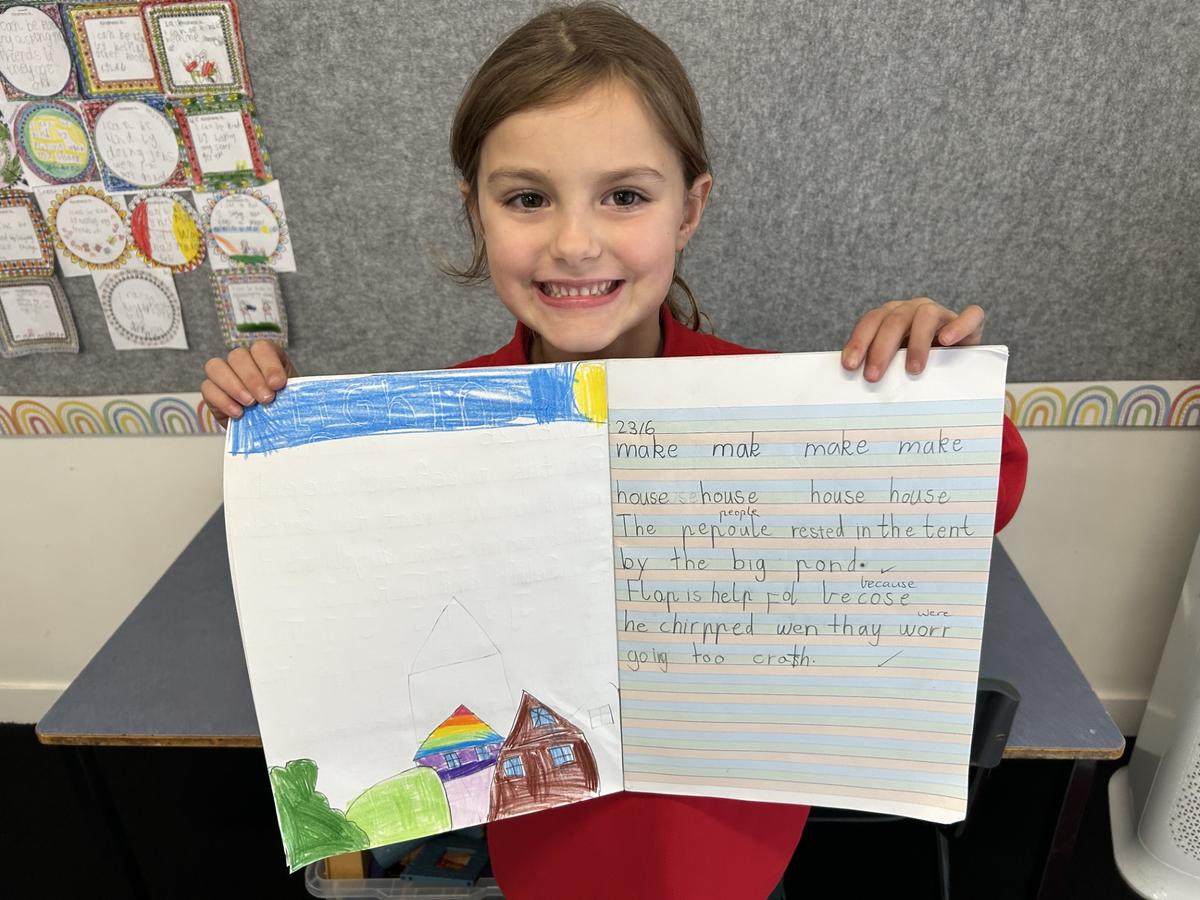
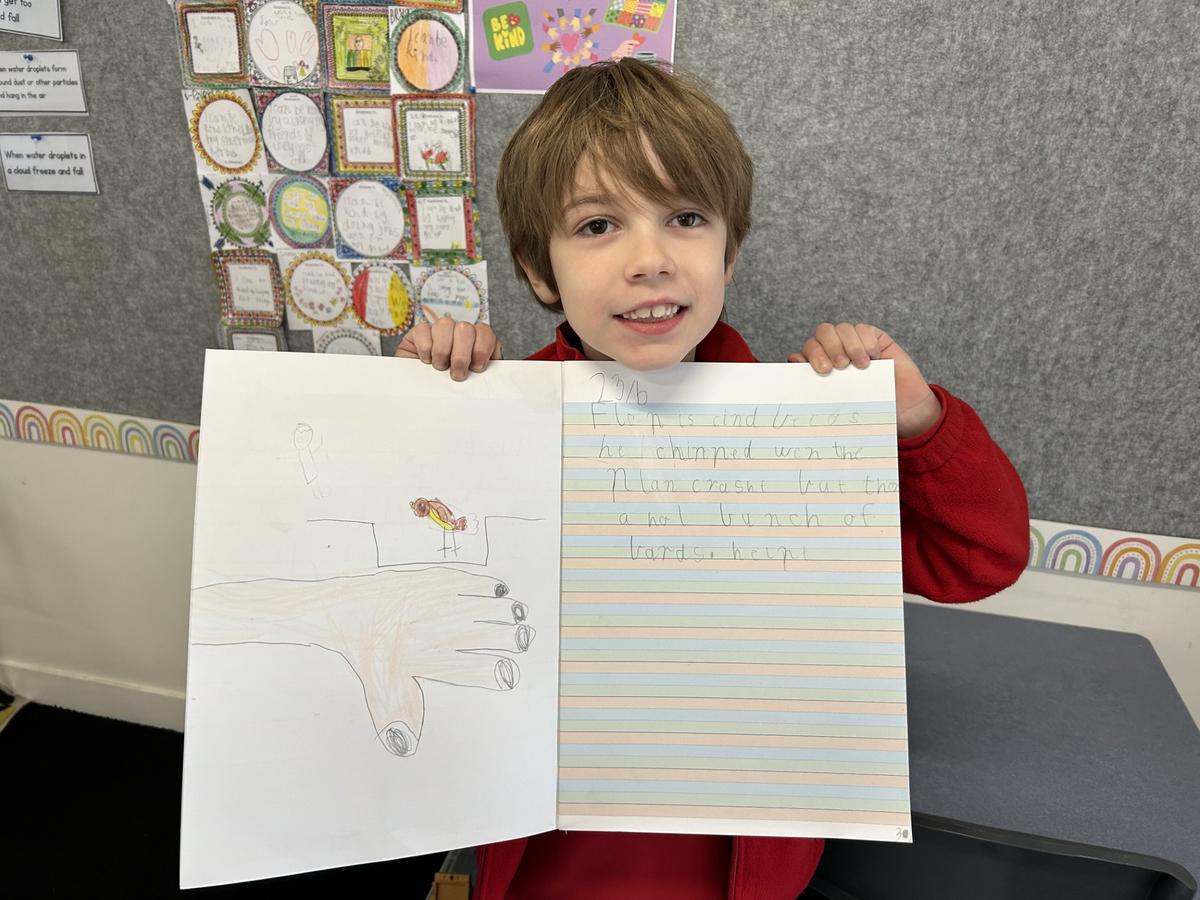
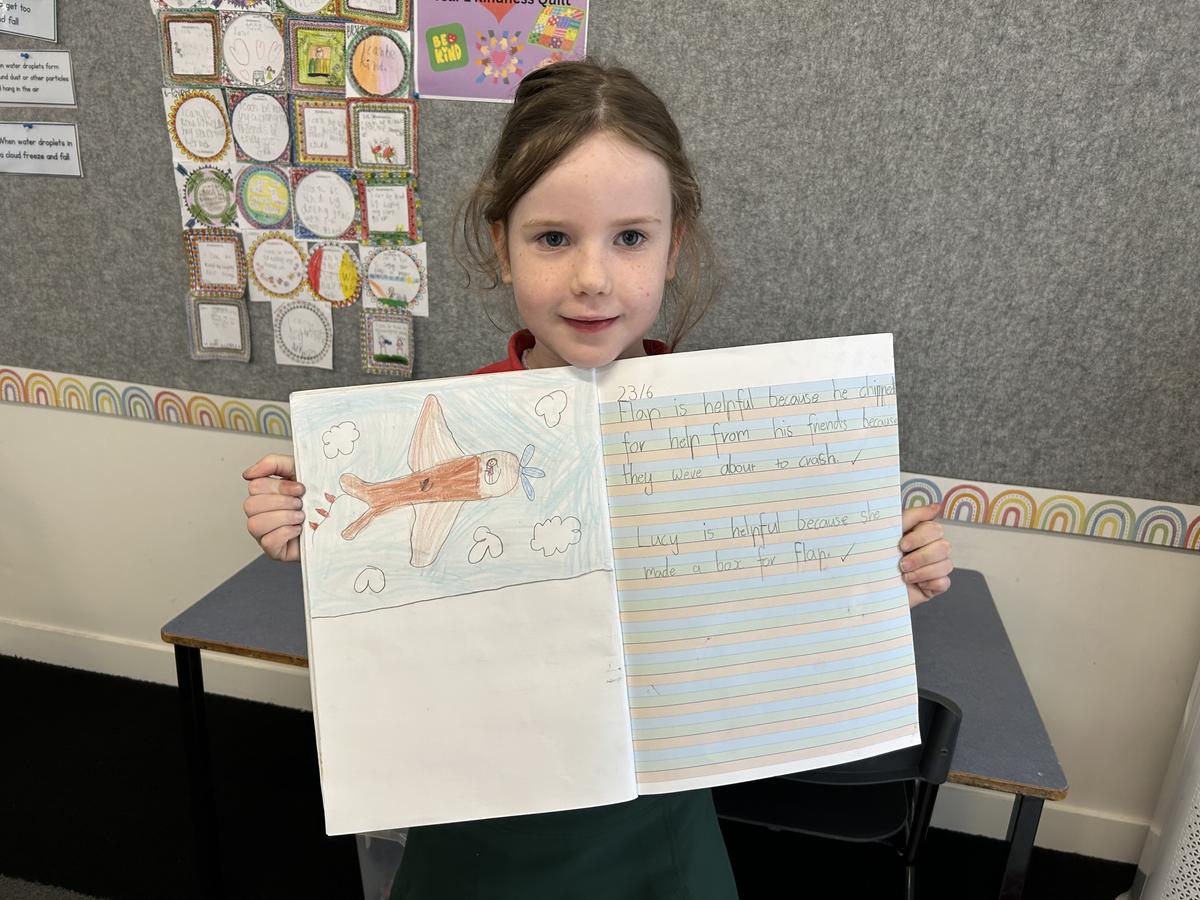
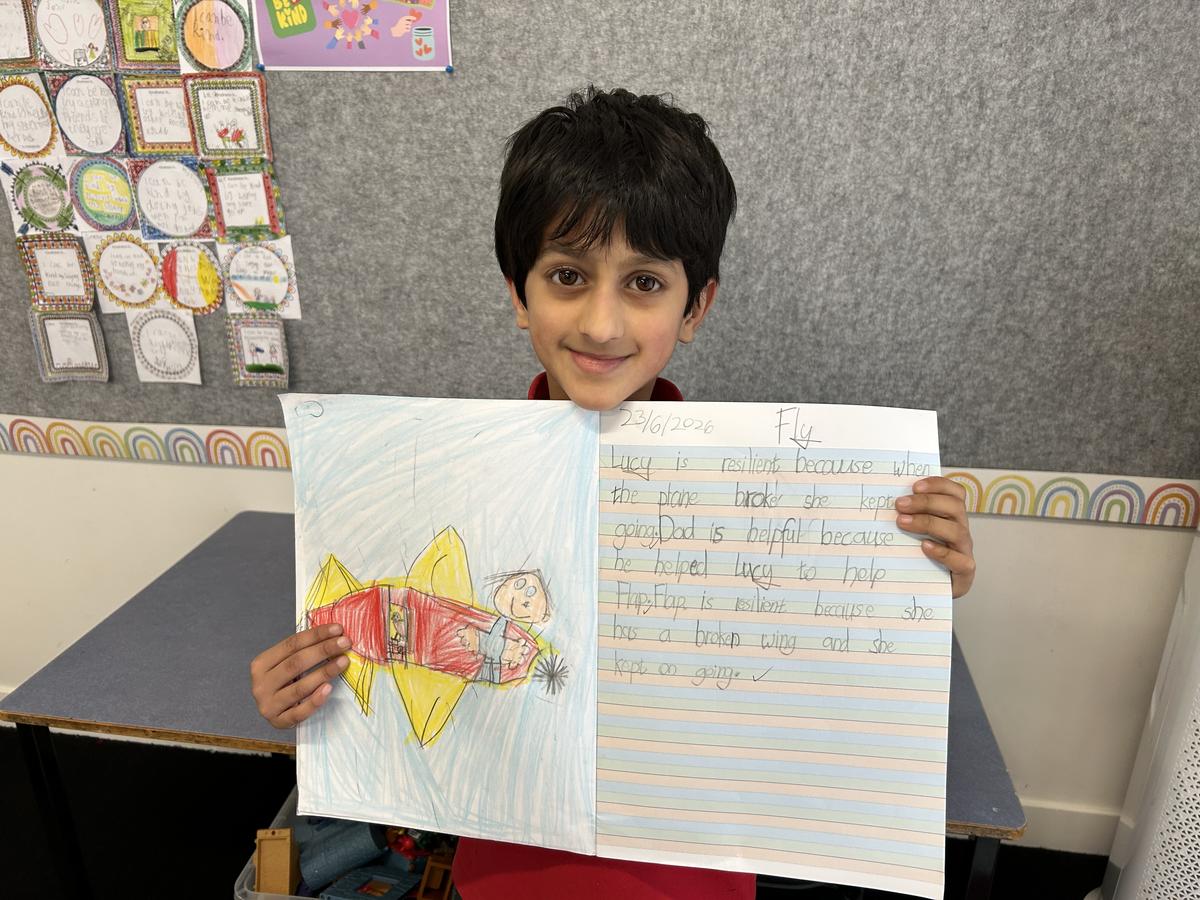
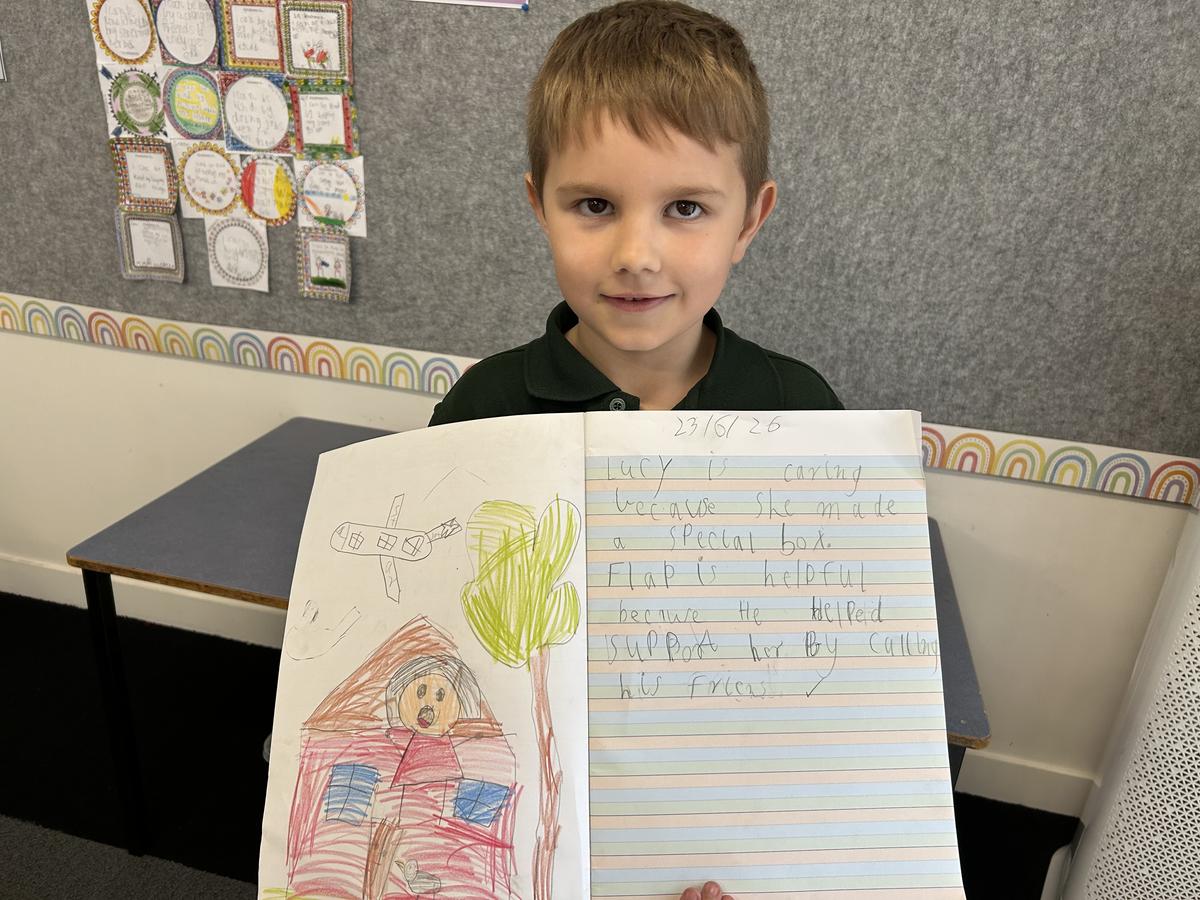
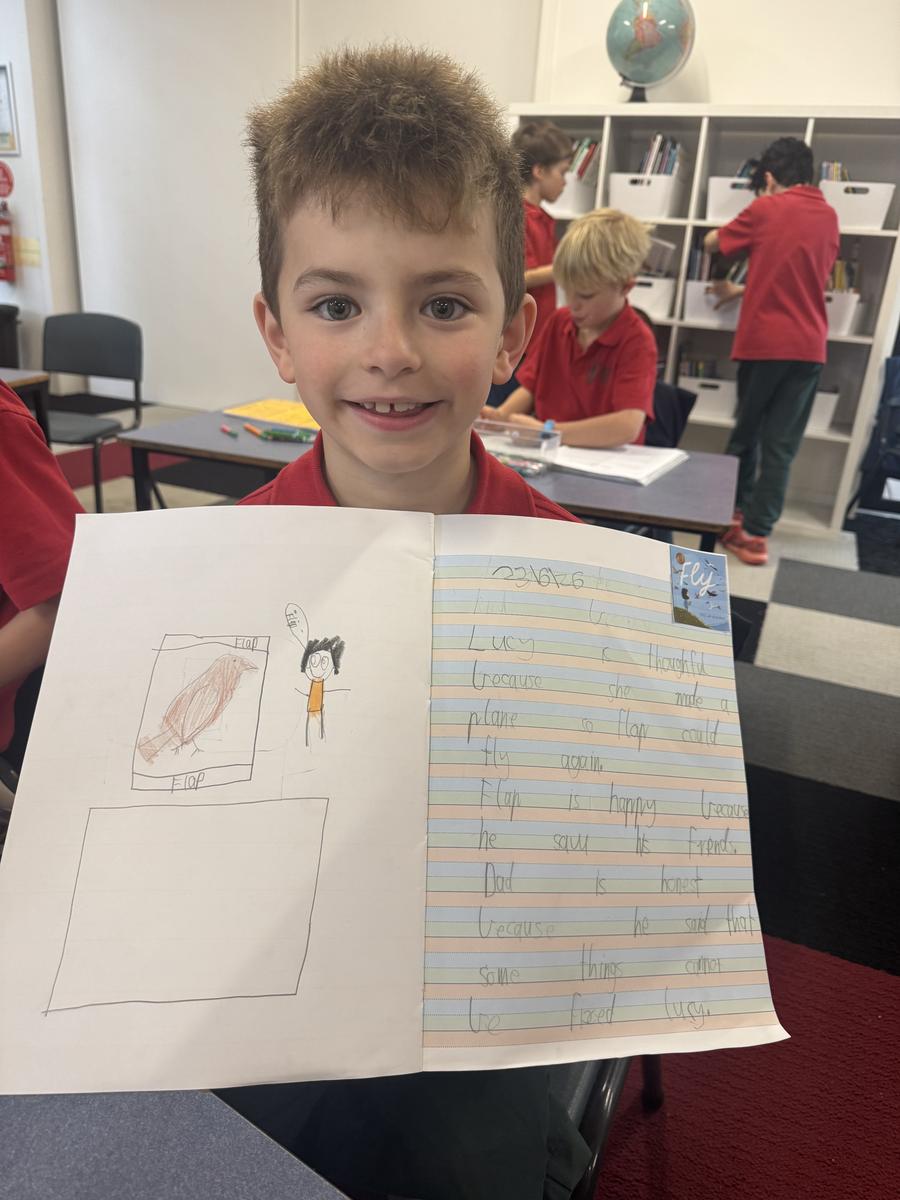
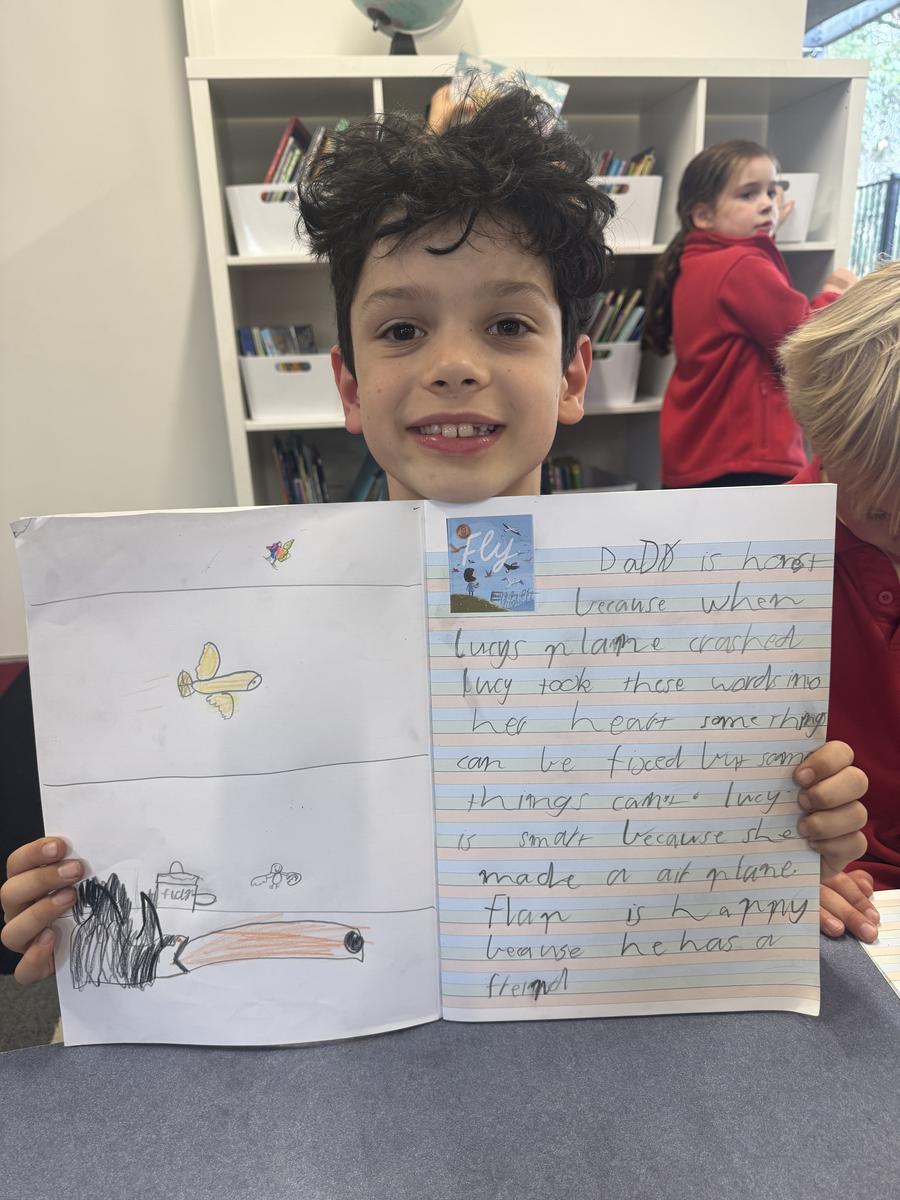
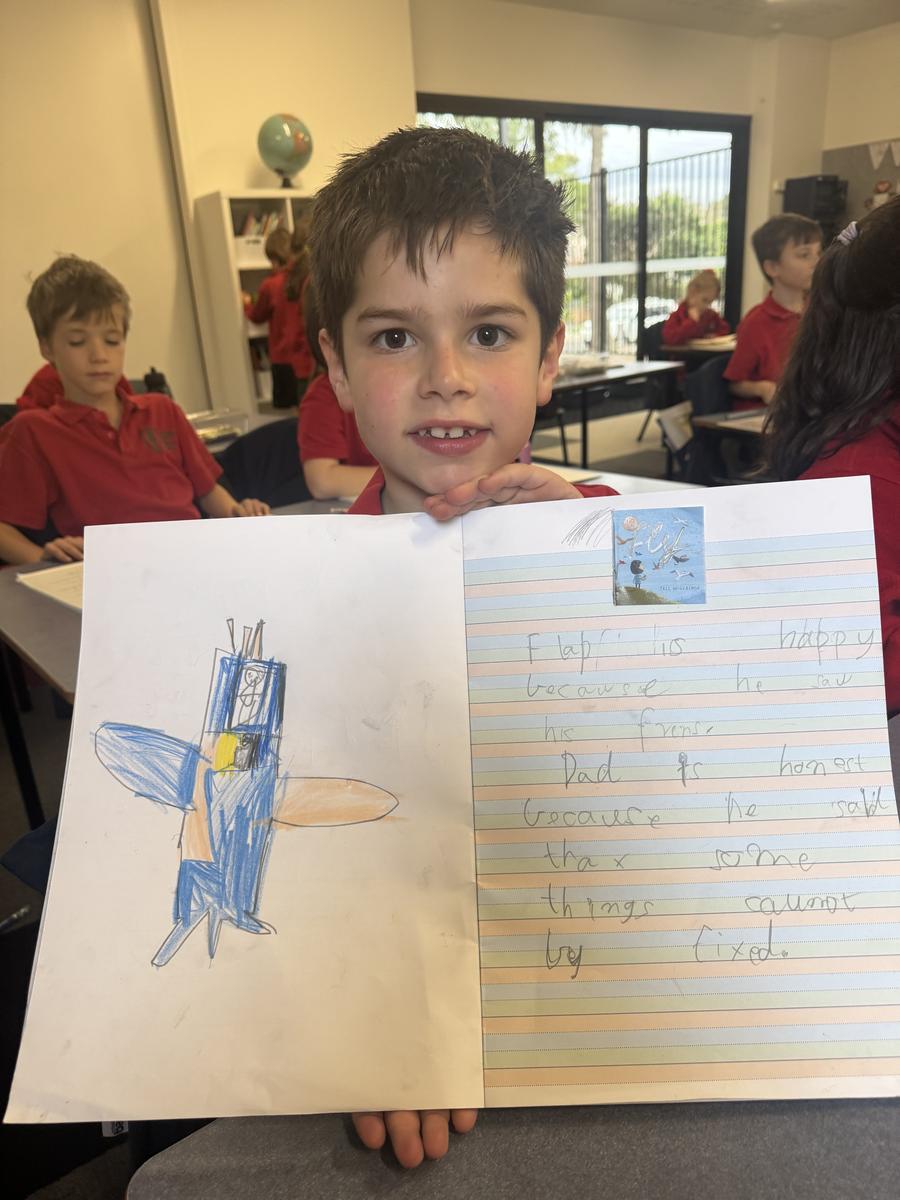
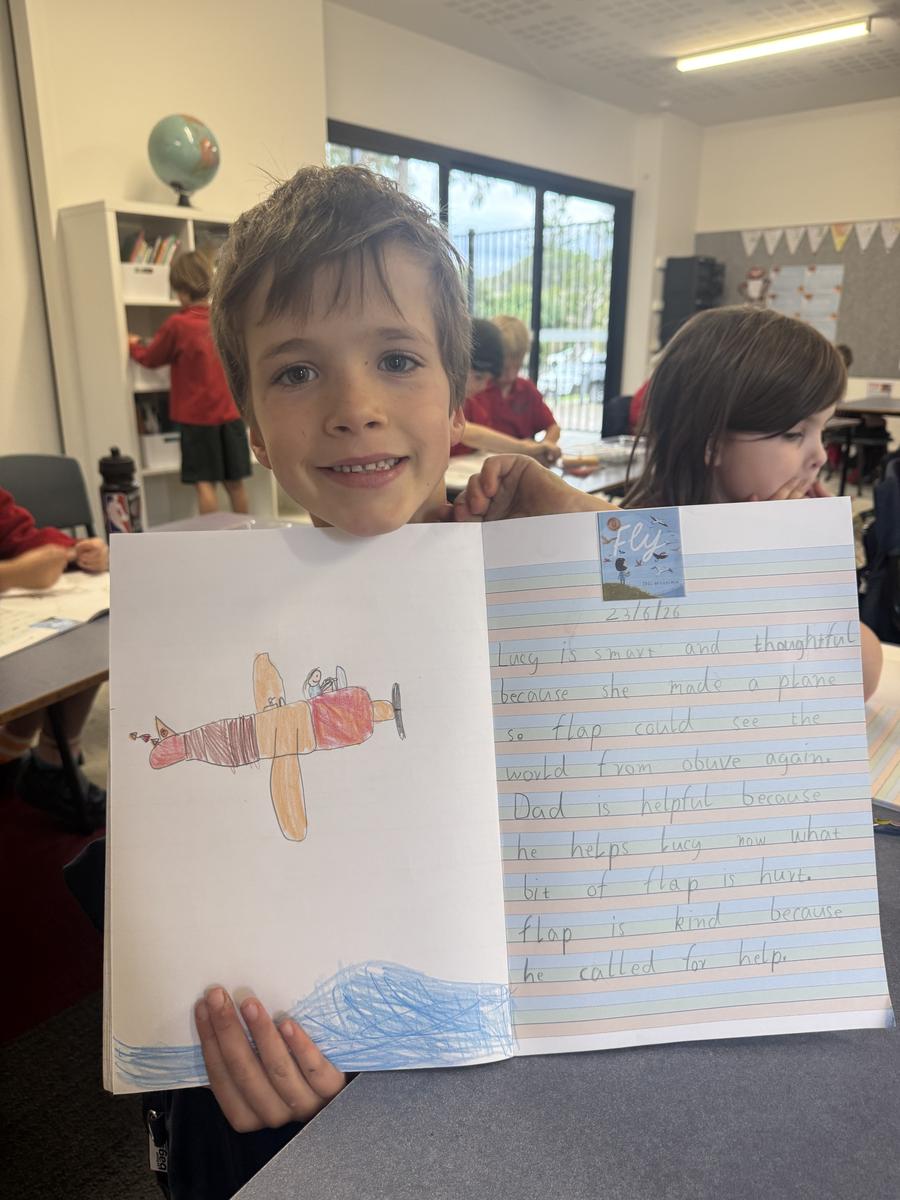
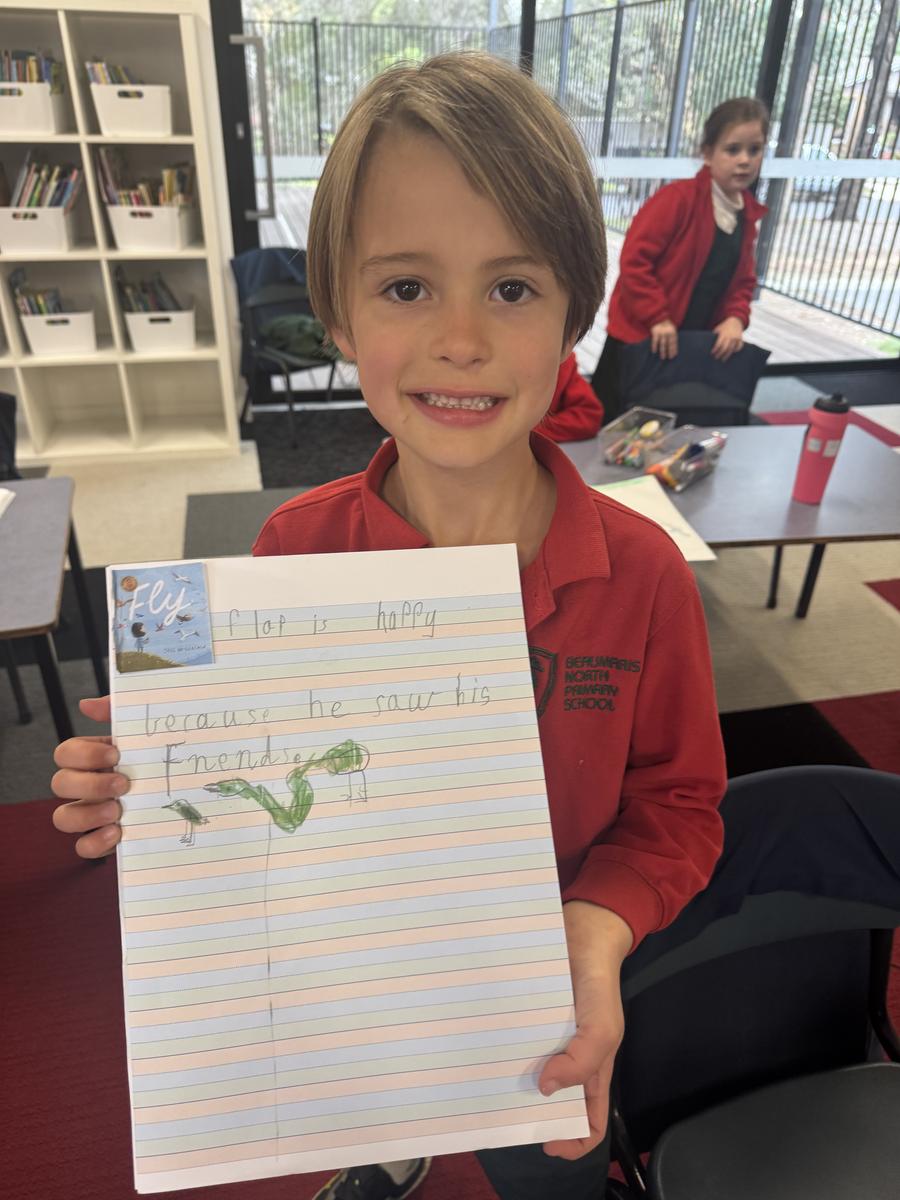
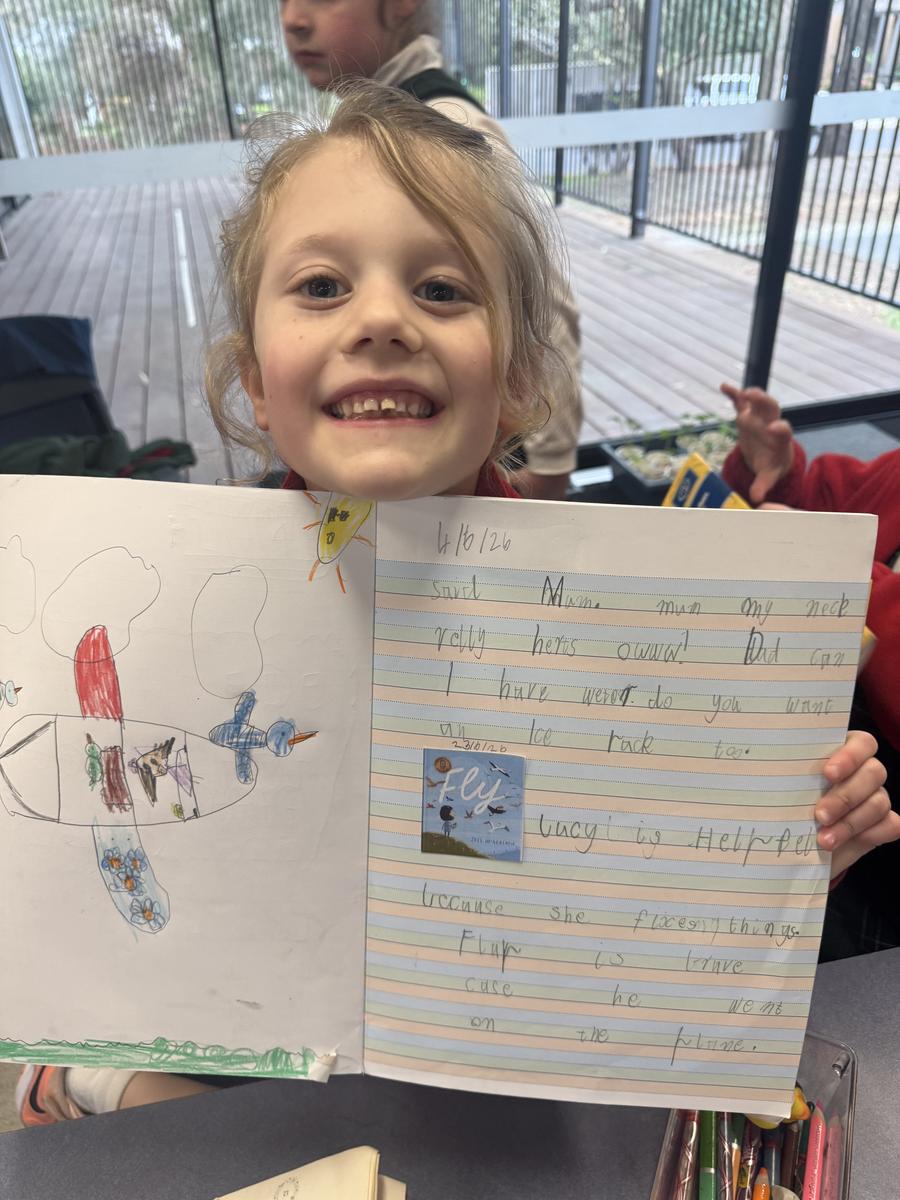
Throughout the unit, students will retell the key events of the story using a narrative structure, helping them understand how stories are organised. They will analyse the relationships between the characters and discuss how their actions and feelings shape the story. Students will use rich descriptive language to create vivid descriptions of birds and explore how authors paint pictures with words. They will also map the story's key events using a story map to deepen their comprehension and understanding of narrative texts.
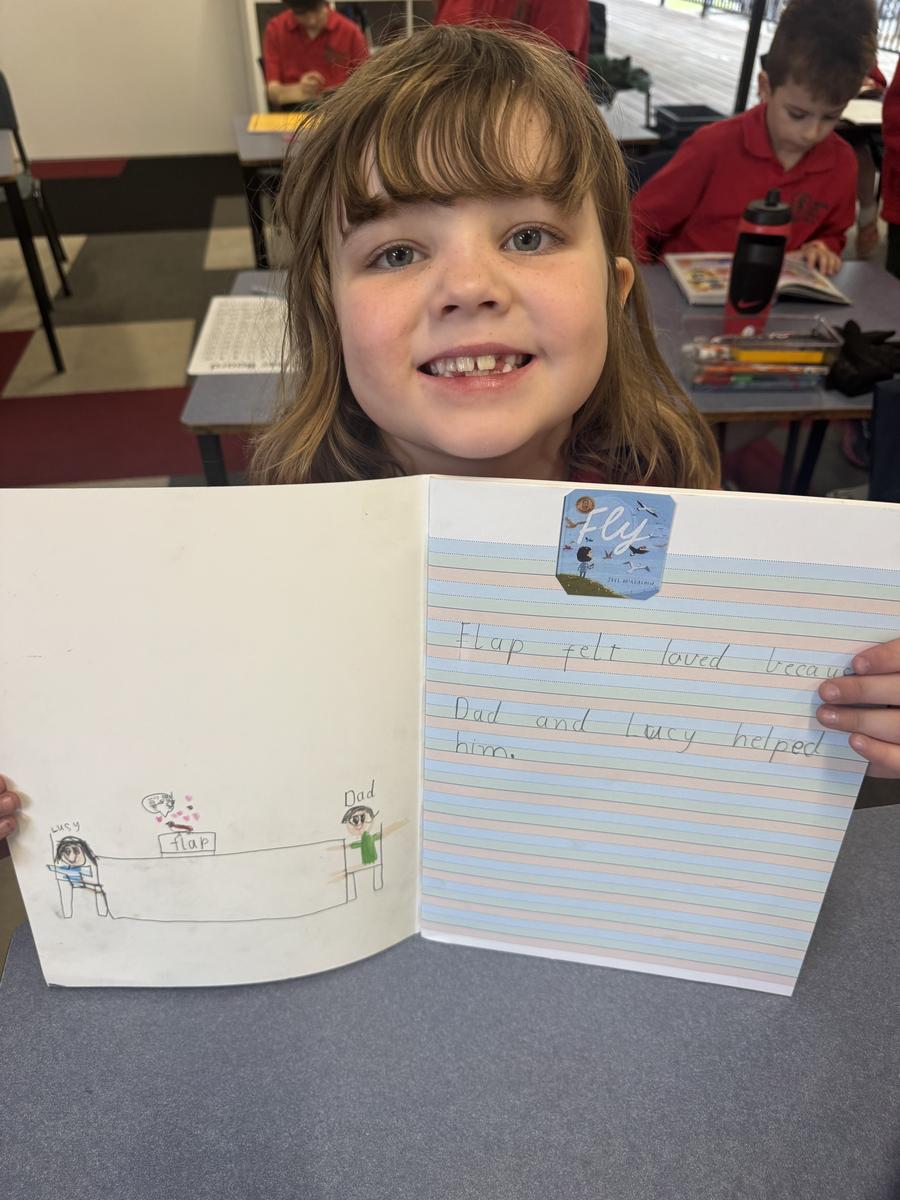
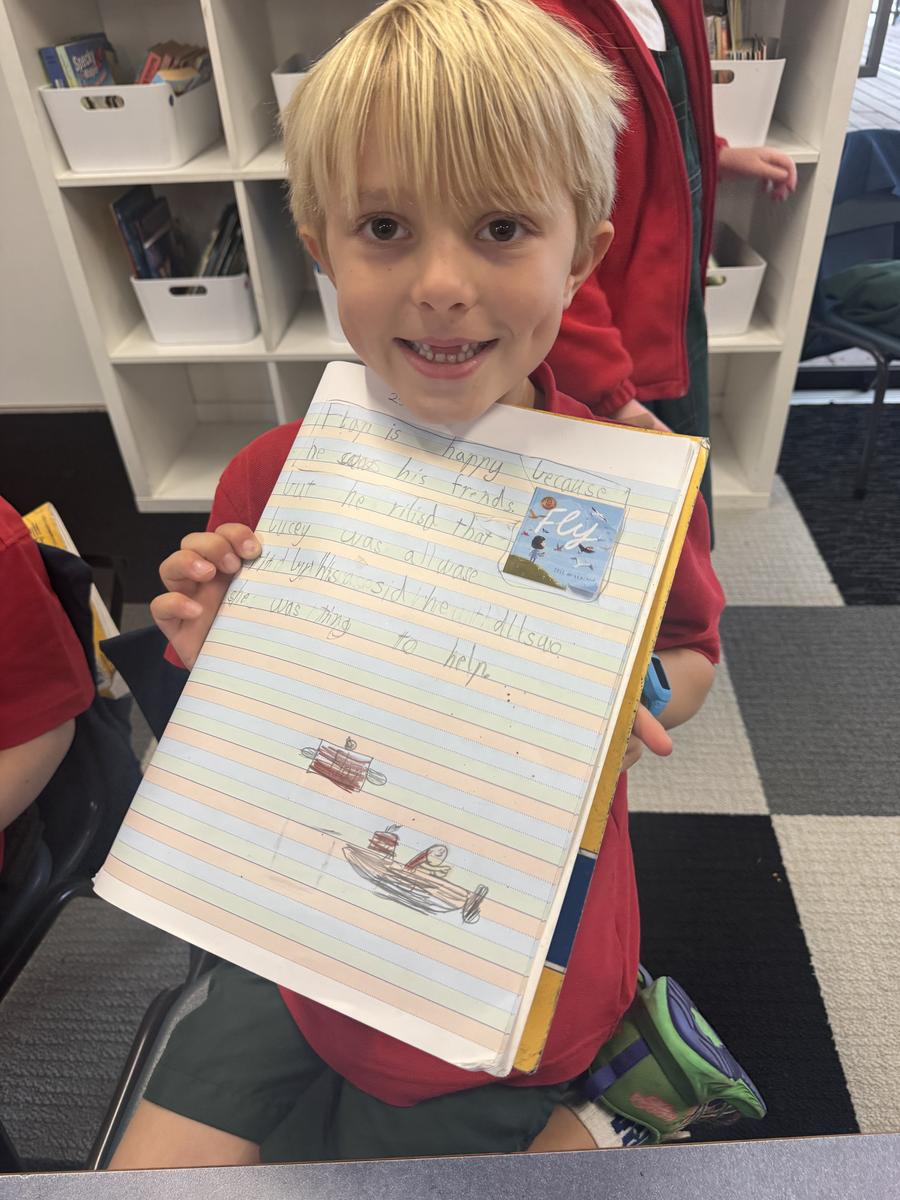
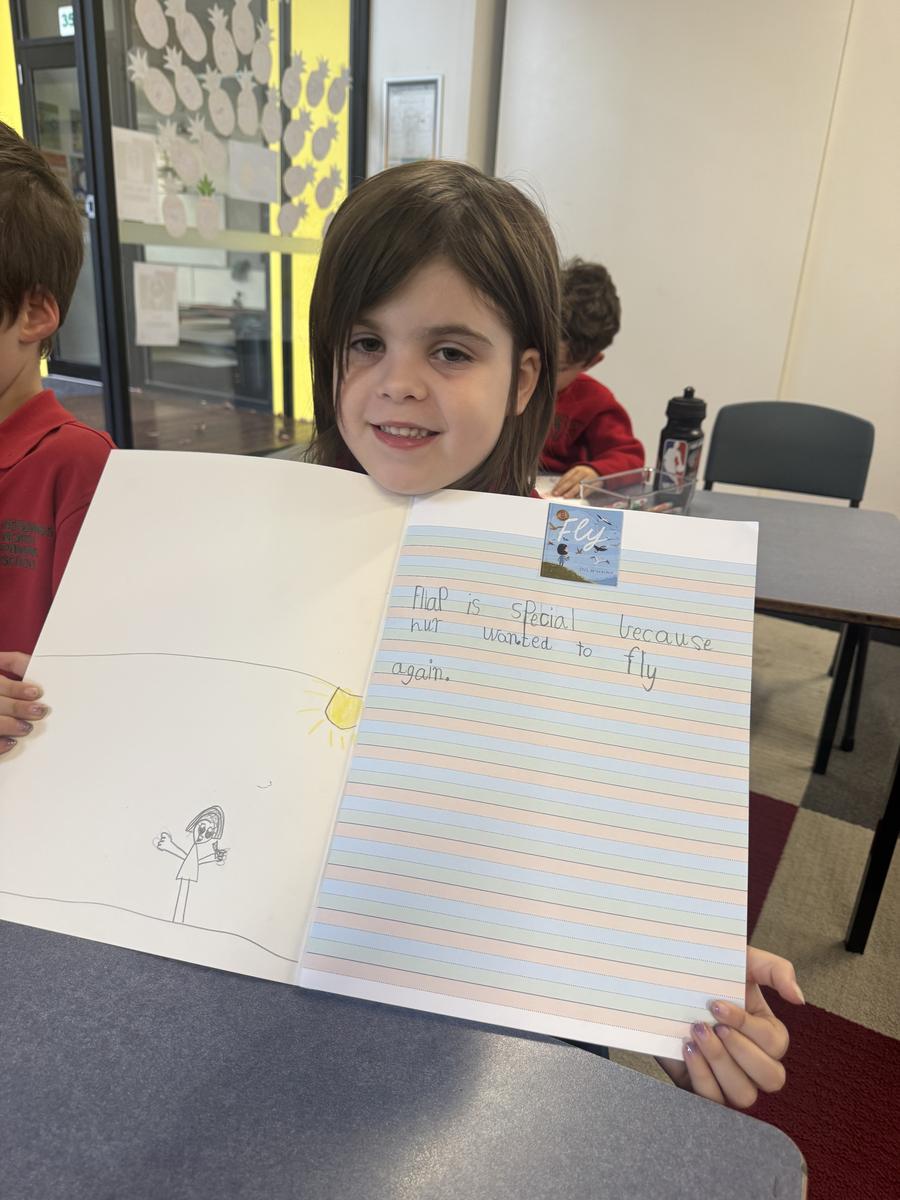
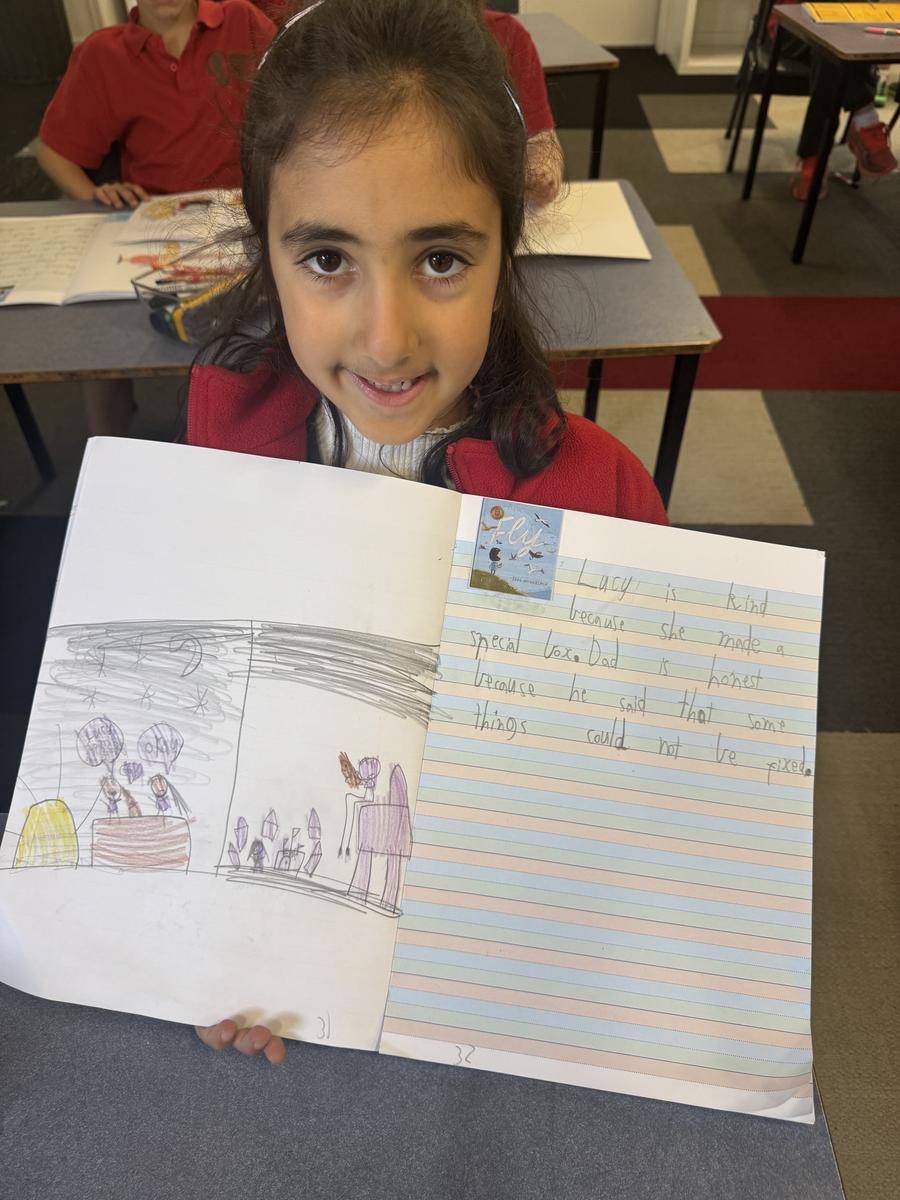
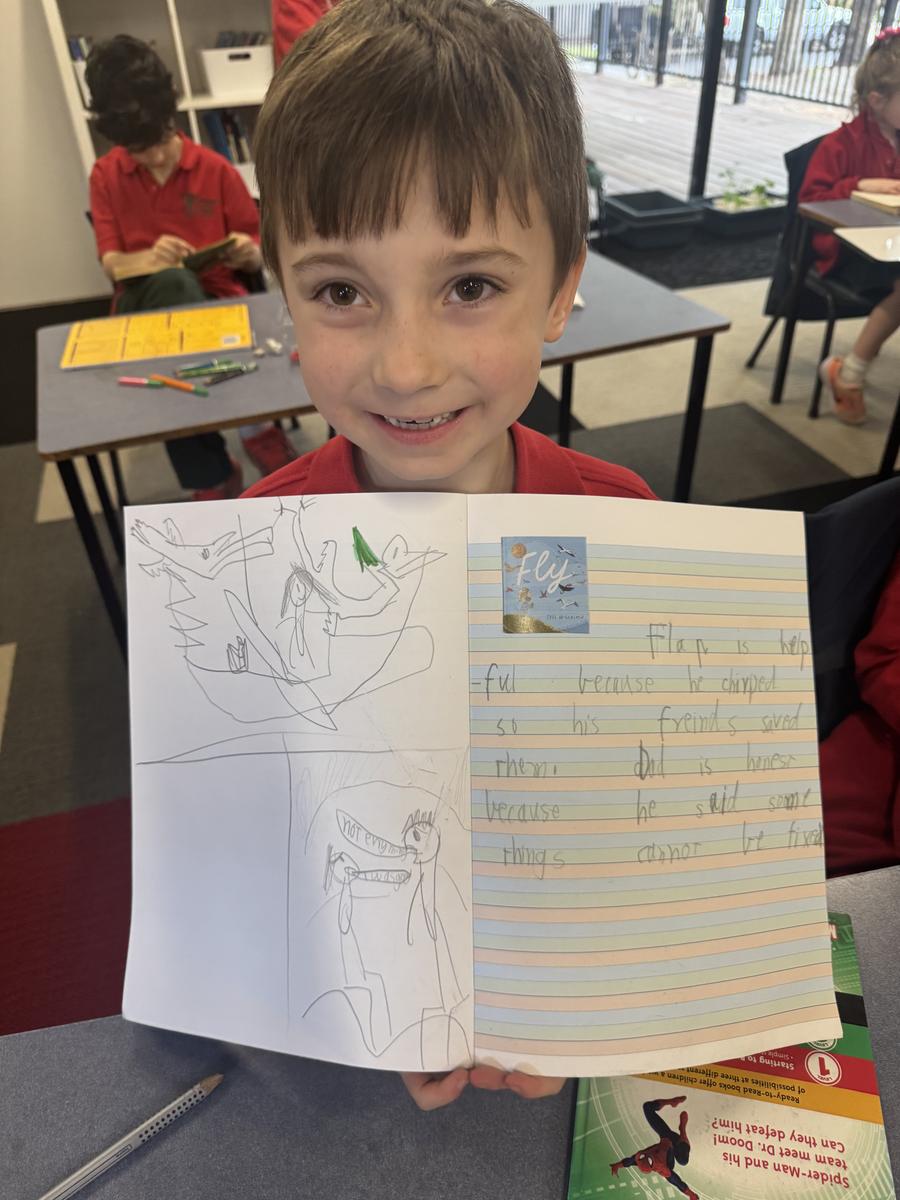
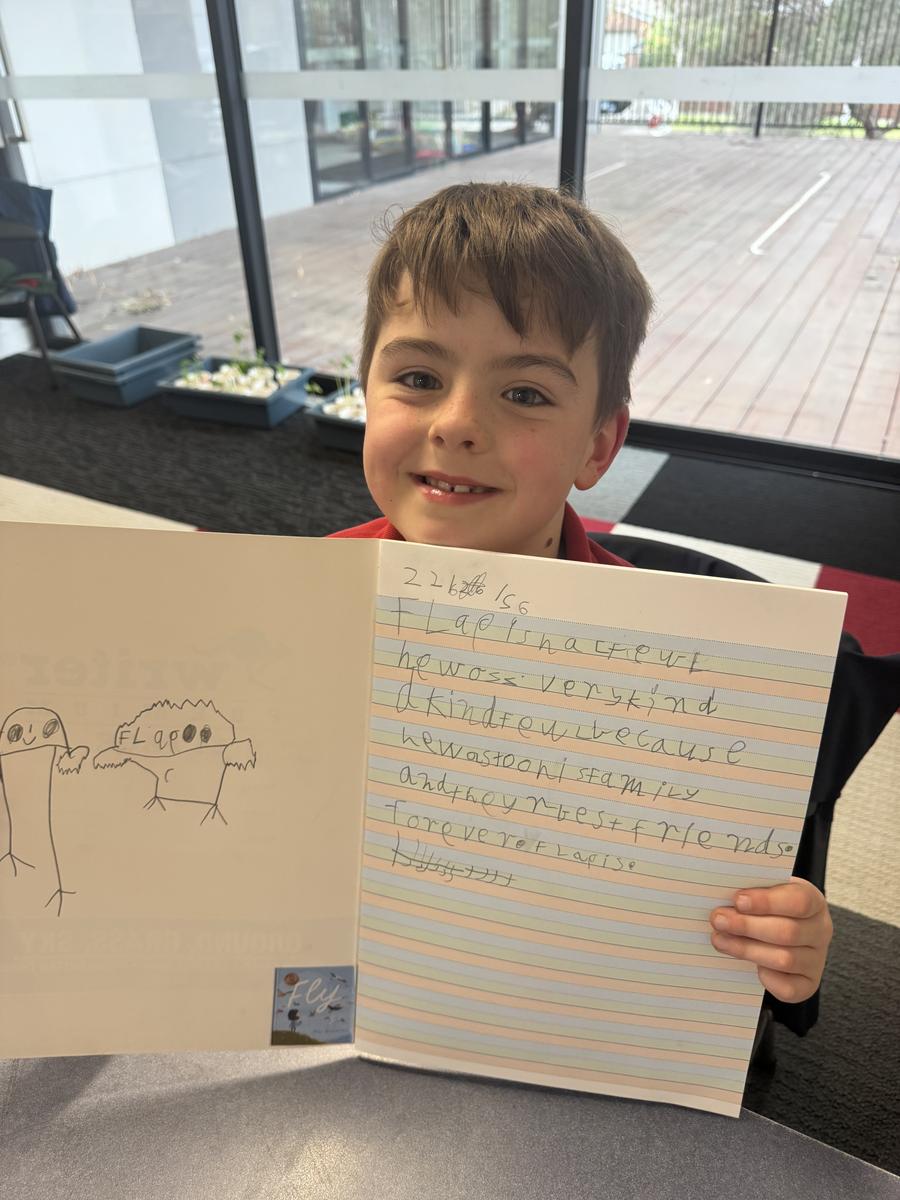
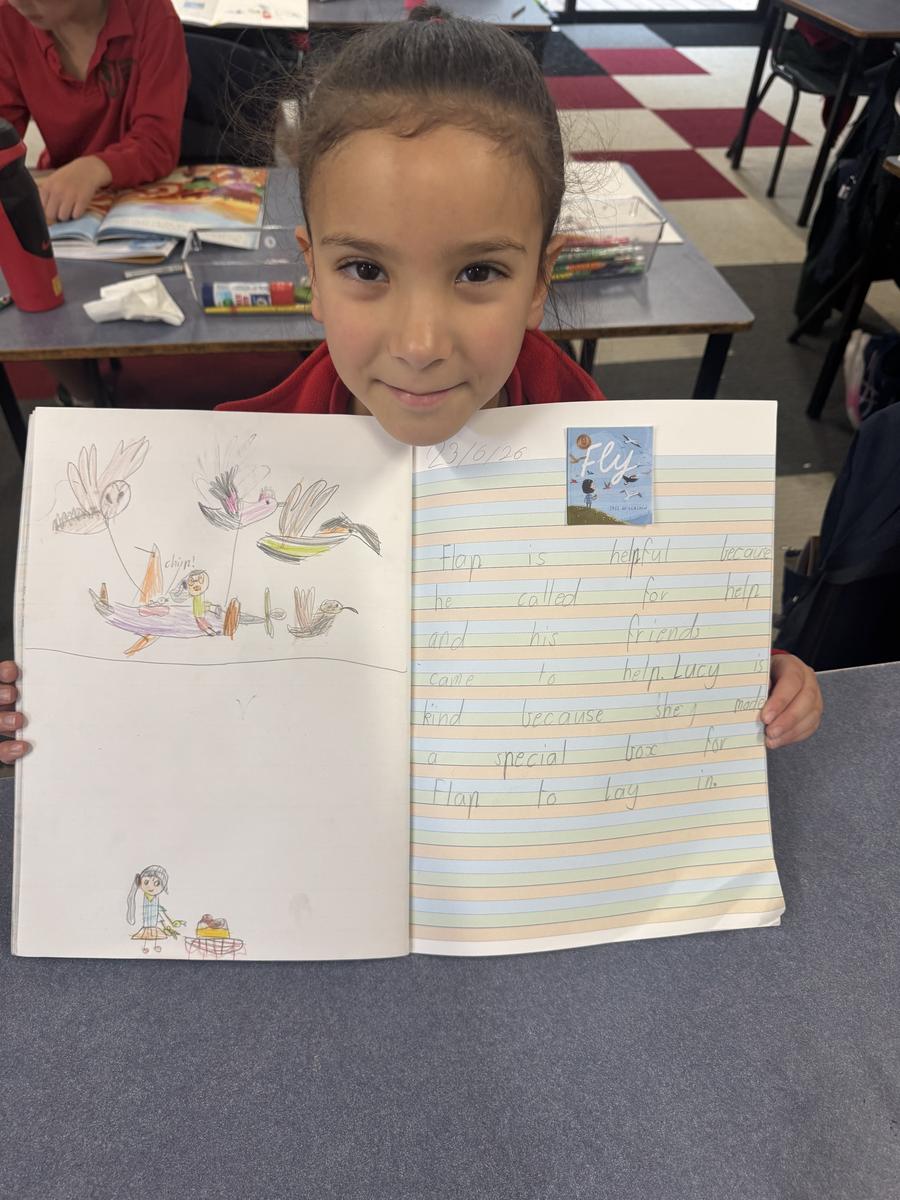
To conclude the unit, students will let their imaginations soar as they create and write their own ending to the story. This engaging unit will provide students with opportunities to develop their reading, writing, comprehension, and creative thinking skills while enjoying a meaningful and memorable story.
Maths
Year 1 students have continued to be busy building their confidence and mathematical understanding across a wide range of concepts.
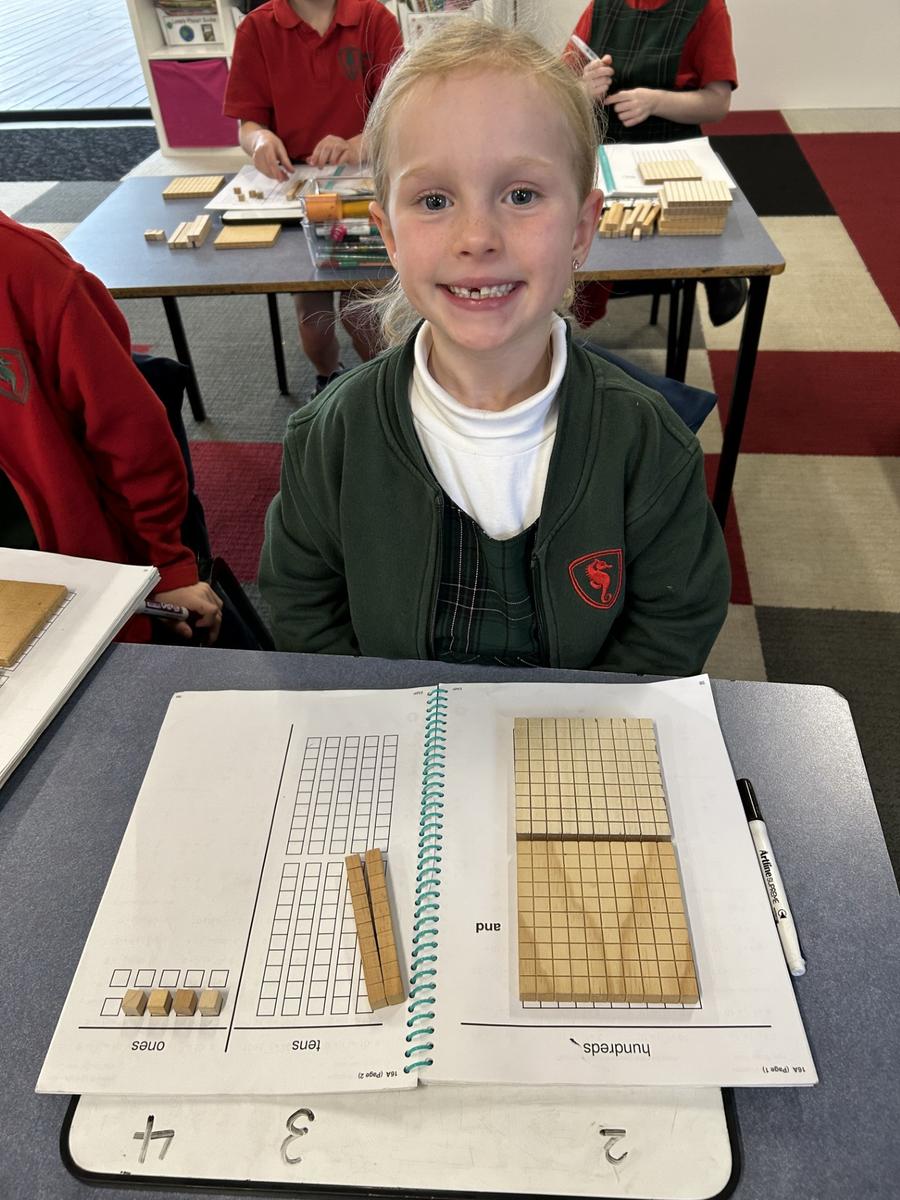
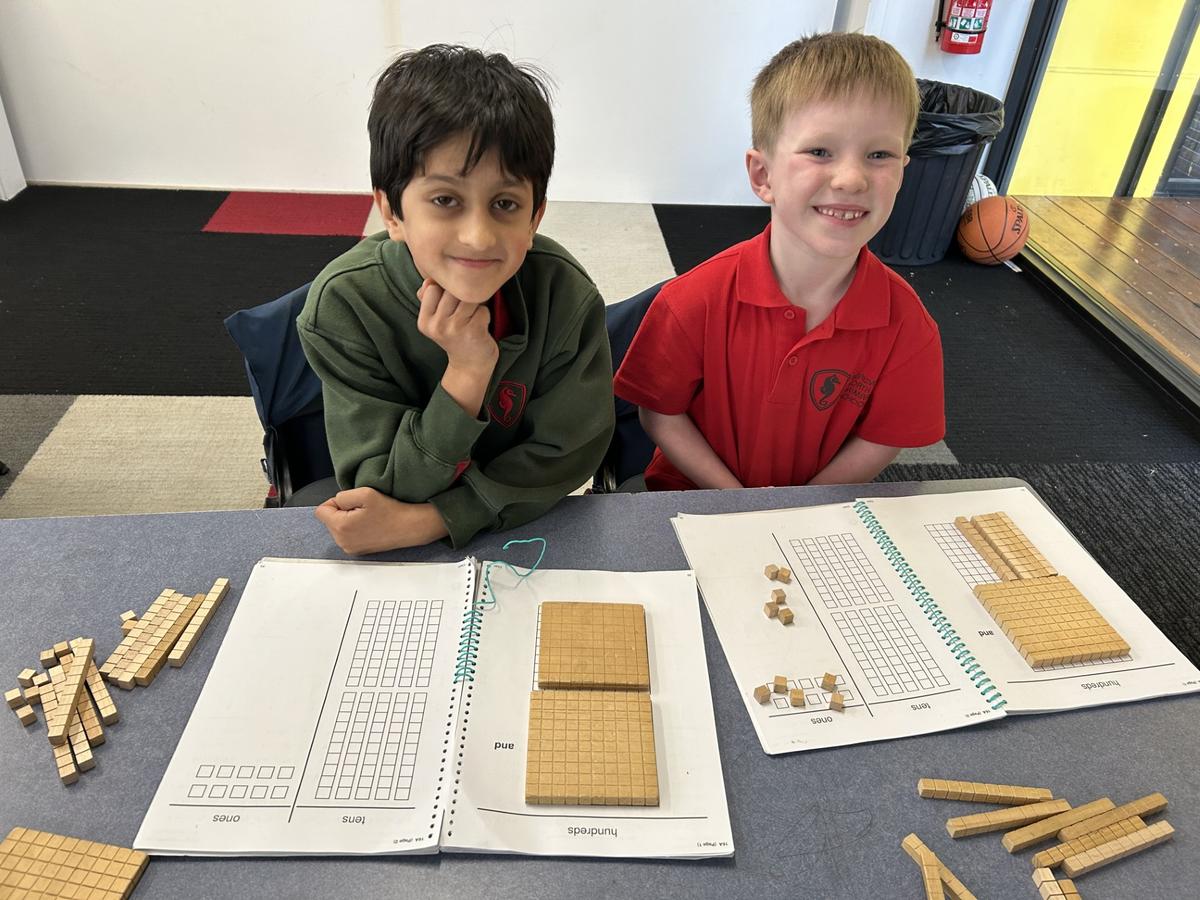
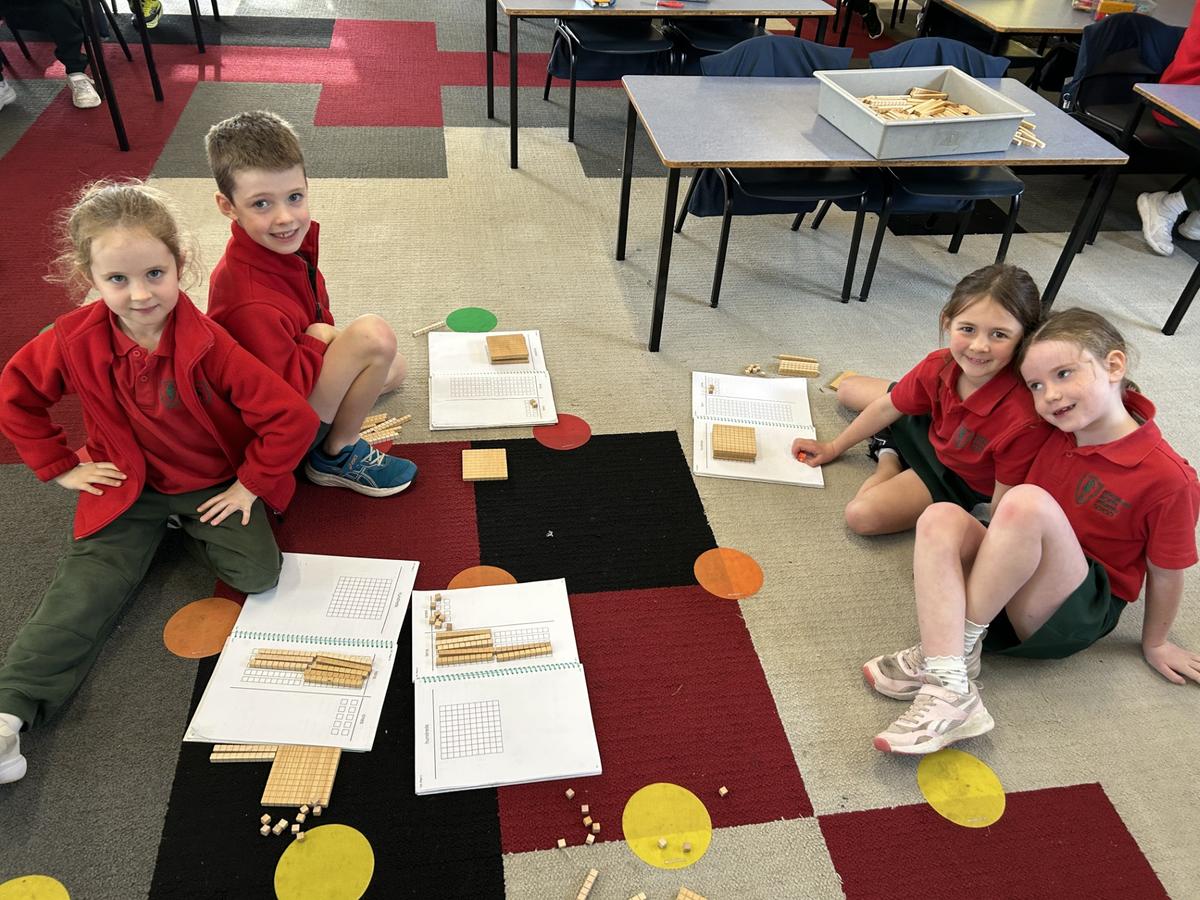
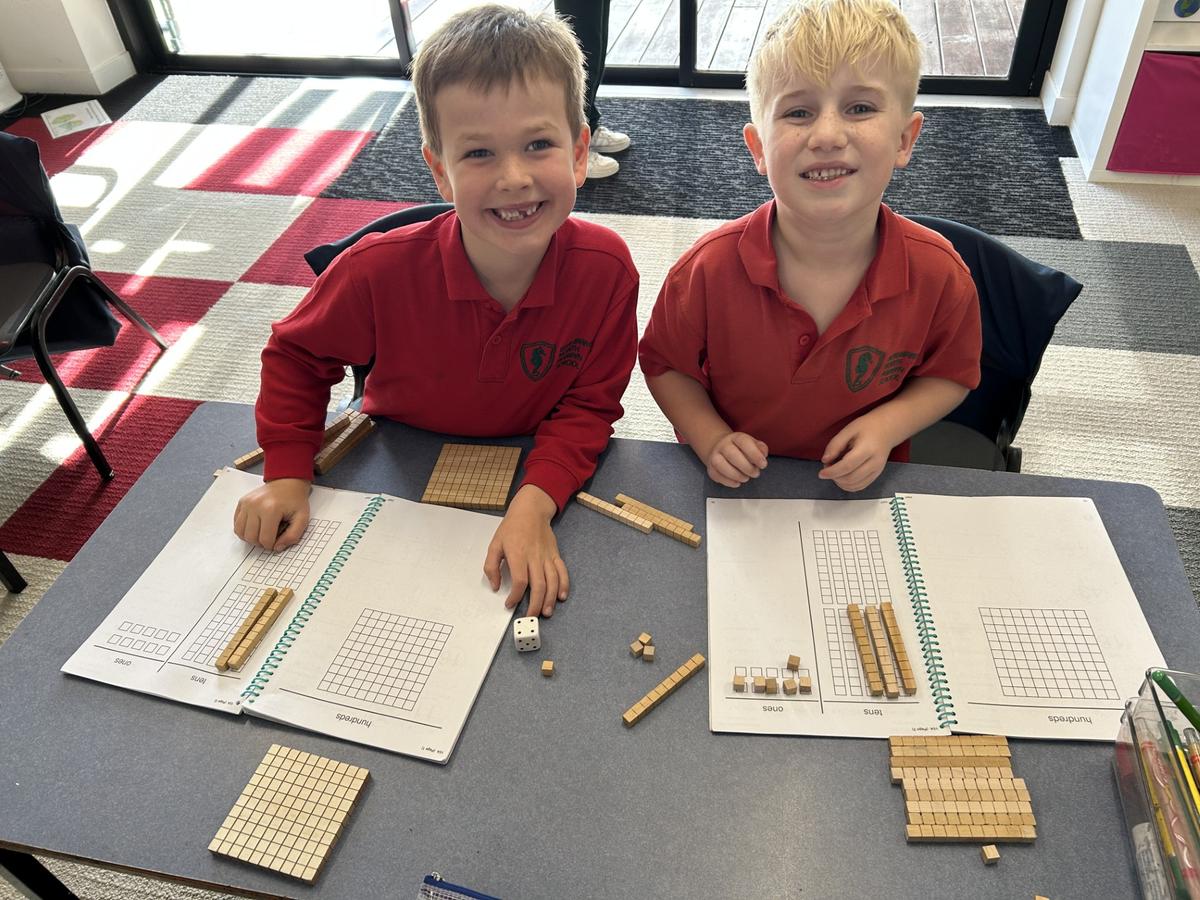
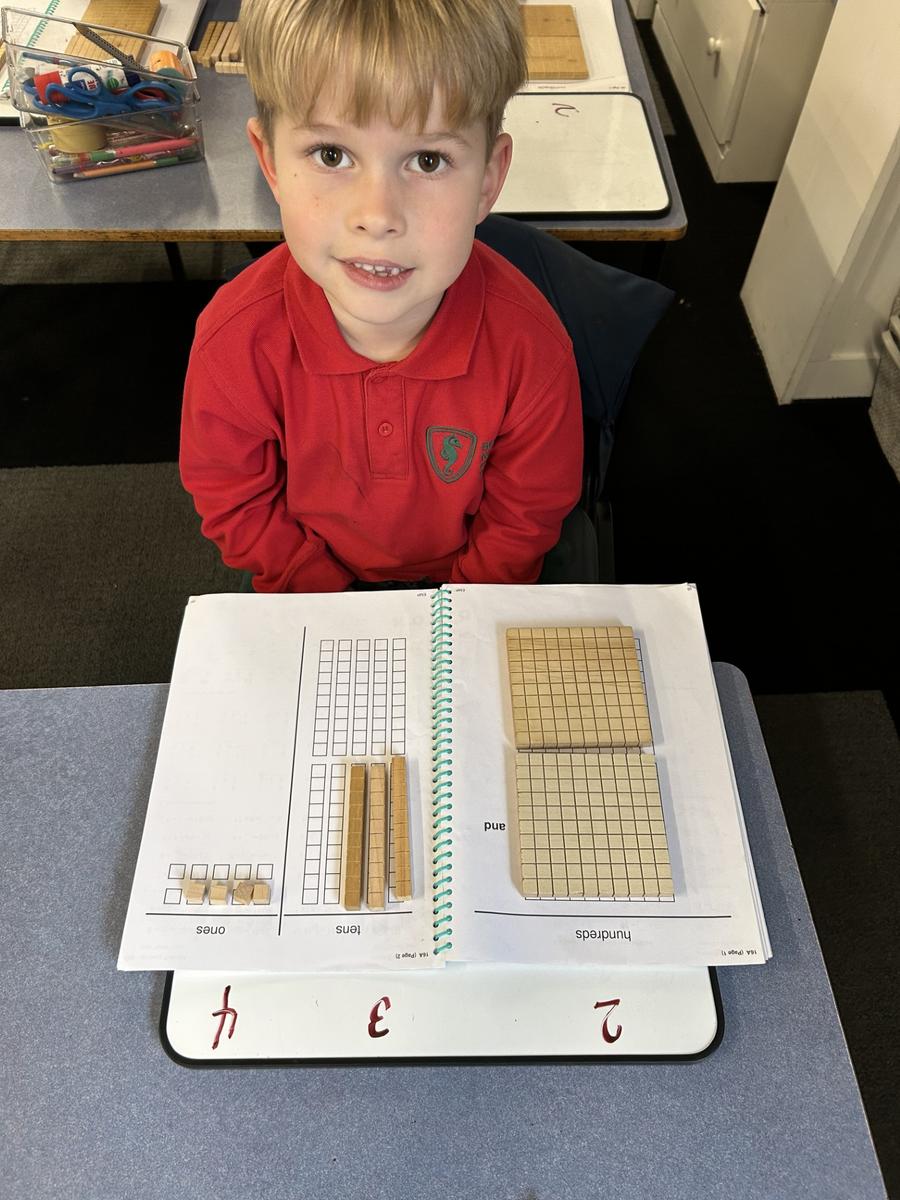
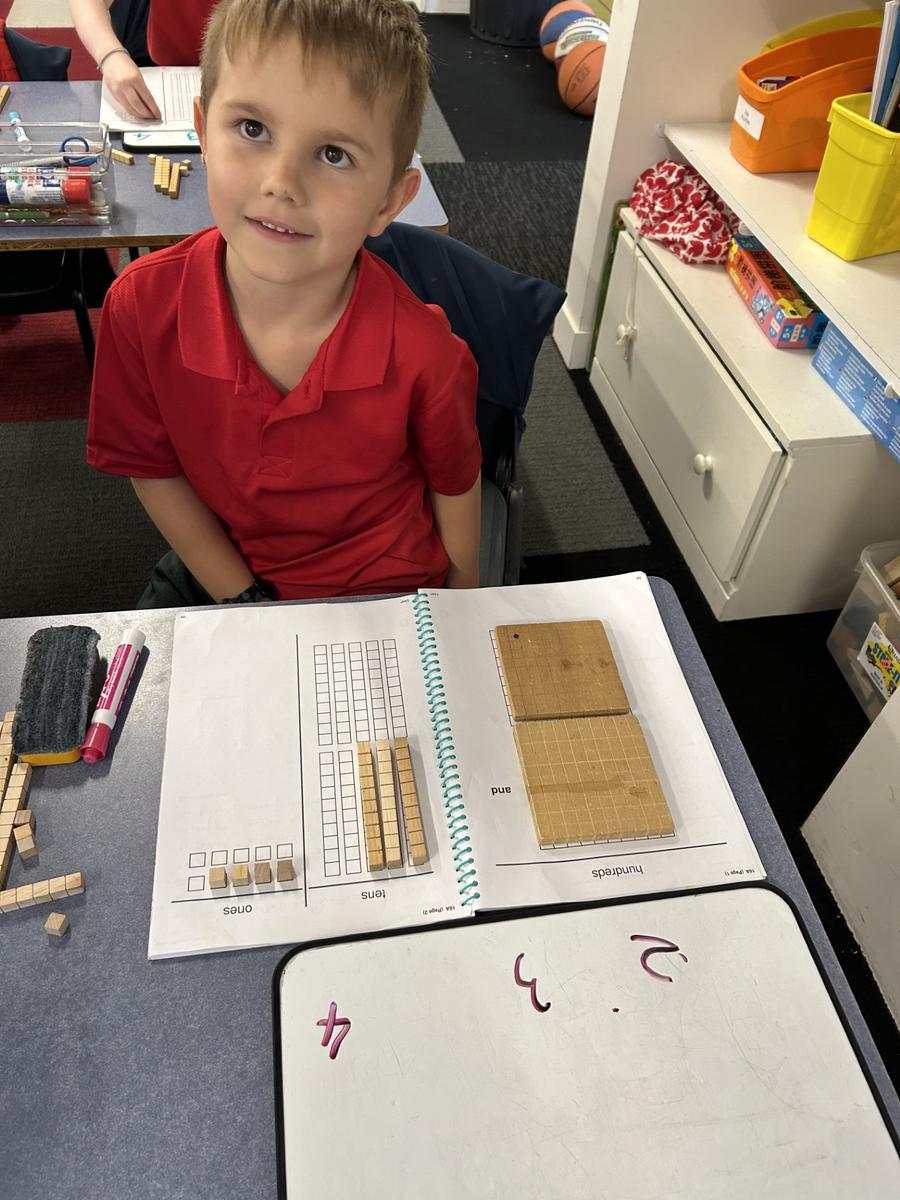
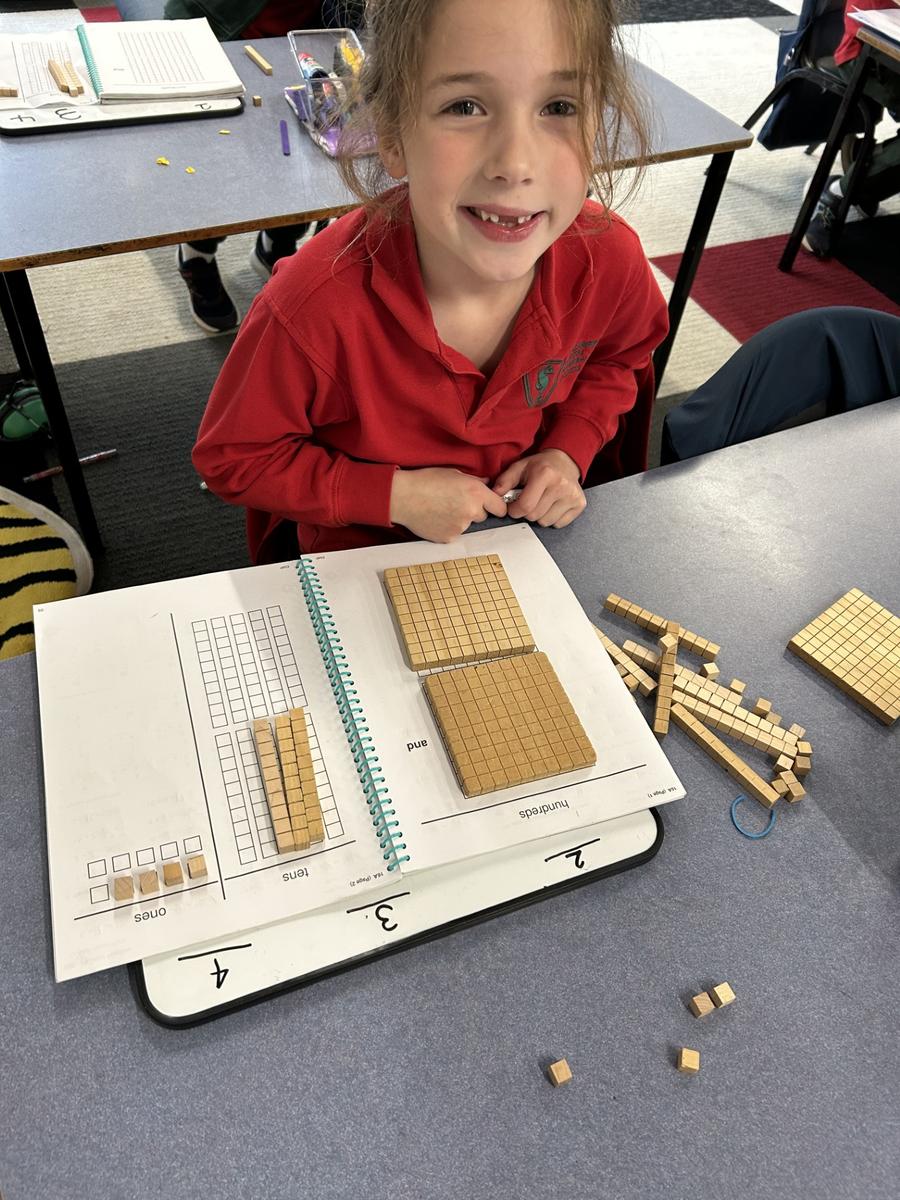
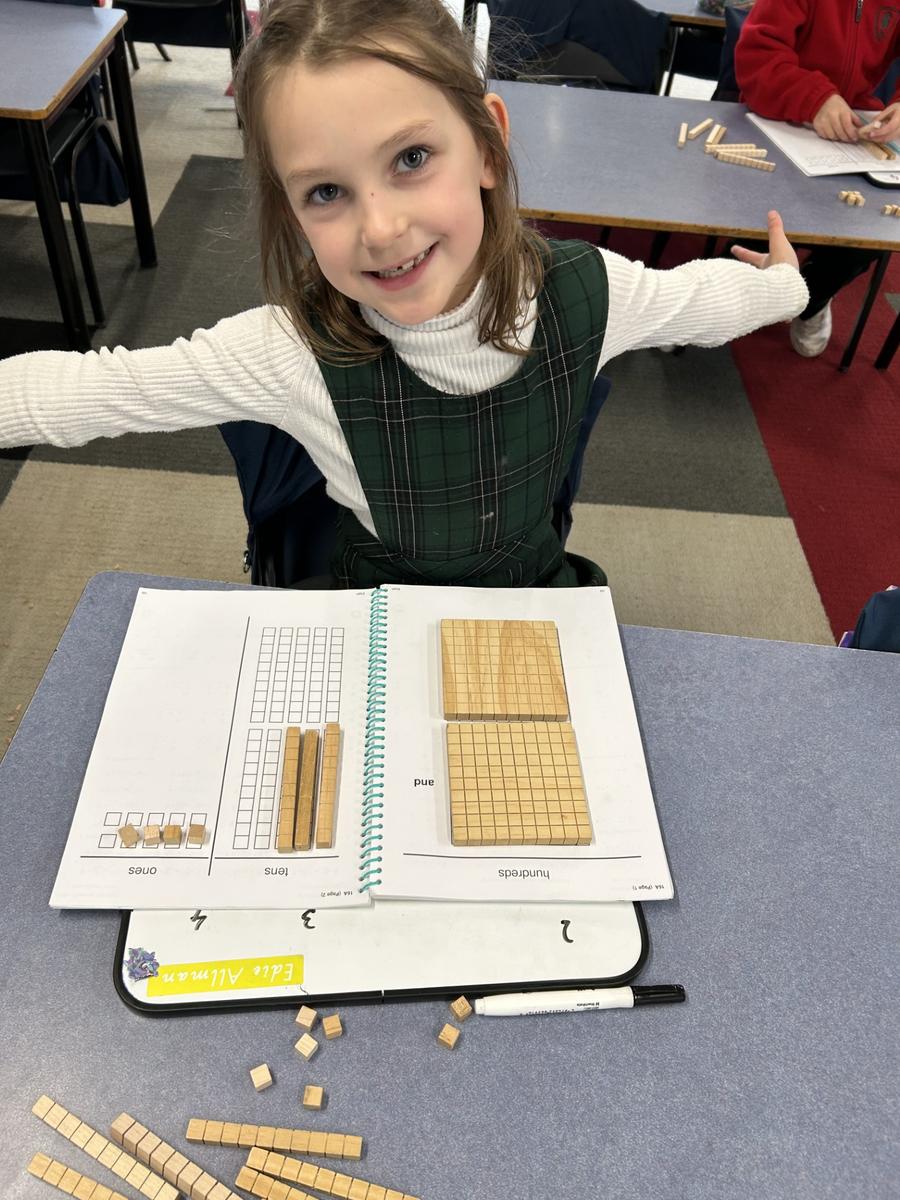
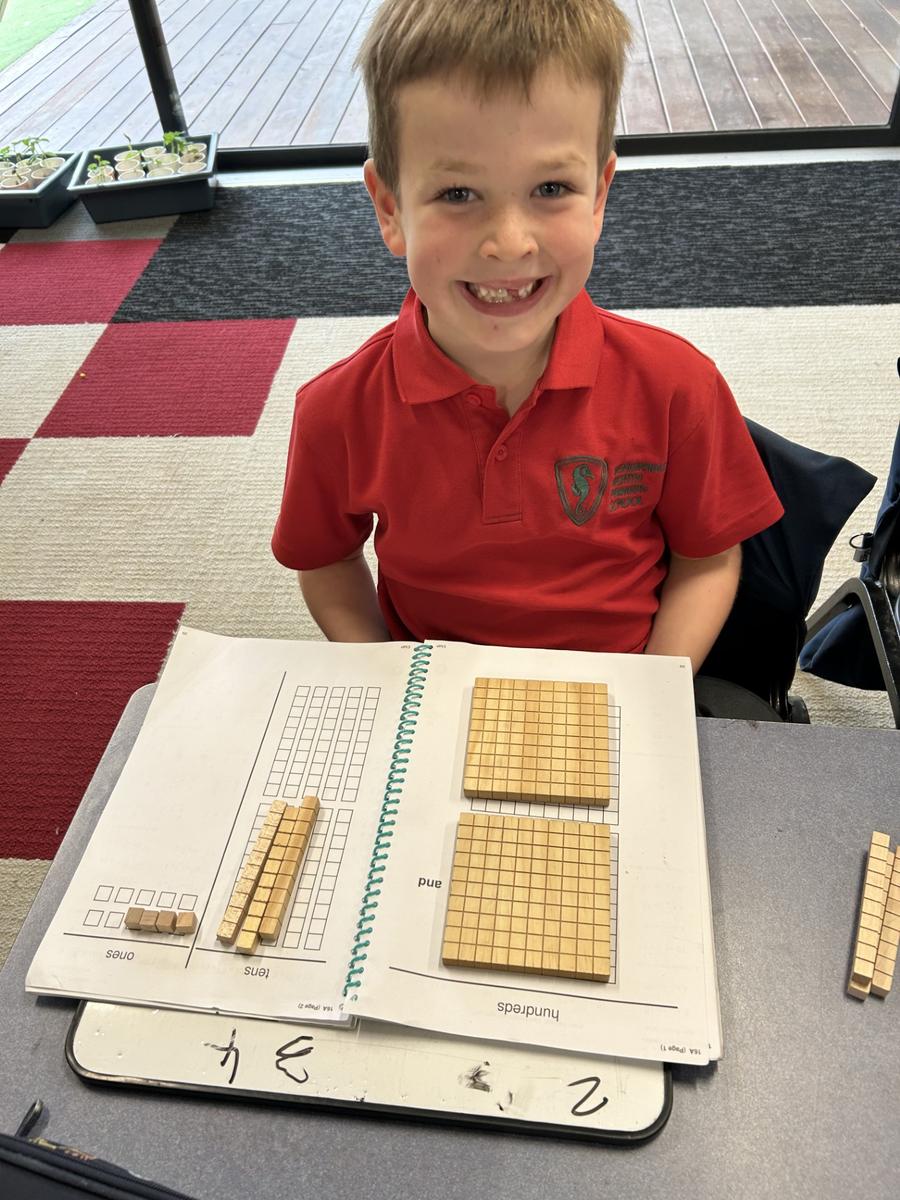
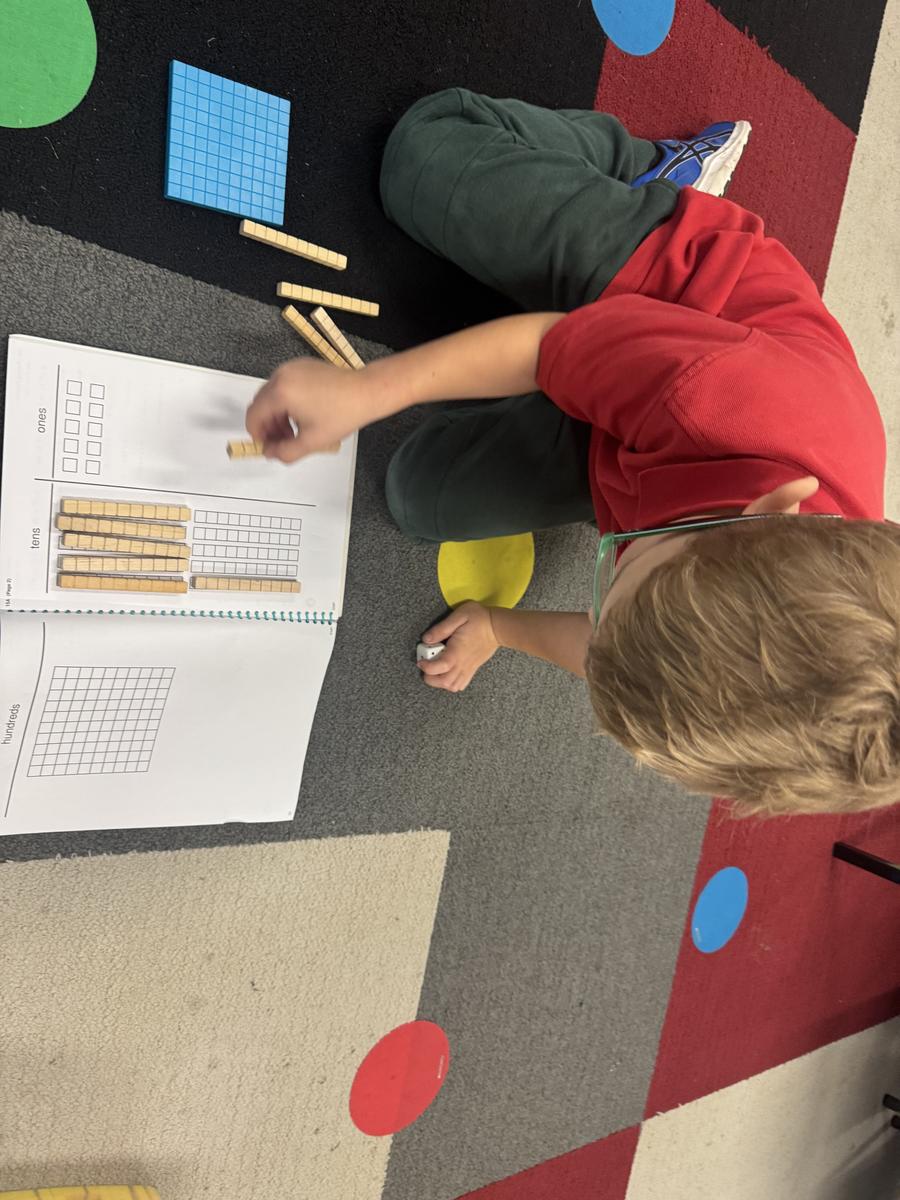
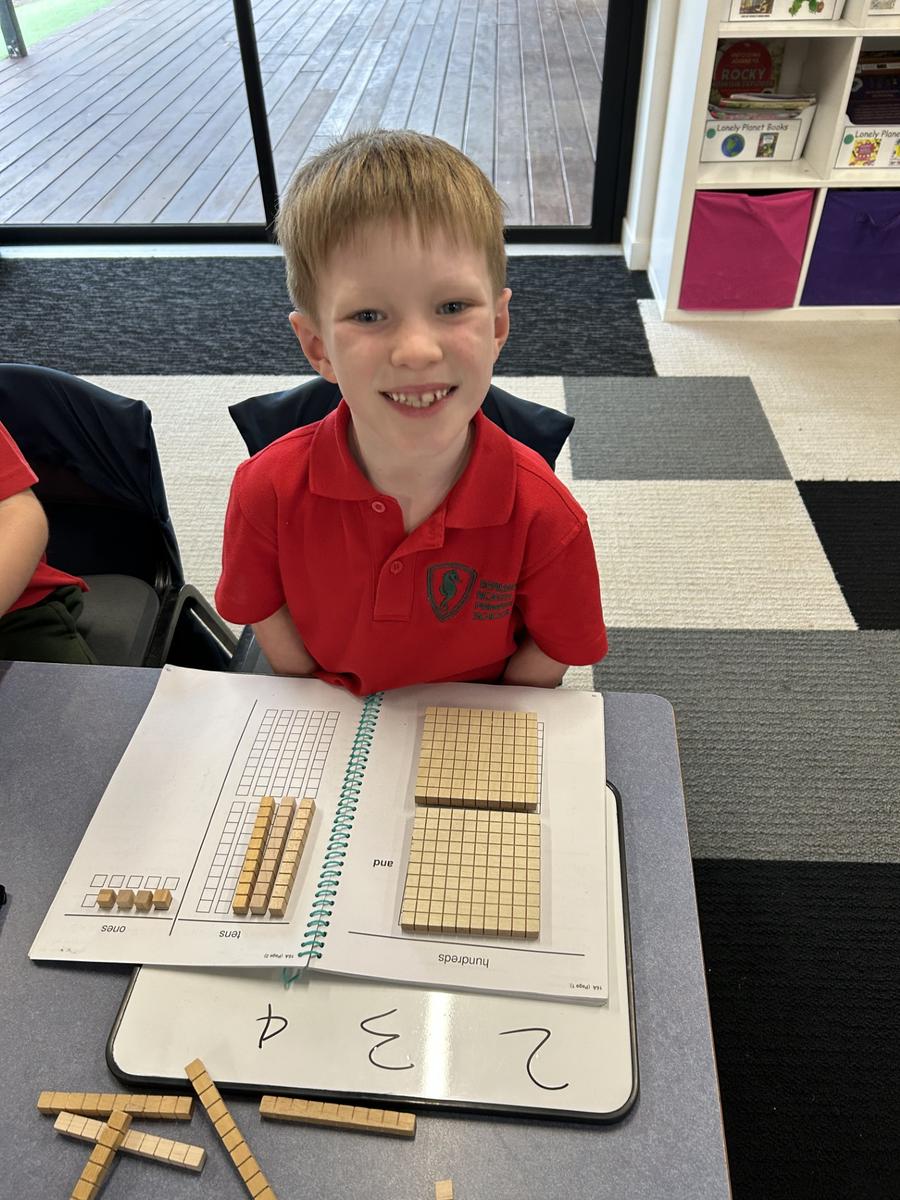
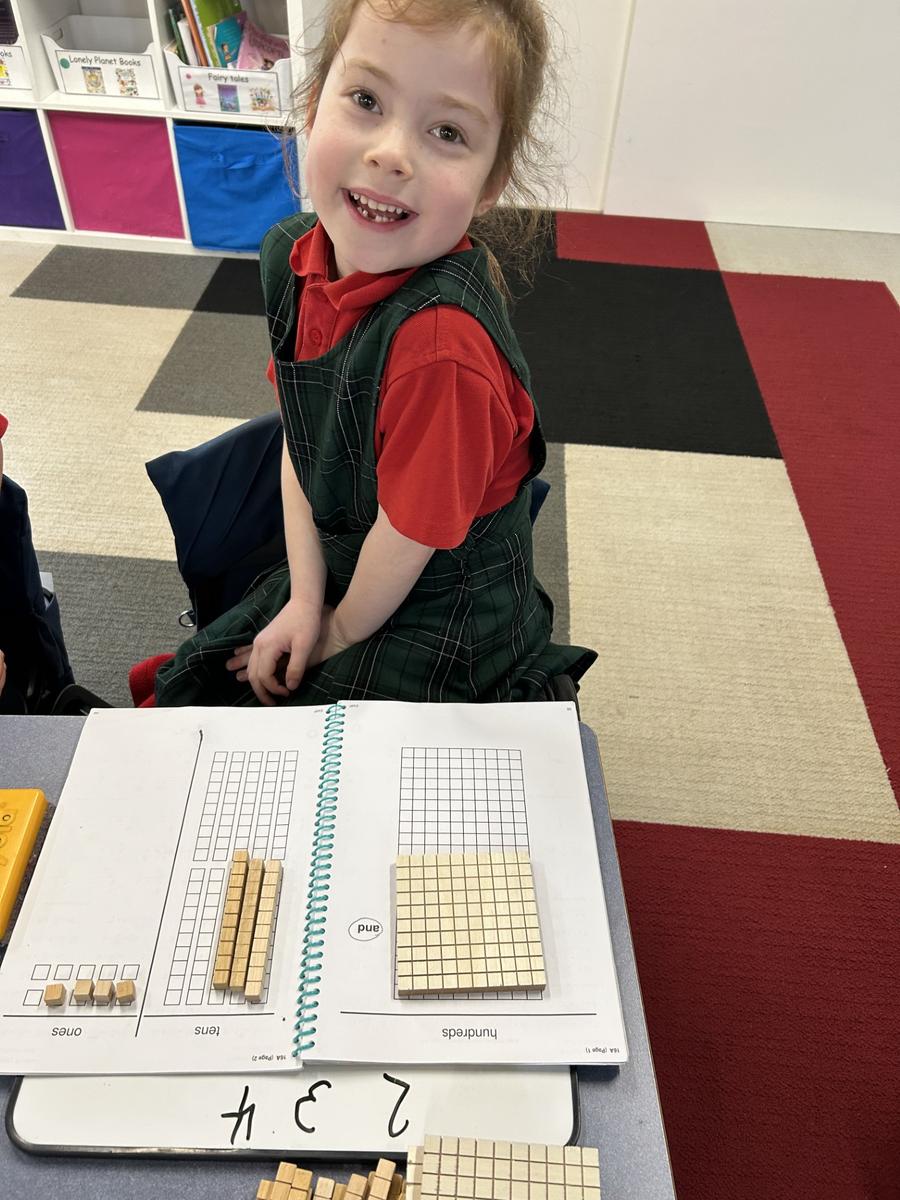
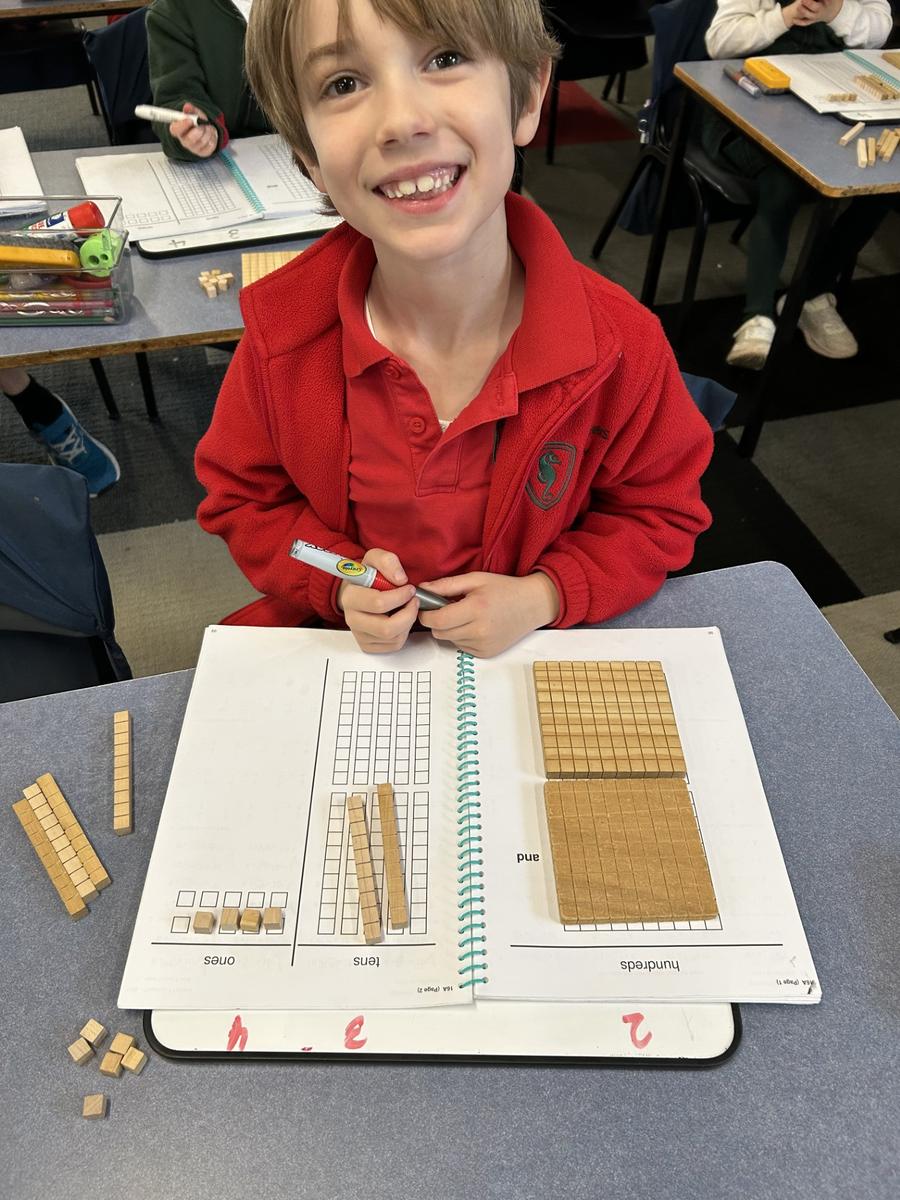
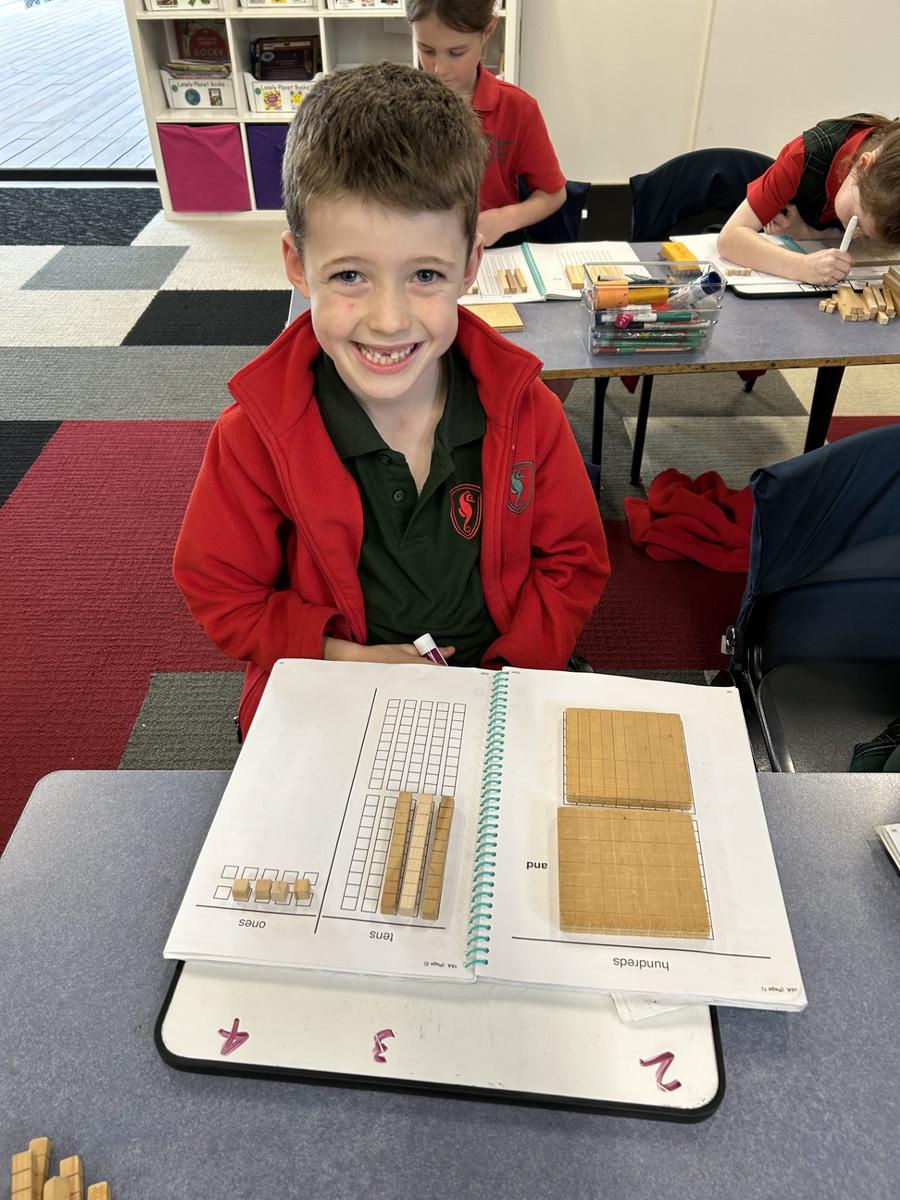
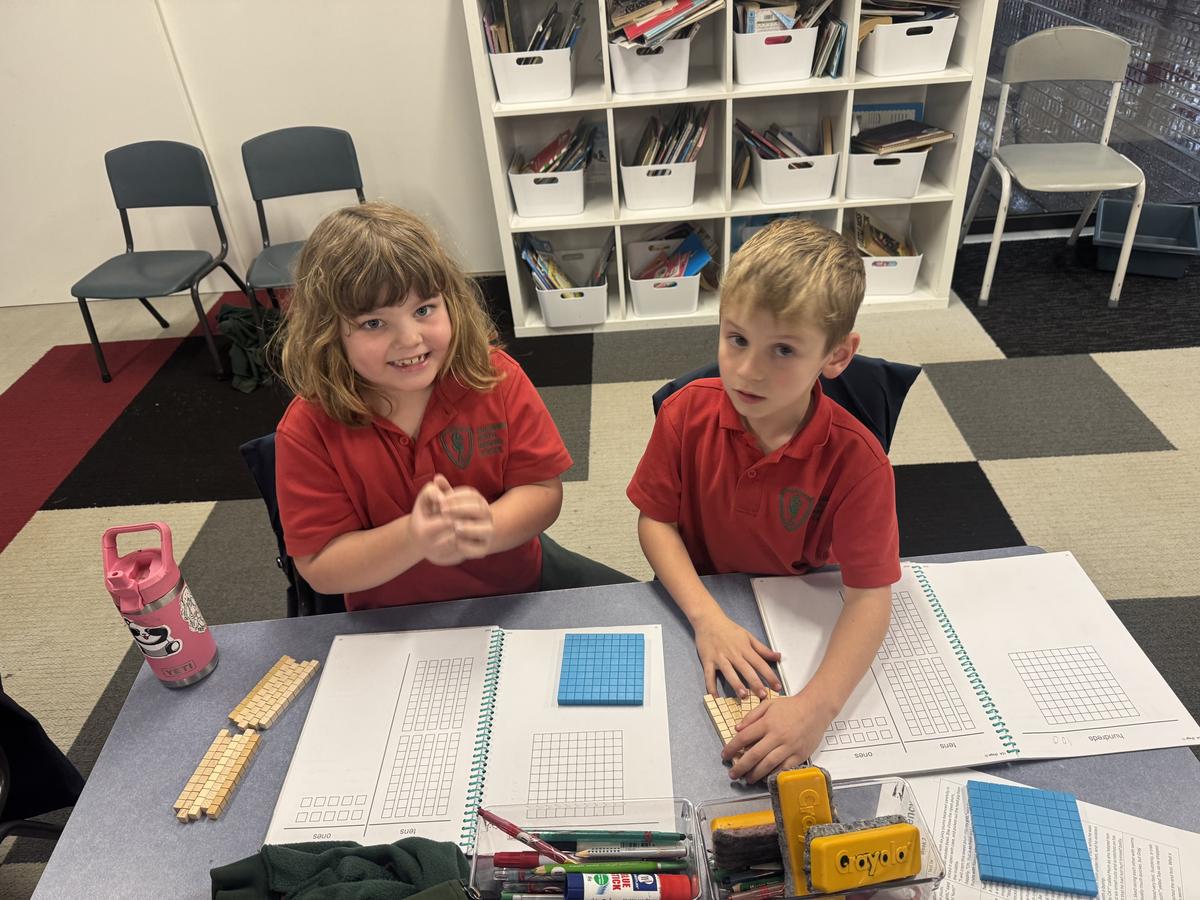
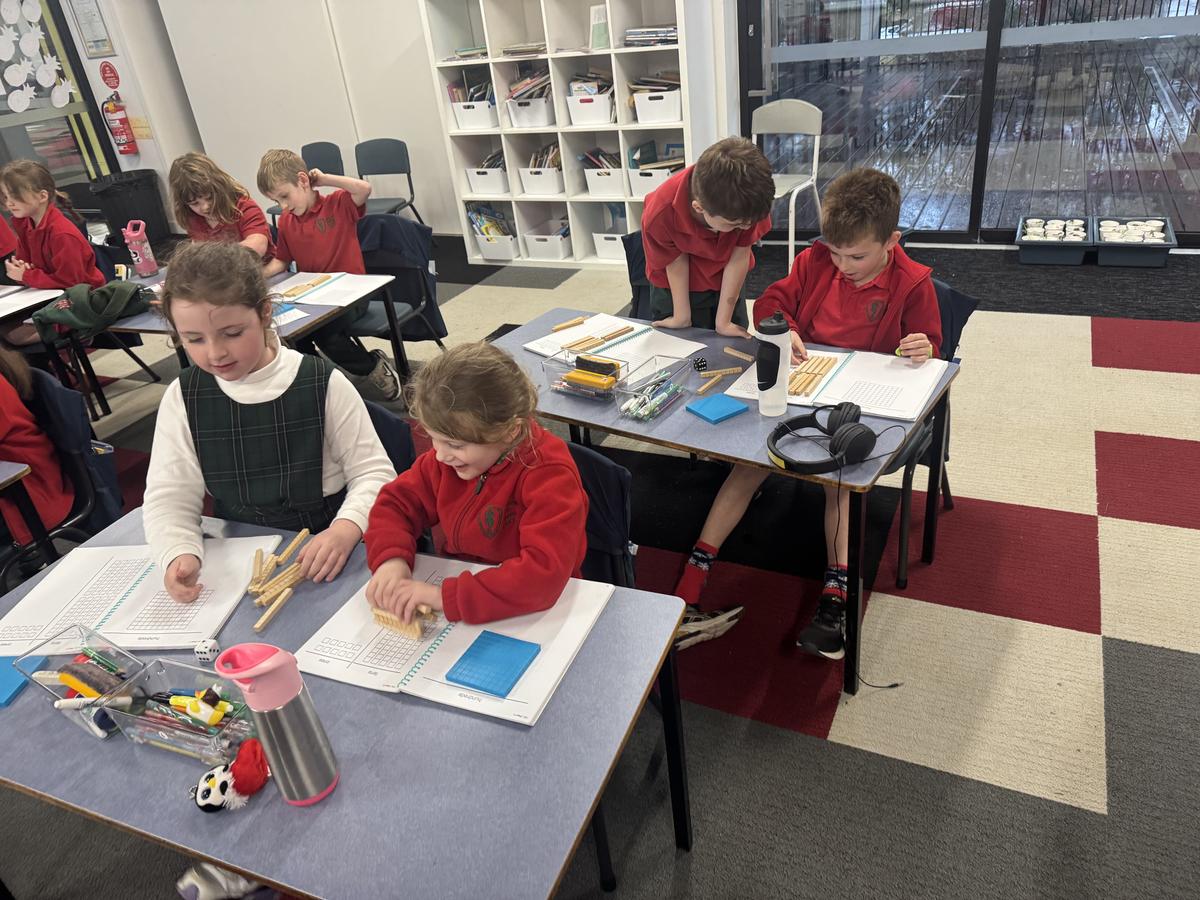
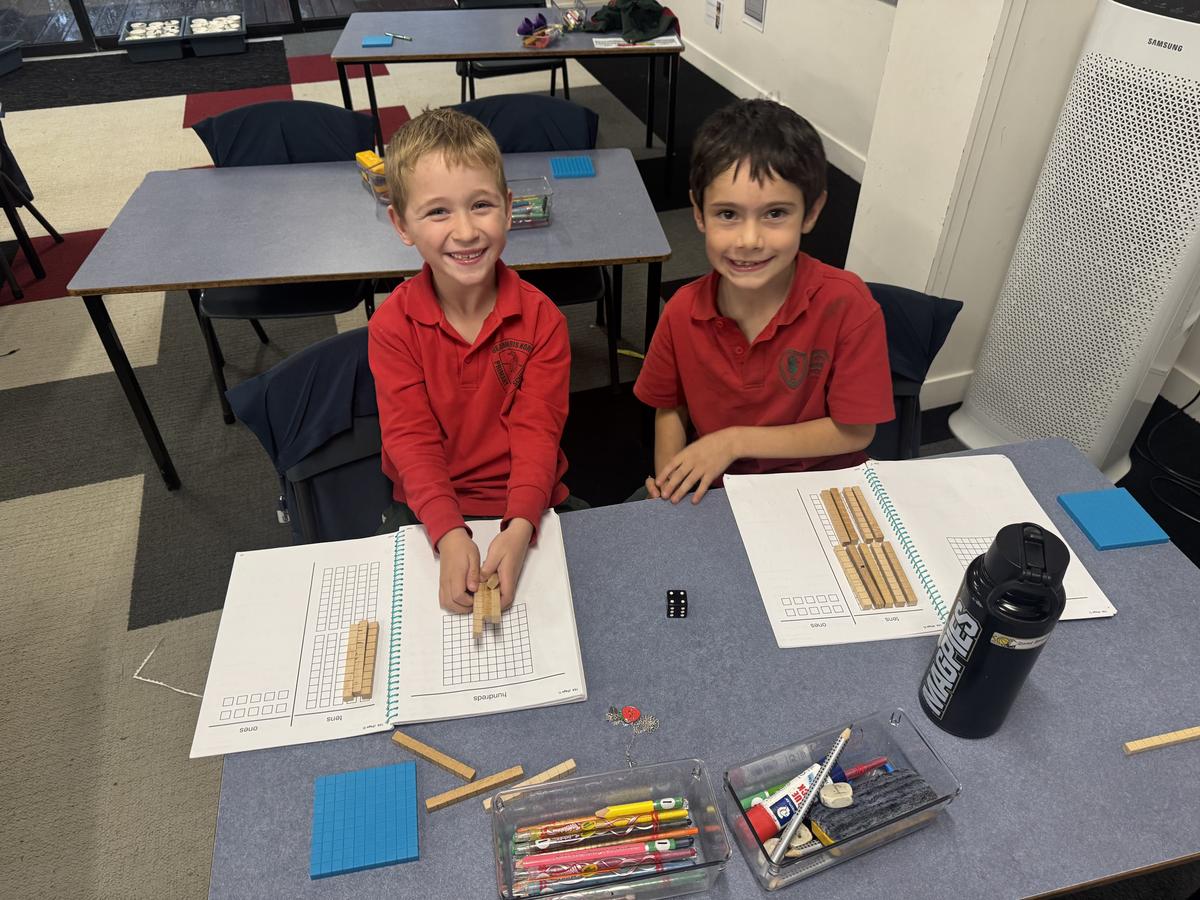
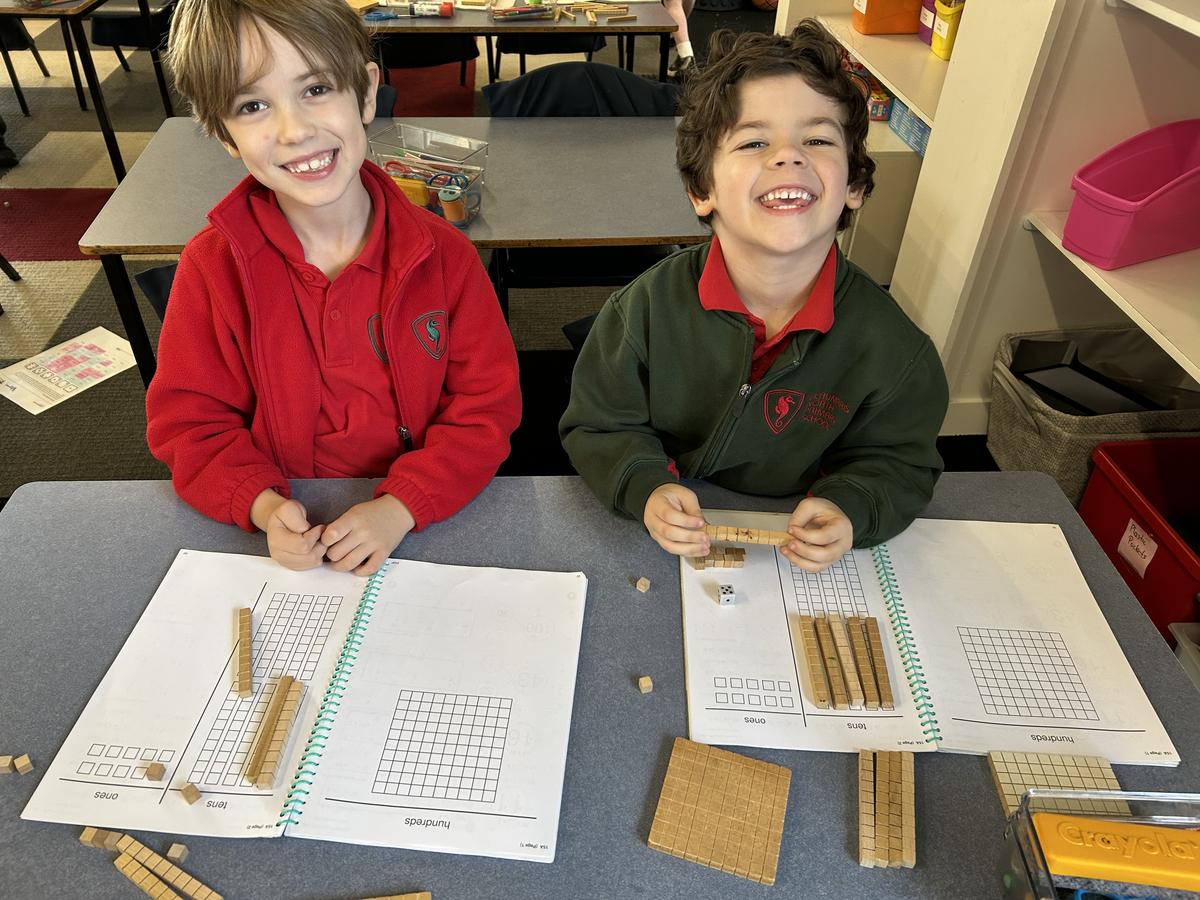
A big focus over the last two weeks has been place value and the introduction of MAB blocks. Students have been learning how to regroup numbers, recognising that 10 tens can be exchanged for 1 hundred. They particularly enjoyed playing Race to 100 with Place Value Blocks, which provided valuable hands-on learning experiences and helped strengthen their understanding of place value concepts.
Students were also introduced to 3D shapes. They learnt the names of various 3D objects and explored their features by counting faces and vertices.
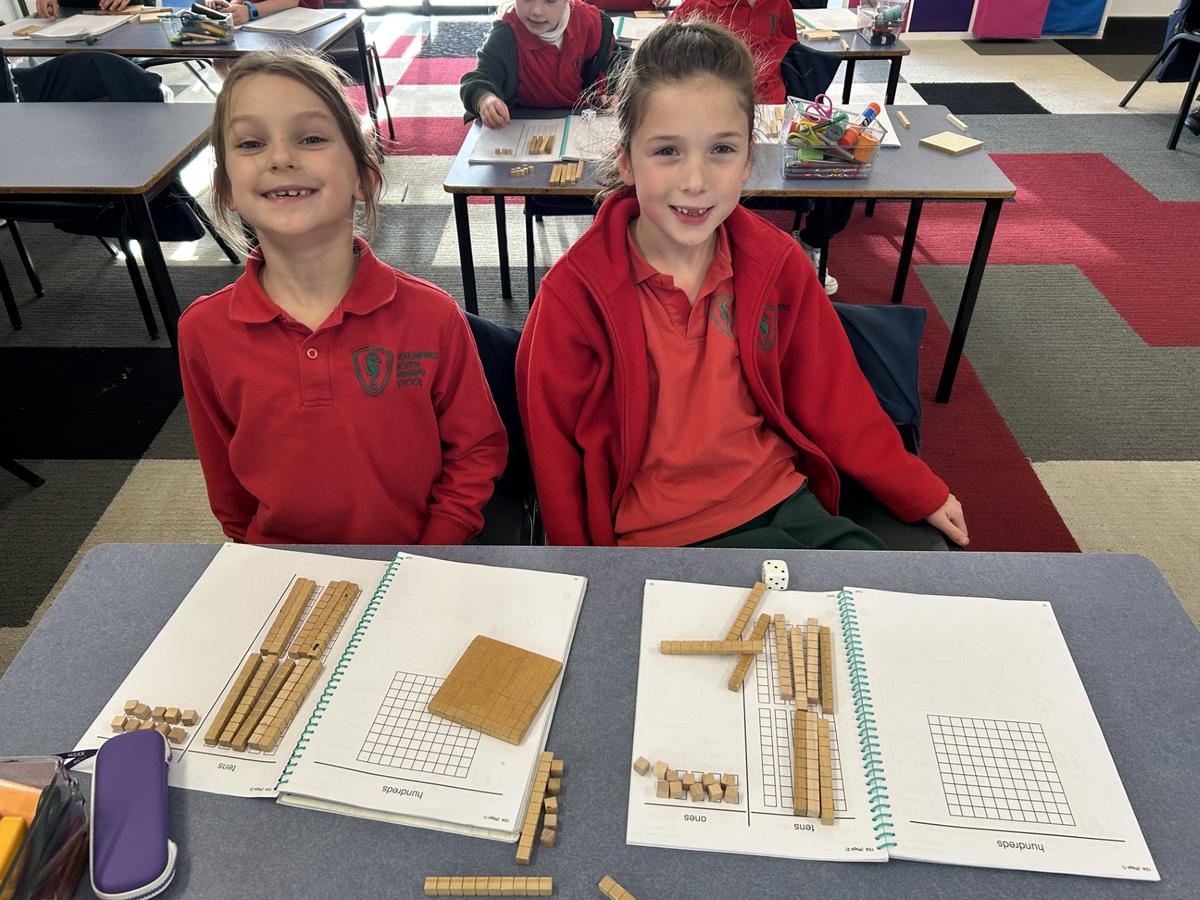
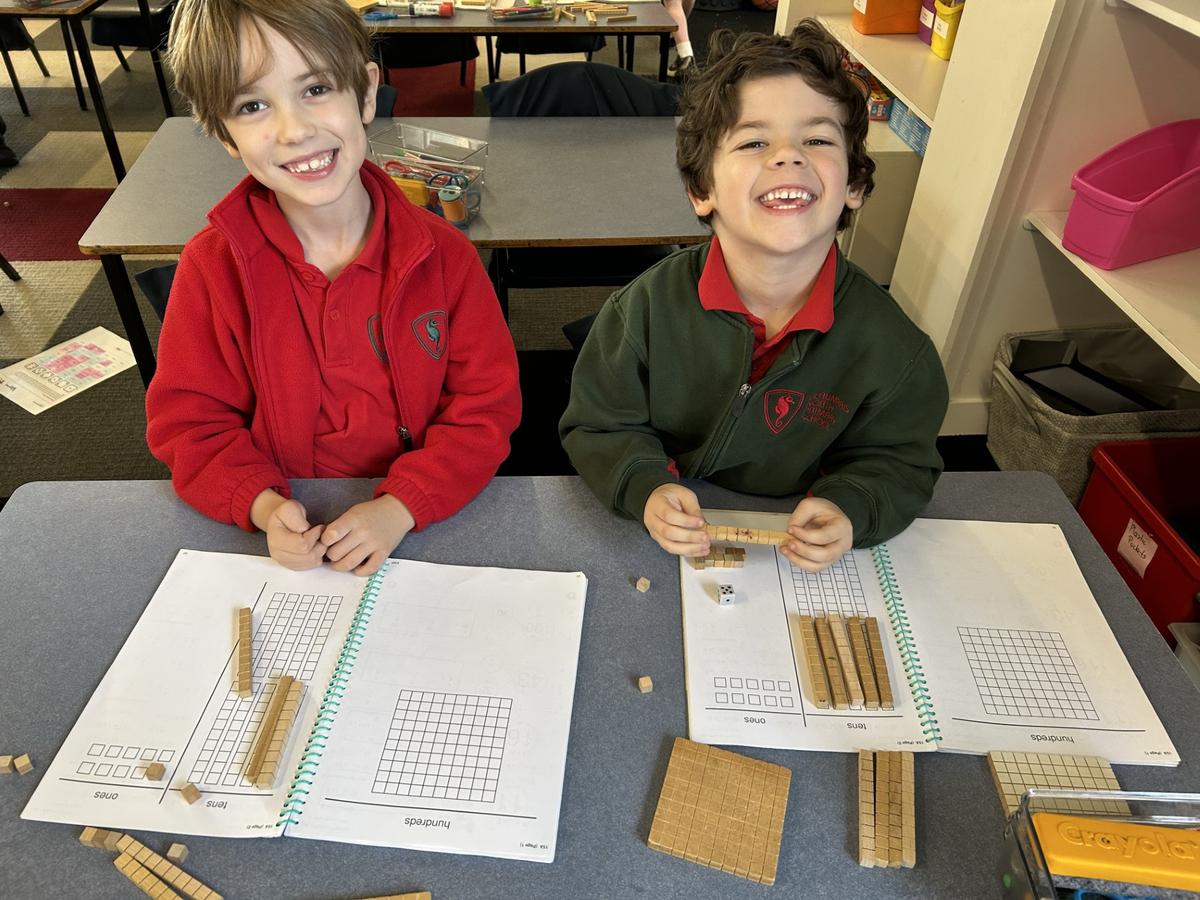
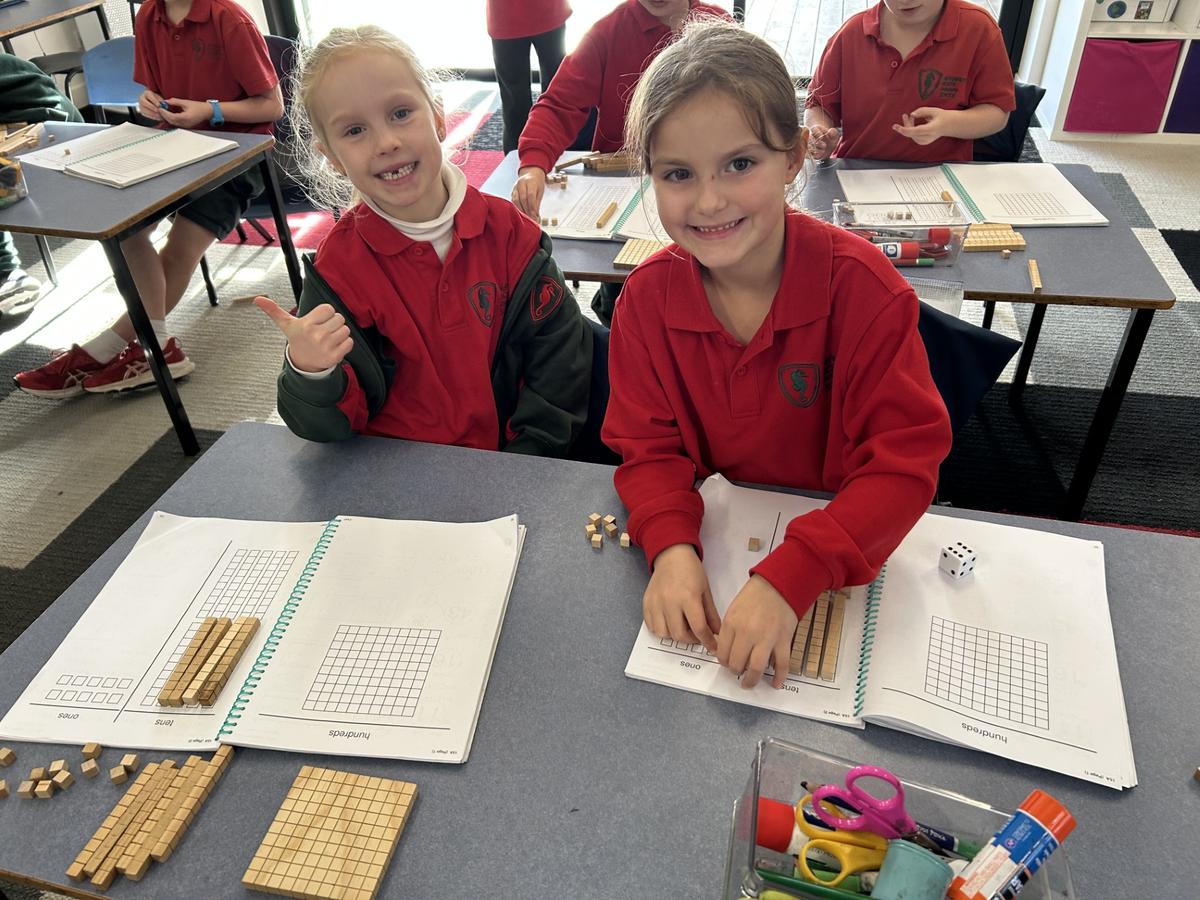
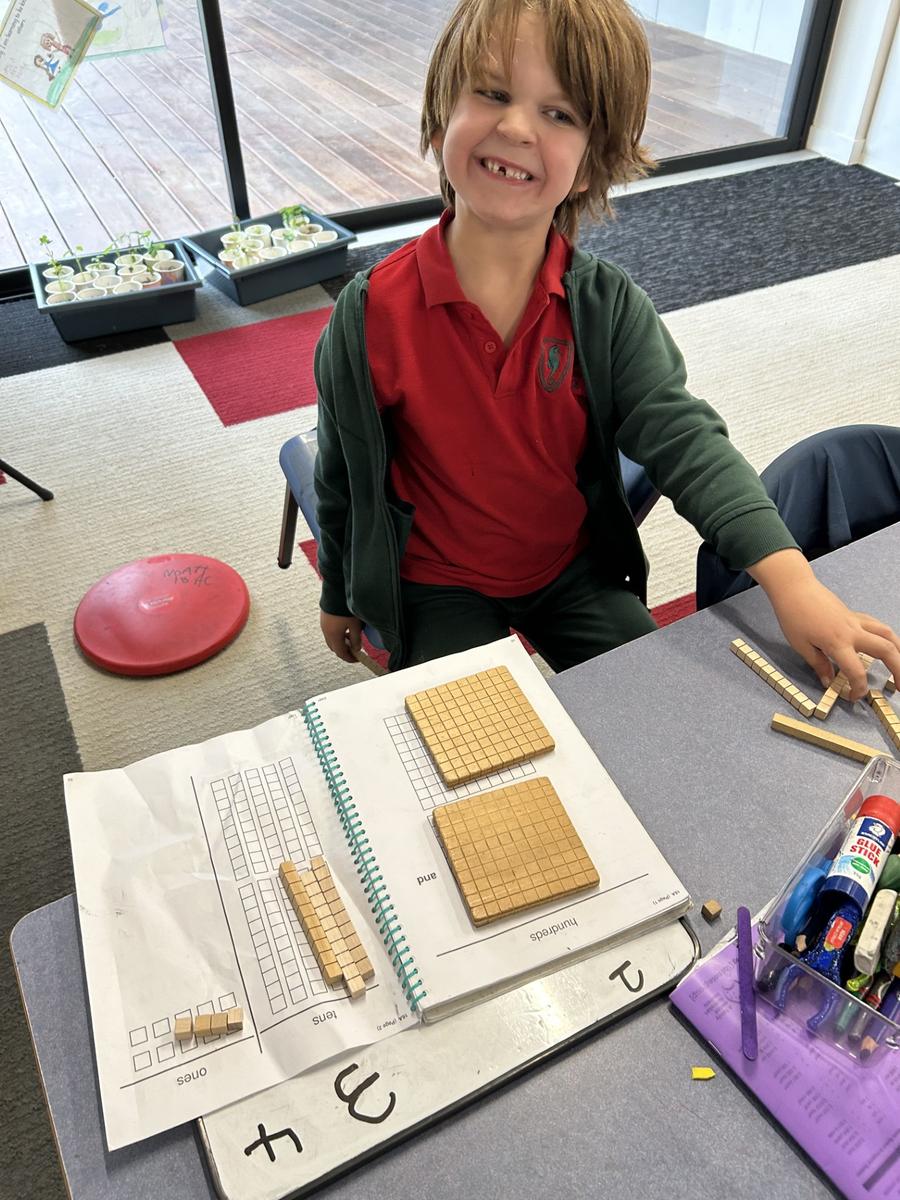
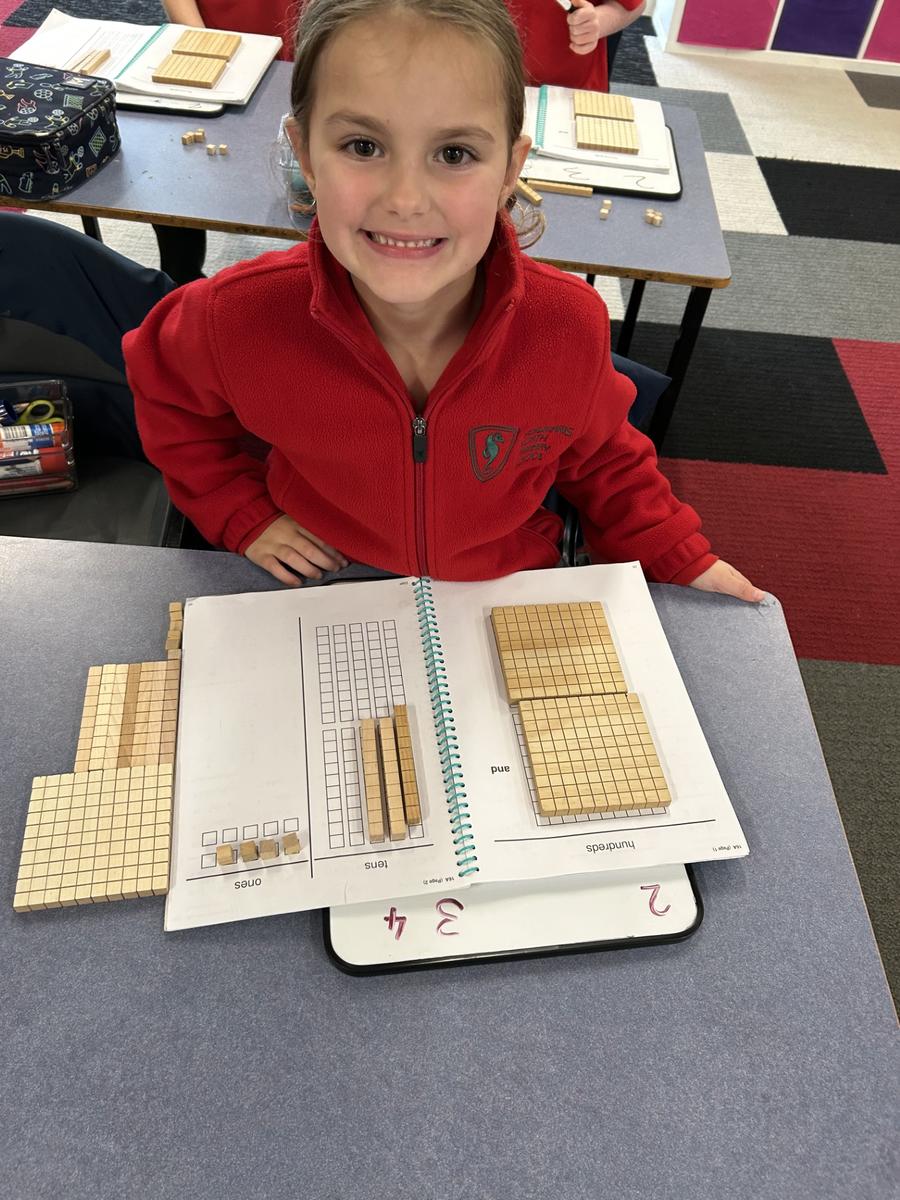
The students have also continued to revise addition and subtraction facts through daily automaticity and fluency practice. This regular practice is helping them develop greater confidence and efficiency when solving problems mentally.
Students have also been strengthening their skip-counting skills. We have focused on counting by 1s from different starting numbers, as well as counting in 2s, 5s and 10s. They have also been practising counting forwards and backwards to build number sense and flexibility.
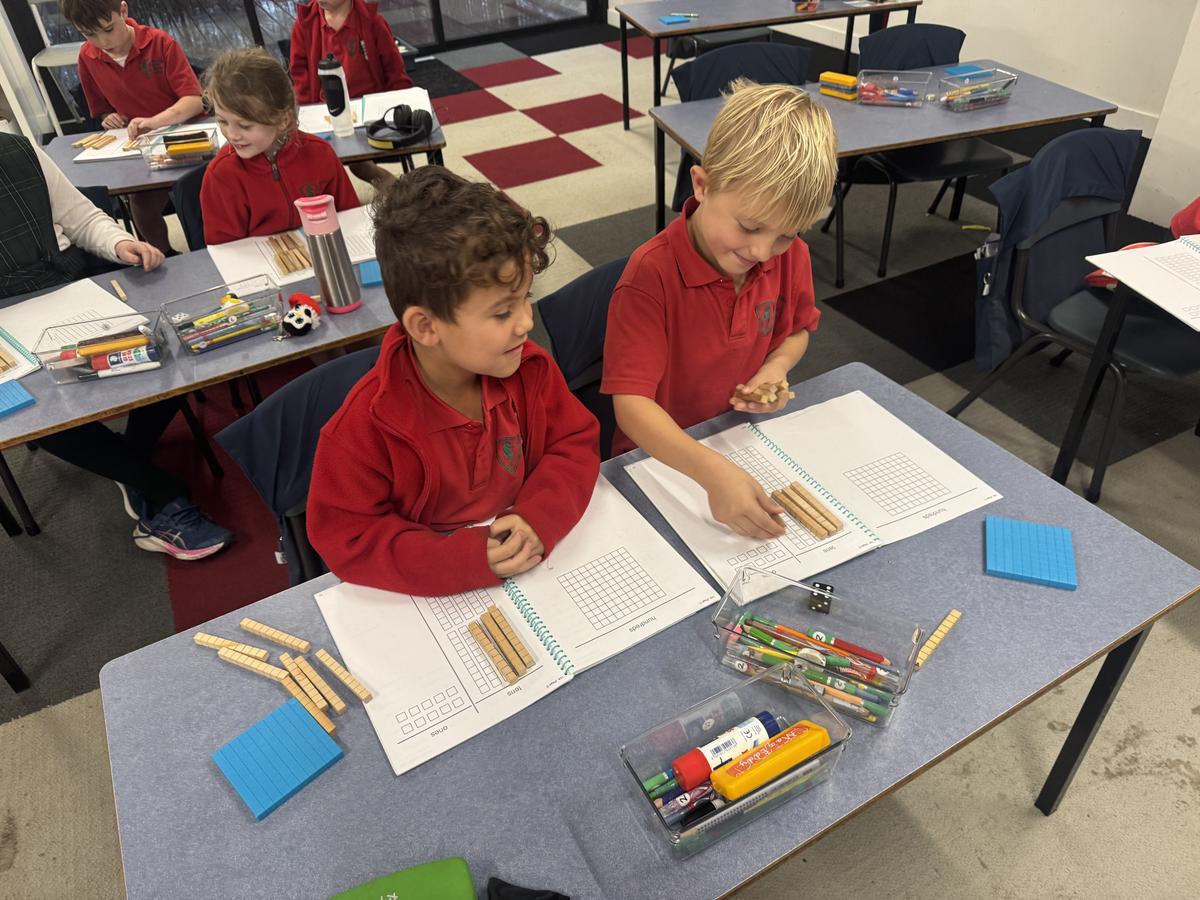
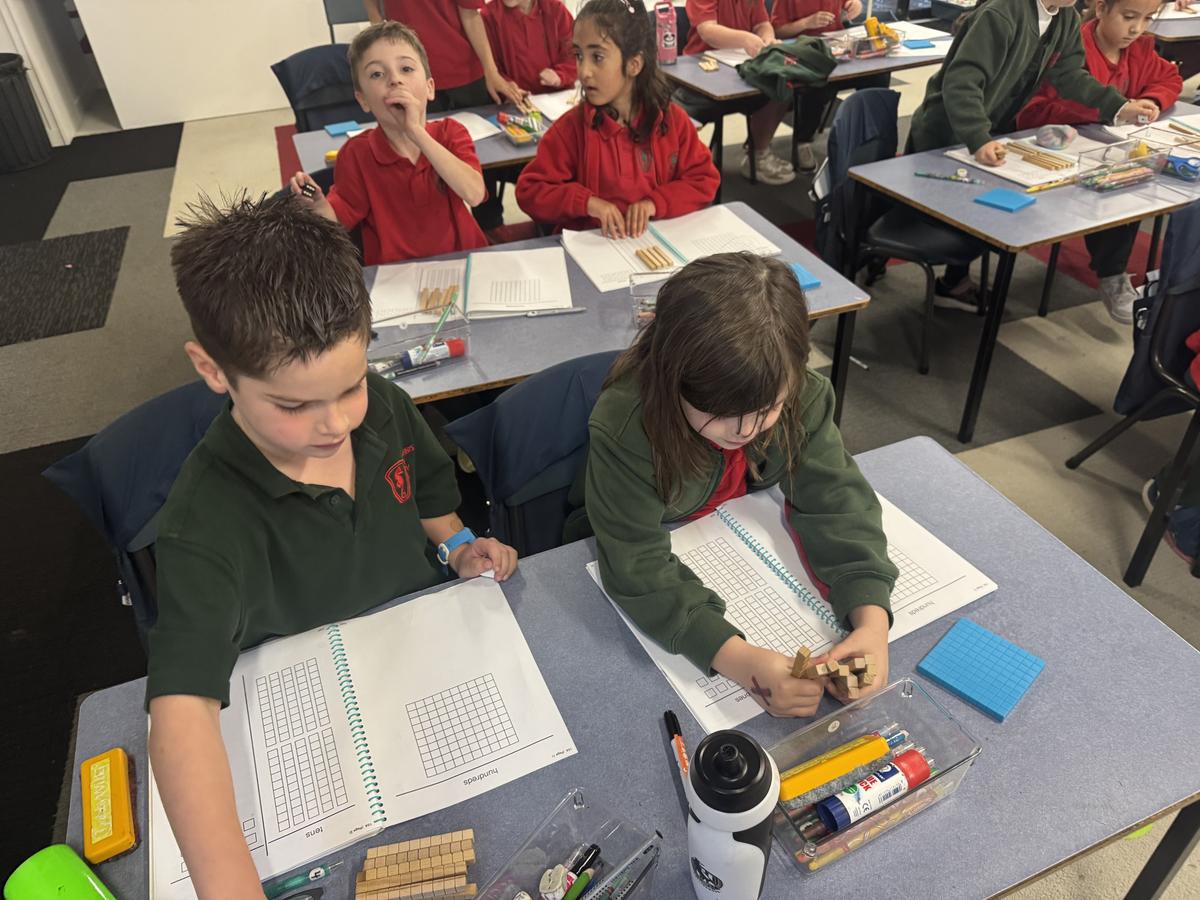
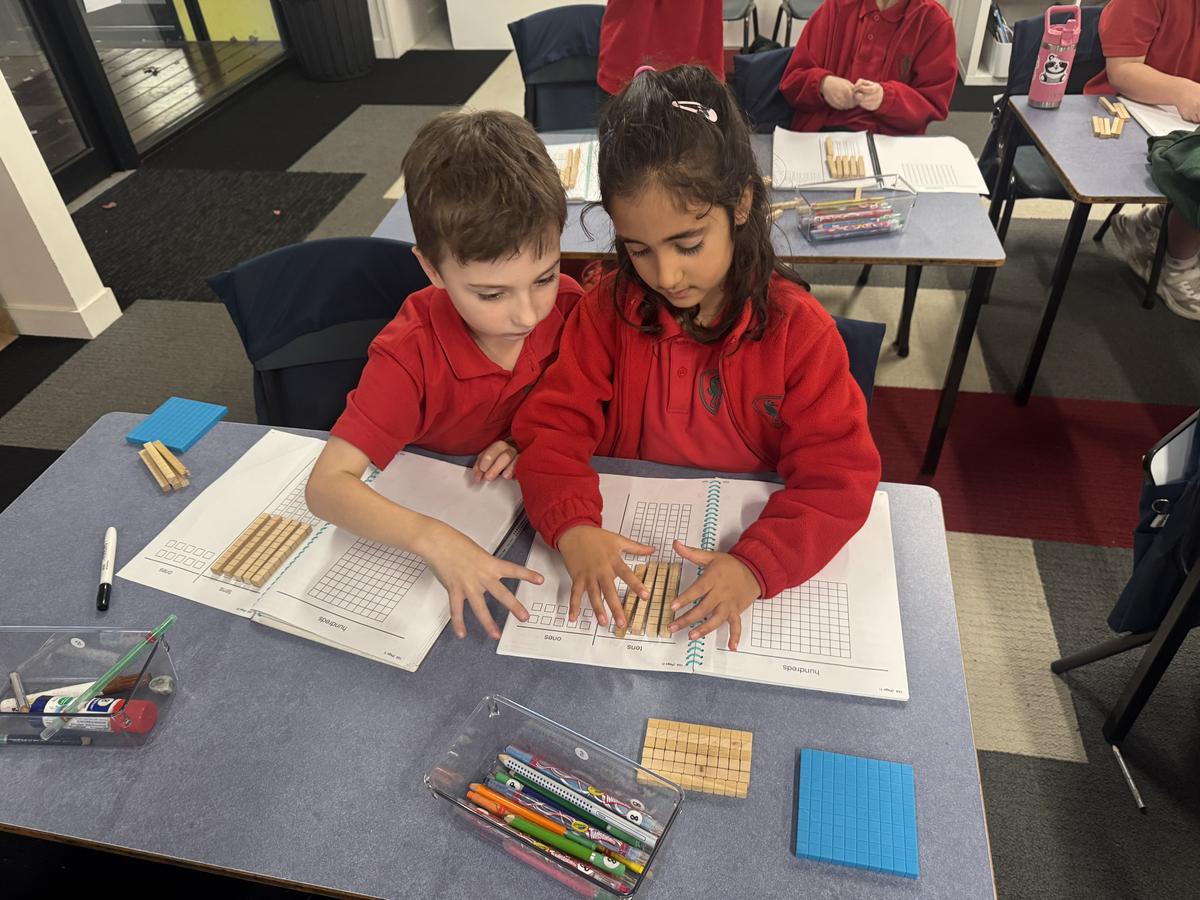
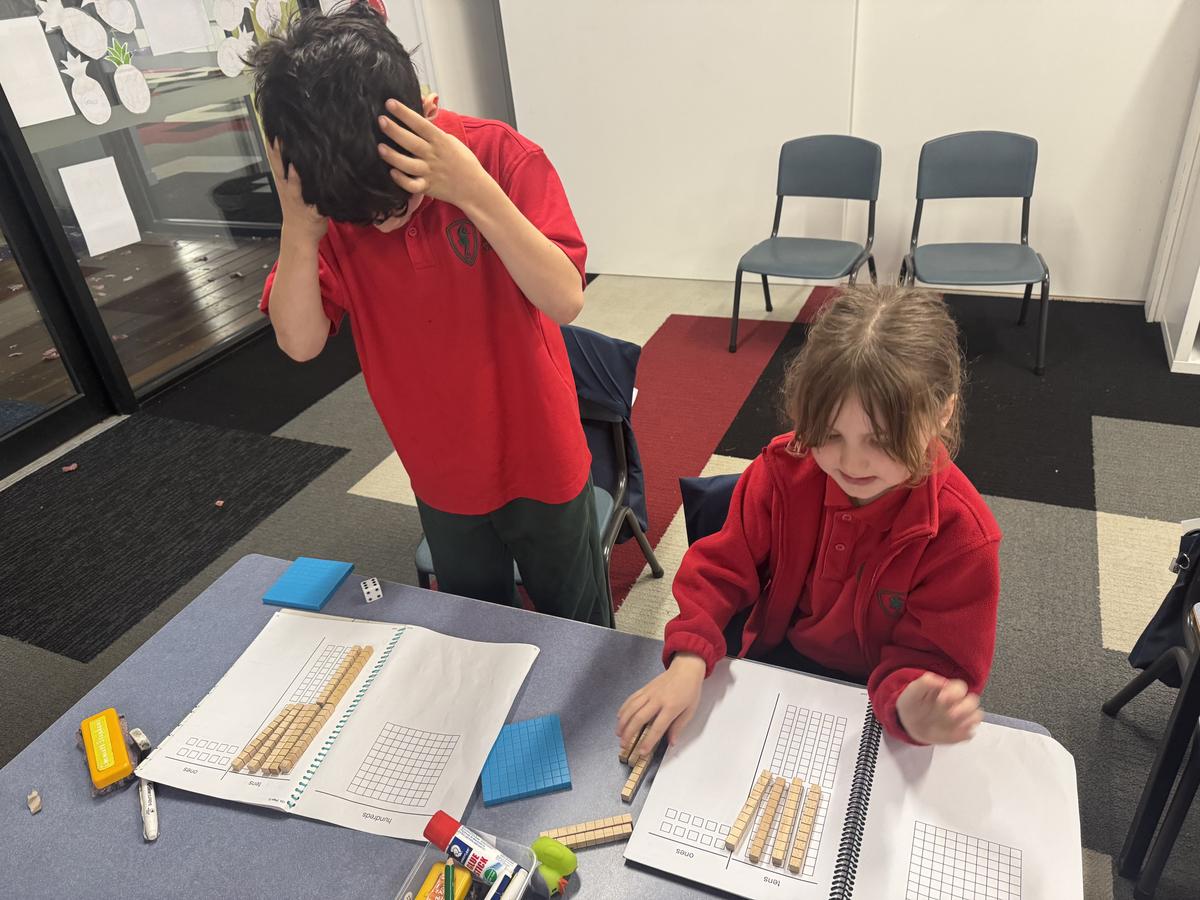
Families can support their child's learning at home by playing number games involving number bonds, flashcards, dice games, skip counting activities, or practising simple mental maths questions. These activities can make a significant difference in developing confidence and fluency with numbers.
How We Organise Ourselves
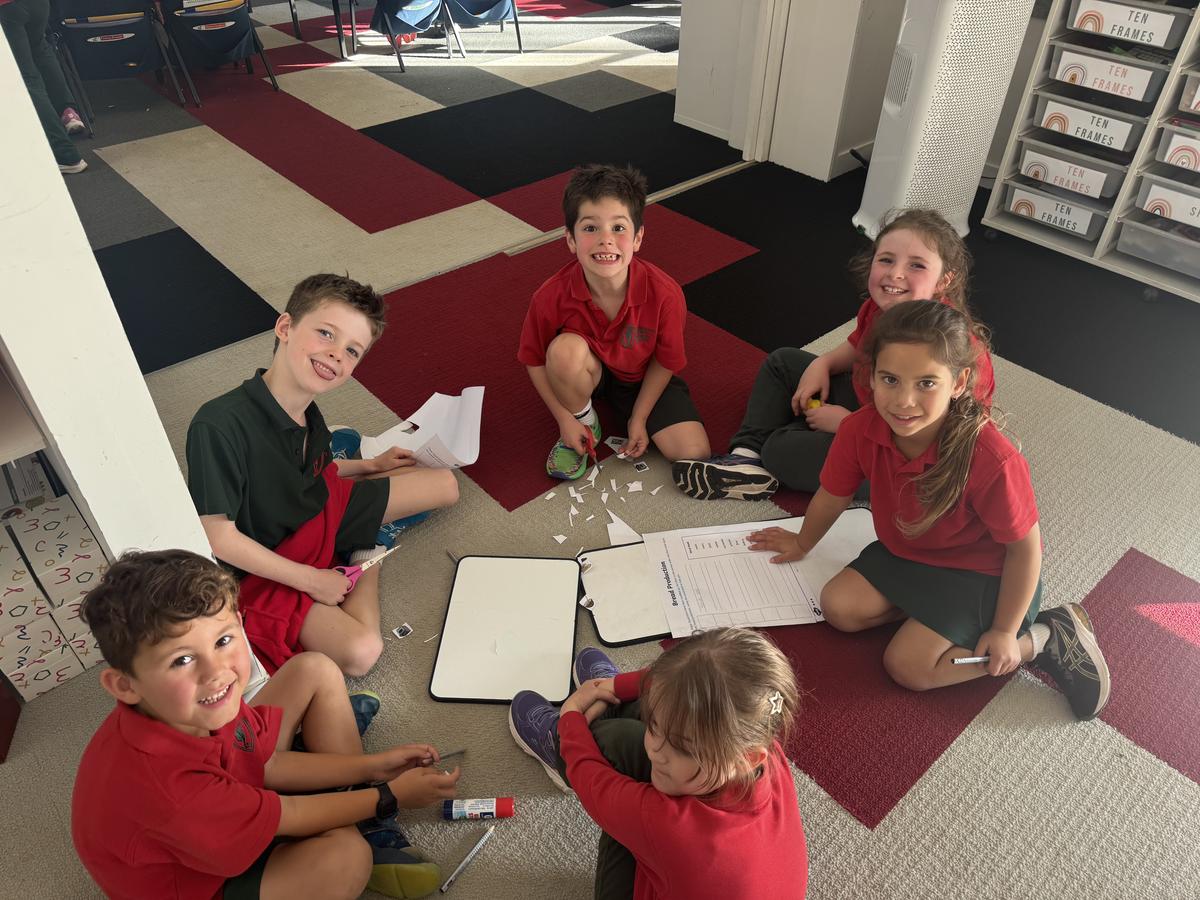
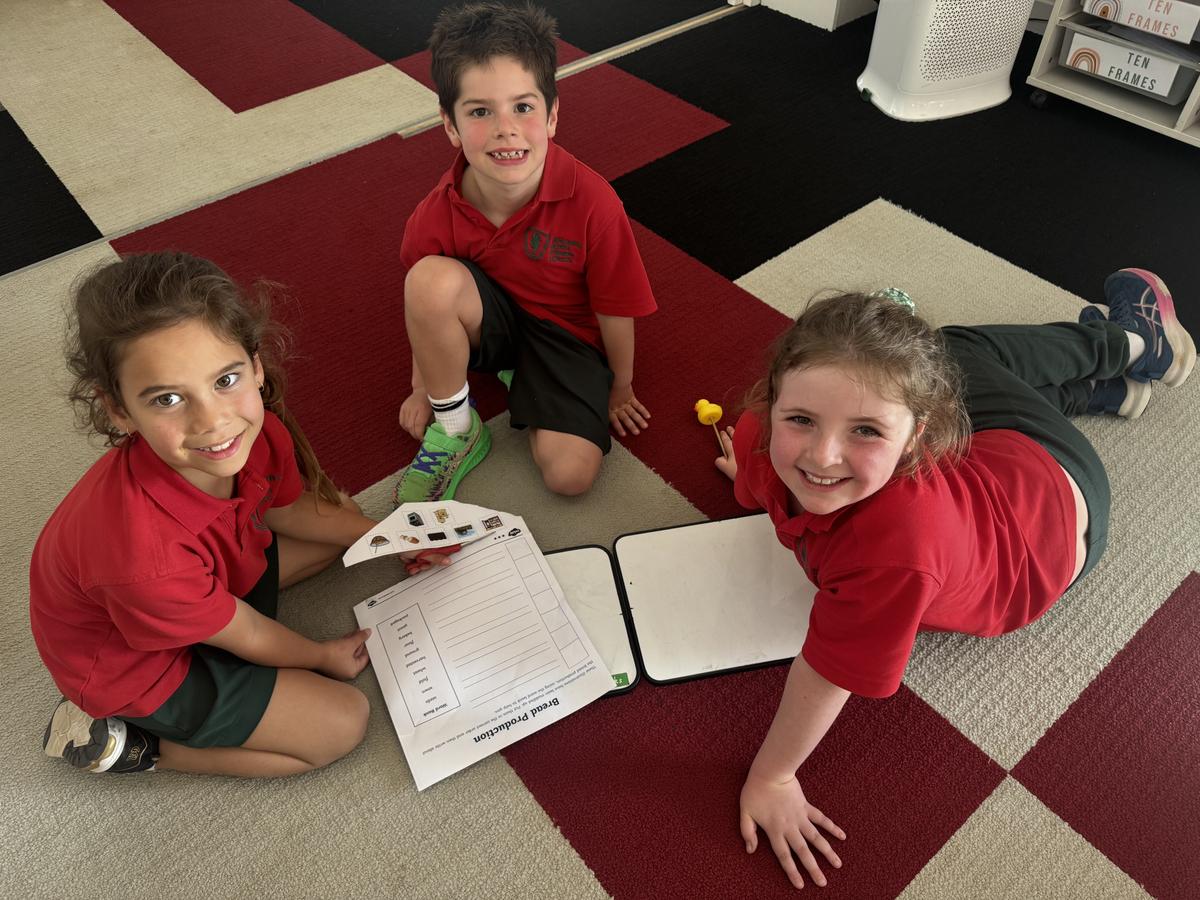
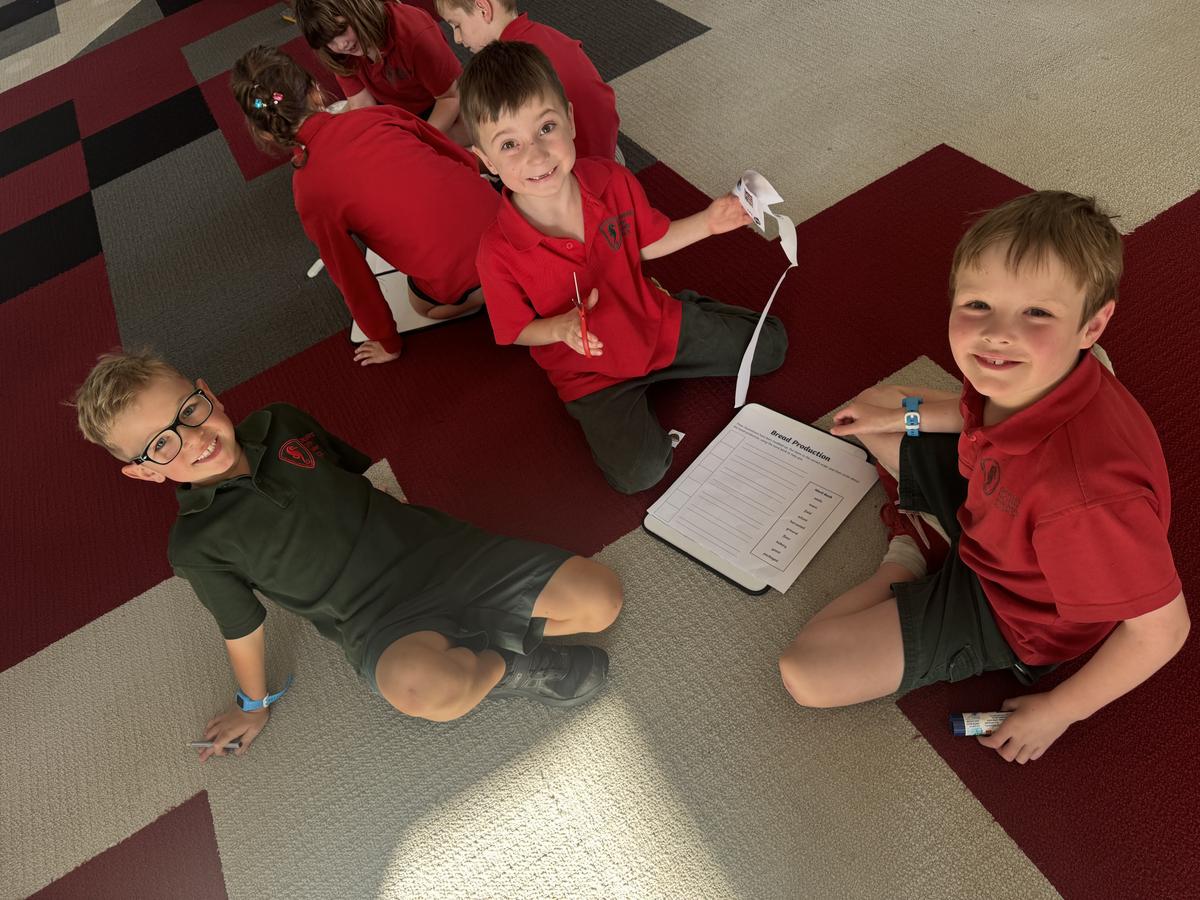
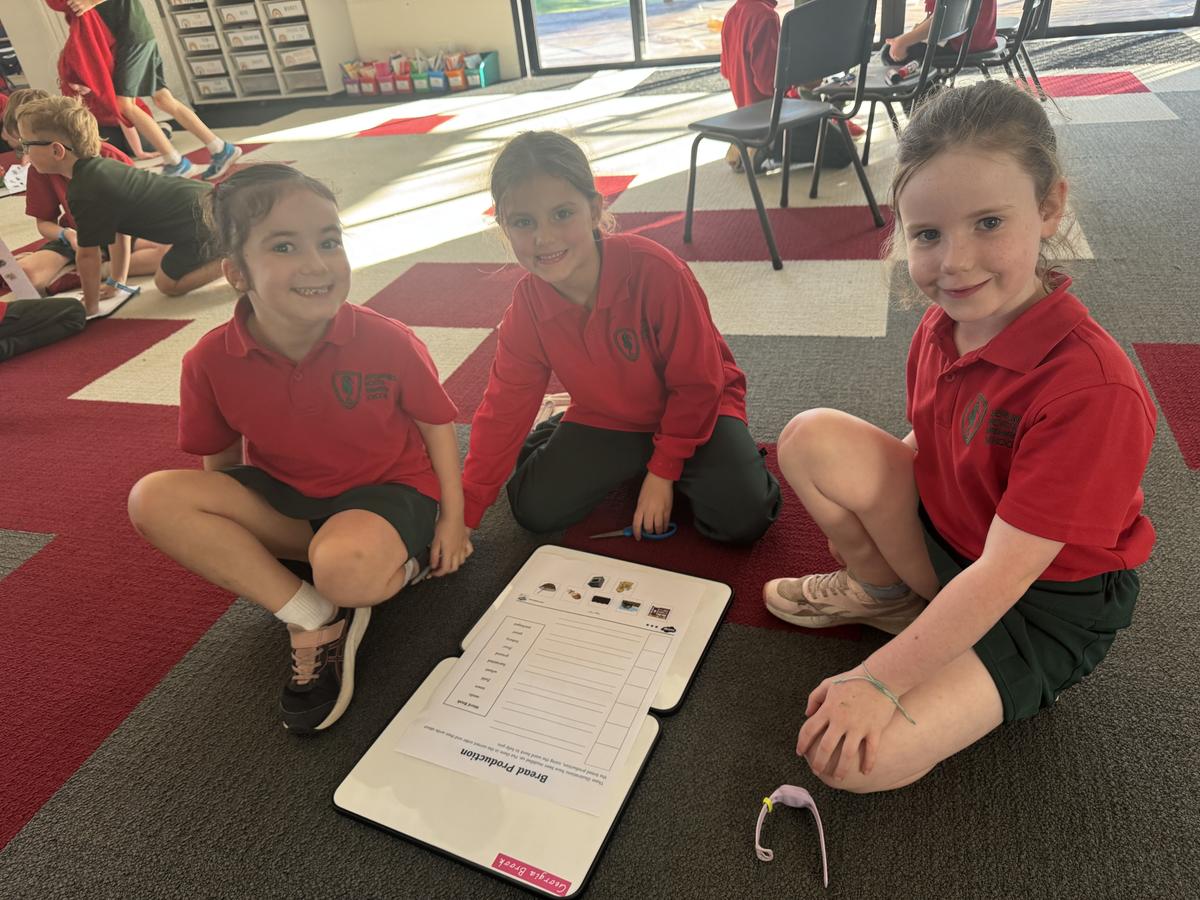
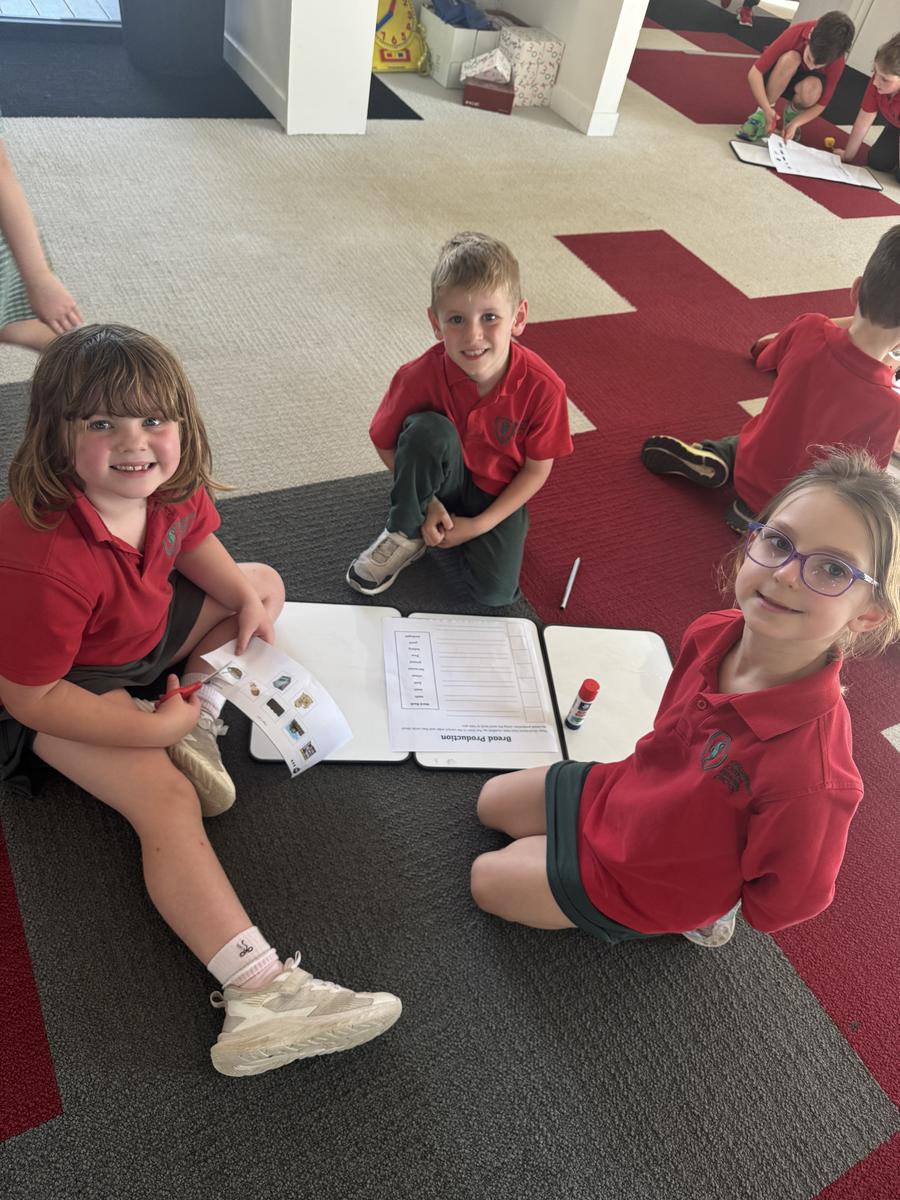
In our current PYP Unit of Inquiry, How We Organise Ourselves, Year 1 students have been exploring the fascinating journey of food from farm to plate. Students are learning about the many different processes and people involved in getting food from its source to the supermarket shelves and ultimately into our homes.
As part of this unit, students recently completed a comprehension and procedural writing task focused on the process of honey production, tracing its journey from the farm to the factory, and finally to the shop. Students demonstrated wonderful curiosity and engagement as they explored the different stages involved in producing and packaging honey.
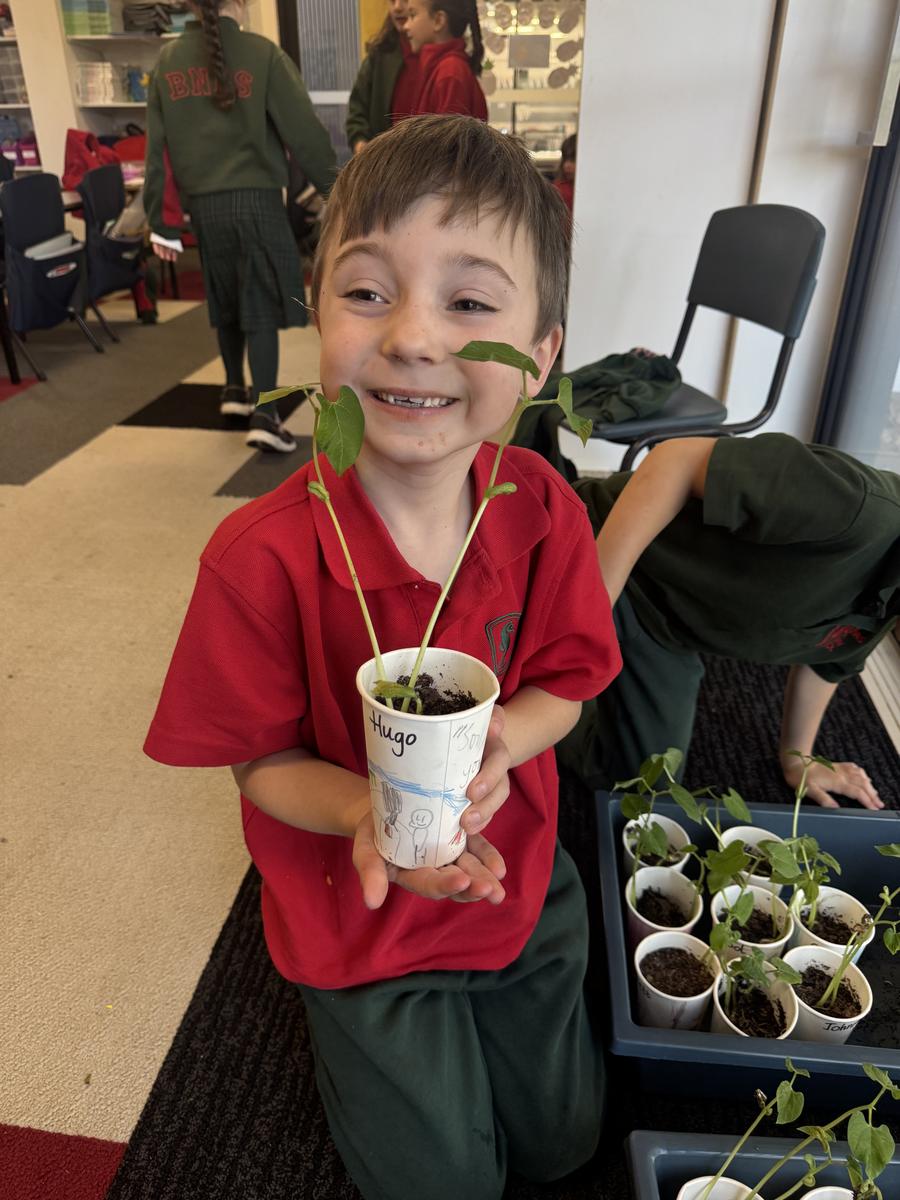
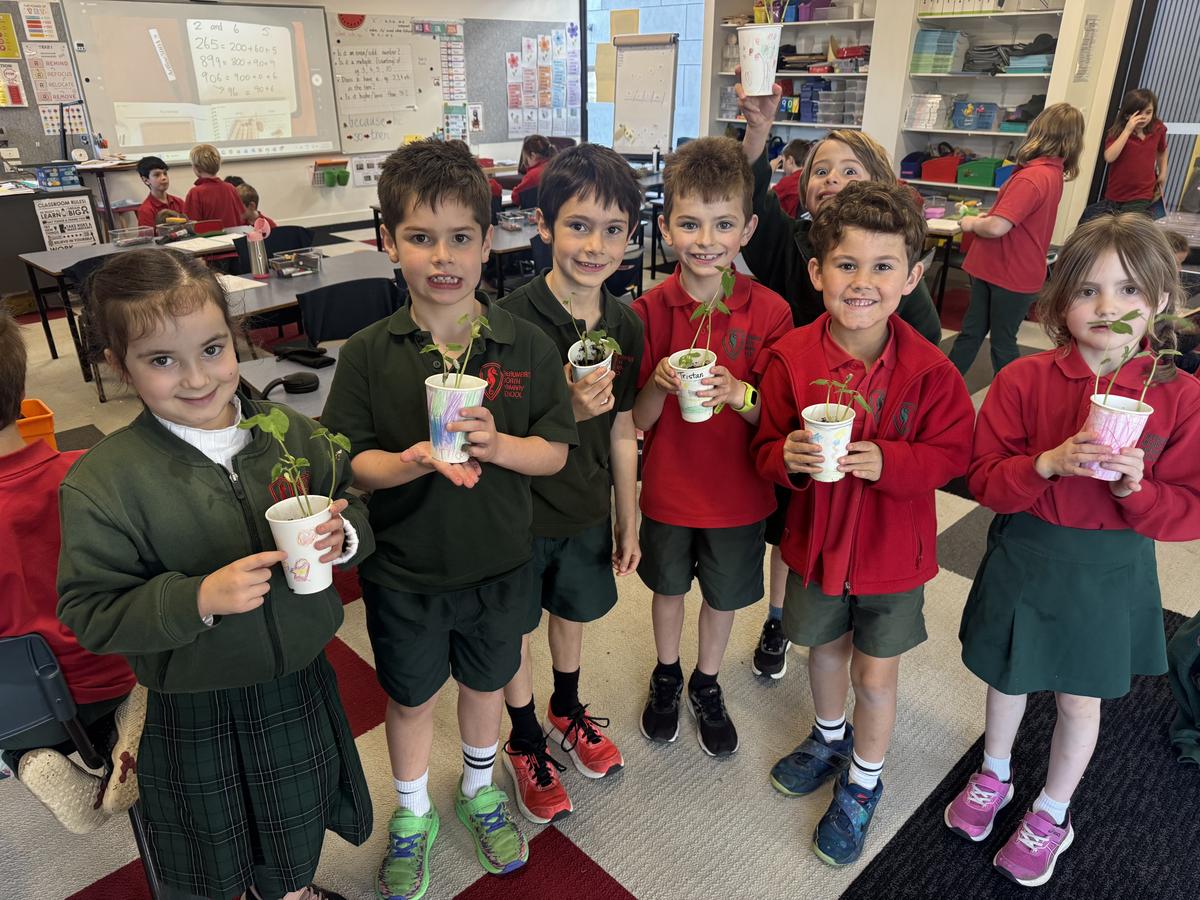
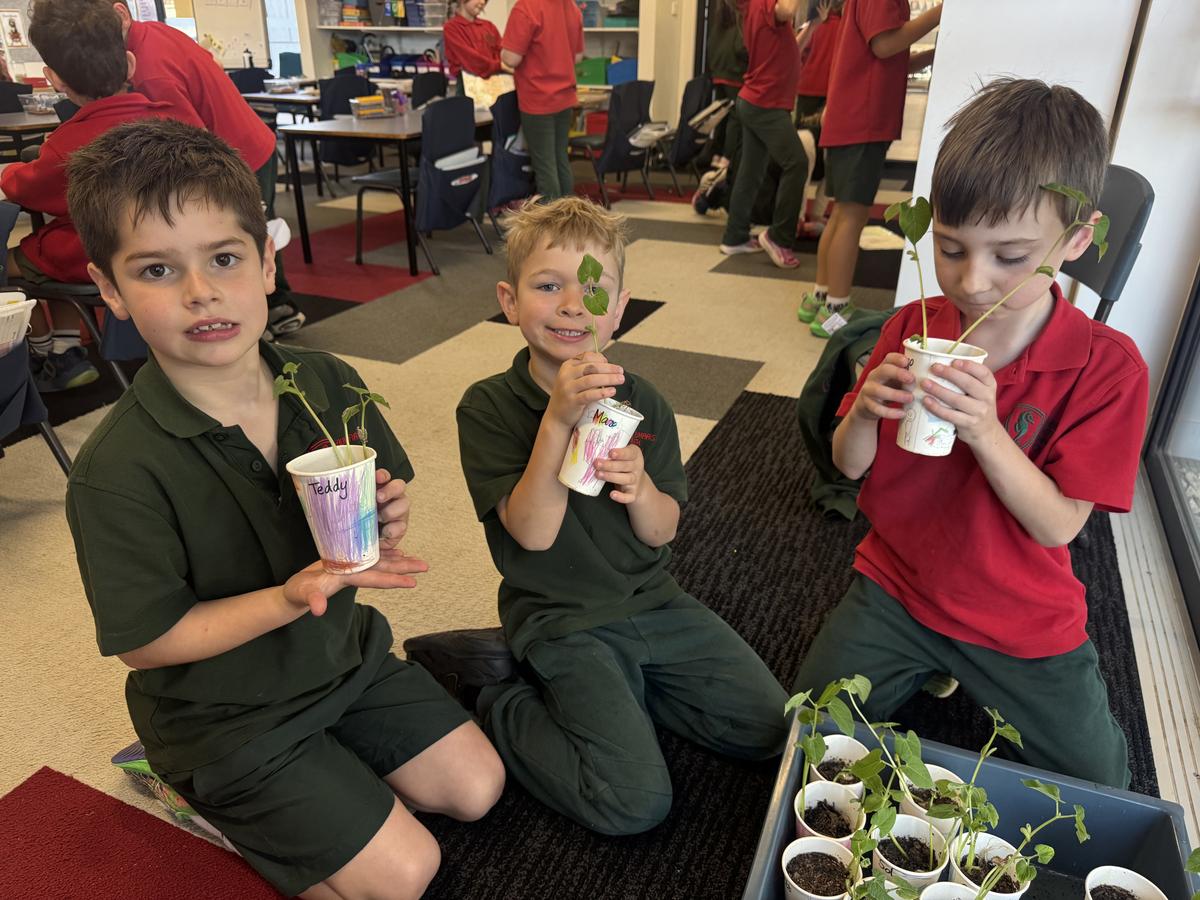
Over the coming weeks, students will continue investigating a variety of foods, including dairy products and breads, while also learning about healthy eating choices and the importance of balanced nutrition.
An exciting highlight coming up later this term will be our Pizza Making Day! Students will have the opportunity to make their own pizza dough, choose toppings, and watch their pizzas bake. We know this will be a memorable and engaging hands-on learning experience for our students. We would also greatly appreciate the support of a few parent helpers on the day, and further information will be sent home closer to the event.
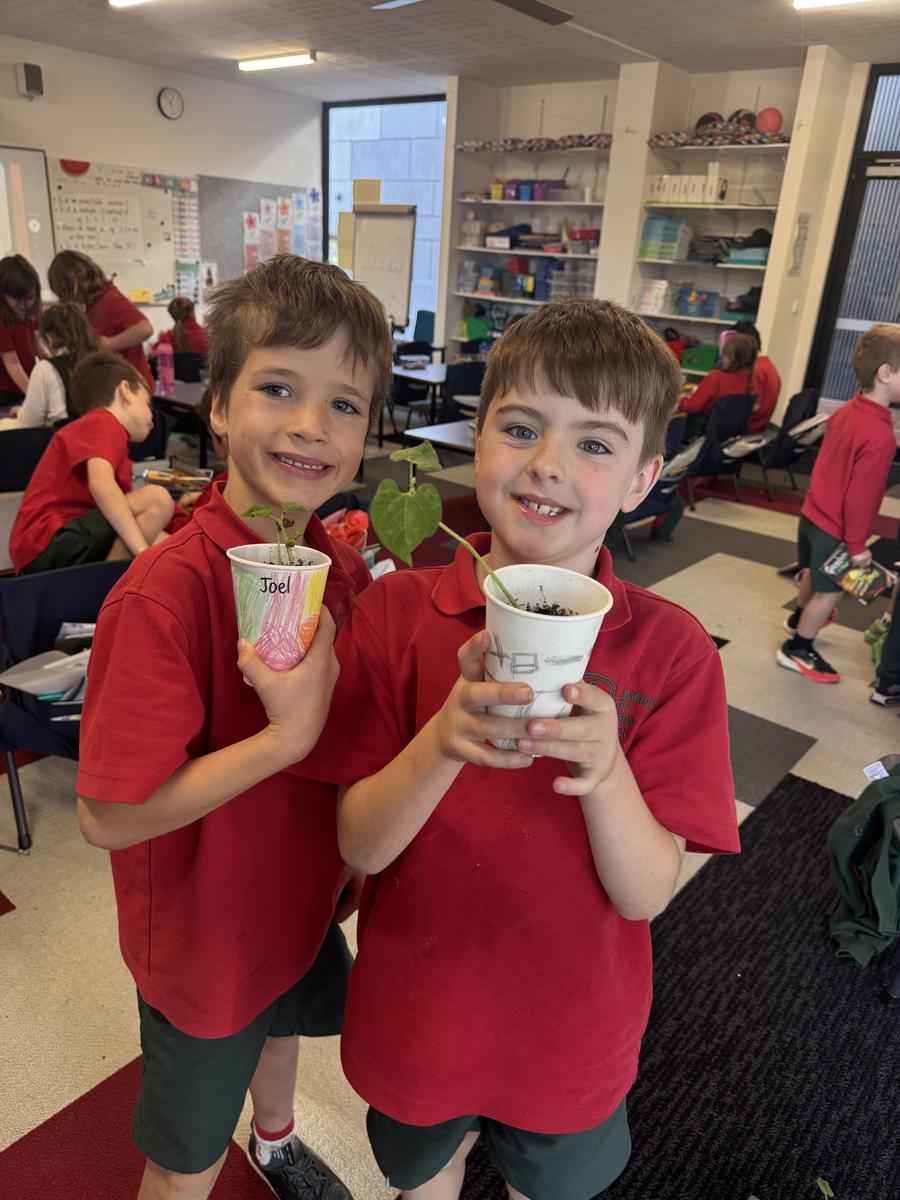
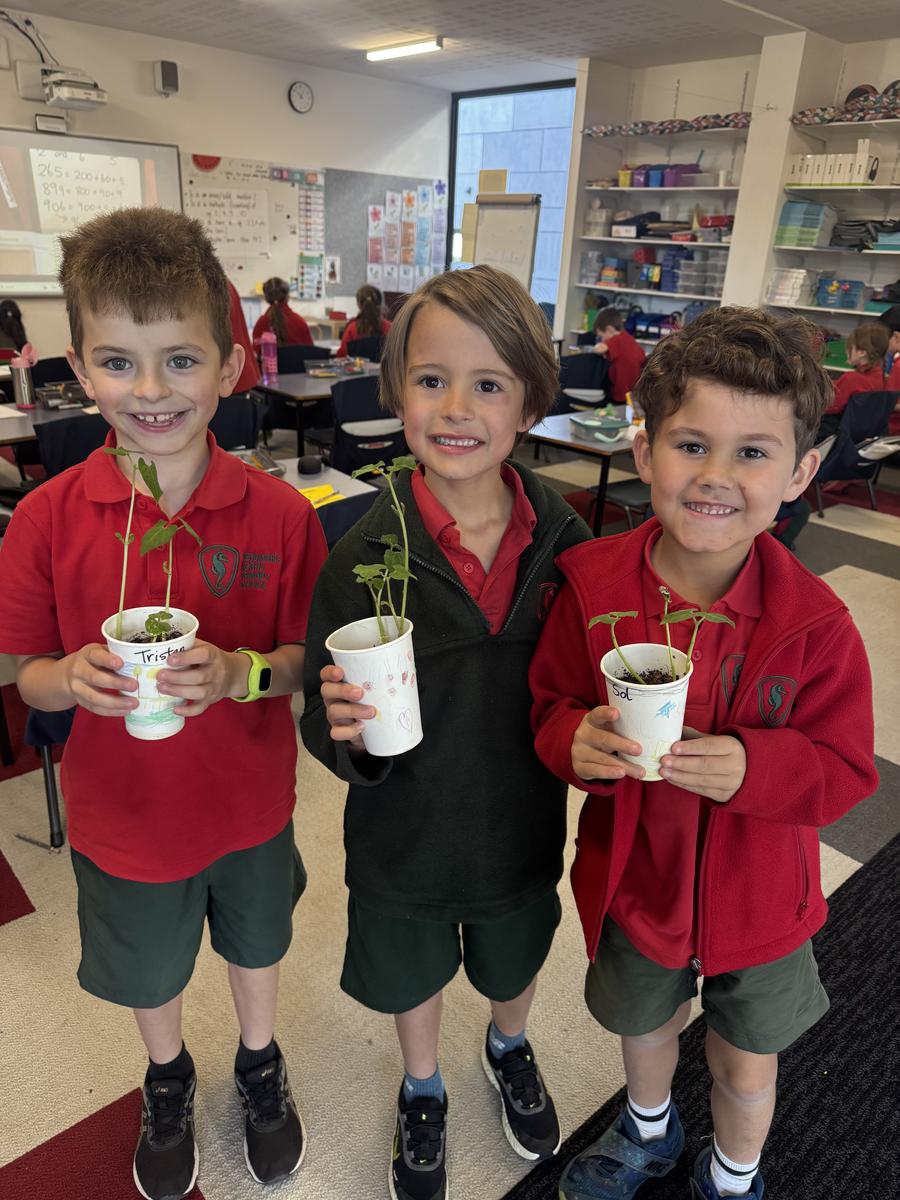
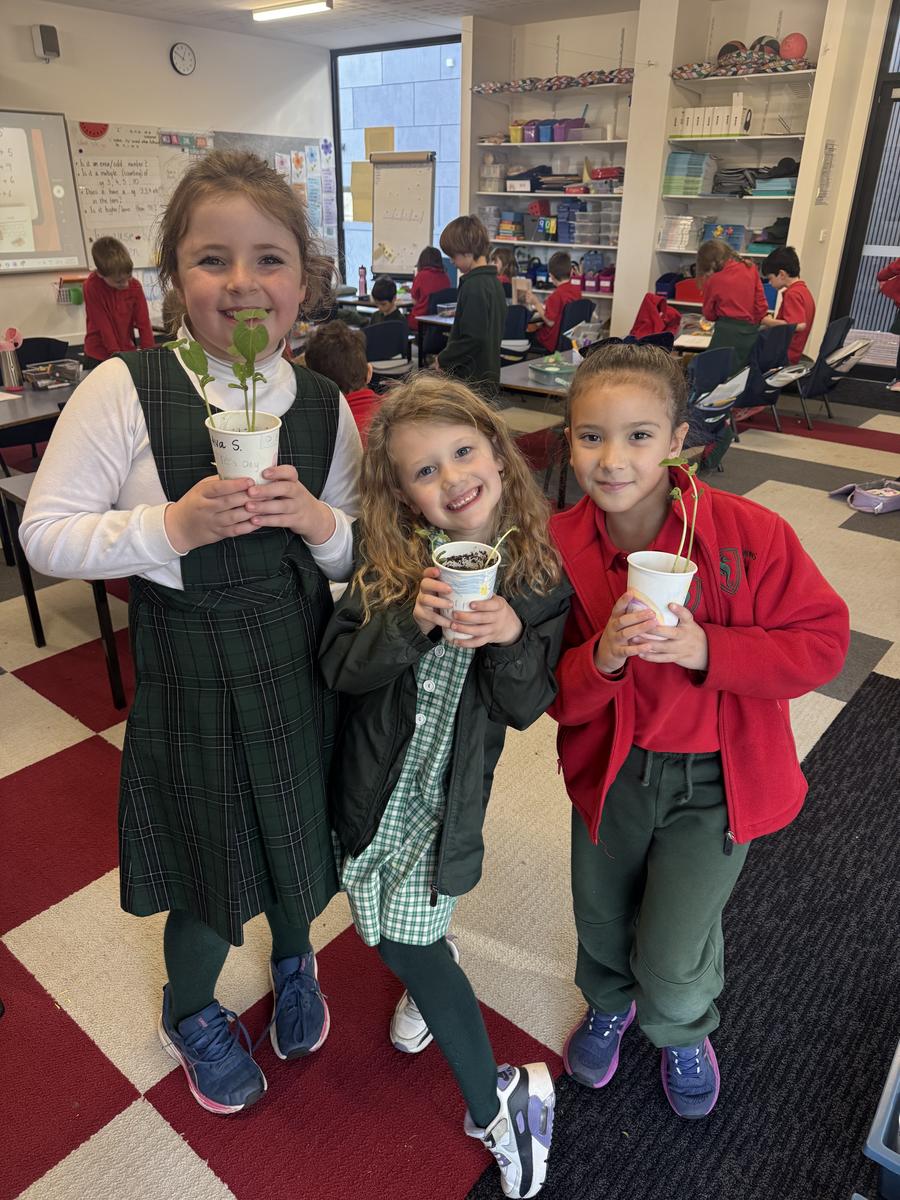
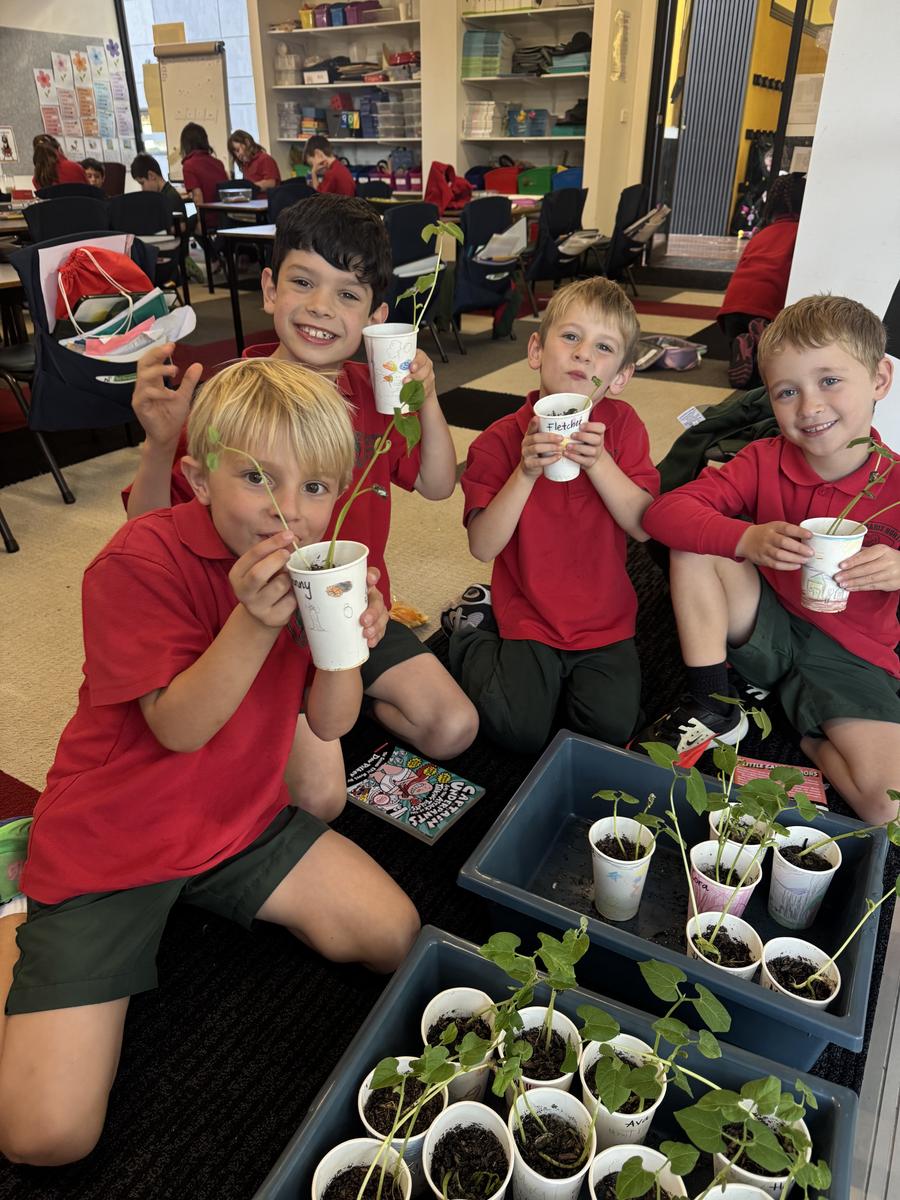
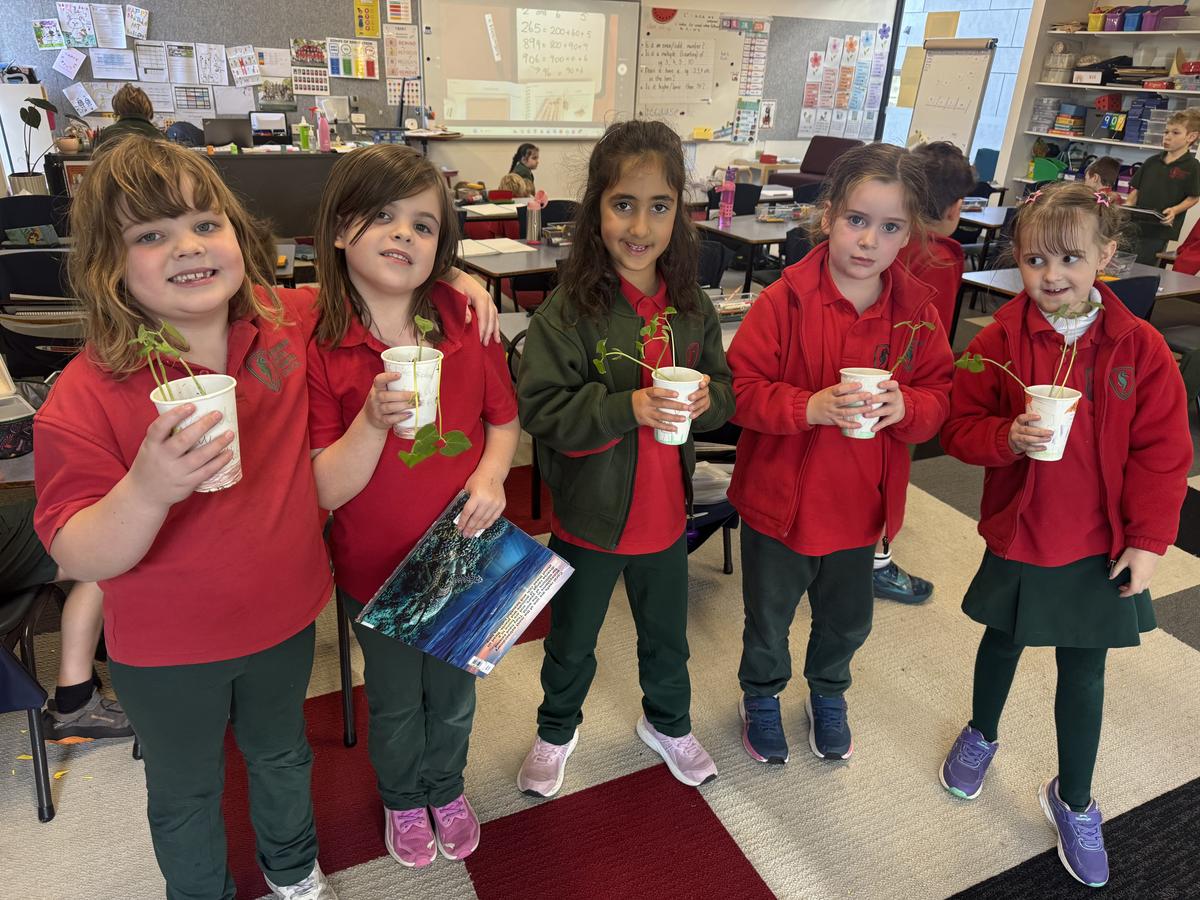
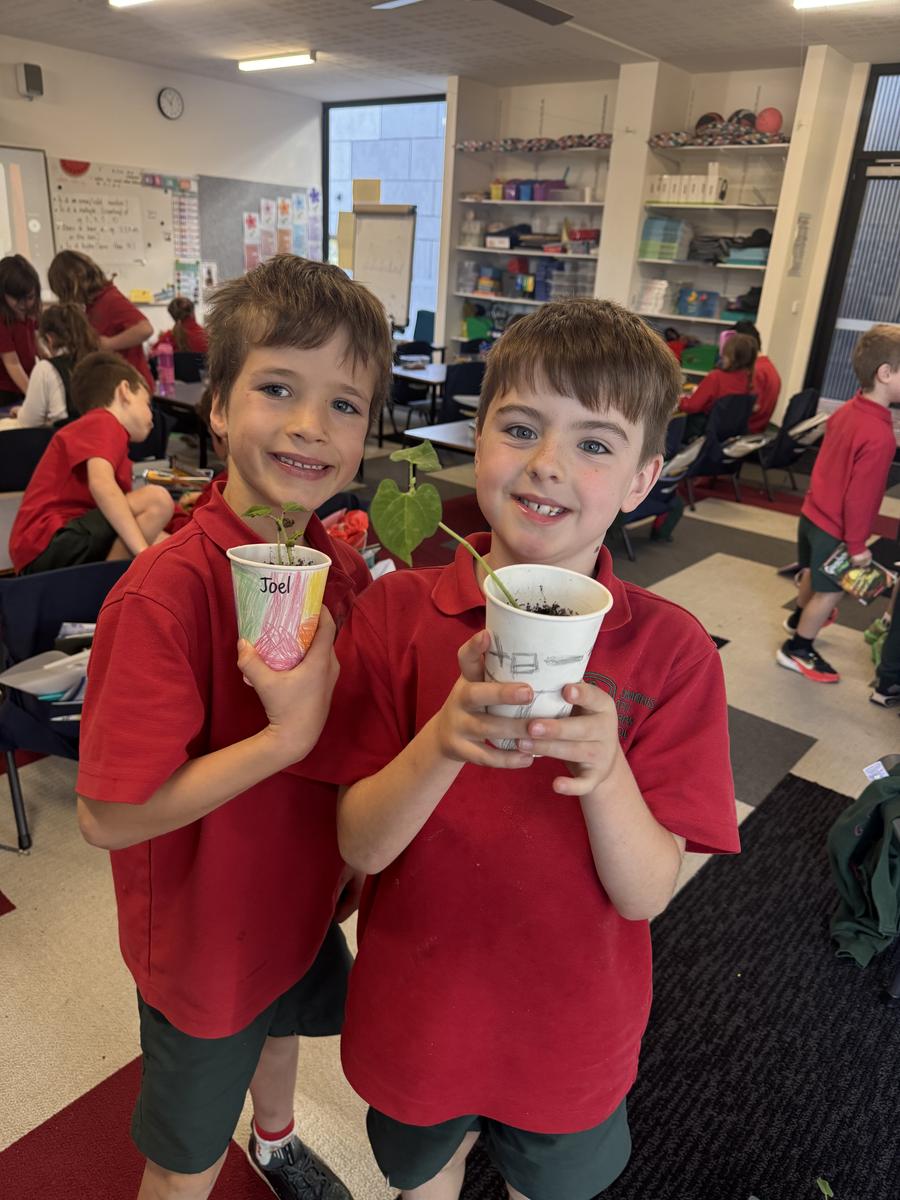
Students have also been busy exploring how plants grow by germinating their own bean plants. This week, students will plant their beans and care for them in the classroom while observing and recording their growth over time.
It has been wonderful to see students showing such enthusiasm, curiosity and excitement throughout this unit of inquiry.
Future Learning
Literacy
Phonics Plus
Introduction of new Grapheme-Phoneme Correspondences (GPC’s):
We will be focusing on teaching grapheme-phoneme correspondences (GPCs): ay, ai, a_e. Students will practise decoding and spelling words such as rain, stay, came, save, maybe, railway, update and complain.
There will also be a continued focus on developing reading fluency, handwriting skills, and learning high-frequency words.
The students will be introduced to compound words such as drumstick, handbag, goldfish, hilltop.
Students who are ready will be extended by reading and writing longer words and sentences that include these spelling patterns, as well as applying their phonics knowledge when composing their own simple texts.
Grammar and Punctuation
To identify fragments and complete sentences
Expand simple sentences by adding details about when, who or what, and where.
Maths
Making and saying 3-digit numbers
Saying and writing 3-digit numbers
Introduction to worded problems
Revising Length
Revising Capacity