Wellbeing

Emotional Regulation
Teenagers experience emotions more intensely as their brains develop. Anger, frustration, sadness, and excitement can feel overwhelming and may affect behaviour, relationships, and learning. Learning to manage emotions safely is essential for long-term wellbeing, social connection, and problem-solving skills.
Parents can support emotional regulation by modelling calm responses, acknowledging feelings, and helping their child identify practical strategies to manage strong emotions. Focusing on learning and reflection rather than punishment reinforces emotional resilience.
What parents can do:
- Stay calm and listen actively: “It sounds like you’re really frustrated. Let’s figure out what helps you calm down.”
- Encourage naming emotions: “Can you describe what you’re feeling right now?”
- Provide outlets for emotions, such as exercise, music, or journaling
- Discuss emotions when everyone is calm, not only during conflicts
What students can do:
- Pause before reacting: take a few deep breaths or step away briefly
- Use healthy outlets: run, draw, or write down feelings
- Ask for support or space instead of lashing out
- Reflect after emotional moments: “What helped me feel calmer next time?”
Learn more: https://au.reachout.com/articles/emotional-regulation
Social Media platforms on notice
From mid-December, eSafety has been monitoring age-restricted platforms to assess how they are complying with their obligations to prevent under-16s from having accounts. It is clear the restrictions are already having an impact. Based on information gathered through legally enforceable notices, many platforms have removed, deactivated or restricted a large number of under‑age accounts.
However, based on the information gathered, including through submissions from the public, field research with parents and carers and engagement with key stakeholders, children under 16 continue to retain accounts, create new ones, or pass platforms’ age checks.
Because of these concerns, eSafety is now focusing its investigations on five major platforms - Facebook, Instagram, Snapchat, TikTok and YouTube. These platforms have been notified about our concerns and expectations for improvement and warned eSafety will take enforcement action if they fail to take reasonable steps to prevent systemic failures that allow children under 16 from having accounts on their service.
Major reforms like this take time – not just to embed, but to spark a broader cultural shift in how industry designs services to keep children safer online. It won’t happen overnight, and although we can see some progress has been made, it's clear there's still a way to go.
This update explains what eSafety has learned so far since the legislation took effect on 10 December 2025. We will continue to provide transparency where we can while protecting the integrity of our ongoing regulatory processes and provide relevant up-to-date information for the community, including children and young people, parents and carers and educators at our social media age restrictions hub.
eSafety remains committed to holding platforms accountable, and ensuring these restrictions deliver real change for Australian families.
Headspace Newsletter
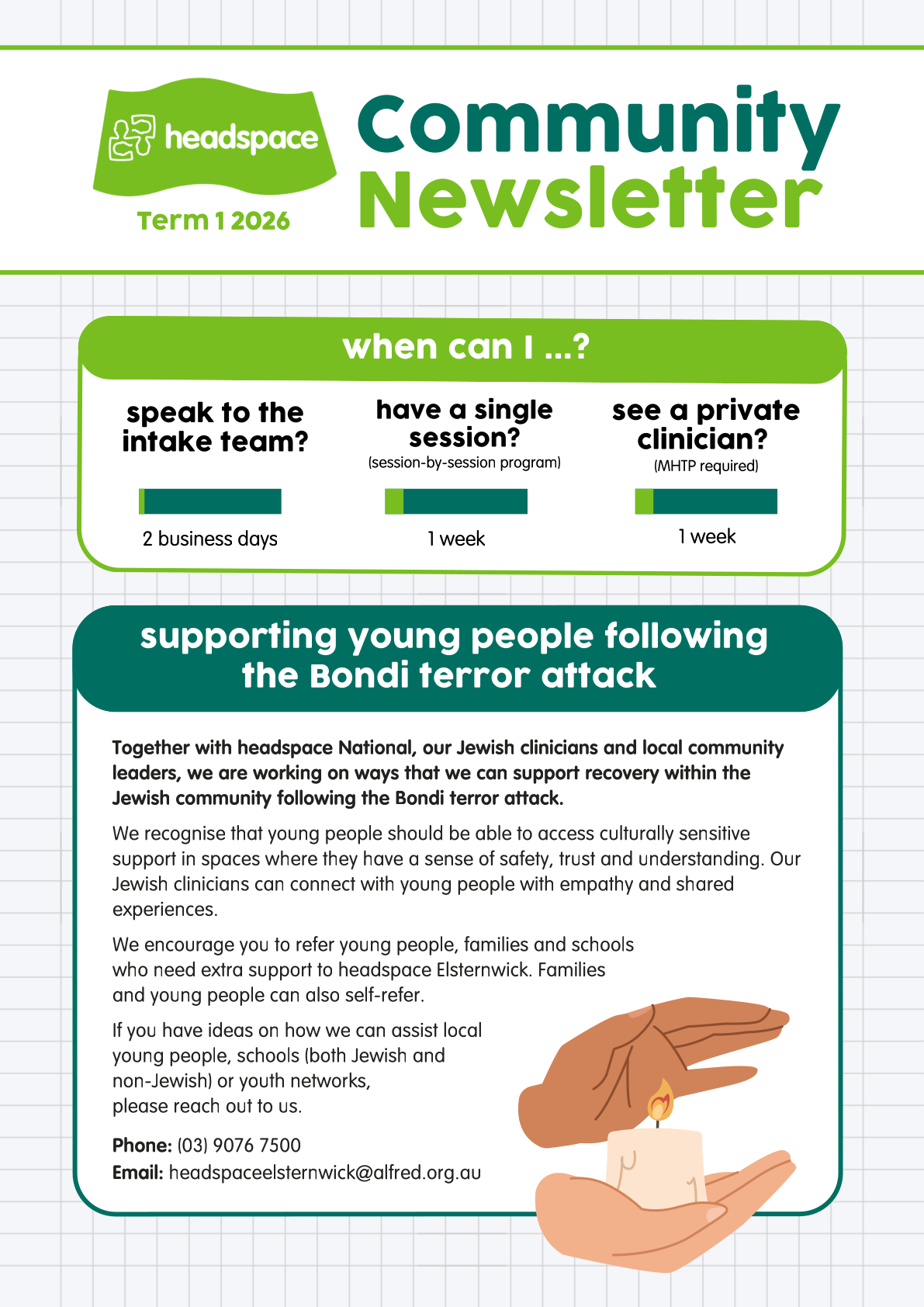
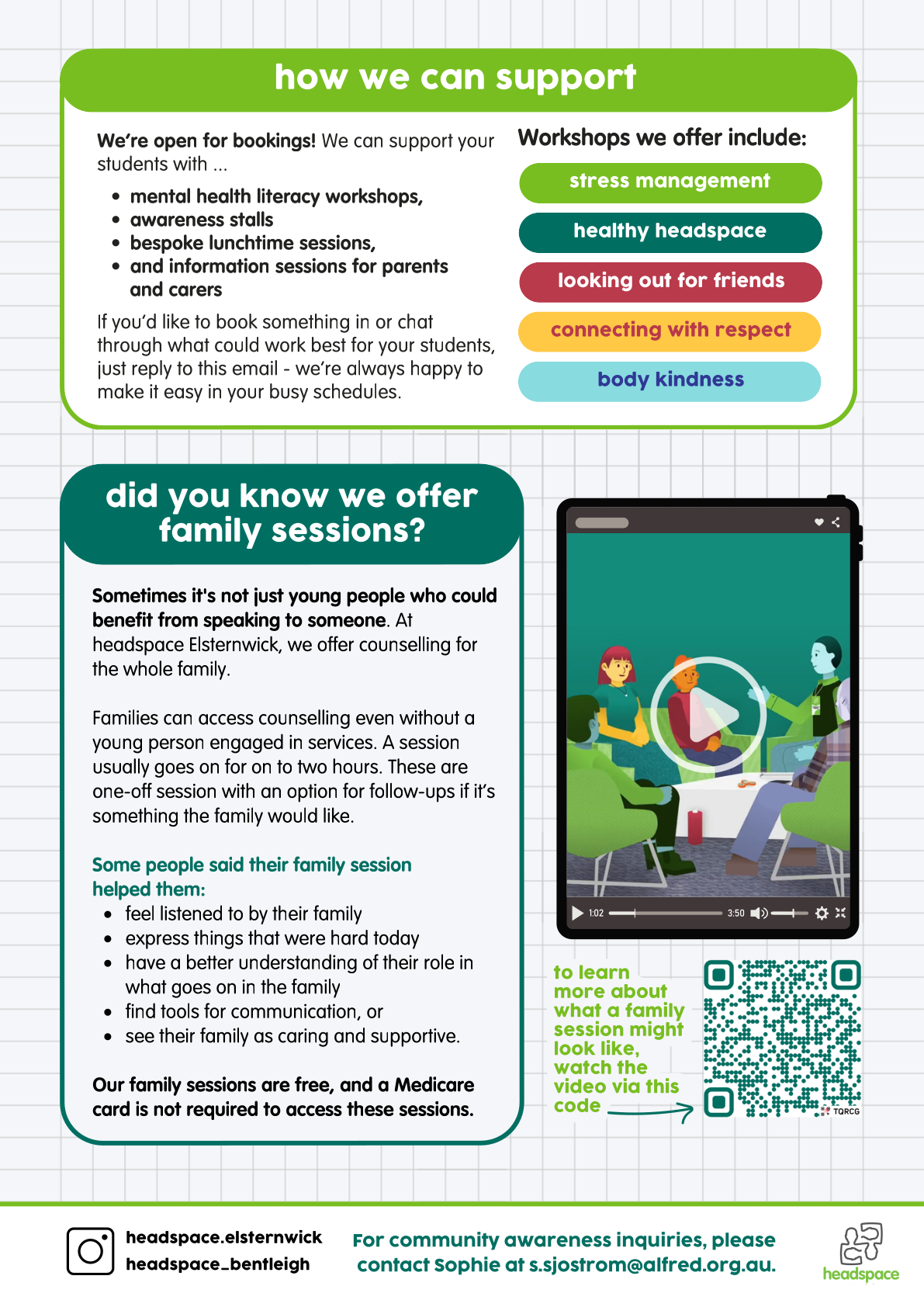
Headspace have released their first Community Newsletter for 2026, with a quick snapshot of their current intake timeframes, workshop offerings, free family sessions, and how they’re supporting young people following the Bondi terror attack.
Their wait times are currently low, and the intake team aims to respond to all referrals within two business days. Young people and families are also welcome to self-refer directly by phone or email.
- headspace Elsternwick | (03) 9076 7500 | headspaceelsternwick@alfred.org.au
- headspace Bentleigh | (03) 9076 9400 | headspacebentleigh@alfred.org.au
They’re also open for school bookings and always happy to tailor sessions to suit your needs – if you’d like to chat about how they can support, just contact headspace via the details above and they will find a time that suits you.