Glen Education St Patrick's
Changing of Seasons: An Inquirybased project
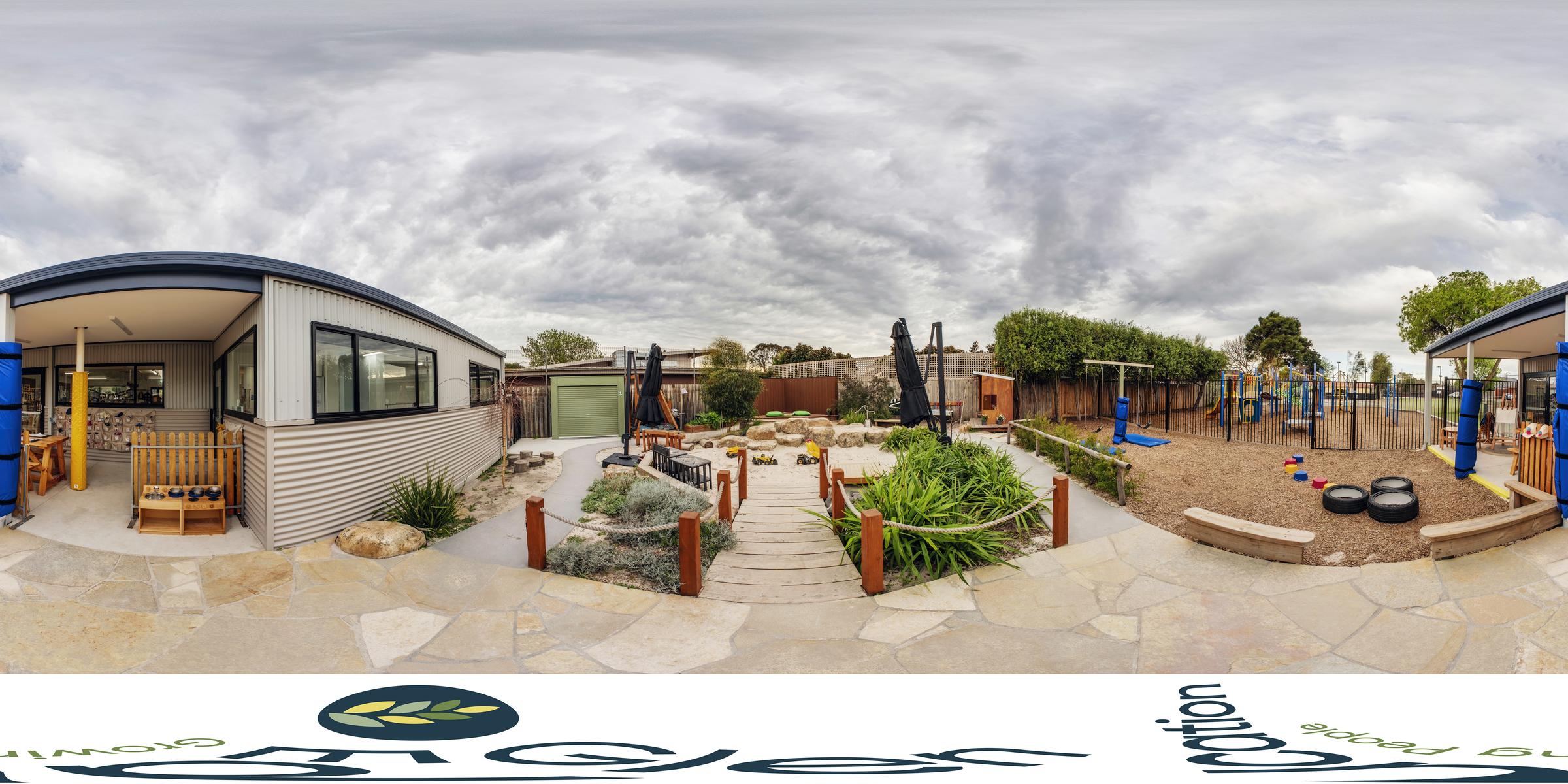
At our kindergarten, we believe that children learn best when they explore the world around them. This term, we are excited to share our ongoing, year-round Changing Seasons Project.
This project directly highlights Quality Area 1: Educational Program and Practice, which is one of the most important areas of the National Quality Standard (NQS) [1]. It relates to what matters most in early childhood education: the quality of children’s learning experiences and the intentionality of our teaching practice [1].
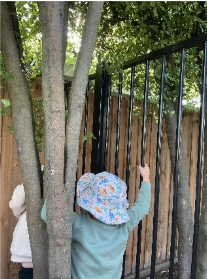
The Changing Seasons Project helps children connect with nature and notice the cycles of the environment. Our purpose is to foster curiosity, sustainability, and scientific thinking. What started as a simple walk to look at trees has grown into a deep exploration of weather, plant life, and art.
This project integrates smoothly into our curriculum planning cycle and aligns with the Early Years Learning Framework (EYLF):
Outcome 2 (Community): Children develop an awareness of their impact on the environment and connect with natural cycles.
Outcome 4 (Learning): Children use inquiry, imagination, and cooperation to explore plant growth and seasonal shifts.
We observe the children’s interest in the changing weather, plan targeted experiences to expand their knowledge, and document their learning to guide our next steps.
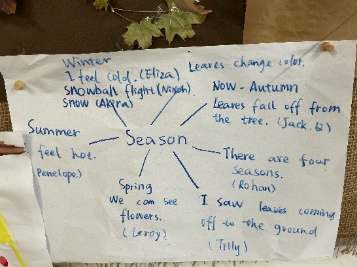
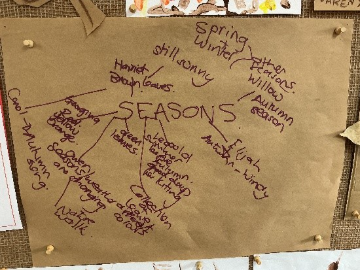
Children's ideas are at the heart of our curriculum. To launch our autumn focus, we created a large mind map with the children to capture what autumn means to them. Here is what they shared:
"Autumn tree leaves change to red, yellow and fall off the tree falling to the bottom of the tree." – Gabriel
"The Autumn Tree leaves all fall off, the leaves change to red, orange and brown.!" – Elijah
“Autumn the leaves fall down the tree, colour of the leaves falling are red, yellow and orange”. - Henry
"Deciduous is a tree a changing tree leaves change to red and yellow. Leaves are first green; I have an evergreen tree next to my house." – Leopold
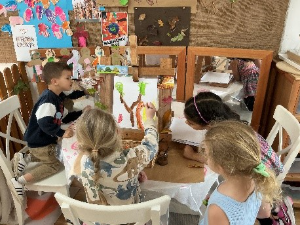
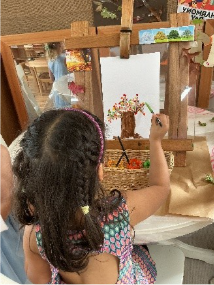
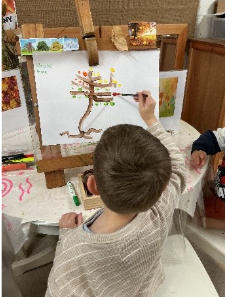
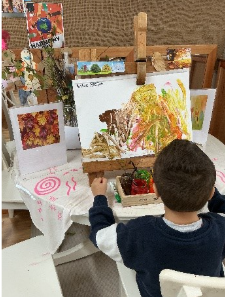
We display these mind maps and the children's artwork proudly around the room. This shows the children that their thoughts, voices, and ideas are valuable and important.
We have provided storybooks for our Seasonal Learning with the children:
Reading stories provides a magical, relatable framework for observing the weather and nature:
- Leaf Man by Lois Ehlert is a wonderful book for exploring autumn with children. Through its lyrical language and richly detailed illustrations, the story supported vocabulary development, strengthened children’s connection with nature, and built spatial awareness. It also inspired imaginative play, as the children searched for hidden animal shapes in the illustrations and created their own nature-inspired collages at the craft table.
- Stick Man by Julia Donaldson is a wonderful story for exploring all seasons. It naturally links to autumn and winter and serves as a flexible resource for seasonal and outdoor learning throughout the year. The children thoroughly enjoyed the story and eagerly explored the playground in search of sticks and leaves to create their own stick people.
Our project connects our classroom to the local environment and families. We invited our community to help us collect natural resources, and families generously brought in unique bark, seeds, and seed pods for our learning spaces.
In the Garden: Our educator, Liz, planted autumn carrot seedlings with the children. The children care for these daily. Later this year, we will visit Bunnings to buy new tools and winter seeds, connecting our kinder to the wider community.
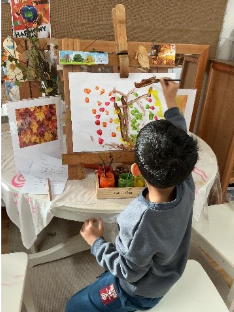
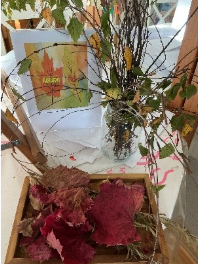
In the Art Space: Liz set up a natural resources’ art station. Children used their collected leaves and twigs to paint their interpretations of trees, comparing evergreen and deciduous trees using real-world examples from our playground.
As educators, we constantly reflect on our teaching practices to drive improved learning outcomes. We noticed how much the children loved the sensory experience of handling soil and leaves. This reflection helped us realize that the project should not stop when the season changes. Instead, it will naturally evolve into winter gardening and cooking projects. By listening to the children and critically reflecting on their engagement, we have moved from simple craft activities to deep, inquiry-based scientific learning.