Glen Education Syndal
Exploring Turtles, Ocean Life & Sustainability: A Collaborative Inquiry Project
Our recent learning has been shaped by the children’s growing curiosity about turtles, sea creatures, and how we care for our environment.
What began as shared holiday stories has evolved into a rich inquiry project that aligns with our curriculum goals and planning cycle, supporting inquiry‑based learning, environmental awareness, and sustainability education.
The inquiry began when children shared their holiday experiences. Mandy described exploring a rock pool in Inverloch, while Divya recalled seeing dolphins and turtles. These authentic contributions sparked excitement and set the direction for our learning. During play, Aryan asked, “What do turtles eat?” which led to a group investigation. Children predicted a range of foods, and Jacob’s comment about turtles eating rubbish opened deeper conversations about pollution and its impact on marine animals. Their ideas and questions continue to shape the project.
To enrich the exploration, we created a rock pool small‑world environment using seashells, sea sponges, cuttlefish, and miniature sea animals. This hands‑on space encouraged imaginative play, storytelling, and scientific thinking. We also incorporated digital technology by displaying calming ocean scenes and sea‑life videos, creating an immersive sensory experience. We recorded their predictions about turtle diets in a group graph, strengthening early numeracy and communication skills.
Connections to Community, Environment & Sustainability
This inquiry naturally connects to our broader sustainability practices and reflects the children’s growing interest in caring for the planet. During a group discussion, the children explored the impact of plastic in the ocean by comparing images of sea creatures in clean water with those in polluted water surrounded by plastic and rubbish. They described the animals as “sad,” imagining how they might feel living in such environments. The children also learned that sea animals can become very sick when they accidentally eat plastic. “The sea turtle will get sick and will need to go to a vet,” Abhinandan shared.
The children then suggested ways to help the animals feel happy and healthy again. “We need to put rubbish in the red bin,” said Hannah H, while Jasper added, “We need to use a bag to pick up the rubbish.” Building on their ideas, we created an activity to encourage children to pick up rubbish when they see it on the ground, helping to prevent it from blowing into waterways and eventually reaching the ocean.
This discussion prompted us to reflect on our sustainable practices and provided opportunities to scaffold the children’s understanding of recycling. We extended their learning through stories, posters, books, and hands-on activities, deepening their awareness and engagement with caring for the environment.
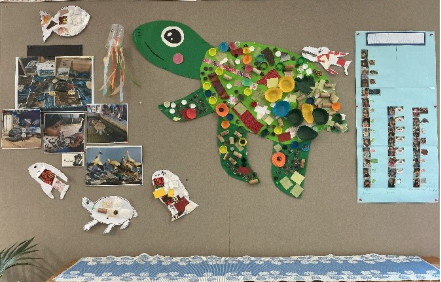
The children have also been using recycled materials to create artworks inspired by ocean life. Boxes, bottle tops, cardboard rolls, and fabric scraps have been transformed into turtles, coral, and underwater scenes. Through this creative process, the children express their ideas artistically, strengthen their fine motor skills, deepen their understanding of reusing and repurposing materials, and engage in conversations about reducing waste.
In our work with the worm farm, the children have been actively involved in feeding food scraps to the worms. Through this hands‑on experience, they are learning how worms break down organic waste, how composting helps reduce landfill, and how the nutrients created through this process can be returned to the garden.
Children in this project investigate scientific concepts about marine life as they explore, observe, and make sense of the underwater world. They ask questions, make predictions, and test their ideas through hands‑on inquiry, building early literacy and numeracy through discussions, documentation, and simple graphing.
As they learn, they develop empathy and responsibility for the natural world and engage in sustainable practices that help them understand real‑world environmental issues.
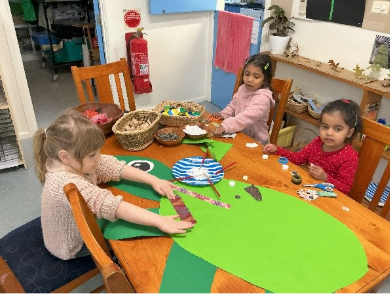
These experiences reflect our ongoing planning cycle, where children’s voices guide curriculum decisions and learning is extended through intentional teaching.
Together, these experiences strengthen the connection between our ocean inquiry and our sustainability goals, helping children understand how their everyday choices can contribute to caring for the natural world. We are now planning further learning opportunities, including incursions such as Junkyard Beats, to deepen the children’s understanding of recycling and sustainability in engaging and meaningful ways.