
Glen Education Orrong Road
Sustainability
One of our whole service curriculum goals for 2026 has a focus on sustainability:
Children are provided with opportunities to learn to care for environment, resources as well as our own emotional and physical wellbeing.
Educators will support children to grow their awareness about nature and implement rules in our daily practices in order to preserve nature.
Working as the whole service, educators in both rooms have implemented inquiry-based projects to ensure that children are able to engage in rich, meaningful and hands-on learning experiences. The following two learning stories reflect how educators link children’s interests and voices with Early Year Learning Framework and our curriculum goal.
Worms
At our kindergarten, we acknowledge and implement sustainable practices to show our children how we can be environmentally responsible and learn about tips and strategies to take good care of our resources.
As we have been learning and talking about how we can protect and be kind towards nature and living creatures, the educators thought it was the perfect time to introduce our wiggly worms to the children (there’s an in-ground worm compost in the front garden).
Before we headed out to our garden, we discussed the reasons why we have the worms in our garden and how we can make them happy and feel safe. We read a book about worms and food composting and discussed some rules to figure out the best way to feed and take care of them, for instance, they love eating any vegetable or fruit scraps except citrus fruits, they can even eat egg shells and shredded papers, they only can survive and breathe in a damp area with no direct sunlight, we can hold them in our hands and pat them with one finger but not squeezing or stretching them.
As our children are encouraged to eat a variety of healthy and nutritious food items at kindergarten, there are always some healthy treats left for the hungry worms. The purposes of worm composting are to reduce landfill waste; to give the worms a safe home and our plants grow stronger and healthier with the rich soil that the worms produce.
Providing this kind of opportunity that each child to take part in their own sustainable practice and giving them a simple structure but ongoing responsibility can support them to develop a wide range of lifelong skills, nurture their awareness and respect towards their environment and living creatures.
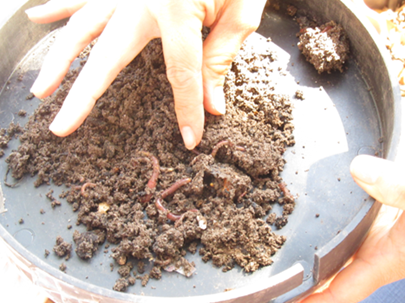
At first, some of the children were a little bit reluctant and scared to see the worms as they said they had never seen worms that close before. But when Charlie, Lucy and Francesca said that the worms never bite or hurt us and they are super gentle with everyone, the rest of the children start to feel less scared and show their curiosity towards the worms. The children enjoyed observing how the worms wiggled and moved, how big/small they were and describing how they felt when the worms were wiggling in their hands.
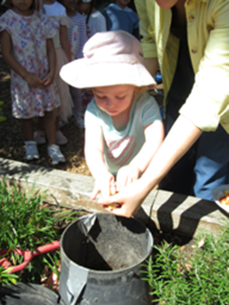
When the weather was getting warmer, we decided to say goodbye to the worms, returned them gently into their home and fed them with some apples.
The children not only had fun feeding the worms but also shared the joy of taking care of small living creatures and further developed their trust and strong relationships by helping their peers feel safe and included them through their interactions and leaning.
OUTCOME 2: CHILDREN ARE CONNECTED WITH AND CONTRIBUTE TO THEIR WORLD
- Children develop an awareness of the impact of human activity on environments and the interdependence of living things.
- Children explore relationships with other living and non-living things and observe, notice and respond to change.
- Children demonstrate an increasing knowledge of, and respect for natural and constructed environments.
Gardening
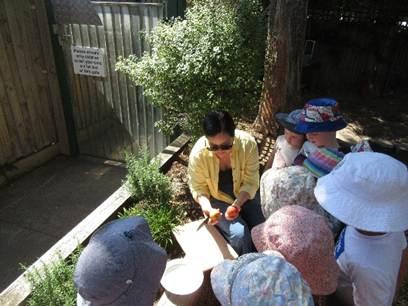
The children have been very interested in gardening. We have been discussing and brainstorming many more topics on gardening. In recent weeks, our kindergarten children have engaged in a whole-group garden project. Children took a big part in cleaning old plants and roots, then mixing soil and cleaning pots for planting seeds and vegetables and flowers.
The children demonstrated a deep sense of understanding, ownership and pleasure in this project. During the mixing of soil and making vegetable beds, I observed strong collaborative skills.
Children negotiated roles, solved problems together, and supported one another physically and verbally.
Some of the children, particularly Lily, Quinn, Jayden, and Hugo, said, “The roots look like pineapple and magical power tools”.
Children’s curiosity was evident as they explored the soil with their hands, asked thoughtful questions about how seeds grow, and made connections to their own experiences at home.
In the daily planting and gardening schedule after morning tea, children eagerly wait and use gloves and safety tools, and they take a huge initiative to support me in pulling out old roots and mixing the soil very well. Children began to develop a genuine sense of responsibility.
Many of the children were asked what to plant of their own choice. I spent my Last Sunday happily buying their list of plants, seeds and seedlings and soil from Bunnings. Many families have donated generous seeds and seedlings, small plants, and some tools. Some children were discussing that we would make some fruit salad and salad at kinder with our grown veggies.
Children learn and develop collaboratively, and they think scientifically about how to plant seeds, what to do with the soil before that, how the plant grows, and how the food comes from, etc., etc. This project supports children not only in understanding but also in taking responsibility.
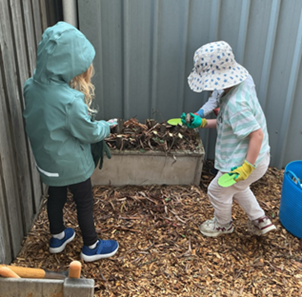
This project affirmed the power of hands-on, real-world learning. The garden project became a living classroom where children learned about the development of literacy skills, such as absorption, fertilizer, and oxygen. The children developed empathy toward living things, and they began to see themselves as capable and important carers.
Link to curriculum framework (EYLF outcomes), Outcome 2 - (connection to the world) and Outcome 4 (confident and involved learners).
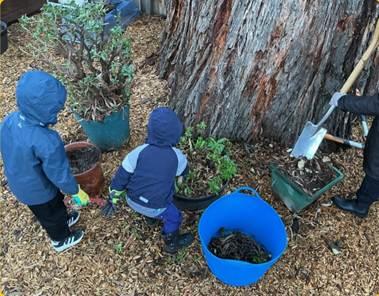
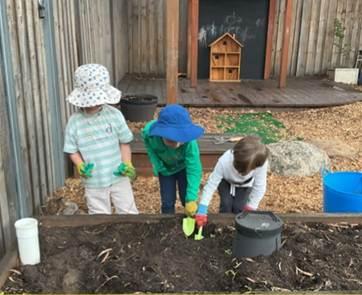
Since these two projects started, children across the service have been encouraged to visit each other’s learning environments to learn and grow from one another thorughout each day.
We have also started an initiative to encourage the whole education team to donate gardening materials (such as seeds, seedlings, compost, pots, planters) so all the children can continue exploring these two projects.