Glen Education North Cheltenham
"I am a Problem Solver"
At Glen Education North Cheltenham Kindergarten, one of our key curriculum goals this term has been supporting children to develop confidence, emotional regulation, communication skills, and positive social relationships. As part of this focus, we introduced our “I Am a Problem Solver” project through the Pyramid Model approach to social and emotional learning.
PROJECT OVERVIEW
This project emerged from ongoing observations that many children were experiencing challenges when navigating social situations and everyday problem-solving within the learning environment. Through reflective discussions as a teaching team, we recognised the importance of intentionally teaching children practical strategies to understand problems, think of solutions, and try them out with confidence.
The project began during group discussions where children explored the meaning of a “problem.” Children were introduced to the idea that “A problem is something that makes you feel sad, mad, angry, or frustrated.”
Children were then encouraged to share their own experiences and ideas with the question “What is your problem?”
Lucas: “I was late when I came here.”
Ewan: “When I was at the different kindergarten, I was sad.”
Isabella: “I want my mum, but mum is not here.” Logan: “Someone keeps shaking my chair. I need a solution.”
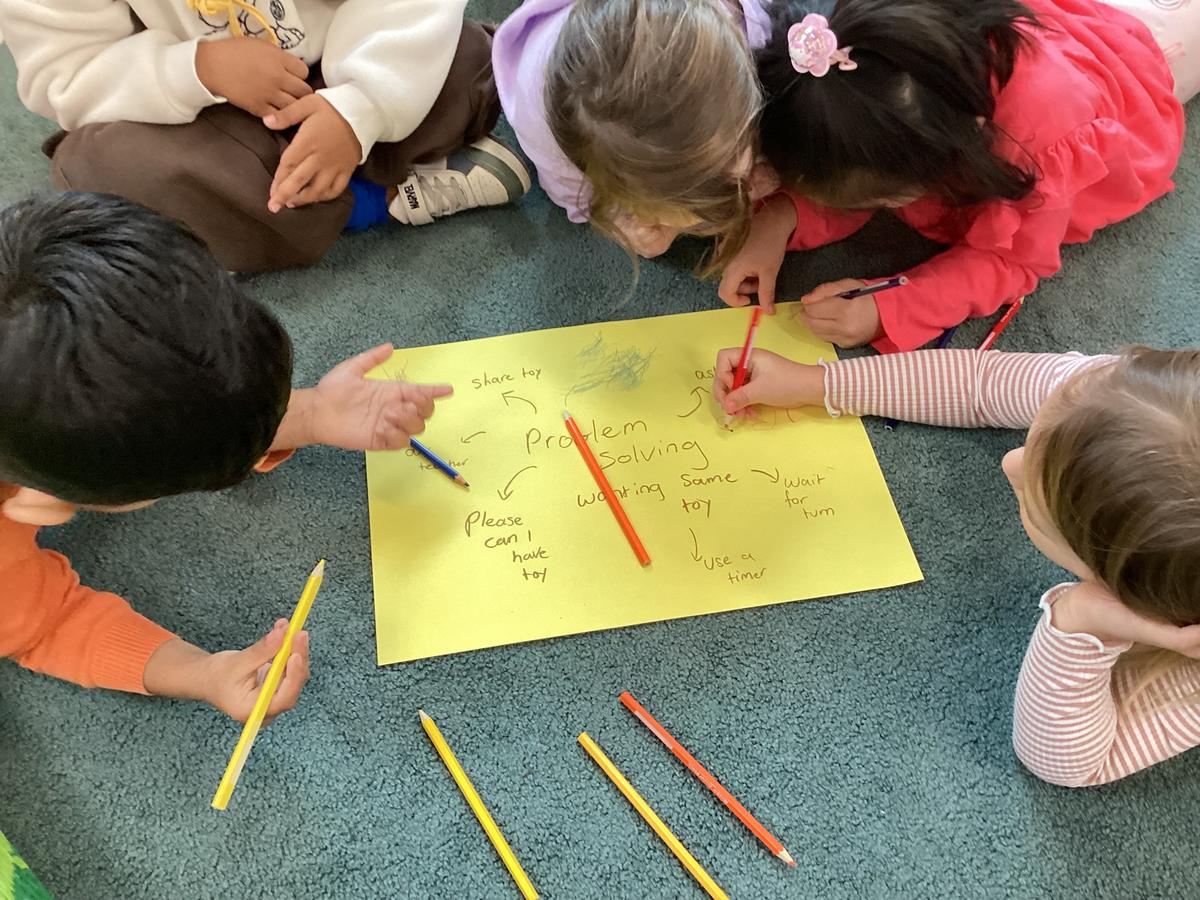
These meaningful conversations helped children connect problem-solving to their own everyday experiences and emotions. During group discussions, children explored common social scenarios such as wanting the same toy or needing help from a friend.
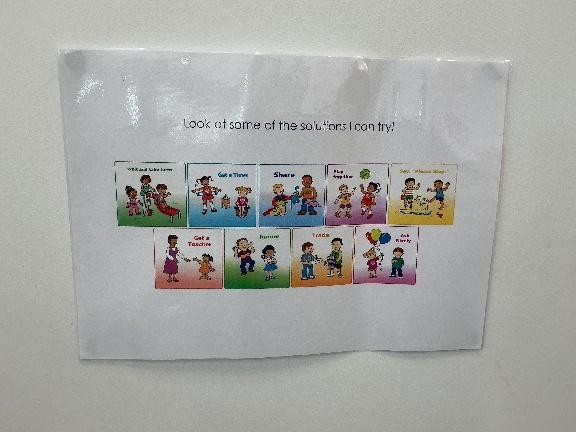
Together, they brainstormed possible solutions including taking turns, using a timer, asking for help, playing together, or choosing another activity.
LEARNING RESOURCES
To support the implementation of this project, educators used a range of Pyramid Model resources including:
Problem-Solving Posters
“We Can Be Problem Solvers” Scripted Story
Solution Kit Classroom Resources
These resources provided children with visual prompts and practical language to support their social and emotional learning.
INTENTIONAL TEACHING
Throughout the project, educators used intentional teaching strategies including modelling respectful language, scaffolding conversations, asking open-ended questions, and guiding children through problem-solving steps during real social interactions.
During interactions, educators first validated children’s emotions using language such as: “You look upset”; “It seems like you both want the same toy.”
This helped children feel seen, supported, and understood before working through solutions together.
Children were supported to follow simple problem-solving steps:
Identify the problem – Children describe what happened in simple terms.
Think of solutions – Brainstorm possible ways to solve the problem.
Evaluate solutions – Consider fairness and others’ feelings with questions such as “Would that be fair?” or “How would your friend feel?”
Try a solution – Children put their chosen solution into action.
After each situation, educators acknowledged children’s efforts by reinforcing positive language such as:
“You solved the problem! you are a problem solver!”. This ongoing encouragement has helped children develop confidence, resilience, and independence.
REFLECTION
This project strongly reflects our curriculum planning cycle. Educators observed children’s social interactions, analysed emerging social and emotional needs, intentionally planned experiences and teaching strategies, implemented the Problem-Solving Toolkit, and continuously reflected on children’s progress to further extend learning opportunities.
As the project evolved, educators noticed significant growth in children’s confidence to communicate their needs, seek solutions, wait for turns, and use respectful language during conflicts.
Children are increasingly beginning to solve problems independently and showing greater empathy for others’ perspectives during play.
Through reflection, educators also recognised the importance of embedding problem-solving opportunities naturally throughout the day rather than only during planned group times. As a result, shared problem-solving language and strategies are now consistently used during routines, transitions, mealtimes, and play experiences across the learning environment.
The “I Am a Problem Solver” project continues to support children in developing important lifelong skills including resilience, communication, cooperation, empathy, and confidence. Through intentional teaching, supportive relationships, and meaningful learning experiences, children are learning that problems can be solved calmly, respectfully, and collaboratively.
EYLF LEARNING OUTCOMES
This project supports children’s learning across the following EYLF outcomes:
- Children have a strong sense of identity
- Children are connected with and contribute to their world
- Children have a strong sense of wellbeing
- Children are confident and involved learners
- Children are effective communicators