
AI Slop Is Everywhere:

Scrolling Through YouTube Shorts? 21% of the Clips Are Probably AI Slop
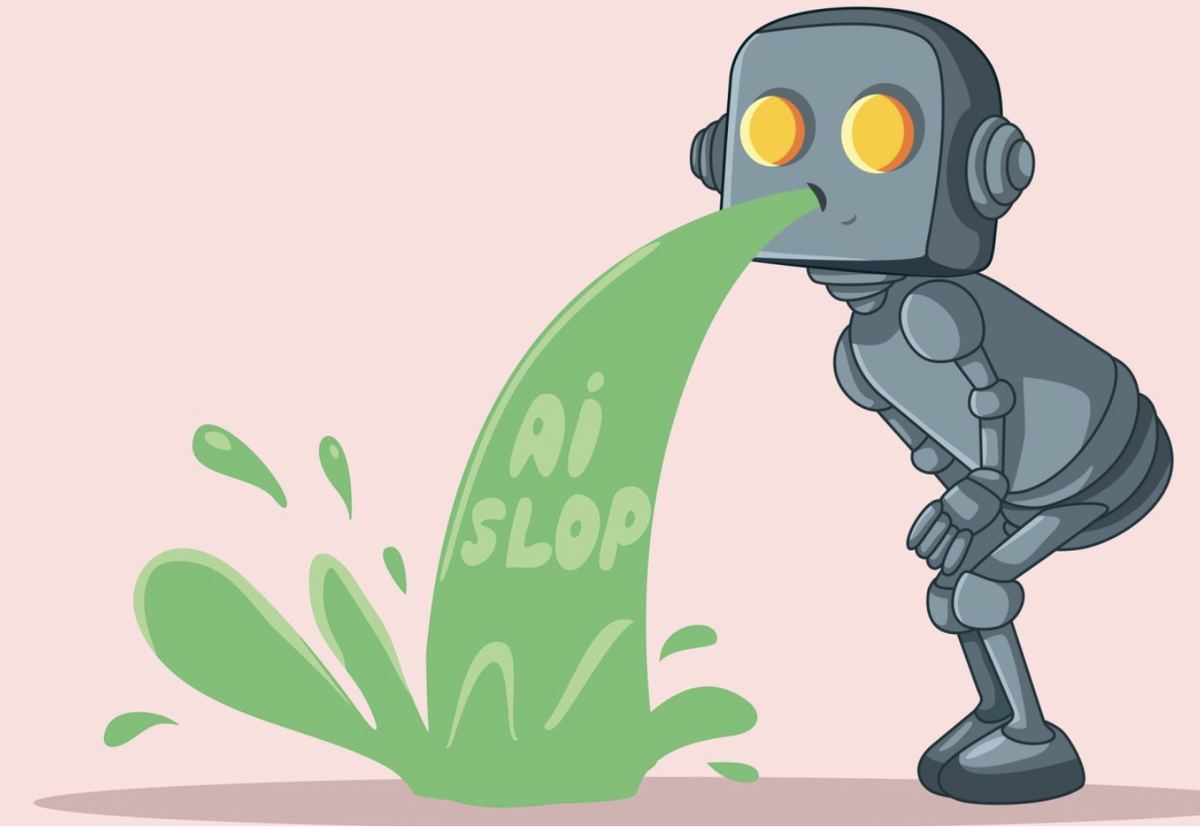
As tools like OpenAI's Sora and Google's Veo make AI video creation more accessible than ever, "AI slop" is also invading YouTube, according to a report by video-editing firm Kapwing.
The company created a new YouTube account and tracked the number of AI-generated videos it saw on YouTube Shorts. Of the 500 videos it scrolled through, 104 (21%) were AI-generated, and 165 (33%) of those 500 videos were what Kapwing considers brainrot, or "nonsensical, low-quality video content that creates the effect of corroding the viewer’s mental or intellectual state while watching."
Kapwing also identified the top 100 trending YouTube channels in specific countries and picked out the top channels. South Korea, which has some of the highest rates of social media and smartphone use globally, is leading the way in terms of slop consumption; the top channels have been viewed roughly 8.25 billion times. Three Minutes Wisdom, which features photorealistic-style footage of wild animals being defeated by cute household pets, has racked up 2.02 billion views on its own. Pakistan came in second place in the rankings, with its top slop channels racking up 5.34 billion views. The United States ranked third, with the top channels collecting 3.39 billion views. The top channel in the US is the Spanish-language Cuentos Facientes, with 1.28 billion views and an estimated $2.66 million in earnings for its creators. It appears to be offline now, however.
YouTube isn't the only part of the web being overrun by AI-generated content lately. As of May 2025, the percentage of AI articles on the web is slightly above 50%.
Some YouTube competitors, such as TikTok, have taken steps to curb the influx of AI-generated content on their platforms. TikTok rolled out features last month to help users better identify AI-generated content, enabling them to keep AI content out of their feeds.
Slop Central: More Than 50% of Articles Online Are Now AI-Generated
The number of AI-generated articles on the web has skyrocketed since the launch of ChatGPT, surpassing the amount of human-generated work. The number of AI articles on the web is slightly above 50%, according to a new report from SEO firm Graphite, which analysed 65,000 URLs published between January 2020 and May 2025. Still, the rate of AI-generated content since ChatGPT's debut in November 2022 is astonishing.
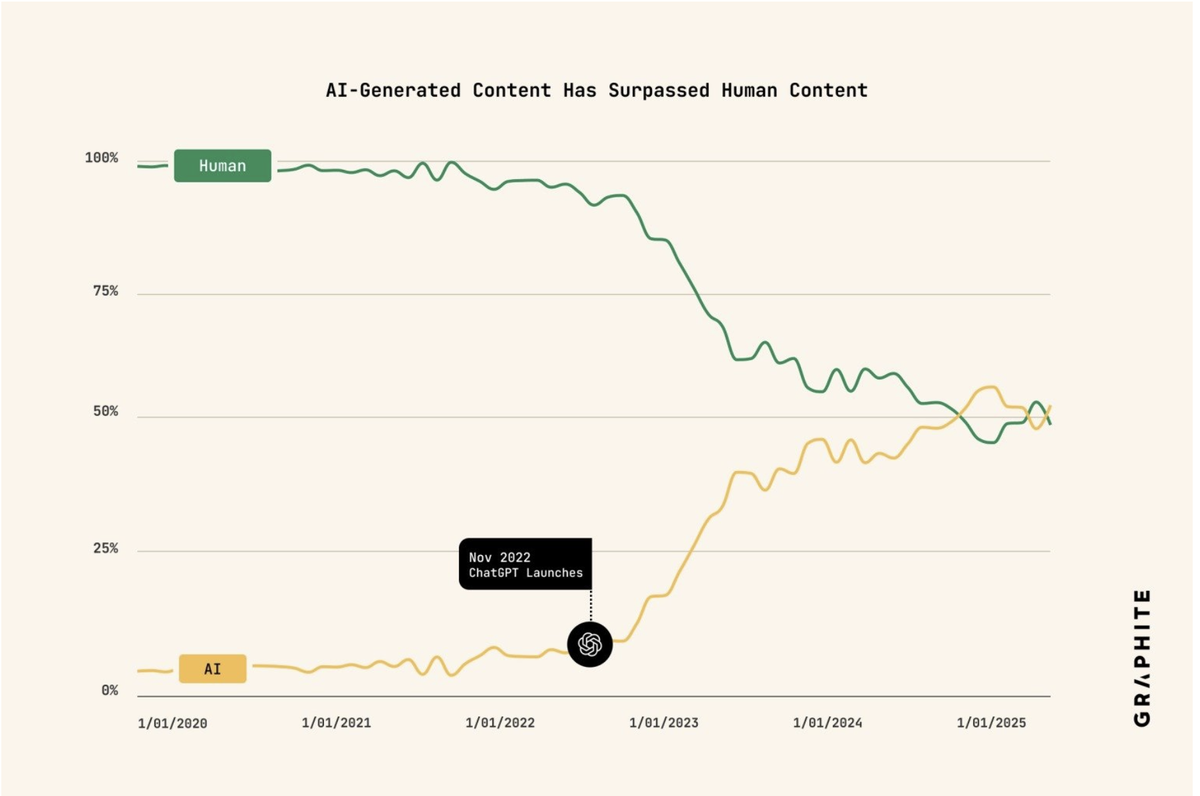
Some minor good news is that the renaissance of robot ink seems to have plateaued since May 2024. Since then, some months have seen more human work, but the two are neck-and-neck. Graphite does not explain the slowdown, especially since the number of ChatGPT users continues to grow; OpenAI now puts its weekly active user count at 800 million.
The idea that half of what we read on the web could be written by a robot is alarming, but how many humans are actually reading chatbot-produced content? Bad actors have turned to AI to crank out propaganda articles, as we saw last year with Iran. They are trying to flood the web with this content, so tools like ChatGPT and Google's AI Overviews regurgitate it to users. In a separate study, Graphite said AI-generated articles largely do not appear on Google or in ChatGPT. "We do not evaluate whether AI-generated articles are viewed in proportion by real users, but we suspect that they are not," it says. Another caveat: Detecting AI content is notoriously difficult, so there could be false positives. Graphite pulled the URLs from Common Crawl, a large, publicly available web archive, and ran chunks of their text through a free AI detection tool called Surfer. It classified the articles as AI-generated if Surfer predicted that more than 50% of the content was AI-generated.
The team tested Surfer's chops by generating 6,009 phony articles using ChatGPT's GPT-4o model, and seeing if it could detect them. Surfer correctly classified 99.4% of them as AI. Still, there's no denying the internet is trending toward more and more AI-generated content every day, especially with the launch of new tools like OpenAI's Sora 2 in early October.