Food Studies
TECHNOLOGY FACULTY

































Food Studies
TECHNOLOGY FACULTY
| 🎓 Course Type | Elective |
|---|---|
| 🧩 Units | Themed (4) |
| 🗓 Timing | Semester 1 2025: Food Essentials, Semester 2 2025: Food Art, Semester 1 2026: Food & Culture, Semester 2 2026: Food Enterprise, |
| ⏱ Hours per week | 3 |
| 📚 Prior Experience | Not required |
| ✏️ Selection | Possible to commence study with any of the above units |
| 🧭 Future Pathways | VET Hospitality, TCE Food and Nutrition and any career related to Food. |
Students who choose Food Studies can complete two units of Food studies per year. There are 4 units available over Years 9 and 10.
Each unit involves investigation and making judgments on how the principles of food safety, preservation, preparation, presentation, and sensory perceptions influence the creation of food solutions for healthy eating.
Each unit incorporates process and production skills, from investigating and defining, generating and designing, producing and implementing, evaluating and collaborating and managing.
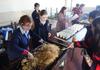
Over the course of the two years various food topics and processes are covered. The students usually work cooperatively in pairs to develop practical skills and theoretical knowledge of various cooking techniques before engaging in a design brief to encompass those learnt skills. Students then test their design against pre-determined success criteria, evaluate and refine their design idea and then produce the improved design product again.
Valuable knowledge and techniques will empower students to confidently reproduce and
reinvent recipes- a skill that will be with them for life. The fundamentals of efficiently preparing and using well-known ingredients and dishes are covered along with exposure to contemporary issues surrounding food. Students are expected to redesign recipes and experiment with ingredients to develop flexibility, problem solving and creativity in their cooking.
Each unit also includes an opportunity for students to work individually on a project that they design and manage.
The content focus for Semester 1, 2025 will focus on ‘Food Essentials’ and the focus for Semester 2, 2025 will be ‘Food Art’.
Semester 1, 2026 will be ‘Food and Culture’ and the focus for Semester 2, 2026 will be ‘Food Enterprise’.
Food Essentials covers cooking techniques (dry heat methods, moist heat methods and combination methods). Dishes will relate specifically to the cooking methods and ingredients that work best with that method. This unit includes a focus on vegetarian cooking.
Food Art covers cooking for different occasions including themed parties, cooking for special diets, restaurant-style dinner parties and celebration cakes. Food art focuses on food styling through the study of the principles and elements of design.
Food and Culture covers exploring how one's culture is reflected in family food choices and social practices, investigating Australia's food culture through a historical perspective with a particular focus on our edible native indigenous flavourings and the many influences of multiculturalism and connecting where possible to some of our local chefs and food businesses.

Food Enterprise covers exploring cafe culture, food service and catering, the Tasmanian food industry and food product development.