
AI: Academic Integrity or Artificial Intelligence?
by Mr Nathaniel Smith, Head of Digital Learning
AI: Academic Integrity or Artificial Intelligence?
by Mr Nathaniel Smith, Head of Digital Learning
Many families will be familiar with recent news coverage of a Melbourne school at which around 35 students were found to have used AI to cheat on an English assessment. This may have raised questions regarding BHHS’ own policies and academic integrity process.
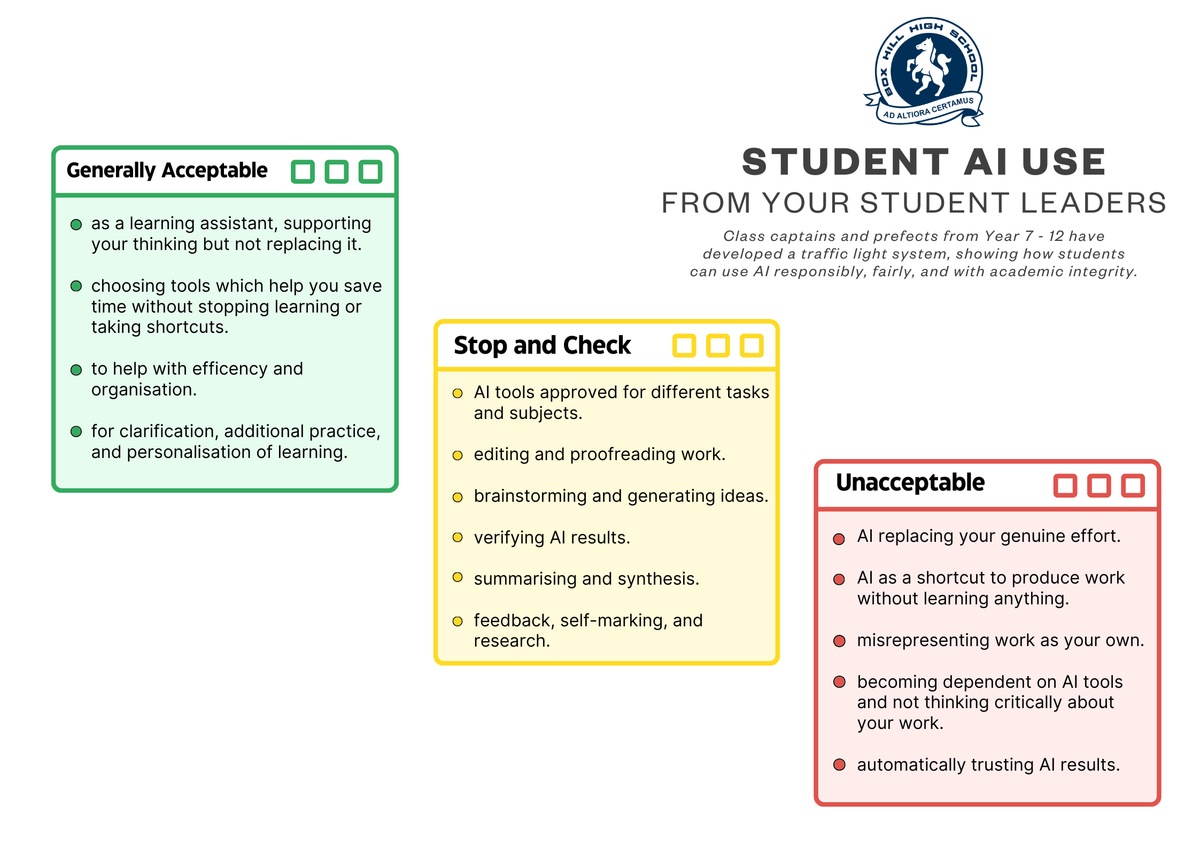
Our Generative AI Policy is clear that students must not misrepresent work completed with AI tools as their own and that doing so is considered plagiarism. The purpose of assessment is to evaluate a student’s understanding, skills, and progress, which is compromised if the work handed in is not their own.
However, different subjects and tasks have specific requirements around how and when AI is permitted, and it is important that students refer to their task sheets as well as their teacher to clarify expectations. Assume AI is not permitted unless otherwise stated, and that how tools may be used will vary across subjects and even tasks within those subjects.
Our Assessment Policy outlines that where a teacher forms a belief that a student has submitted work that is not their own, this may result in:
Receiving an ‘Unsatisfactory’ grade and/or not being assessed for the part of the task that has been plagiarised.
Resubmission of the task.
Requiring students to demonstrate their understanding through completion of an additional alternative task.
Students providing evidence of the authenticity of their work. (i.e. show documentation, plans or drafts of their work, or demonstrate understanding through alternative means).
Submitting a declaration stating the work is their own.
Sharing digital version histories of their work (e.g., Word, Google Docs)
Providing access to chat history or activity logs for an AI tool or agent.
A note for VCE students and families:
Especially for students in Years 11 and 12, teachers must be able to confidently say that a student’s work belongs to them. They build this understanding through a combination of how students work in-class as well as perform on assessment across a unit. If a teacher is unable to authenticate a student’s work, this may result in them not achieving a satisfactory result (S) for that unit.
In all years, but especially at VCE, students must:
Participate consistently in class and complete homework and classwork to the best of their ability.
Keep drafts, planning notes, and earlier versions of work throughout any assessment task.
Be prepared to walk a teacher through their work and explain their thinking if asked.
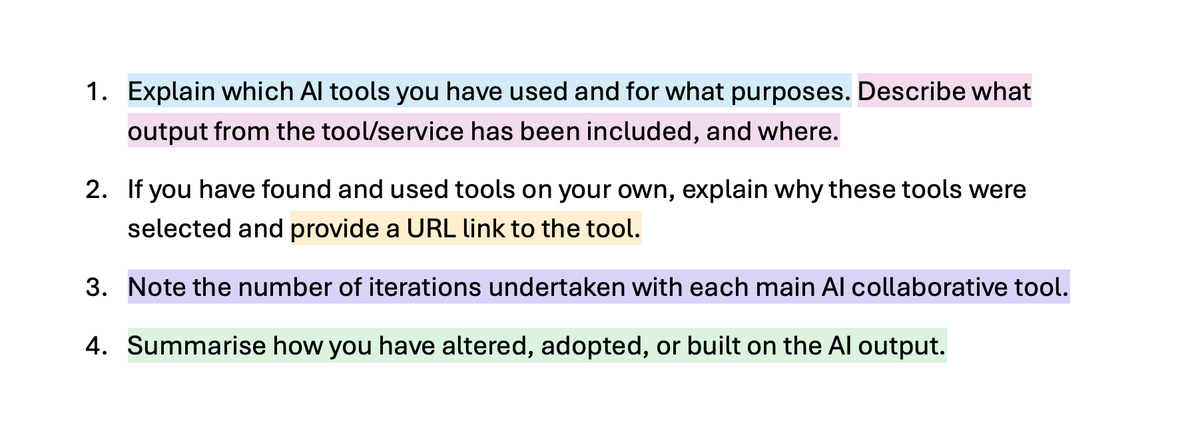
Our policy also recognises that AI has a legitimate role in learning when used appropriately. Where a subject or teacher has specifically approved AI use for a task, students are required to disclose and cite their use.
In Term 3, we are relaunching this expectation with a revised citation guide, taking on Monash University’s recommendations.
Students must explain which tools they used and why, and how they interacted with the output using their own skills and knowledge.
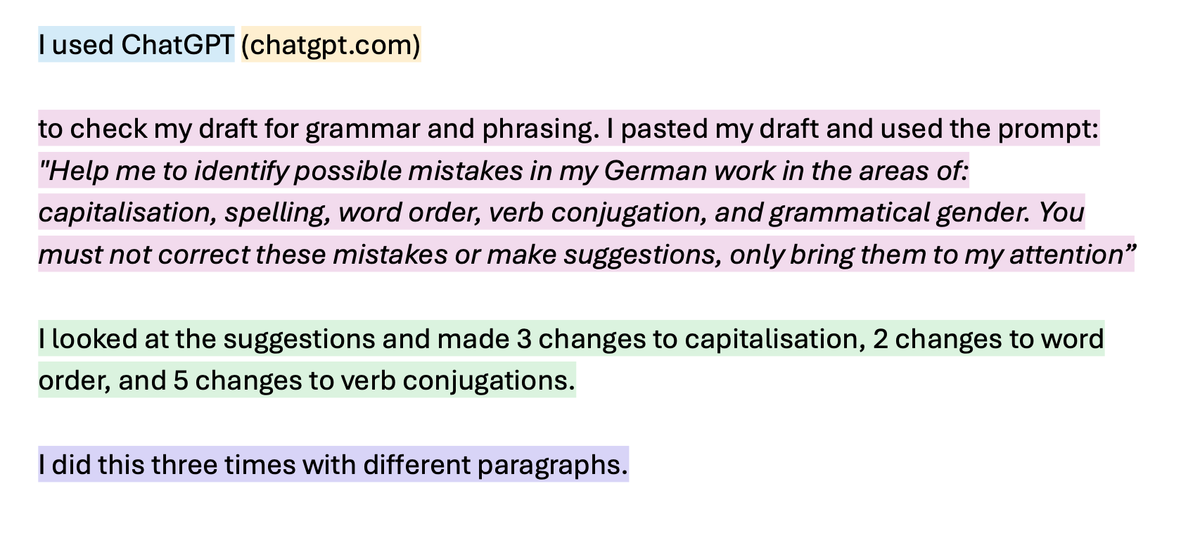
Thinking about my own German classroom, an acceptable AI prompt for a recent writing assessment is one which brings mistakes to a student’s attention but does not rewrite the work for them. This is a good example of how subjects and task requirements may differ from one another and why it’s important to check in with your teacher and assessment materials.
We acknowledge that this is not always straightforward and to both upskill our teachers as well as provide a common framework for students and families, BHHS is developing AI principles by learning area (eg. Maths, Science, Languages, Health and Physical Education, etc). These will be found on assessment materials in those learning areas, as well as made available to students and families to help make approved use cases more transparent.
A volunteer AI Working Group of around ten staff is dedicated to understanding how AI tools can support learning at BHHS in ways that are ethical, effective, and age appropriate.
As part of this work, we have recently piloted paid access to Claude with a group of teachers and education support staff.
Our teachers are also engaging in ongoing professional development and redesigning assessment tasks that are resilient to AI misuse while giving students clear guidance on what is and is not permitted in each piece of work.
A conversation at home can make a real difference. Ask your child what their teachers have said about AI for their current tasks and encourage them to check before they use, not after.
Generative AI is new territory for schools, students, and families. We are committed to navigating it thoughtfully and we value your partnership in this emerging space.