Wellbeing


Wellbeing
As we come to the end of another school year, the Wellbeing Team would like to take a moment to reflect, celebrate and thank our community for the support, trust and connection shown throughout 2025.
This term marked the conclusion of our EACH WILD Program, which finished on a real high with a five-day camp at Lysterfield Lake, followed by a challenging and rewarding rock scramble through the Cathedral Ranges. Across the year, students involved in the program demonstrated incredible growth in resilience, teamwork, confidence and self-belief. Seeing students step outside their comfort zones, support one another and experience success in the outdoors has been a powerful reminder of the impact of experiential learning and strong relationships.
As we head into the school holidays, we encourage families to continue prioritising wellbeing at home. The attached Wellbeing Support for Parents and Carers – School Holidays factsheet provides practical tips to support young people during the break, including maintaining routines, staying socially connected, engaging in enjoyable activities, and knowing when and where to seek additional support if needed . The holidays can be a positive and restorative time, but they can also bring challenges for some, and early support makes a difference.
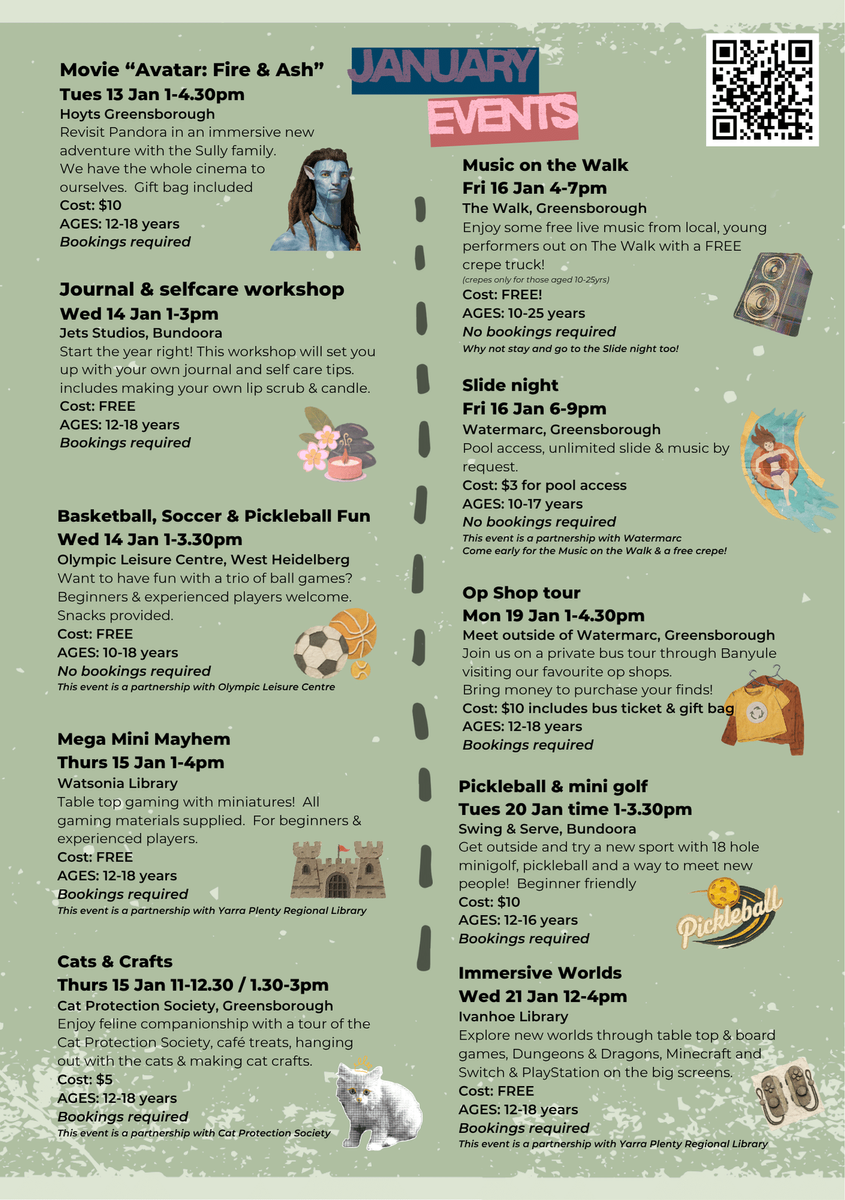
There are also a range of local holiday programs and youth activities available across the community over summer, offering opportunities for young people to stay active, creative and connected. We encourage families to explore these options as a way to support positive mental health and engagement during the break. Take a look at the Banyule Youth Services and Nillumbik Youth Services webpages to book in for an activity.
Looking ahead to 2026, we would like to share that Holly Morgan will be joining the Wellbeing Team as Wellbeing Leader, working closely with students, staff and families while Kasi is on family leave for the majority of 2026. We are excited to welcome Holly and know she will be a wonderful addition to the team.
On behalf of the entire Wellbeing Team, we would like to wish all students, families and staff a safe, restful and happy holiday period. Thank you for being part of our community, and we look forward to reconnecting in the new year.
Warm regards
The Wellbeing Team
For parents and carers Wellbeing support for students during the school holidays
This guide provides tips and resources for parents, carers and families to support the mental health and wellbeing of children and young people in their care during the school holidays. This includes services to reach out to if more support is needed.
Actions that support positive mental health
Encourage your child or young person to:
- Exercise and eat healthily to boost their mood
- Prioritise sleep to support mental and emotional wellbeing
- Explore relaxation techniques and coping strategies
- Stay in touch and catch up with friends and loved ones
- Make time to do things they enjoy
- Practice positive self-talk, and remind them they are not alone
- Engage in healthy online habits
- Seek professional help if needed.[1]
The department has developed wellbeing activities and conversation starters for parents and carers of primary school-aged children and secondary school-aged children.
Feeling it: mindfulness resources and activities for secondary students. Smiling Mind gives tips on self-care, understanding and managing emotions, being mindful, being kind to yourself, navigating uncertainty and preparing for change.
Signs a child or young person may need mental health support
In some cases, these actions will not be enough to support positive mental health.
Keep an eye out and seek professional help for changes that last two or more weeks such as:
- Loss of interest or involvement in activities normally enjoyed
- Feeling ‘low’, unusually stressed or worried
- Doing ordinary things gets harder
- Being easily irritated or angry
- Taking more dangerous risks, like using alcohol or drugs
- Withdrawal or feeling overwhelmed
- Difficulties with concentration and motivation
- Having a lot of negative thoughts
- Changing sleeping and eating habits.[2]
Young people supporting each other
Young people are most likely to turn to each other for support before seeking out an adult or service provider.
Young people can support each other by:
contacting 000 if a friend needs urgent assistance or is at risk of harming themselves or others
reaching out to a friend, offering support and letting them know you care
letting their friend know they may need to tell a trusted adult about their concerns.
Having these types of conversations can be difficult for young people. Information for young people on how to support a friend is available via:
the Mental Health and Wellbeing Toolkit: If you or a friend need help with mental health
Mental health resources
Supporting your young person during the holidays (headspace)
Mental Health and Wellbeing Toolkit (Department of Education)
Raising Learners Podcast Series: providing expert advice and information to parents and carers on topics including how to keep your child safe online
Learn how to handle tough times (headspace)
Get into life (to keep your headspace healthy) (headspace)
Online wellbeing and safety
- Safe Socials (Department of Education)
- Fact sheet – parents of primary students
- Fact sheet – parents of secondary students
- ScrollSafe (Orygen)
- Parents and carers hub
- Social media age restrictions (eSafety Commissioner)
Mental health support
- Contacting 000 for urgent assistance
- Your local GP for a mental health plan and referrals
- headspace Counselling: Young people aged 12-25 can access counselling services from headspace. During the holidays, students can call their local headspace centre
- eheadspace: 1800 650 890 www.headspace.org.au/eheadspace
- Kids Helpline: 1800 551 800 www.kidshelpline.com.au
- Lifeline: 13 11 14 www.lifeline.org.au
- Beyond Blue: 1300 224 636 www.beyondblue.org.au
- Head to Health: 1800 595 212 https://www.medicarementalhealth.gov.au/head-to-health-clinics-victoria
- Suicide Call Back Service: 1300 659 467 www.suicidecallbackservice.org.au
Self‑harm and suicide prevention resources
- Getting a mental health care plan (ReachOut)
- What you need to know about self-harm (headspace)
- How to help when someone is suicidal
- (SANE Australia)
Family violence support and resources
- Safe Steps: 1800 015 188 www.safesteps.org.au
- 1800RESPECT: 1800 737 732 www.1800respect.org.au
- What’s okay at home: www.woah.org.au
- Family violence support resources
[1] headspace – supporting young people with school stress https://headspace.org.au/friends-and-family/parents-guide- tips-for-managing-stress-and-problems-at-school/ https://headspace.org.au/explore-topics/supporting-a-young-person/school-stress/
[2] headspace ‘mental health and you’ poster https://headspace.org.au/assets/Uploads/Mental-Health-Posters-mgpdf.pdf and headspace – how to talk to your children about mental health https://headspace.org.au/dads/