
The Green Page:

Chinese team makes mice regrow complex tissue using ancient genetic regeneration code:
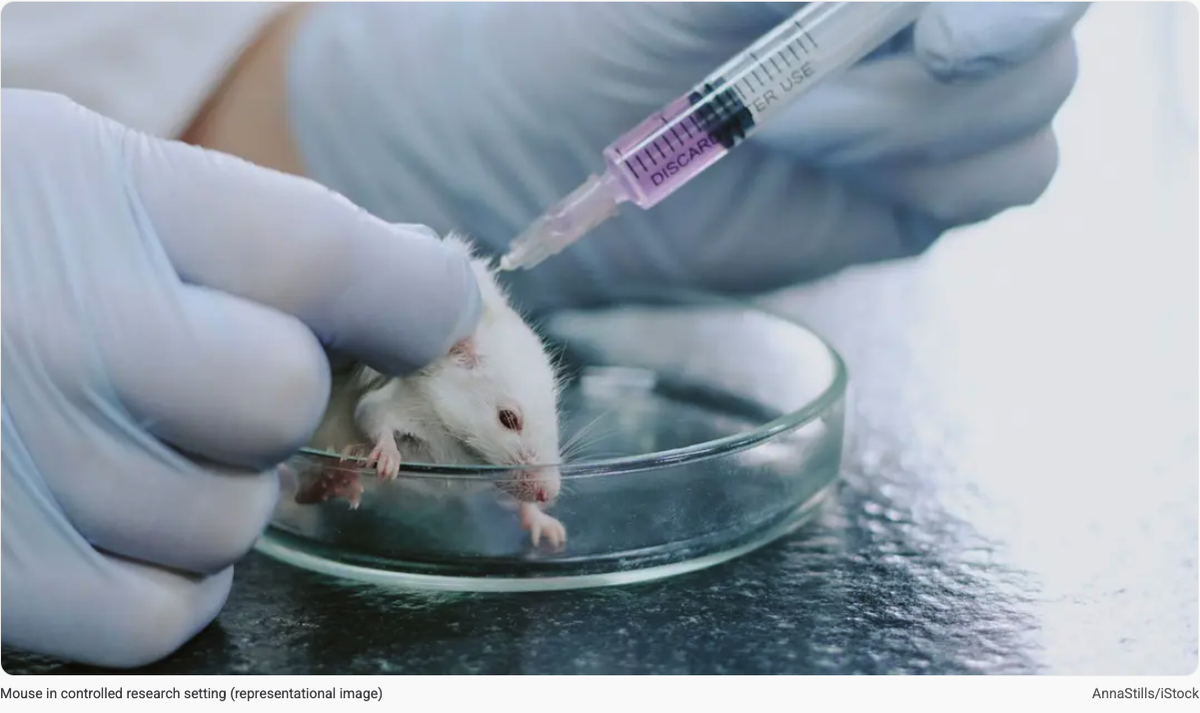
Chinese scientists have restored damaged ear tissue in mice by reactivating a genetic switch long thought to be lost in mammals.
This is a significant development, as mice cannot naturally regrow complex tissue.
The team used rabbits, known for their limited regenerative ability, as a comparison model.
Both species began healing similarly after injury, forming a blastema at the wound site. However, by day 15, rabbit ears showed visible tissue outgrowth, while healing in mice stalled completely.
“We were trying to learn how certain animals lost their regeneration capacity during evolution and then put back the responsible gene or pathway to reactivate the regeneration program,” said Wei Wang of the National Institute of Biological Sciences in Beijing.
The researchers studied the ear pinna, a structurally complex part of the ear that includes skin, cartilage, nerves, and blood vessels.
They found that rabbits could close a full-thickness hole in their ear within a month and restore all lost tissue within three months. In contrast, mice barely regenerated any tissue over the same period.
Retinoic acid is the key to healing.
The study identified ALDH1A2 as the key player in retinoic acid production, a vitamin A-derived molecule.
This compound regulates cell specialisation and plays a central role in tissue regeneration. While rabbits activate ALDH1A2 robustly after injury, mice show almost no activity in this gene.
“Mice, on the other hand, had very high activity in genetic pathways responsible for degradation of retinoic acid and very low activity in pathways responsible for synthesising it,” said Wang.
To test this, the team injected retinoic acid directly into injured mouse ears. Unlike a 2022 study that failed to produce results, this time the treatment worked. “I think the concentration of the acid they injected there was not high enough, and the duration of these injections was not long enough,” Wang explained. “Retinoic acid has a very short life.”
At a more advanced stage, the scientists transplanted a rabbit DNA enhancer near the ALDH1A2 gene into mice. This modification reactivated the gene, allowing mice to produce their own retinoic acid and fully regenerate ear tissue.
Unlocking lost ability.
“This performance suggests a genetic switch involved in the evolution of regeneration,” the researchers wrote in the study.
They also noted the broad application of retinoic acid in regenerating nerves, bones, limbs, lungs, and skin.
BGI-Research said in a press release: “The therapeutic implications stretch far beyond mouse ears.”
The institution added that retinoic acid is already FDA-approved for certain cancers and skin conditions. “For trauma surgeons treating battlefield injuries, plastic surgeons reconstructing birth defects, or cardiologists facing heart attack patients, the prospect of flipping a single molecular switch to restore rather than merely repair represents a paradigm shift in medicine,” the institute said.
Still, challenges remain. “Adding back the retinoic acid can activate ear pinna regeneration, but may not be able to activate the regeneration of heart or other organs,” said Wang. He added that different organs may have lost regenerative abilities for different evolutionary reasons, a puzzle the team is now working to understand.