Wellbeing Information
Triple P - Positive Parenting Program
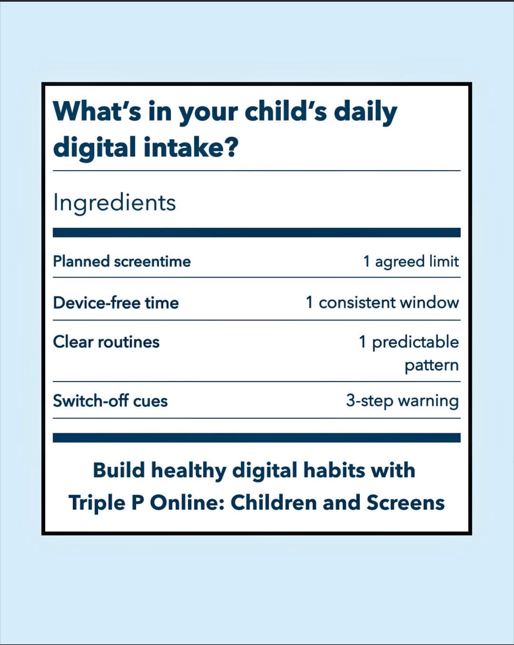
What can a healthy 'digital diet' look like for our children?
- screentime for fun
- time for games
- time for learning
- time away from devices
Balance is what matters most.
Triple P Online: Children and Screens shared practical strategies to help parents and carers guide healthy screen habits and support a better balance between online and offline time.
https://www.triplep-parenting.net.au/au/parenting-courses/triple-p-online-children-and-screens/
National Child Road Safety Education Resources
The RAA has launched the Roadsafe Rangers. After many months of development, we are very proud to have officially launched our road safety education resources - the Roadsafe Rangers!
Whether you’re an expecting parent, current parent, carer, health professional, educator, teacher or child, these age-specific, evidence-based resources provide everything you need to support children’s safety on and around roads from birth through to school age.
Join Roadsafe Rangers Quinn, Charlie, Remy and Alex as they guide you through road safety with engaging videos, fact sheets, educator tools, stories and e-learning modules - all available in 20 languages on one easy-to-use website!
Together, we’re setting our children up to be safer road users for life.
https://roadsaferangers.com.au/
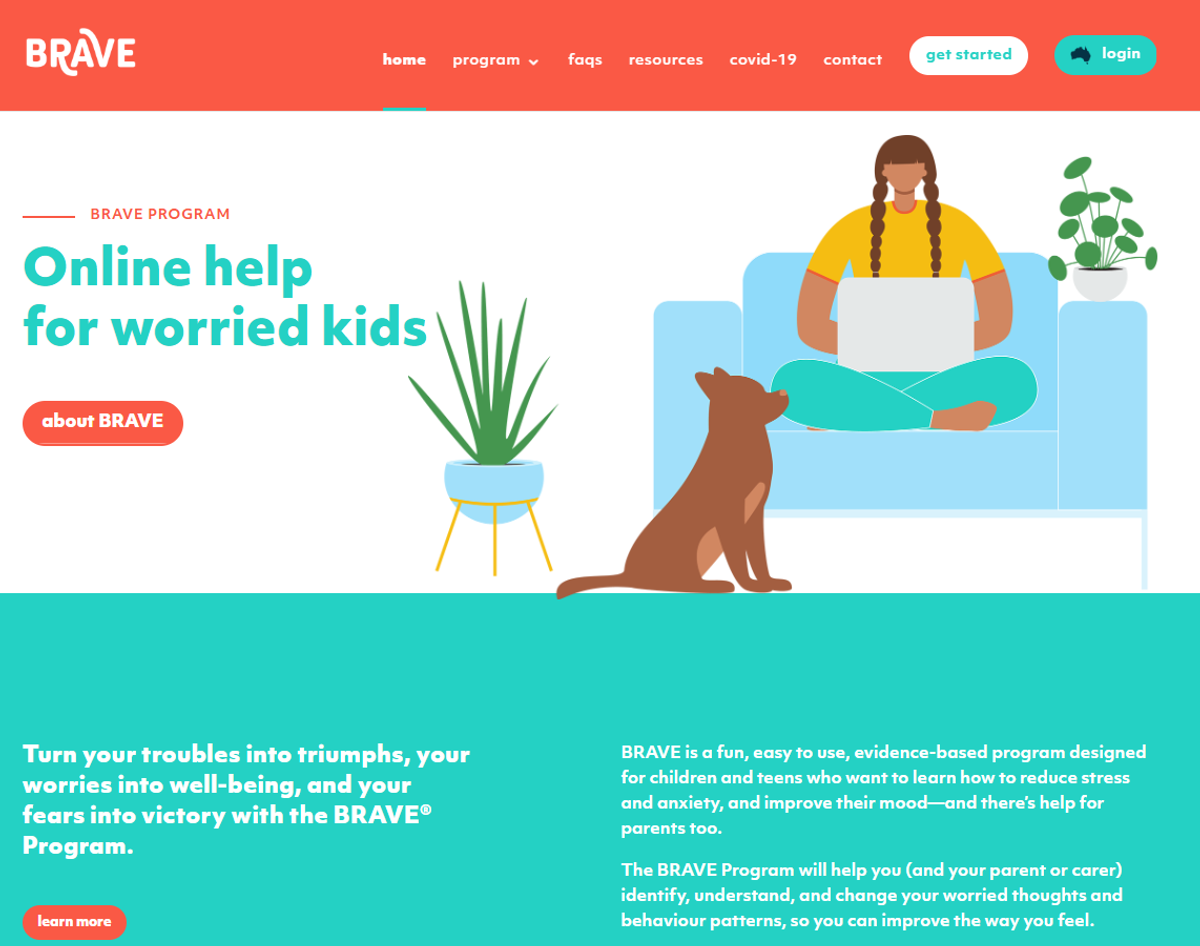
Brave - Online help for worried kids
Everyone feels anxious or worried every now and then.
BRAVE is a fun, easy to use, evidence-based program designed for children and teens who want to learn how to reduce stress and anxiety, and improve their mood—and there’s help for parents too.
The BRAVE Program will help you (and your parent or carer) identify, understand, and change your worried thoughts and behaviour patterns, so you can improve the way you feel.
Some young people can worry about things like starting school or might get anxious when meeting new people. Teenagers may experience anxiety before exams or worry about joining a new sports team. These feelings are natural responses to common situations that are usually short-lived. For some young people, however, anxiety can be severe and persistent, to the extent that it interferes with the activities of day-to-day life and causes problems at school and at home.
Youth anxiety statistics
- 7% of Australian young people ages 4-17 year old suffer from anxiety disorders
- More than 70% of young people experiencing mental disorders don’t access professional support
- Most young people feel comfortable using technology to access mental health help
Having an anxiety condition or disorder can cause prolonged distress and can get worse over time if left undiagnosed and untreated. But the good news is, effective treatments are available.
Anxiety disorders are amongst the most common mental health concerns experienced by young people—at any given time nearly 7% of youths worldwide have an anxiety disorder. Anxiety disorders tend to develop slowly over time and start to impact your everyday living. Some common signs in young people include:
- Wanting things to be perfect.
- Reluctance to ask for help or ask questions.
- Difficulty joining in, shyness, or withdrawal from social interactions.
- Avoidance of fear/anxiety-provoking situations.
- Difficulty concentrating and/or completing tasks.
- Seeking reassurance about things that worry them.
- Feeling ill and/or requesting to go to the sick bay.
- Fear of exams, presentations, or performance-based situations.
- Worrying that performance on assignments, exams or presentations will not be good enough.
Parenting Easy Guides
Parent Easy Guides provide information about raising children from birth to 18 years. We have a Parenting Easy Stand in our Front Office to support you with any parenting concerns. Please feel free to pop in to our Front Office and take a brochure on a topic you are interested in, or use the link below to view them online for free.