Mental Health
& Wellbeing update
Mental Health
& Wellbeing update
Starting a new school year is an exciting time for many, but for some students (and their parents) it can also be quite challenging. The return to school can be tricky for parents and carers to navigate to ensure their child is happy and settled in the classroom. Many students experience anxieties as a new school year begins. Although being in a small school- with only two classes- some of these worries may not arise, I have included them anyway.
Here are some tips from Sharon Baker, a Principal in Residence at the Victorian Academy of Teaching and Leadership, informed by Australian research and the general principles of child psychology, to help make the transition smoother for all.
1. Acknowledge their feelings
Validate emotions: Let your child know it's okay to feel sad, anxious, or disappointed. Acknowledging these emotions can reduce anxiety by making them feel understood (Beyond Blue, 2021). You might say, ‘I know it’s hard to leave a class where you felt comfortable, and it's normal to feel a bit nervous about what’s coming next.
2. Focus on positives and familiarity
Identify familiar faces: Point out any friends or known peers who might also be in their new class. Familiar faces can help ease the transition (Dockett & Perry, 2007).
3. Encourage problem-solving and independence
Model a positive outlook on change: Show a positive attitude toward change yourself, sharing times when you successfully handled transitions or new experiences. This can set a model for them and show that they can handle new situations too. Let them see that you are confident in their ability to handle the change, which can help them feel more secure.
4. Set and maintain predictable routine
Transition preparation: If possible, practice aspects of their new routine, such as packing their school bag or visiting the new classroom, to help them feel prepared and ready.
5. Encourage open communication with teachers
6. Promote friendships and social skills
Arrange playdates or social time: If possible, arrange for your child to meet some classmates outside of school. Positive social interactions help children build confidence in their social skills and see their new class as a space for friendships (Dockett & Perry, 2007).
For more information, resources like Beyond Blue and the Australian Institute of Family Studies provide helpful guidance on fostering resilience and managing transitions for children. The Department of Education also provides some helpful Tips for Starting School and a Starting School Guide, which has hints for changing schools and supporting children with additional needs.
Feel free to reach out to me if you'd like more information or support.
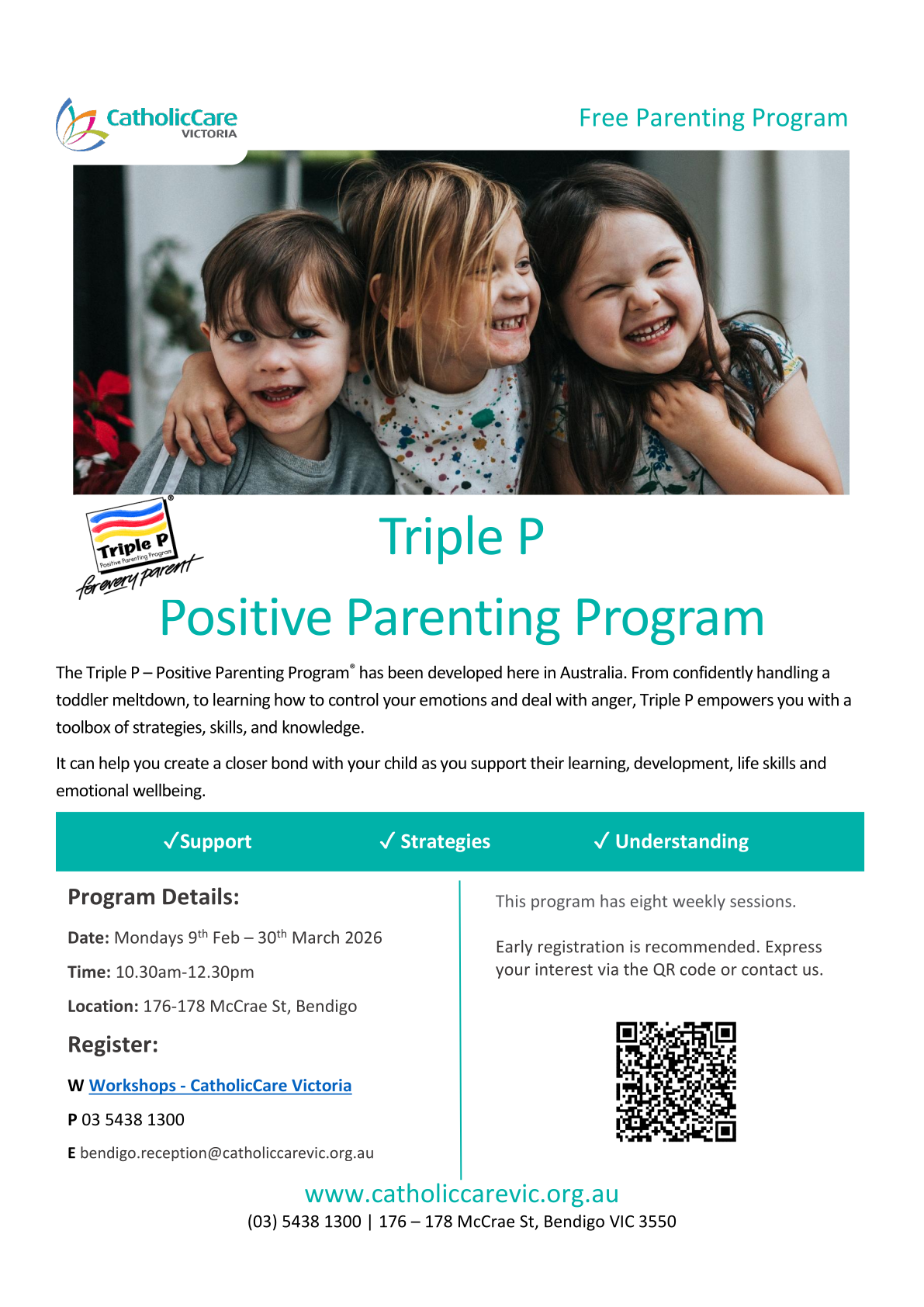
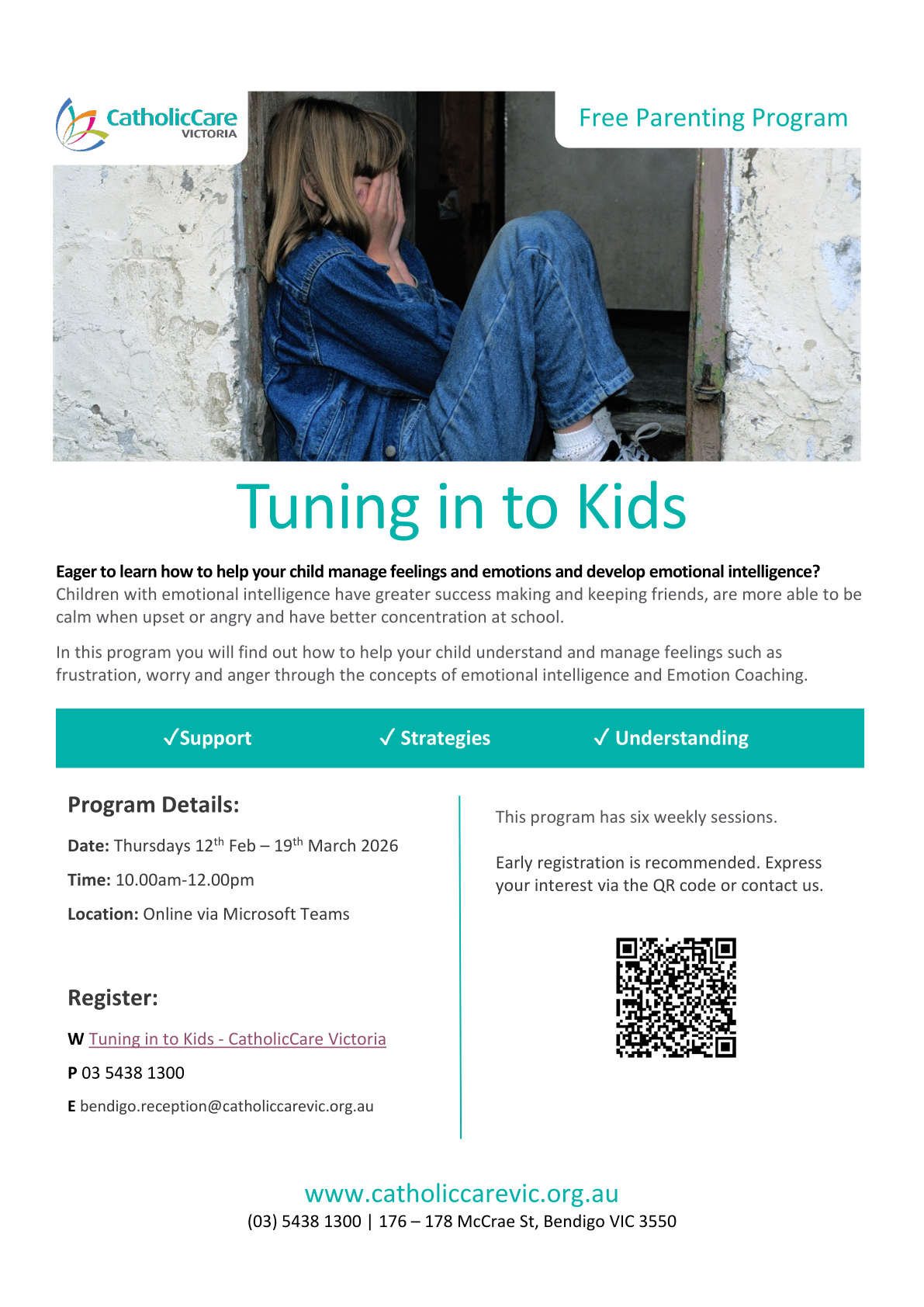
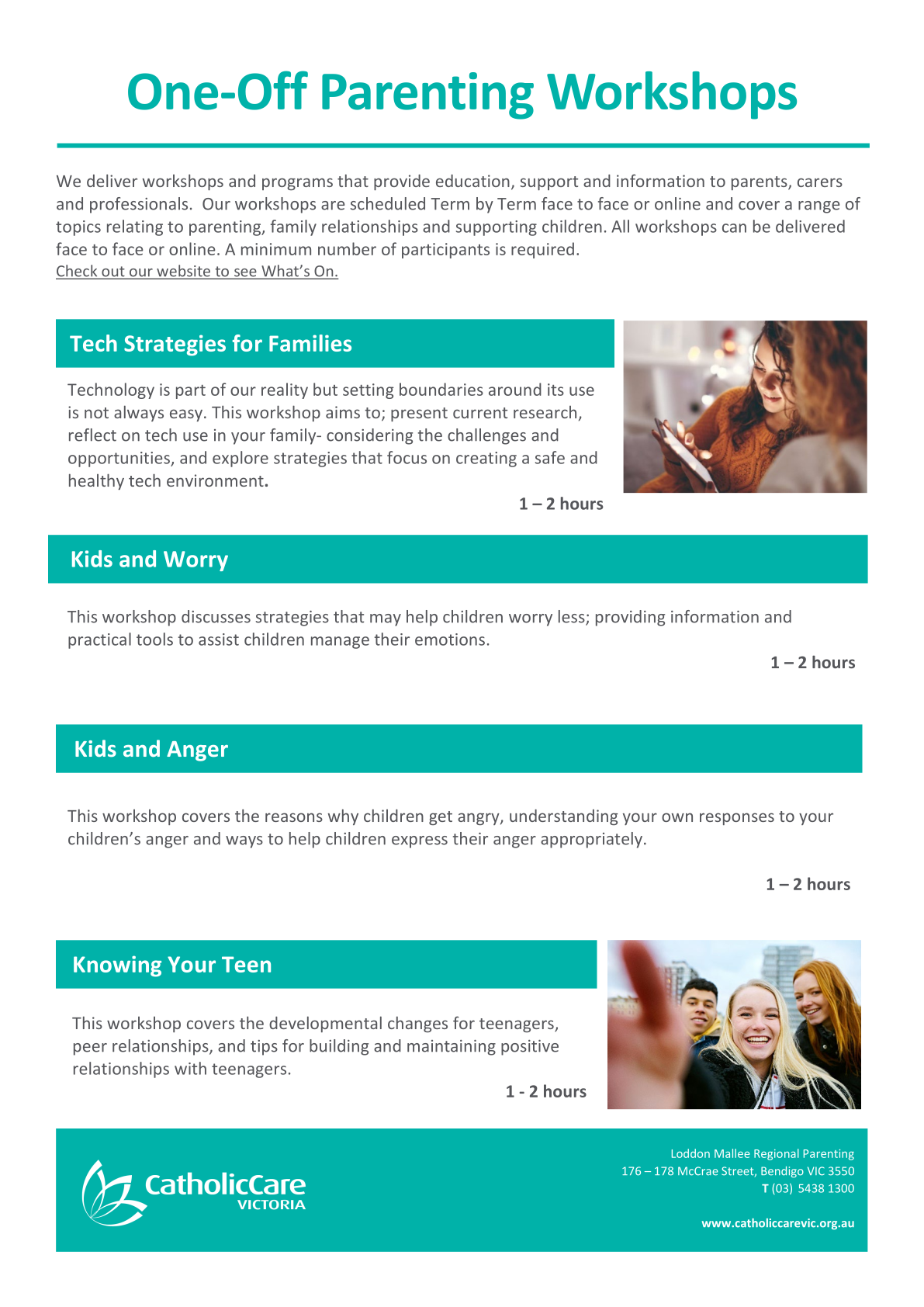
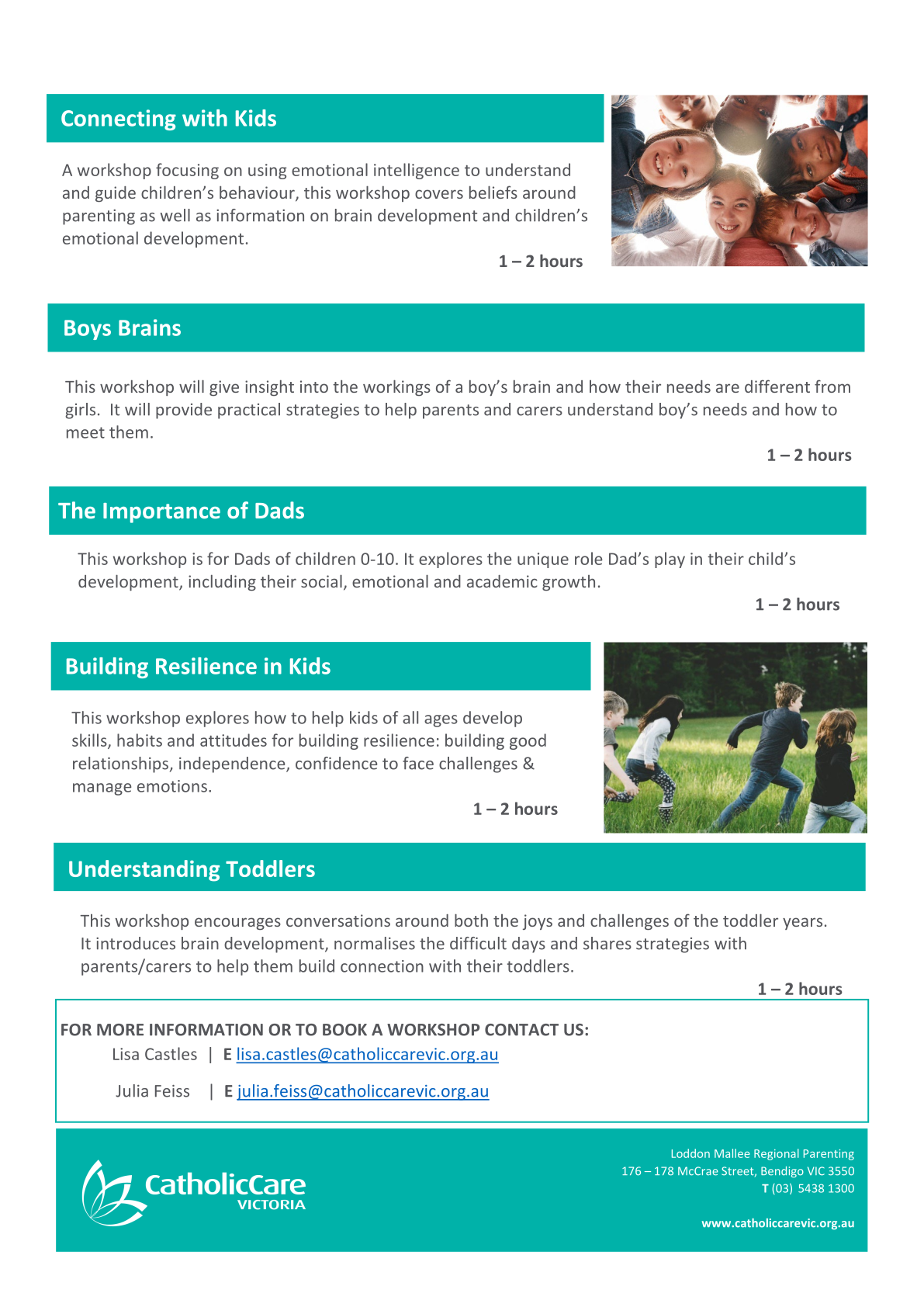
Here are some of the programs available in Term 1. If you'd like to know more, either reach out to The Local, or get in contact with me via ClassDojo, or alternatively my email bronwyn.coffey@education.vic.gov.au
Topics include-
Anxiety in kids, ADHD, Autism, Parent Wellbeing, Sensory Processing, Managing Big Feelings, Tech Troubles and Setting Limi
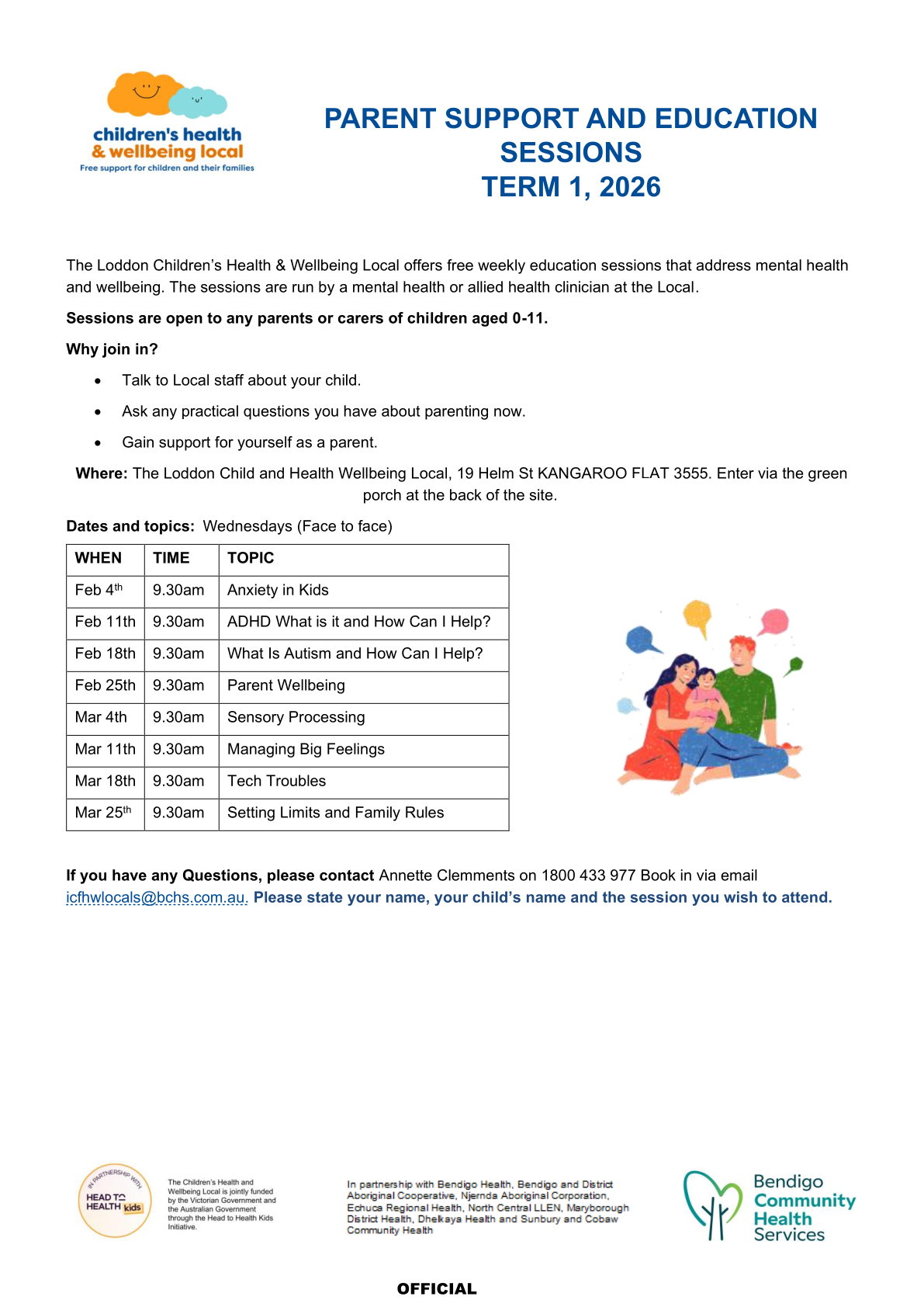
Here are some of the programs available in Term 1. If you'd like to know more, either reach out to CatholicCare, or get in contact with me via ClassDojo, or alternatively my email bronwyn.coffey@education.vic.gov.au
Thanks,
Bron Coffey