
Principal's Message
Mr Forrest
Principal's Message
Mr Forrest
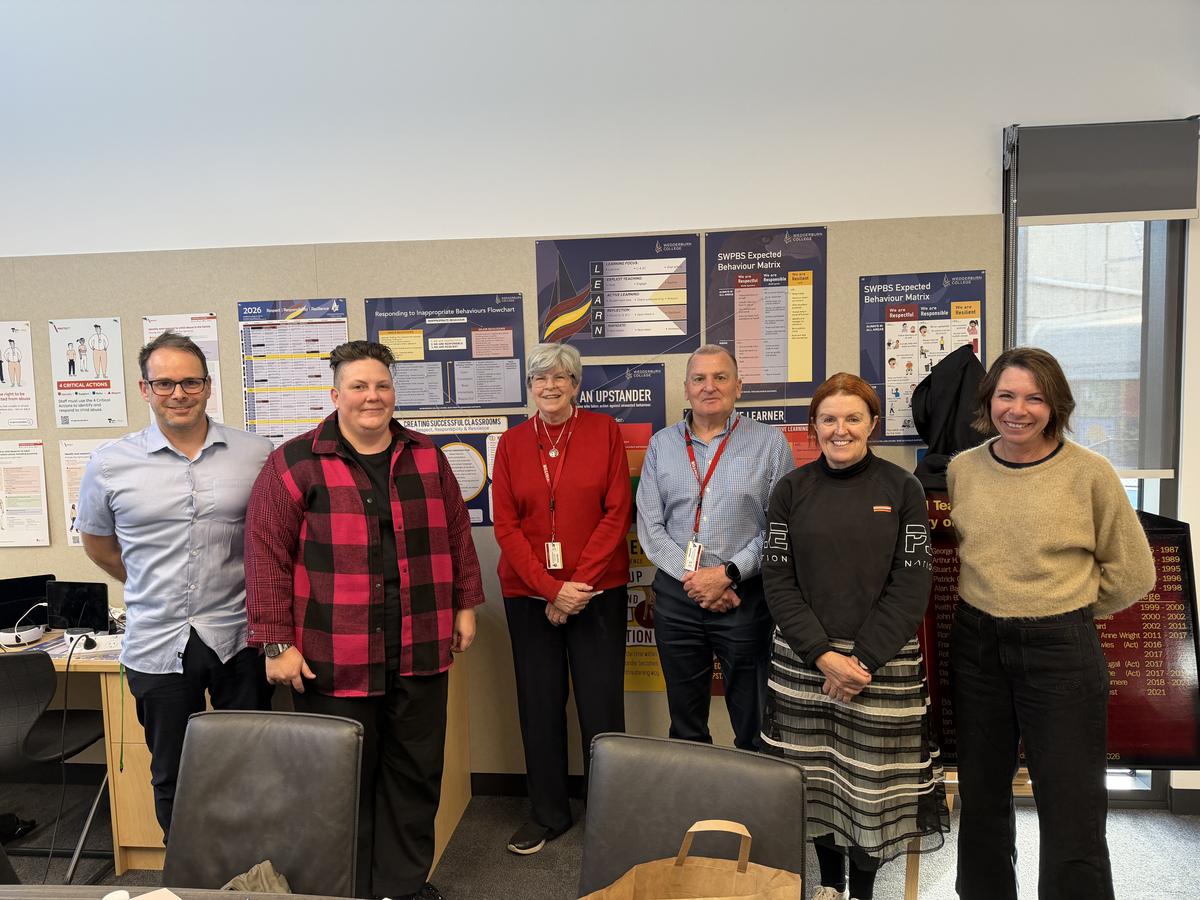
We are absolutely delighted to announce that over the next two days, we will be completing our four-year school review — a significant milestone that reflects the dedication and hard work of our entire school community. We extend our heartfelt thanks to every student, staff member, parent, and stakeholder who has contributed so generously over the past four years; your commitment has been the foundation of everything we have achieved. As we close this chapter, we look forward with great excitement and optimism to the next four years, confident that our students and staff will continue to reach new heights and build on the outstanding achievements that define our school. We have two days looking over our past four years and then setting learning goals for the school for the next four years. Pictured above Alexander Iser AP, Casey Fry DE, School reviewer Charmaine Taylor, DE representative Damien Jenkin, challenge partner Wycheproof P-12 Principal Christine McKersie., school council Prersident Carolyn Stevenson.

We wish our Assistant Principal, Mr Lockhart all the very best as he recovers from recent surgery. His old football injuries have come back to haunt him! We cant wait to see him laughing like a hyena again at his own jokes. Rumour has it he was given a new joke book to study while he is on sick leave.

Monday of next week will be our first School Council meeting after almost a term due to industrial action . A finance meeting will be held at 5:30pm followed by a general meeting, where we will attempt to fit three meetings into one!
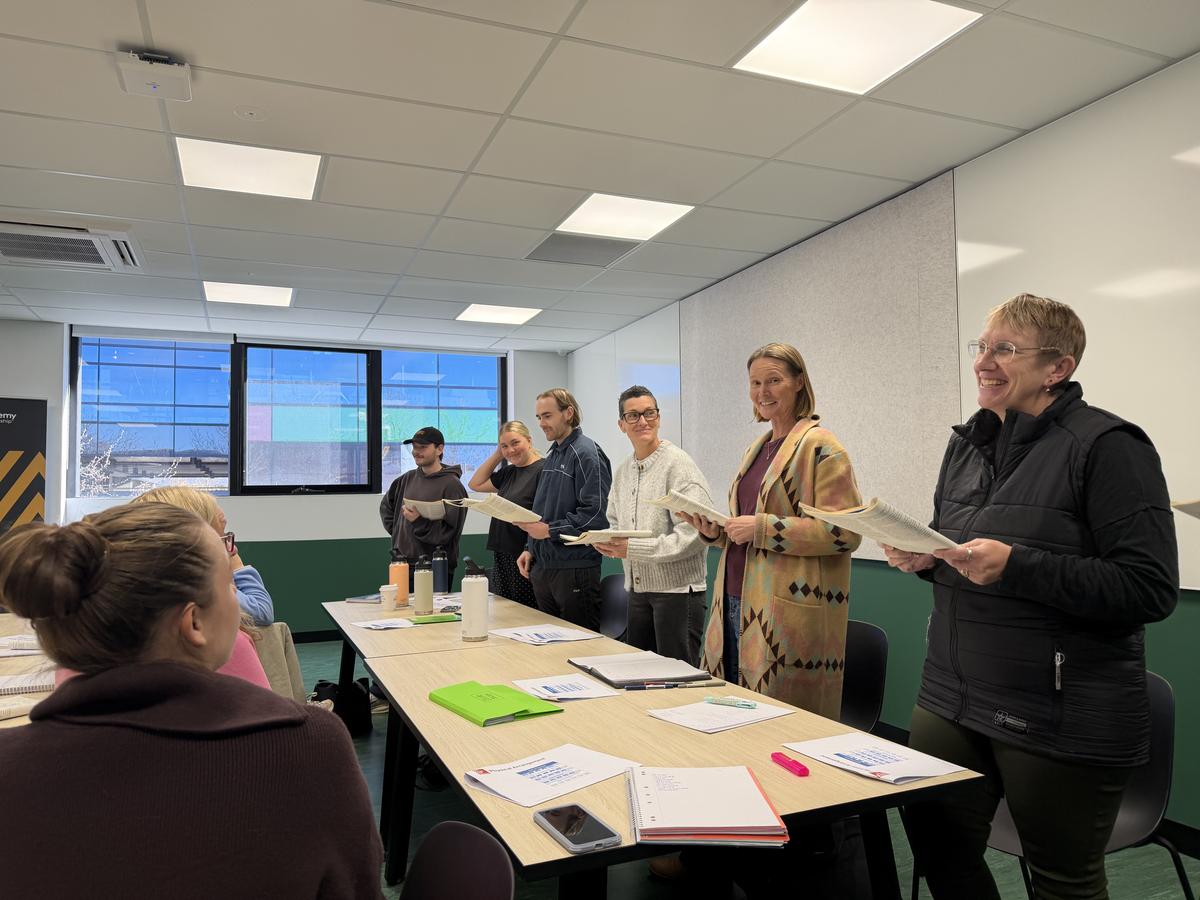
On the Friday, prior to the long weekend, staff participated in professional development activities at the Bendigo Teaching Academy. Secondary staff worked on the upcoming exam preparation and school review documentation while the primary teachers partcipated in SRA Spelling mastery. This new spelling program will be adopted in year 3 to 6, commencing in the upper grades shortly. Pictured above some members of the team practicing the new way of teaching spelling.

We will be providing student achievement reports for Semester 1 this year as usual.
The reports will continue to provide important details about student learning attainment, but full descriptive comments will not be included as a result of industrial action taken earlier this term by the Australian Education Union.
We will of course be pleased to discuss with you your child’s progress at our next Learning Conversations scheduled for 22 July, week 2 of term 3. Appointments will go online at the beginning of term 3.
Hand, foot and mouth disease
Dear Parents and Guardians,
There have been more reported cases of hand, foot and mouth disease within our school community. This is a common but highly contagious viral illness that can spread quickly among children.
To help protect all students and staff, we ask that any child with hand, foot and mouth disease symptoms remain at home and not return to school until the fluid in their blisters have completely dried up. Otherwise, they will be very contagious to other children.
The most common symptoms of hand, foot and mouth disease are:
We appreciate your cooperation in helping to keep our school community safe and healthy.
For further information please see:
Royal Children’s Hospital: Kids Health Info : Hand, foot and mouth disease.
Better Health Channel: Hand, foot and mouth disease | Better Health Channel
NURSE-ON-CALL - 1300 60 60 24 - can help determine if you should manage symptoms at home, see a GP, or visit an urgent care clinic for non-emergency issues. For emergencies, always call 000.
Hand, Foot and Mouth Disease
Reference: Royal Children’s Hospital Kids Health Info : Hand, foot and mouth disease
Key points
What is hand, foot and mouth disease?
Hand, foot and mouth disease is a viral infection caused by the Coxsackie virus. Most children with this illness will get a rash with spots or blisters on their hands and feet, along with mouth ulcers.
There is no vaccine to prevent hand, foot and mouth disease.
While hand, foot and mouth disease is most common in pre-school children, anyone can become infected. It is possible to get the virus more than once, but the symptoms will be less severe.
Signs and symptoms of hand, foot and mouth disease
The most common symptoms of hand, foot and mouth disease are:
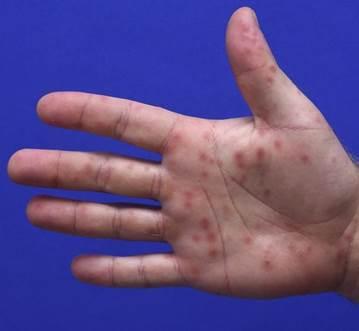
Figure one: Close-up image of hand with hand, foot and mouth disease spots and blisters. Image has been reproduced with permission from ©DermNet2025.
Mouth blisters and ulcers can be painful – especially when your child is trying to eat and drink. Many children are often grumpy while unwell and do not sleep well.
Hand, foot and mouth disease usually lasts from seven to 10 days.
Sometimes, hand, foot and mouth disease can cause eczema to flare up.
Very rarely, the illness can affect the brain or heart. In these cases, your child will seem unwell, often acting drowsy and looking pale. They may have stomach pain and shortness of breath, or rarely, seizures. If your child experiences these symptoms they should see a doctor.
How to care for hand, foot and mouth at home
Hand, foot and mouth disease is a mild illness that rarely causes complications. Antibiotics will not help, as they do not work on viruses.
In most cases, hand, foot and mouth disease will get better on its own. To care for your child at home, you can:
If your child is unwell with a fever and a rash that does not turn skin colour (blanch) when you press on it, this may be a sign of meningococcal infection and requires urgent medical attention.
When to get help
| Call an ambulance (000) if: |
|
| Go to a hospital if: |
|
| See a doctor or health professional if: |
|
| Look after your child at home if: |
|
Common questions about hand, foot and mouth disease
How does hand, foot and mouth disease spread?
Hand, foot and mouth disease spreads easily through fluid from the blisters, saliva and poo for up to a month after the infected person is better. To stop the spread of the virus, follow good hygiene measures like regular hand washing and do not share items like cups or cutlery.
Is there a difference in caring for hand, foot and mouth in babies compared to older children?
The main difference in caring for children of different ages with hand, foot and mouth disease is how you keep them drinking fluids. If your child is young and refusing to drink enough, you may need to give them fluids using a syringe. Older children may find drinking with a straw or eating icy poles easier.
Is hand, foot and mouth disease in people the same as foot and mouth disease found in animals?
Foot and mouth disease in animals is an entirely different disease from hand, foot and mouth disease in humans.
Can children get hand, foot and mouth disease more than once?
Your child can get hand, foot and mouth disease more than once. This is because there are different types of hand, foot and mouth disease viruses, and each can cause a new infection.
Can adults get hand, foot and mouth disease?
Adults can get hand, foot and mouth disease, but it is usually much milder than in children.
Is hand, foot and mouth disease dangerous for pregnant women?
Hand, foot and mouth disease is not known to be dangerous for pregnant women or their unborn babies.
How long is hand, foot and mouth disease contagious for?
Hand, foot and mouth disease is contagious for up to a month after symptoms first show, but it spreads most easily in the first week of infection.
Can my child go to child care or school with hand, foot and mouth?
Your child should not go to childcare or school with hand, foot and mouth disease until the fluid in their blisters has dried up. Otherwise, they will be very contagious to other children.