Building Blocks
Tanya Vaughan, Deputy Principal - Head of Primary
Building Blocks
Tanya Vaughan, Deputy Principal - Head of Primary
It’s been a delight to be greeted by excited faces as young learners arrive each morning. There is something exciting about returning to a new term, seeing teachers and friends, and being curious about the learning and experiences that will happen over the approaching 10 weeks. As always, our term is full of opportunities for students to engage, to learn and to appreciate the goodness of God – in the classroom, in the yard, as we venture offsite to different places and as we gather collectively for times of reflection, sport, music and celebration.
Learning is obviously at the heart of all we do each day – “and our aim is to nurture students as lifelong learners who are able to explore the world with the full depth of sophistication of their gifts and abilities”. (Transformational Education, p27)
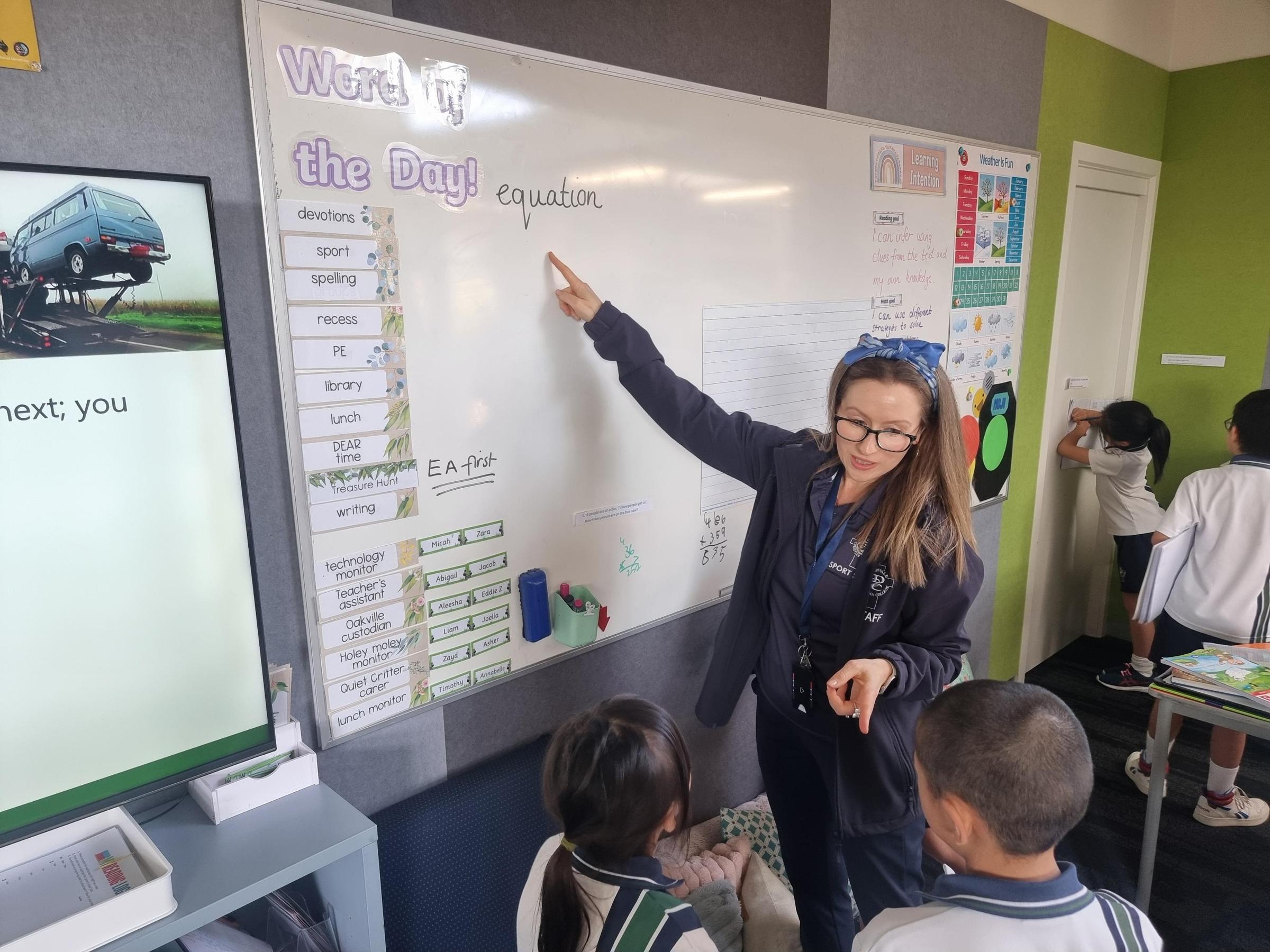
To ensure that we are working towards this aim, a new approach to spelling instruction is being rolled out across the Primary school, with students in Junior Primary accessing the LEM spelling program in a revised format, and students in Years 3-6 being introduced to a new and different way of looking at words and spelling.
From P-6, spelling instruction is carefully sequenced to build strong, lifelong literacy skills. Spelling is the building block for all other forms of literacy – as we seek to develop confident communicators of oral and written language. The LEM phonics program lays the essential foundations of spelling and reading. Through LEM, children learn how letters and letter combinations represent sounds, helping them decode words when reading and encode words when spelling. This phonics knowledge gives students confidence and accuracy as they learn to read and write.
Our new PhOrMeS spelling program builds on the strong LEM phonics foundation. While phonics remains important, PhOrMeS recognises that English spelling is not based on sounds alone. Many words cannot be fully explained through phonics, particularly as vocabulary becomes more complex. PhOrMeS expands students’ understanding by teaching them how spelling, meaning, and word structure work together.
In PhOrMeS, students learn that words are made up of meaningful parts called morphemes, such as base words, prefixes, and suffixes. They also explore etymology, which looks at where words come from and how their history influences their spelling and meaning. These word parts act like building blocks—once students understand them, they can use the same pieces to build newer and more complex vocabulary; to read, spell, and understand many related words. This approach helps students see patterns across words rather than memorising each one individually.
By developing an understanding of how words are built, PhOrMeS equips students with powerful tools for the future. Students become more confident readers, more accurate spellers, and more precise writers as they encounter increasingly sophisticated vocabulary. This strong understanding of word structure supports success not only in literacy, but across all learning areas where language plays a vital role.
As staff, we are excited about the great learning that will continue to take place in the Literacy classrooms at DCC, and look forward to building on the solid foundation as we encourage our students to be confident, capable, creative and critical communicators who can share the good news of the gospel today, and in the years ahead as we prepare them for a life of learning and service for Jesus.