
Year Five
Dear Families,
As we gear up for a busy time of year, the Year 5 students have engaged in a range of learning experiences that have enhanced their prior learning and extended and challenged their thinking.
Reading
The Year 5s have been exploring how authors use language to entertain and inform. Using How to Babysit a Grandpa as a mentor text, students identified action verbs, humour, and tone before creating their own playful “found poems” or written piece from its words and phrases. In comprehension lessons, we practised skimming and scanning strategies to locate key information efficiently, using texts such as The World Is Defrosting to compare data and interpret scientific ideas. Through SOLO questioning and Book Club discussions, students learned to connect ideas across fiction and non-fiction texts, share insights with peers, and build confidence as reflective, collaborative readers who think deeply about the world around them.
Writing
To extend reading understanding through writing, we have been exploring how structure, humour and language choices bring writing to life. Building on our reading work, students created How to Babysit a Teacher, a playful spin on How to Babysit a Grandpa- using clear steps, vivid verbs and a light-hearted instructional voice. We also learned to use adverbial phrases for detail and identified the key features of scientific reports, including aims, hypotheses and conclusions. Creativity shone through in “What to Do if…” animal adventures and a quick-write challenge, How to Train a Dragon to Do Your Homework. Using VCOP routines, students revised vocabulary, punctuation and sentence openers before closing with a “My Life in Similes” reflection celebrating imagination and voice.
Mathematics
In Week 5, the students explored how angles work and how to measure them accurately. They learned that an angle shows the amount of turn between two lines and practised using both handmade and real protractors to measure degrees. Linking maths and science, we investigated how light travels in straight lines and changes direction, using angles to describe the path of light. Outdoor tasks comparing shadow angles at different times of day helped students understand how the sun’s position affects measurement and how geometry connects to real-world observation.
This week, we learned about the properties of 2D and 3D shapes and how these are used in everyday design. Using accurate mathematical language, students identified sides, angles, faces, edges and vertices, exploring how shapes fit together to create strong, balanced structures. To apply our learning, students designed imaginative “robot blueprints,” labelling the shapes used and explaining why forms such as cylinders for arms or cubes for heads suited the designs best.
Inquiry
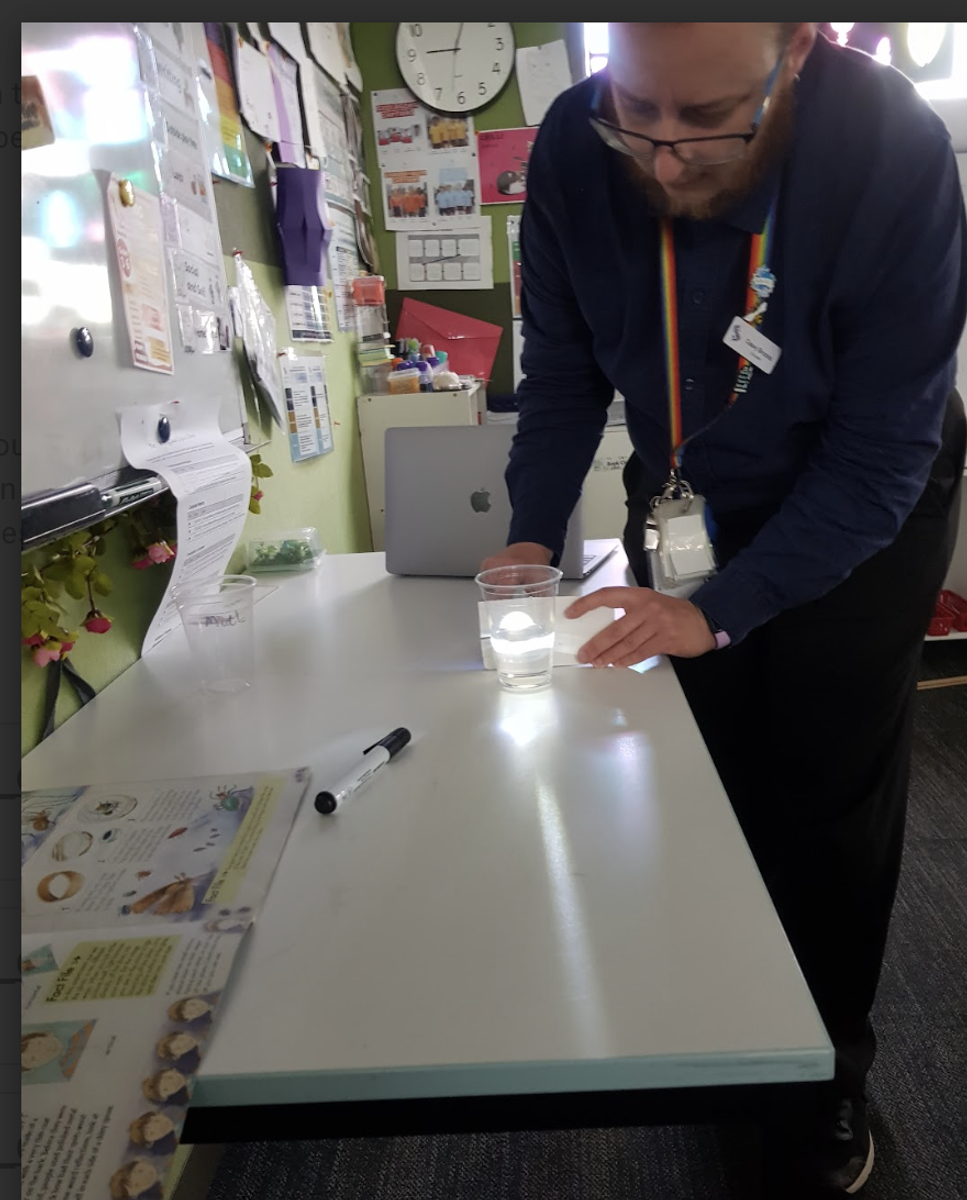
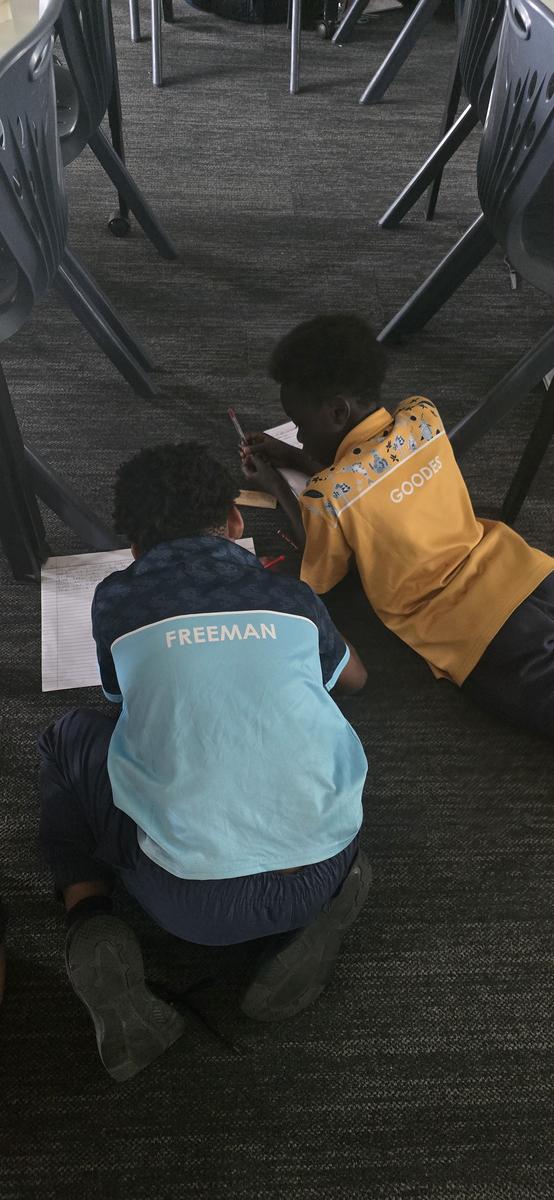
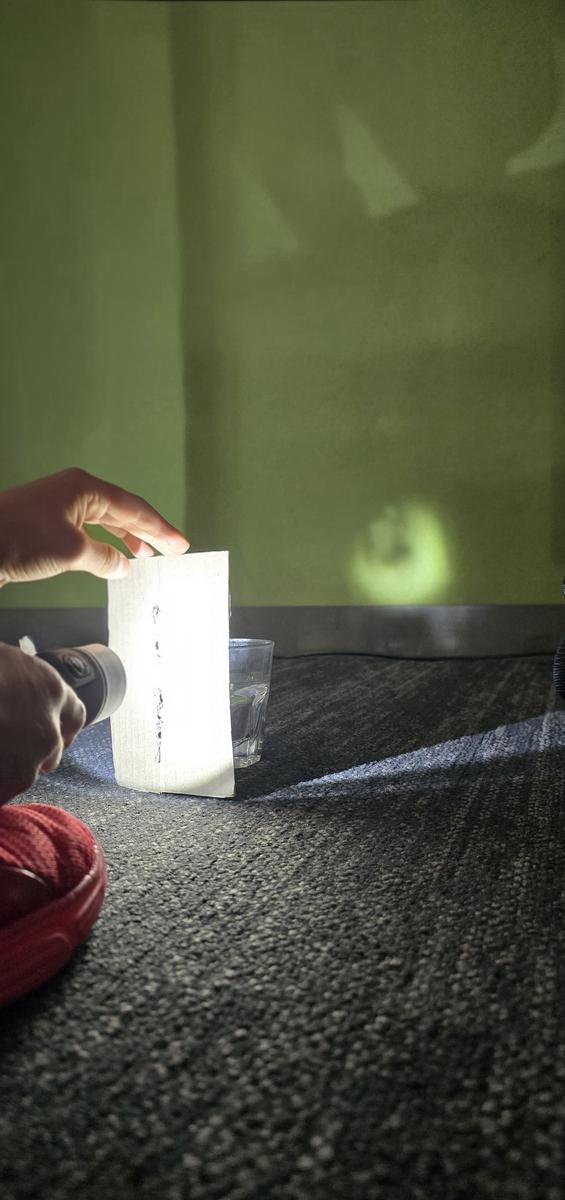
Over the last fortnight, students have been acting as scientists to explore the fascinating properties of light. Using scientific reporting, we recorded hypotheses, observations and results as they investigated how light travels and behaves.
Through hands-on experiments, we discovered that light moves in straight lines, can be measured precisely, and changes when it meets different materials. Working in groups, we tested glass, cardboard, mirrors and cellophane to see how light passes through, reflects or is blocked, developing their understanding of transparency, translucency and opacity. These investigations helped connect scientific concepts to real-world applications and deepened their appreciation of how energy, particularly light-can be converted, transferred and transformed to support human life.



Upcoming Reminders
Life Education Van: 25th November to 9th December 2025
Beach Program Group 1: 19th November to 3rd December 2025 (Wednesdays)
Beach Program Group 2: 21st November to 5th December 2025 (Fridays)
-The Year 5 Team