
Health

Prevention of heat-related illness
Western Australia can experience long periods of extreme heat, where the maximum and minimum temperatures are much hotter than usual.
Children and teenagers are more at risk of heat stress than adults because they are generally smaller and weigh less, absorb heat more rapidly and produce more heat when active.
You can reduce your child’s risk of experiencing heat stress by making sure that they drink plenty of fluids, limit outdoor activities and wear protective clothing
- Children need to drink water throughout the day to help maintain their body temperature, produce bodily fluids, and function properly.
- Young children and babies are at the highest risk of becoming dehydrated.
- Children sweat less and cannot lose heat as rapidly as adults, as well as lose body fluid quickly.
By the time your child is thirsty, they are probably already dehydrated.
Mild dehydration can be treated at home by giving oral rehydration fluids or water.
DO NOT GIVE DRINKS THAT ARE HIGH IN SUGAR.
How much water should my child drink?
Babies under a year old receive all the fluid they need through breast milk or formula. If your baby is aged six months or older, you can give them small amounts of boiled, cooled water.
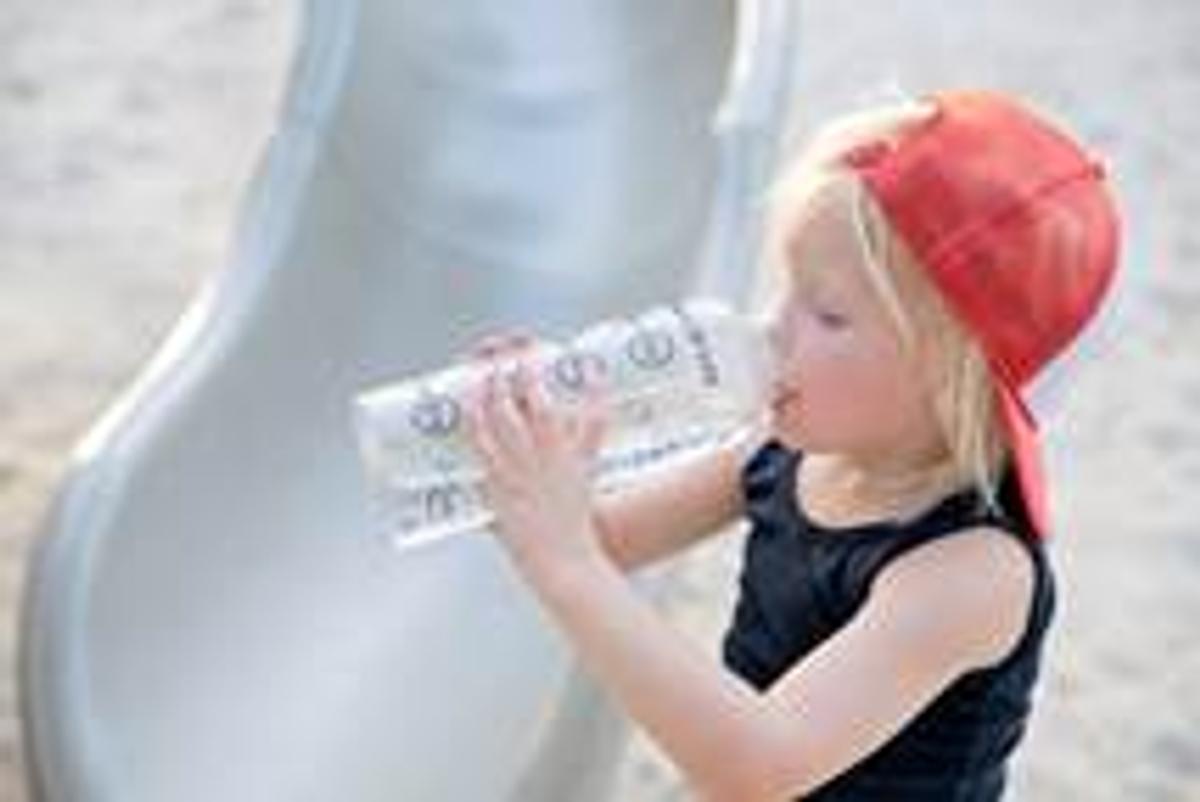
The recommended daily intake of water for children is:
- 1 to 3 years old: 4 cups
- 4 to 8 years old: 5 cups
- 9 to 13 years old: 5 to 6 cups
- 14 to 18 years old: 6 to 8 cups

Judy Buckley
College Nurse