Practical Ways to Build Emotional Self-Regulation
Young people manage many pressures: learning demands, friendships, family changes, sport, work, social media and growing independence. Strong feelings such as anger, worry, embarrassment and frustration are normal. Emotional self-regulation is the skill of noticing these feelings early and choosing a safe, helpful response.
The aim is not to stop emotions. It is to help recognise when stress is building and use strategies before we feel overwhelmed.
Everyone can try strategies to best respond to emotional distress:
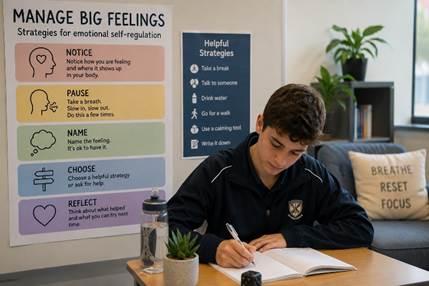
- Notice body signals. Look for early signs such as a racing heart, tight chest, clenched fists, hot face, upset stomach, shaky hands or a need to leave the room.
- Use a simple stress scale. Ask yourself: “Am I low, medium or high?” Taking action at “medium” is often easier than waiting until feelings are at “high.”
- Pause before responding. Try: Stop – breathe – name the feeling – choose the next step. Even three slow breaths can create space to think.
- Take a planned reset. Use an agreed short break: get a drink, walk briefly, visit a quiet space, listen to calming music with permission, or use a sensory item.
- Name the feeling clearly. Saying “I am frustrated,” “I am worried,” or “I am overloaded” can make a difficult feeling easier to manage.
- Ask for help early. It’s OK to ask someone “I need a quick break,” “Can you help me get started?” or “I am finding this too much right now.”
- Break the task into one step. Instead of focusing on everything that must be done, choose the first small thing to do: open the document, write the heading, complete one question, get the vacuum cleaner out, clean a part of the house etc.
- Use helpful self-talk. Replace “I cannot do this” with “I can do one part,” “I can ask for help,” or “This feeling will pass.”
- Debrief when calm. After a difficult moment, think about what happened, what helped and what could be tried earlier next time.
- Talk with someone about your experience. Sometimes speaking about what has happened can help you think about it in a new way.
Everyone can support young people by staying calm, offering clear choices and recognising effort. Building emotional self-regulation takes practice, support and time for all of us.