
Helping with Maths at Home

It’s Not About the Method — It’s About the Mindset
As part of our approach for Maths in 2026, we want to encourage students to be regularly working on maths at home – which can bring its own challenges!
Some common things that we hear from families when talking about helping with maths at home is:
“Maths isn’t taught the way I learned it.”
“I don’t want to confuse my child.”
“I’m not good at maths anymore!”
If that sounds familiar, you are absolutely not alone! But here’s the most important thing to know:
You do not need to know the method to support your child in mathematics.
All you need is an open mindset and a willingness to learn new something new.
Methods Change, but the Maths Doesn’t.
Why does Maths look different now?
We know that maths can look different to when many parents and carers were at school.
It can feel unfamiliar. But that change is intentional and grounded in research.
The strategies we teach today are designed to help students reach a deeper understanding of maths concepts, as well as building flexible and resilient problem-solving skills.
Students are encouraged to explore more than one pathway to a solution. By teaching different methods, we aim to help students find a way of problem-solving that feels intuitive and ‘right’ for the way that they think.
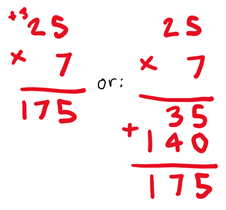
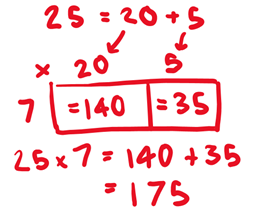
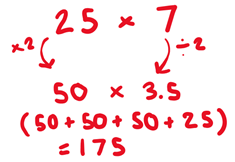
For example: when multiplying numbers together – especially ones that don’t fit onto a multiplication grid – there are three different methods that students might be shown.
In our Year 7 classes, we talk about this as:
- Short or long multiplication (numbers in columns):
- The area or ‘grid’ method (numbers in boxes):
- The ‘double and halve’ method (changing numbers to be easier to work with in our heads):
If you have a Year 7 student – ask them about these methods!
These might all look quite different – but they are all mathematically sound. If you have a different method that you use and find reliable, share this at home and encourage your child to bring this to class.
The goal isn’t to have just one ‘right’ way of doing things – instead, we want students to have a toolkit of strategies they can reach for when they need.
| Then | Now |
| ● Memorise steps | ✔ Understand the concept |
| ● Follow the method | ✔ Explore multiple strategies |
| ● Get the answer | ✔ Explain your thinking |
| ✔ Apply maths to real life |
Why? Because understanding builds confidence.
We are not simply teaching procedures.
We are developing capable, analytical thinkers.
Turning “I Don’t Know” Into a Learning Opportunity
If your child is grappling with a method or process that you haven’t seen before, rather than saying “That’s not how I was taught” or “I don’t think I know that way…” – get curious!
Try saying: “I haven’t seen it done that way before — can you teach me?”
Ask your child to talk through what they remember, go back through notes they might have in their books or check out the last lesson plan and re-learn the process together.
In that moment:
- You empower your child.
- You reinforce that learning is lifelong.
- You normalise not knowing everything straight away.
- You build confidence.
Confidence is the foundation of mathematical success.
And Remember…
It is completely normal not to know everything.
Even maths teachers learn new strategies when their own children bring home different methods!
You just need to show:
- Curiosity
- Encouragement
- Belief in effort
- A positive mindset
Because the most powerful maths support at home isn’t technical. It’s emotional.
If you ever feel unsure, please reach out. Our teachers are always happy to explain approaches used in class.
Joanne Ganis & David Young