Banner Photo

Hello from Grade 4/5 M.B

Respect, Responsibility and Kindness
Throughout Term 1, we have enjoyed getting to know each other, building strong classroom routines and expectations and completing lots of different learning experiences. 


Writing:  

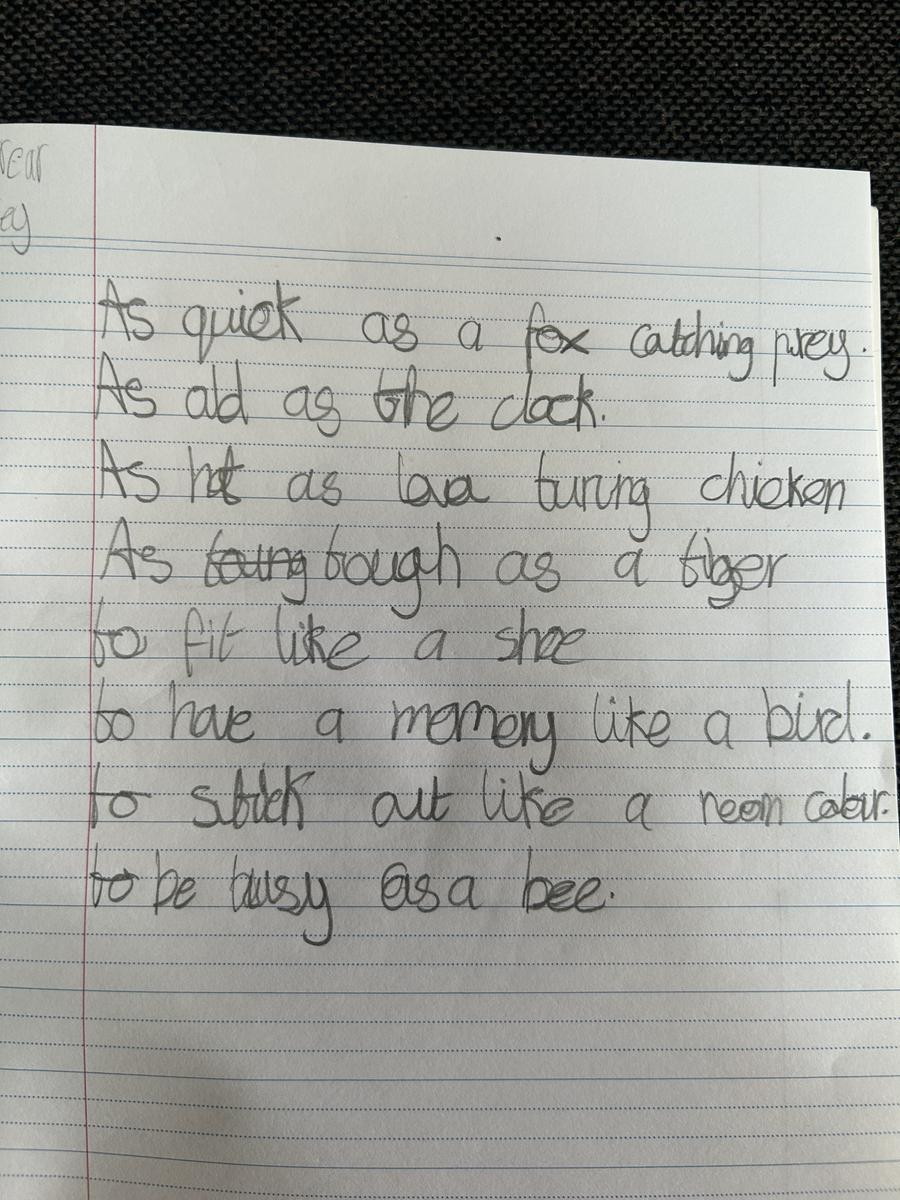
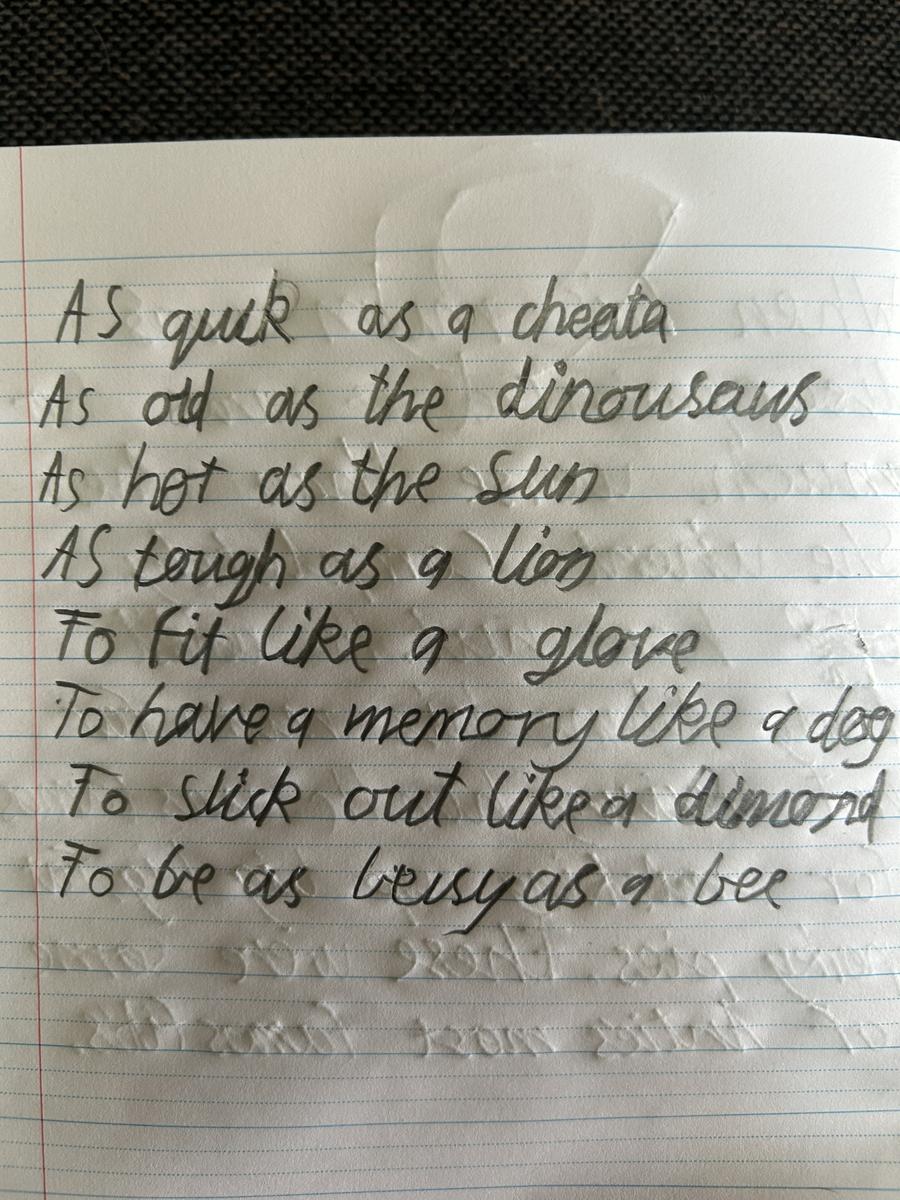
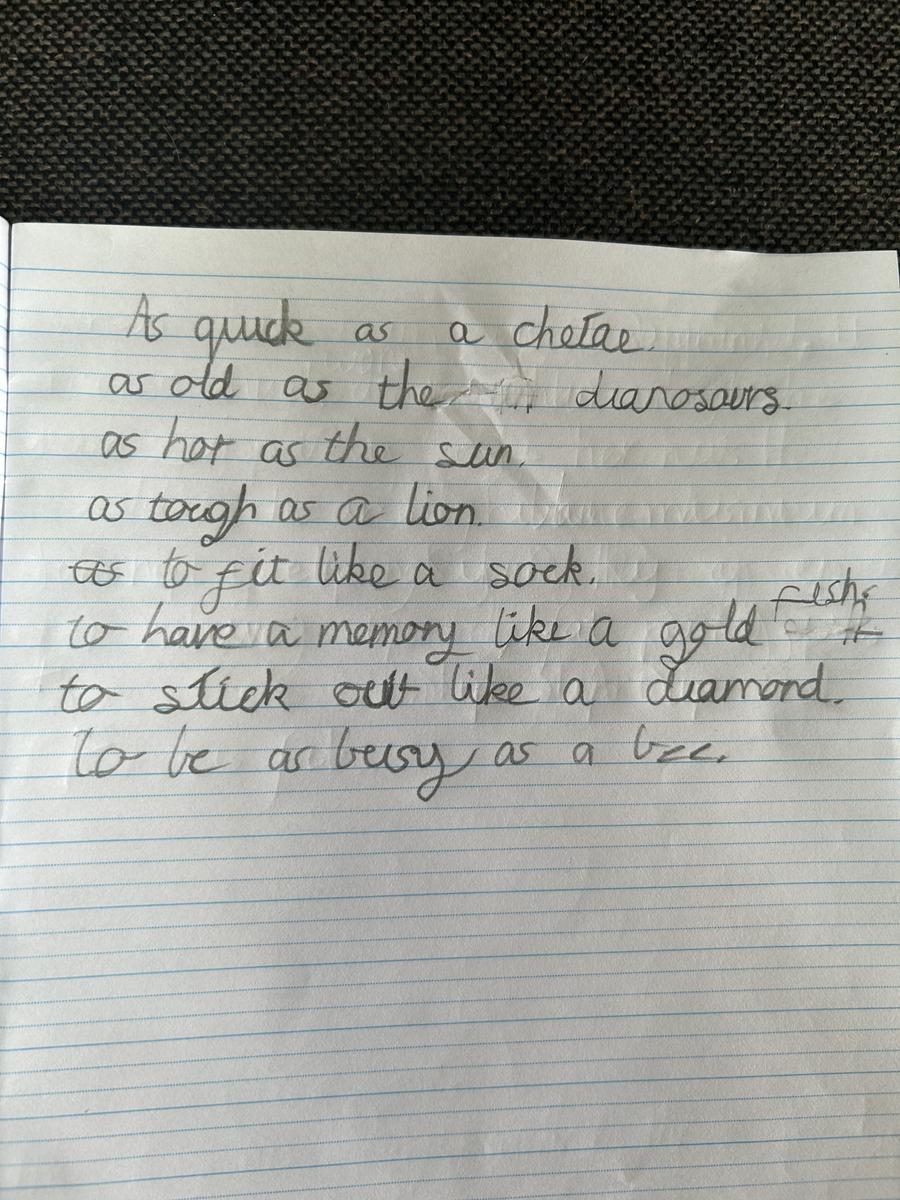
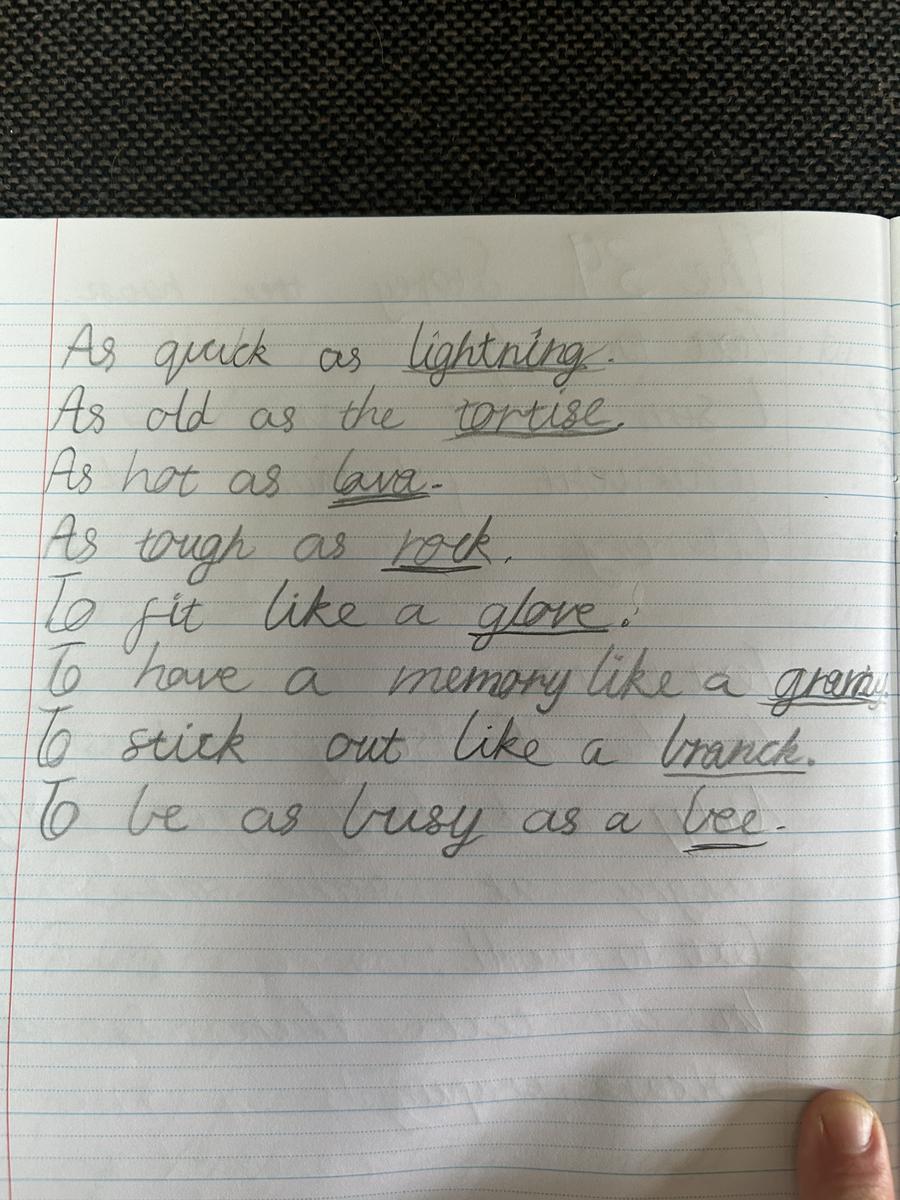
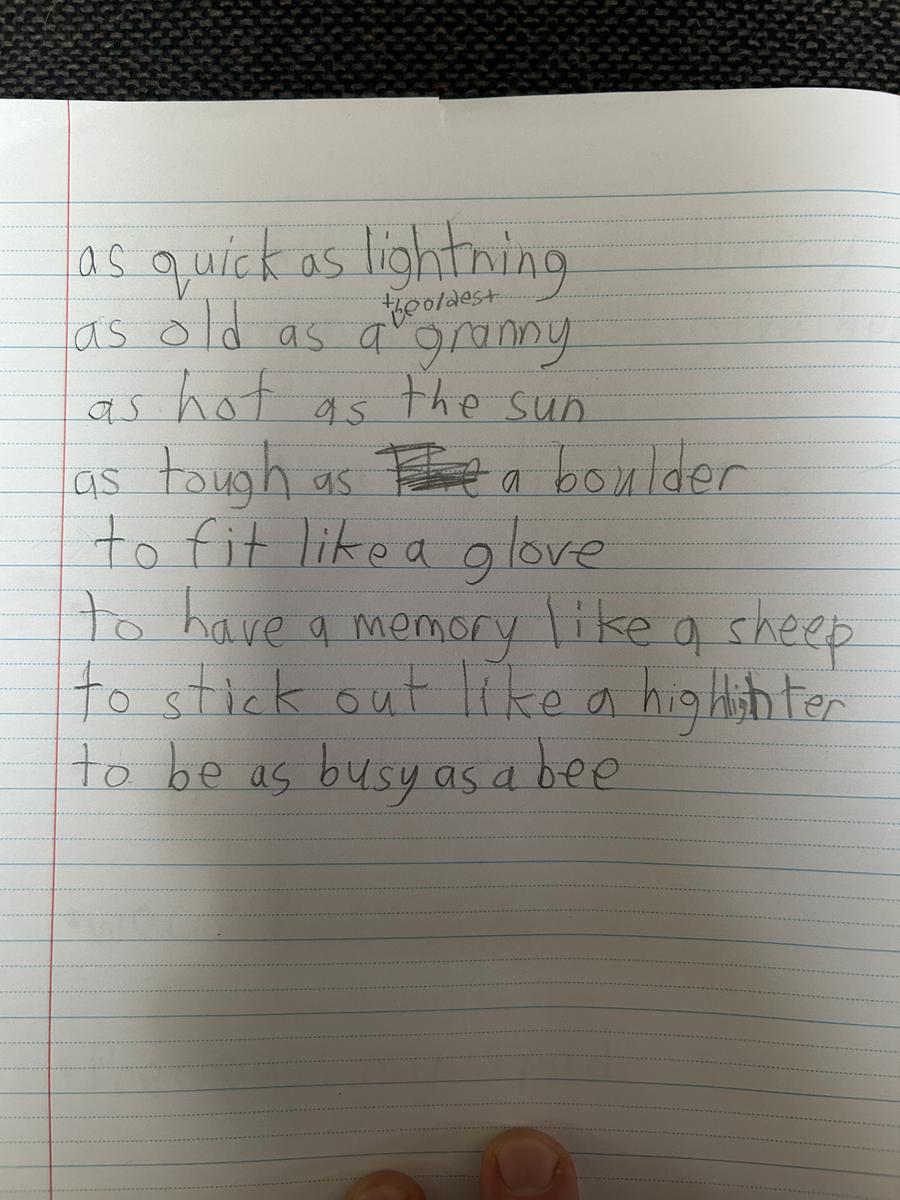
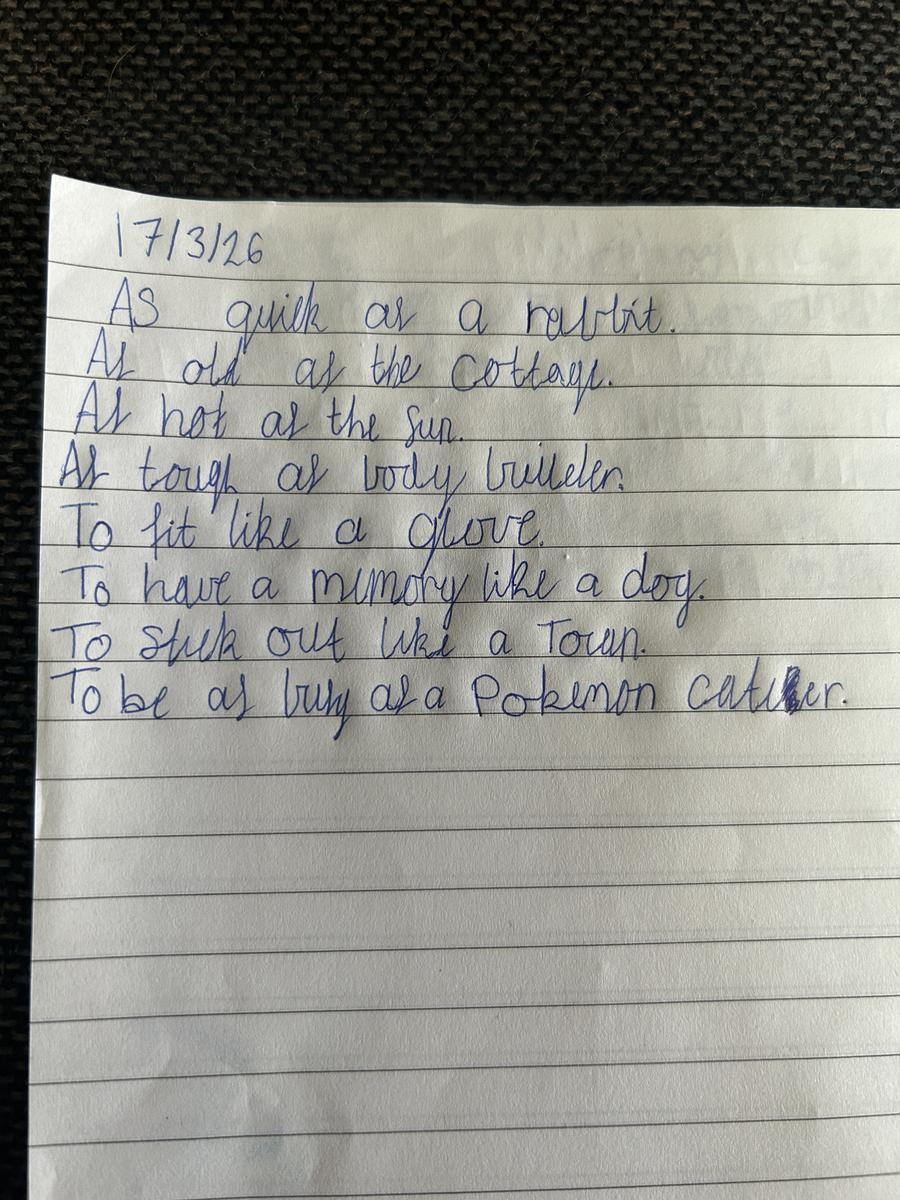
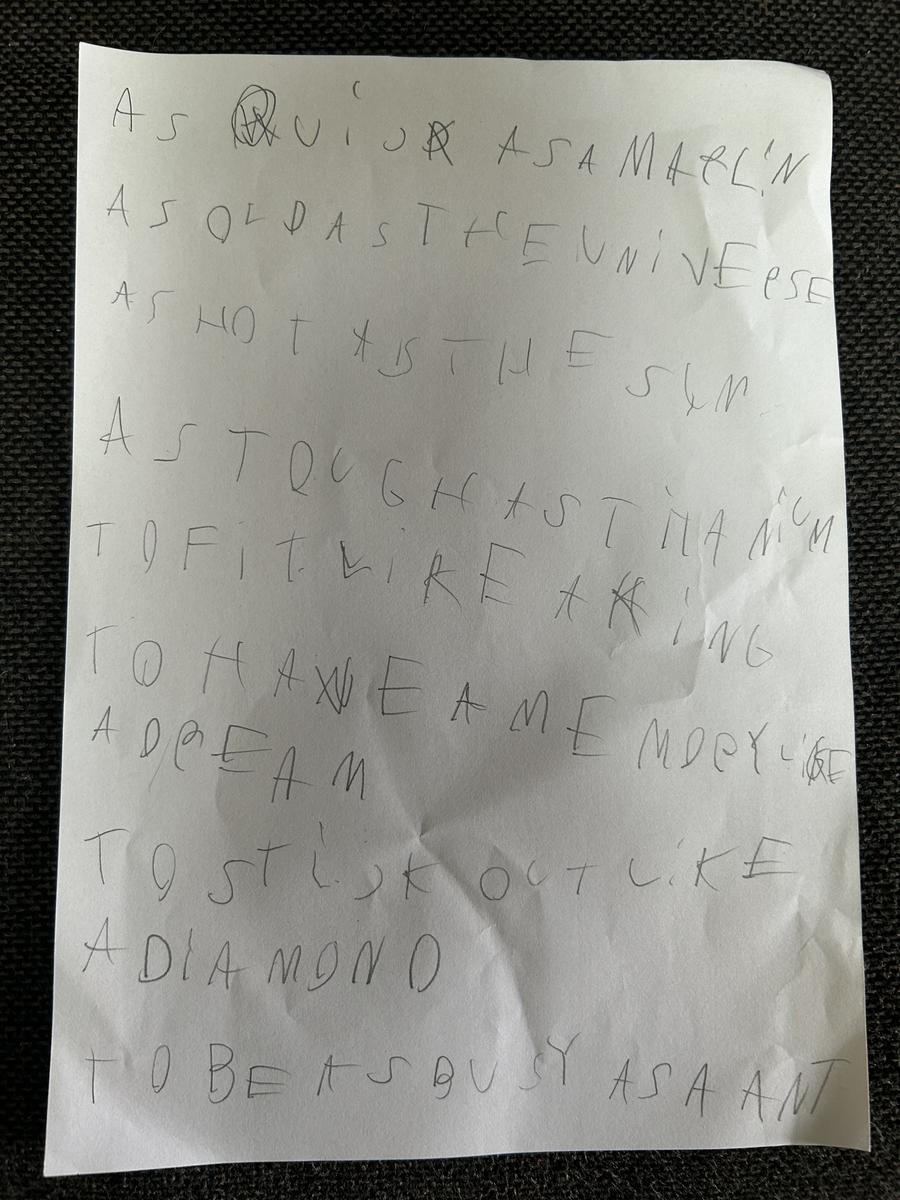
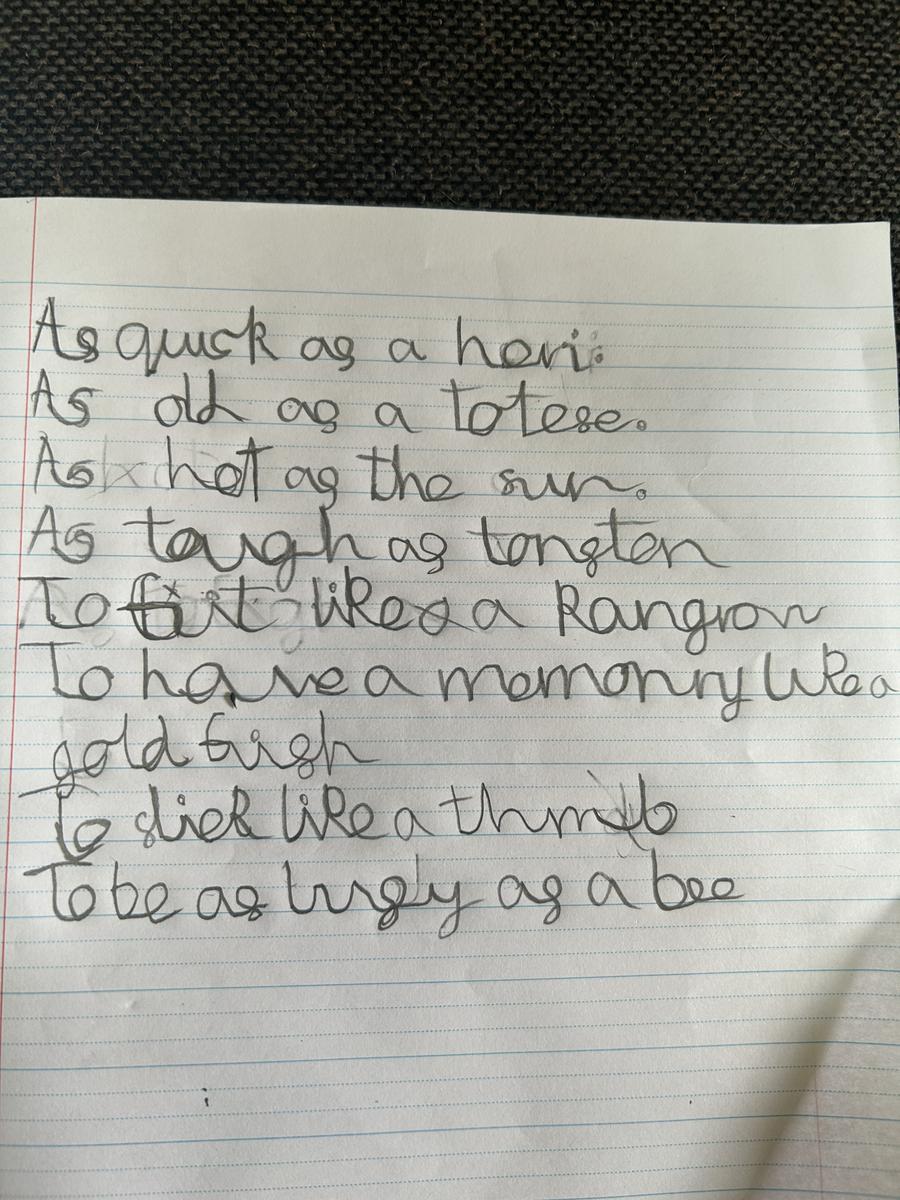
This term students have been looking at narrative writing. They have been learning how to develop ideas, plan stories to have characters, settings, complications and resolutions. They have most recently explore how to add metaphor and simile to writing.

Here are some examples of similes the student's created.
Gallery Image
Gallery Image
Gallery Image
Gallery Image
Gallery Image
Gallery Image
Gallery Image
Gallery Image


Reading:

In reading students have been devloping their abilities to make predictions about texts, clarify unknown words, pose questions related to a text and summarise key aspects of a text. Students have also been working on reading fluency and more recently, their ability to make connections to a text. Our class novel to begin this term was 'Miss Peregrine's Home for Peculiar Children' by Ransom Riggs and now we have begun 'The Goldfish Boy' by Lisa Thompson. Both novels have explored the themes of otherness, grief and resilience.


Maths:

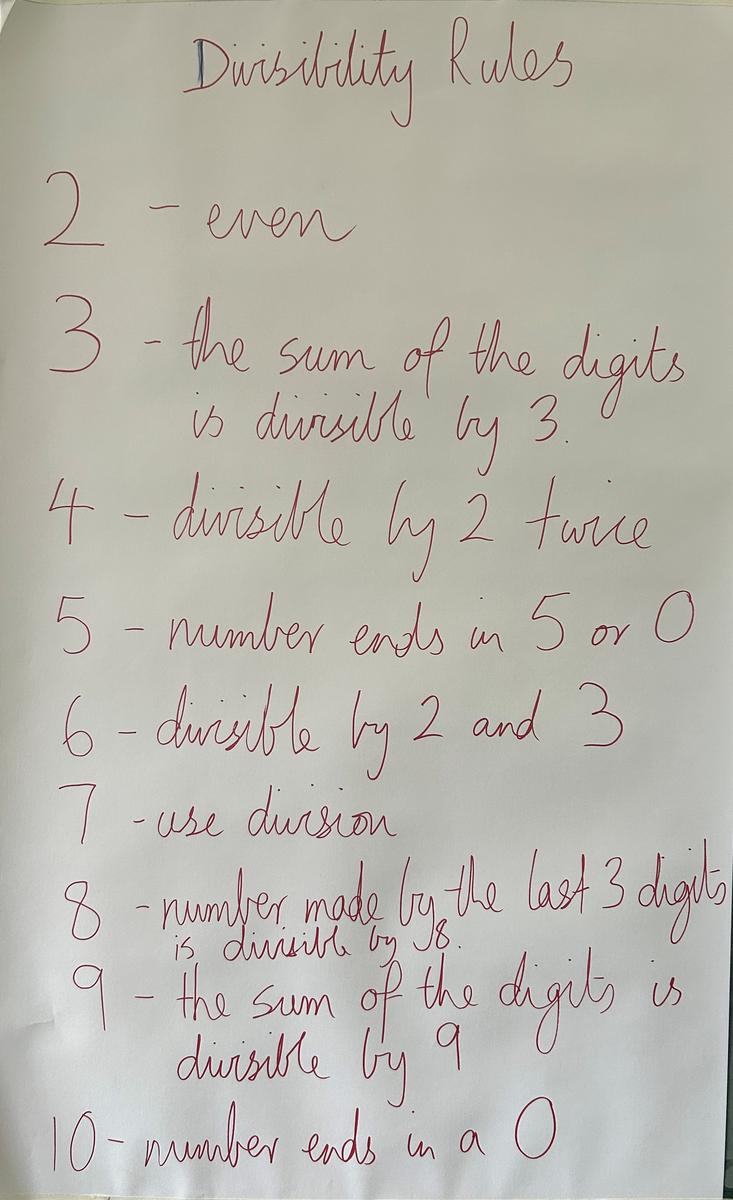
In maths this term students have worked on their understanding of place value and their ability to rename numbers. We have also explore 2D and 3D shapes, probability and factoors and multiples. Students are currently learning rules for divisibility.

Here is an anchor chart we made together:
Gallery Image

See if you can use the rules to work out what the factors of 621 are.


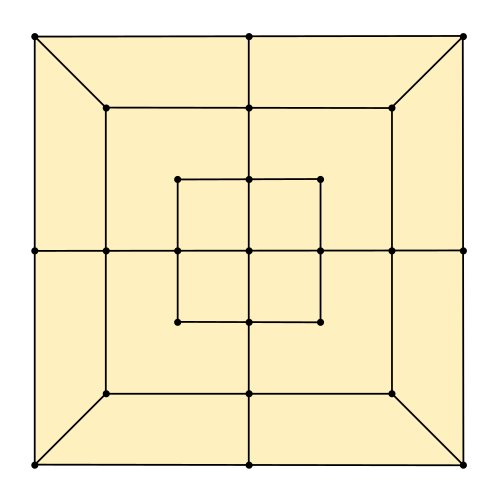
We have also just learnt a game from South Africa called Mlaba Laba or Moraboraba.

The version we've been playing is a variation from Lesetho. It is played on a board like this:

The rules are below - you just need 12 counters or pieces of lego or stones of a similar colour per person. It's played in pairs.
Gallery Image

Placing the cows

  • The board is empty when the game begins. Each player has 12 pieces, known as "cows"; one player has light cows and the other has dark cows
  • The player with the dark cows moves first
  • Each turn consists of placing a cow on an empty intersection on the board
  • The aim is to create a "mill": a row of three cows on any line drawn on the board
  • If a player forms a mill, he or she may remove one of the opponent's cows. The removed cow is removed from the board and not placed again. A cow in a mill may not be removed unless all of the opponent's cows are in mills, in which case any cow may be removed.
  • Even if a move creates more than one mill, only one cow can be removed in a single move

Moving the cows

  • After all the cows have been placed, each turn consists of moving a cow to an empty adjacent intersection
  • As before, completing a mill allows a player to remove one of the opponent's cows. Again, this must be a cow which is not in a mill, unless all of the opponent's cows are in mills.
  • Players are allowed to "break" their own mills
  • A mill may be broken and remade repeatedly by shuffling cows back and forth. Each time the mill is remade, one of the opponent's cows is removed. Of course, by breaking the mill the player exposes the cows which were in a mill to the risk of being sremoved by the opponent on his or her next turn.

Flying the cows

  • When a player has only three cows remaining, desperate measures are called for. This player's cows are allowed to "fly" to any empty intersection, not just adjacent ones.
  • If one player has three cows and the other player has more than three cows, only the player with three cows is allowed to fly

Finishing the game

  • A win occurs if one opponent has just two cows or if there are no moves.