Term 2 Learning Summary
Library
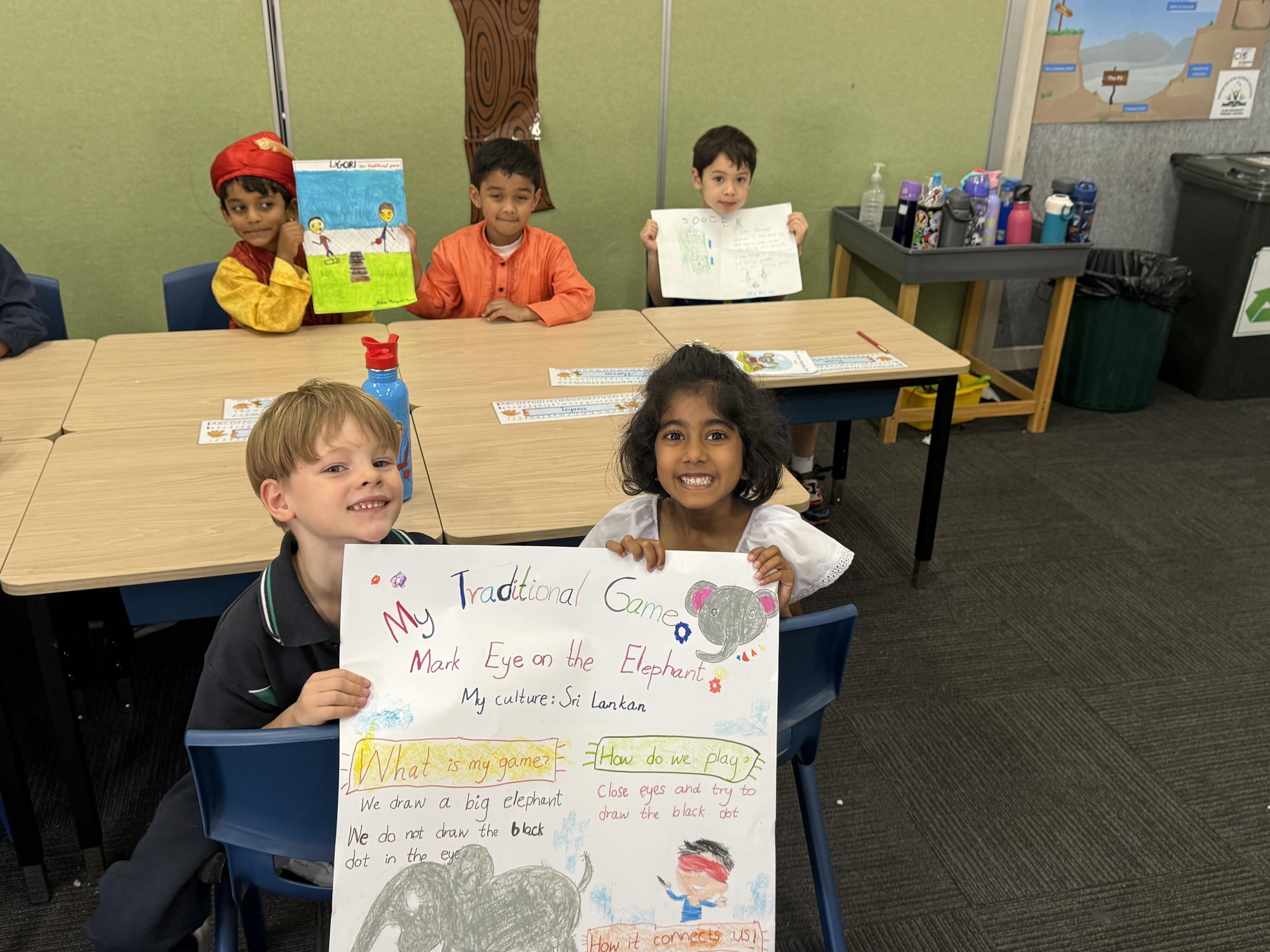
Once a week, every Prep Class has a session in the library. Your child may choose a book of interest during this time and will use a bag already provided to carry their chosen book to class. Please take note of your child’s Library Day as it may have changed (see below). Kindly ensure that any borrowed books are returned the next week so that they may borrow a new book. There may be times when library days may change due to whole school timetabling, when this occurs your child’s teacher will let you know.
PREP A | PREP B | PREP C | PREP D |
Wednesday | Tuesday | Wednesday | Thursday |
English
InitiaLit
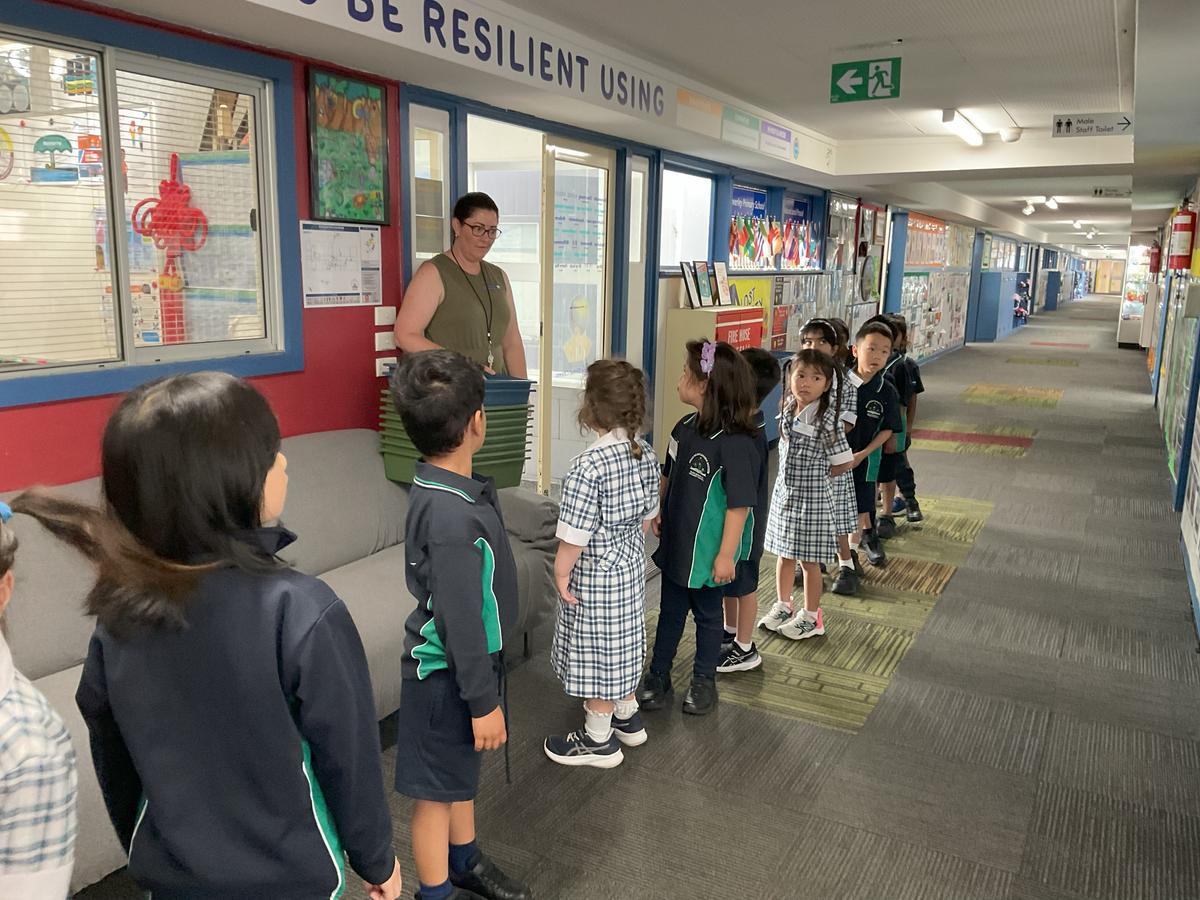
This term, students will continue with a systematic synthetic phonics approach to literacy. Letters will be explored in the following sequence: o, c, d, h, e, n, g, l, k, u, b, j. Students will build their understanding of key concepts of reading such as phonological awareness, oral language and phonemic awareness as they continue to explore the different sounds and blend them together to make words. They will practice the application of phonics skills through reading words in isolation and in sentences.
Key Vocabulary | Beginning sounds, middle sounds, ending sounds, stretch, blend, letter name, letter sound |
Supporting your child at home in Reading:
- Read with your child every night and record this in their diary.
- Discuss the story with your child to promote comprehension with questions such as “who is in the story?”, “what is happening?”, “I wonder why did the character decide to...”, “how does the character feel? What evidence did you use for your inference?”
- Allow your child to stretch and blend the words in their decodable reading books.
- Continue to revise the sounds taught in Term One using the at home video and game resource
Writing
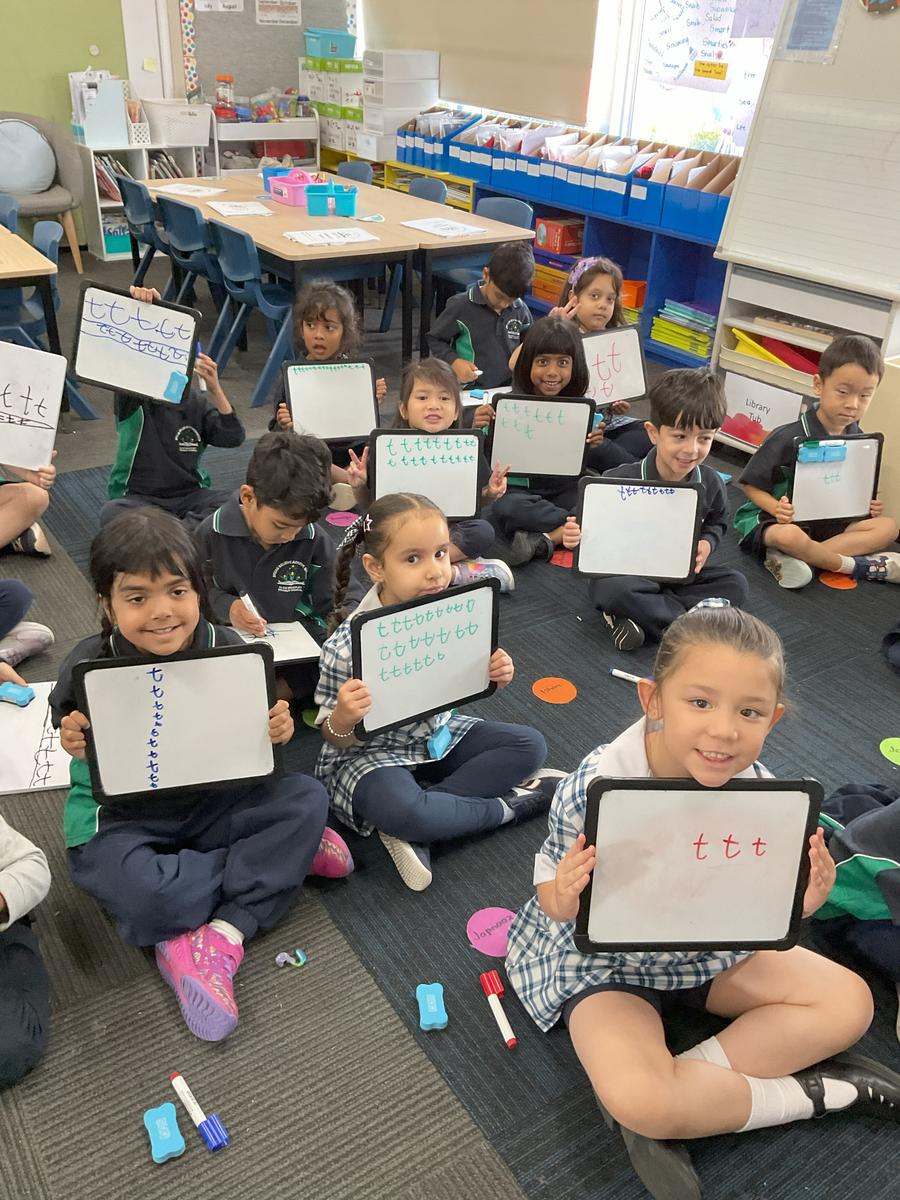
This term, students will continue to develop their understanding of letters and the sounds they represent in order to form words. They will also practice correct letter formation and spelling to construct simple sentences as part of the InitiaLit program.
Key Vocabulary | Capital letter, lowercase letter, full stop, sentence, idea, word, sound, noun, adjective, letter, question |
Supporting your child at home in Writing:
- Ensure correct writing posture and the use of correct pencil grip.
- Focus on correct letter formation in Home Learning Tasks, paying attention to the size, proportion, and placement of letters on the dotted thirds. We use the Victorian Modern Cursive script – for right handers, for left handers
- Engage in fine-motor activities to support muscle development for writing. This can include playdough (especially rolling and pinching), cutting, beading, folding paper, and finger stretches.
Speaking and Listening
This term, students will continue to develop their confidence in speaking and listening. They will be encouraged to continually reflect on their learning with the feedback received, enabling them to challenge themselves. As part of the InitiaLit program, students will identify the individual sounds in words. They will stretch, blend and manipulate sounds within a word. In mathematics, students will be encouraged to explain their thinking and justify their answers.
Some tips for speaking and listening with your child at home:
- Encourage your child to respond by using full sentences.
- Ask your child to repeat the instructions you have given them. For example, “tell me what you need to do first”.
Mathematics
In this term’s mathematics lessons, we will be following the Ochre Mathematics program to explore exciting concepts that build foundational skills. Our learning will cover a variety of topics as follows:
- Location: Students will practice describing positions and locations in 2D space, including the concepts of left and right.
- Part-Part-Whole: Students will build their understanding of the relationship between parts and wholes through partitioning and part-part-whole properties. This helps students understand that numbers can be broken into smaller parts and then recombined.
- Whole is 5 Parts: 3 and 2. Or “You have 5 toys. 3 are on the floor and 2 are in the box. How many altogether?”
- Shape: Students will focus on recognising 2D shapes, their features, properties, and orientation and learn about 3D shapes. Students will make real-life connections to enhance their understanding of shapes, such as sorting shapes based on their features and participating in a shape hunt around the school.
Counting and Place Value: Students will develop their knowledge of the digits 0-9, group tens, and understanding the importance of place value.
It’s going to be a fun and engaging term for mathematical exploration.
Key Vocabulary | Left, right, five-frames and ten-frames, corners, edges, sides, vertices, straight, curved, equal, same, long, short, how many, groups of ten, place value, digits 0-9, adding, subtracting, more than, less than, number stories, partitioning numbers to 10 |
Supporting your child at home in Mathematics:
- Discussing with your child different shapes. Go on a shape hunt and find different shapes around the home. A clock is a circle. The window is a rectangle. The slice of bread is square.
- Ask them to describe the features of 2D shapes. How many sides? How many corners?
- Ask them to describe the features of 3D objects. How many vertices? How many edges? What 2D shapes can you see in the object?
- Ask them to create groups using resources found at home, such as cereal or Lego pieces
- Create number stories using counting resources to support their understanding
Inquiry
Question: “How do I show respect to my environment?”
Global Theme: Identity and Belonging, Conflict Resolution and Peace Building
Global Goal: Responsible Consumption and Production
During Term Two, Prep students will explore the question, ‘How do I show respect to my environment?’ Students will explore environments they are familiar with, such as home and school, and use observations to identify the main characteristics of each setting. Through hands-on experiments, they will develop an understanding of cause and effect, as well as explore boundaries and ways to show respect for their environment.
This learning links to Global Goal 12: Responsible Consumption and Production, where students will begin to understand the importance of using resources carefully and reducing waste through everyday actions such as recycling and not wasting food.
At the end of the unit, students will apply their understanding of living and non-living things and share their learning with their buddy classes, highlighting the importance of respecting our environment.
Key Vocabulary | Environment, connect, living, non-living, man-made, impact, effect, respect, boundaries |
Supporting your child at home in Inquiry:
- Explore your home environment and what things are found in your home and in your backyard. These can include flora, fauna and man-made objects.
- Discuss with your child their daily actions that can have a positive impact on the environment.
Wellbeing
What a wonderful start for Term Two, as our Prep students continue to settle in and build positive relationships with one another. We are seeing them grow in confidence as they form new friendships and learn how to navigate the school environment. In our classrooms, there is a strong focus placed on supporting student wellbeing, with opportunities for students to learn about their emotions and develop social skills such as sharing, cooperation and resilience. It is wonderful to see the Prep students including others in their play and working together so positively. These experiences are helping to build a strong sense of belonging and supporting our students to thrive both academically and personally.
The Resilience Project
During Term Two, students in Prep will be delving deeper into The Resilience Project. This term we will continue looking at the three key pillars which cultivate positive emotion; Gratitude, Empathy and Mindfulness (also referred to as GEM) while linking this in with Emotional Literacy.
We will be having many GEM chat discussions based around these wellbeing areas which help build resilience. Students will learn about friendships and how we both make friends and be good friends. We will also explore sharing and why this is an important aspect of belonging to a classroom and school.
We will learn about the school values of Integrity, Respect, Initiative and Global Empathy and how these four values are followed in the classroom and throughout the school. We will explore, discuss and demonstrate the expectations of behavior.
Key Vocabulary | Friends, gratitude, empathy, mindfulness |
Supporting your child at home with the Resilience Project
- We also encourage parents and families to have GEM chats at home. For example, what has made you smile today?
- Ask your child what they have been learning about in TRP learning time.
- Ask them what gratitude, empathy and mindfulness are. You may be amazed at the information your child can share about The Resilience Project, through the weekly learning taking place within the classroom.
- Our families have access to the Resilience Project Home - TRP@HOME portal
The Cyber Safety Project
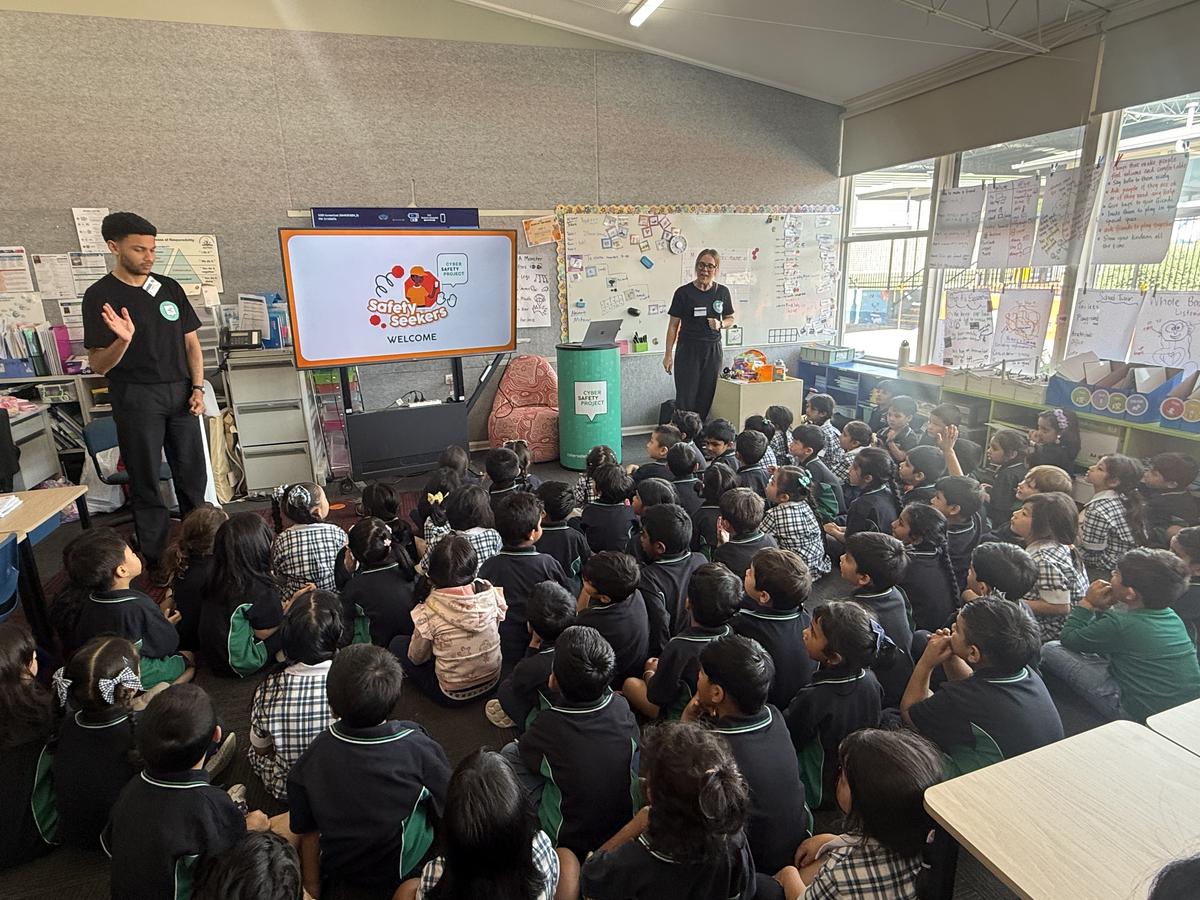
In the upcoming lessons of our Cyber Safety Project, students will explore key concepts to help them navigate the online world safely and responsibly. They will learn how to establish and maintain safe online habits, such as keeping passwords private and being mindful of who they interact with online. They will also begin discussions on making safe and appropriate choices in different online scenarios, helping them understand how to assess situations and make responsible decisions.
As the program progresses, students will gain an understanding of the importance of rules both offline and online, discovering how these rules help keep everyone safe and promote fairness. They will also explore the concept of personal information, discussing what is safe or unsafe to share online. This will help them understand how some information, once shared, can stay online forever, emphasising the importance of thinking carefully before posting or sharing personal details.
How to Support Your Child at Home:
- Encourage open discussions about online safety and ask your child what they are learning in class.
- Remind your child about the importance of keeping personal information private.
- Practice making safe online choices together by exploring different scenarios and discussing the best actions to take.
- Always monitor your child’s usage online.
- Our families have access to the Cyber Safety Project home Resources - Cyber Safety Project.
Perceptual Motor Program (PMP)
This term, the prep students will be involved in a weekly movement-based program starting on Wednesday from Week 2, during session 5 starting at 2.30pm. The program will be run in the school gymnasium. PMP supports children to improve their hand/eye and eye/foot coordination, balance, locomotion, eye-tracking skills and general fitness.
To support the program, we are asking for helpers that have a current Working with Children Check. Your role will be to supervise an activity station (all instructions will be provided) and if possible, to help set up and pack away the equipment. Please speak to your class teacher if you are available to attend one or more sessions or use the QR code in the Compass note sent out in the final week of Term One.