
Careers, Job Opportunities & Apprenticeships

Career in Air Conditioning Technology
Air conditioning engineering technologists work in the design, installation, and service of heating and air conditioning systems in residential and commercial buildings. They know how to select and maintain equipment that ensures building comfort.
Refrigeration and Air Conditioning Draftsperson - design and produce working drawings of mechanical systems for refrigeration and air conditioning systems within a building project so that they can be manufactured, constructed, and installed. Apart from having an aptitude for problem-solving, good communication skills, and being able to work as part of a team, a particular interest must be enjoying technical and design activities.
Automotive air conditioning fitters install and repair air conditioning units in various types of vehicles and machinery, such as cars, trucks, vans, and tractors. Successful fitters enjoy practical and manual activities, have good hand-eye coordination, an aptitude for mechanical work, are able to keep up to date with technological change, and have good problem-solving skills.
Refrigeration and air conditioning mechanics select components, assemble, install, test, fault-find, service and repair industrial, commercial, and domestic refrigeration and air conditioning systems in homes, shops, factories, office buildings, hospitals, supermarkets, and cold stores.
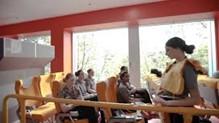
Study to become a Cabin Crew Member
A qualification in aviation is your passport to success. Get a start in this competitive industry with technical, health and safety, and risk management training
William Angliss Institute offers the Certificate III in Aviation (Cabin Crew) at its Melbourne Campus. This is a 6-month course and students get to go on industry-based excursions and learning experiences, strengthening their employability with this industry-approved course. In addition, students experience –
- Practical training and assessment in an Australian training facility used by major airlines.
- Learn and grow alongside a cohort of passionate new aviation enthusiasts in the heart of the city.
- Look the part, students will receive full corporate uniform along with a name badge (additional costs apply).
Applicants must note that Australian based airlines have a minimum height requirement of 160cm (without shoes) and require a reach of 212cm to be employed as a cabin crew/flight attendant. Students who do not meet these requirements should take into consideration that this will affect their employability as a cabin crew/flight attendant with an Australian airline. International airlines may have different requirements.

Career as a Dental Technician
Dental Technicians use techniques including plaster casting, wax modelling and metal casting. Dental Technicians work closely with Dentists and Dental Prosthetists and usually have no direct contact with patients.
Australian Dental Technicians are generally expected to have completed a tertiary level qualification. The minimum standard is generally a Diploma of Dental Technology.
- Complete a Diploma of Dental Technology through a TAFE or registered training organisation.
- Consider further study to broaden your skillset, such as a Bachelor of Dental Technology.
- It may also be possible to become a Dental Technician through an apprenticeship or traineeship in dental technology.
Holmesglen Institute offers the 2-year Diploma of Dental Technology course. This practical, hands-on course covers the design, manufacture, and repair of dental appliances, including dentures, bridges, crowns, and mouthguards. Training takes place in purpose-built dental laboratories with industry-standard equipment and support from qualified dental technicians and prosthetists.
PGA Institute - Study Programs
The PGA Institute is the only Registered Training Organisation (RTO) in Australia dedicated to delivering world-class education and professional development specifically for the golf industry. With courses integrating business, golf training, service, sport, and practical golf skills, the PGA Institute prepares students for diverse career opportunities within the industry.
With pathways to Deakin University, Torrens University, Griffiths University, Holmesglen TAFE, and the PGA of Australia’s Membership Pathway Program, PGA Institute courses serve as the perfect springboard to further education and career progression.
To find out more about programs on offer, visit Study programs - Golf Australia.

ADF Gap Year
The ADF Gap Year program provides an opportunity for young Australians, who have finished Year 12 (or equivalent) and are aged between 17 and 24, to experience military training and lifestyle whilst gaining new skills and pay over their Gap Year. The life skills and job training that students acquire during their Gap Year experience will be valuable regardless of what career they ultimately undertake.
Gap Year opportunities are available in the Navy, Army, and Air Force. This is a useful link to browse - What is an ADF Gap Year?
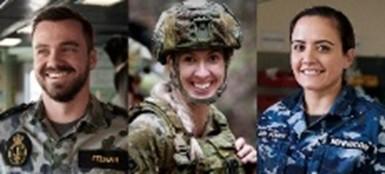
Careers with the ADF
Did you know that the ADF offers over 300 roles across a wide range of specialist military positions, support roles, traditional and technical trades, and professions that range from medicine to engineering? They include jobs for the future aimed at those looking to make the most of their Science, Technology, Engineering and Maths skills.
To ensure students have the most up-to-date information on the opportunities available in the Navy, Army and Air Force, they are encouraged to explore the ADF Careers to help them find what their ideal role in the ADF might be.

UK Gap Year Program in 2027
Applications for our UK Gap Year Program in 2027 are now open! This is an opportunity to live, work, and explore abroad — creating unforgettable memories while gaining real-world experience. Find out more at Letz Live Gap Years Abroad.
Physiotherapist, Chiropractor, Osteopath and Myotherapist
In Australia, physiotherapists, osteopaths and chiropractors have extensive university training and are registered with the Australian Health Practitioner Regulation Agency (AHPRA). Myotherapists complete an advanced diploma or bachelor’s degree in myotherapy or "musculoskeletal therapy” but are not registered with AHPRA.
The article goes on to state that a physiotherapist assesses your problem, provides a diagnosis, and helps you understand what's wrong while considering your general health, activities, and lifestyle. They treat your complaint with a variety of "active" therapies, such as exercise programs and hydrotherapy.
A chiropractor works on the diagnosis, treatment and prevention of mechanical disorders of the muscles, ligaments, tendons, bones and joints, and the effect on the nervous system. They have an emphasis on passive manual treatments, including joint and soft-tissue manipulation, and spinal adjustments. They may also prescribe exercises to help you rehabilitate from your condition as well as provide dietary advice.
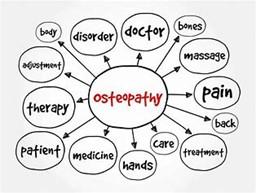
An osteopath focuses on the muscular and nervous systems, assessing the structure of the body to determine its impact on function. Treatment involves a combination of active and passive therapies, including joint manipulation and mobilisation, massage, as well as postural advice and exercise programs.
A myotherapist works to assist your aches and pains by focusing on the muscles and joints. They offer a range of mostly "hands-on" treatments including dry needling, massage, and joint mobilisation, but can also prescribe exercises.
Students can access the full article at Physiotherapist, chiropractor, osteopath and myotherapist: what's the difference and which one should I visit?