Student data and sleep.

Our years 3- 6 students participate each term in a health and wellbeing survey called Pivot.
This survey provides us a lot of valuable information about children’s connection to school, trends in mood and themes that we can support students with around resilience, safety and wellbeing. There is a section in the survey where every week all students rate protective factors. Protective factors are strengths-based attributes, conditions, or resources within families and communities that serve as buffers against stress, enhancing the health and well-being of children and families. In our Pivot survey, students rate family, friends, health, hobbies, schoolwork and sleep.
You can see below our students’ protective factor responses for term 1.
What stands out for us as a school is such a low overall result in the sleep factor all term.
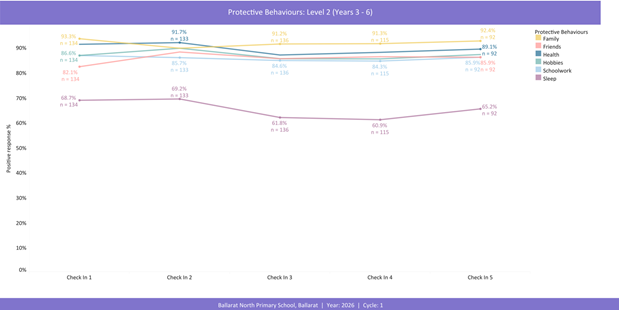
The students are asked the question “How are you going with sleep this week?”
Our students are self-reporting that sleep is considerably lower than any other protective factor in their lives.
Sleep is crucial for children’s health, wellbeing, learning, and mood. When children sleep well, they are more ready to focus, play, and enjoy their day. Most children aged 5–12 years need 9–11 hours of sleep each night.
This information is alarming to us, and it is likely significantly impacting our students' experience at school, but it is beyond our control. We need families' support to help students make changes that improve this protective factor.
Why do we need sleep?
Sleep is not just “switching off.” While we sleep, our bodies and brains are busy:
- Growing and repairing the body
- Strengthening memory and learning
- Helping us manage emotions
Our bodies also have a natural “body clock” that helps us feel awake during the day and sleepy at night. Morning sunlight and regular routines help keep this clock on track.
Simple tips for better sleep
- Keep a regular routine
- Go to bed and wake up at the same time each day—even on weekends.
- Wind down before bed
- Turn off screens about an hour before bedtime. Choose calm activities like reading or drawing.
- Create a calming bedtime routine
- A bath, a story, and dim lights can help signal it’s time for sleep.
- Use the bedroom for sleep
- Keep TV, gaming, and homework in other areas where possible.
- Get morning sunshine
- Natural light helps set your child’s body clock.
- Stay active during the day
- Exercise helps sleep, but avoid energetic play close to bedtime.
- Make the bedroom comfortable
- A cool, quiet, and dark room is best for sleep.
- Try calming strategies
- Gentle breathing, quiet music, or relaxation can help children settle.
- Keep naps short
- 10–20 minute naps earlier in the day are best.
- Be patient
- New routines can take a few weeks to work.
If your child is regularly having trouble sleeping, it may be helpful to speak with your GP or a health professional.
If you are interested in learning more here is a link to a great TED Talk about sleep.