What to expect this term
Year 4 news – what lies ahead!
This newsletter outlines the term’s learning for your child’s year group. We hope that this provides you with a picture of what is ahead.
This newsletter provides an overview for your child’s learning this term, which fits within our approach to:
Welcome to term one!
Welcome to Year 4 2026! A new year brings lots of wonderings and questions, as well as a few nerves. We have spent the first few days setting up our classroom routines and expectations and getting to know each other in our new classes through our start up program.
There is lots to look forward to in Year 4 including an incursion ‘Democracy: You and Me’ based on our inquiry topic – Civics and Citizenship.
Year 4 teachers
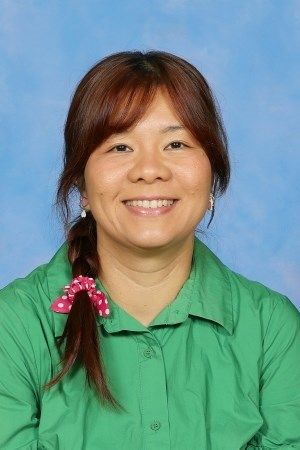
4A - Binh
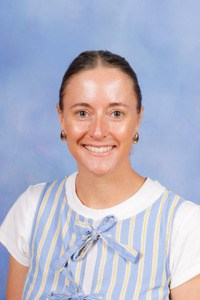
4B - Prue
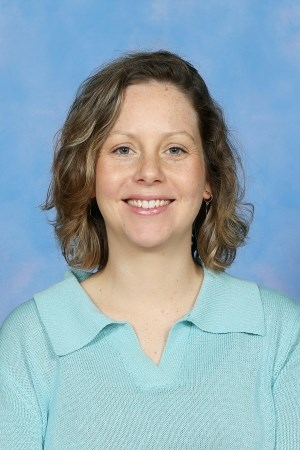
4C - Emilia
4A - Binh
4B - Prue
4C - Emilia
A typical day
A typical day in Year 4 will start with the Literacy block in the mornings, followed by Maths, with Inquiry subjects (Civics and Citizenship) and the Rights Resilience and Respectful Relationships program taught in the afternoon (specialist timetables and special events can affect this order).
Literacy
Our Literacy work this term will focus on persuasive texts and our class novel Kensuke’s Kingdom will support some of our Inquiry work. Alongside the novel, we will explore many fiction and non-fiction mentor texts such as, Be a Friend to Trees and Why You Should Sail the World. These texts help build vocabulary, expand knowledge, and strengthen comprehension as students make connections and ask thoughtful questions about what they read.
After building our understanding of persuasive texts, we will begin crafting our own persuasive texts focusing heavily on sentence and paragraph structure, as well as persuasive language. We will plan, draft, revise and publish persuasive pieces connected to Civics and Citizenship about their own island and government.
Core literacy skills will be supported by weekly explicit phonics, vocabulary, handwriting, grammar and punctuation lessons. Our grammar, punctuation and spelling focus will be determined through assessment and analysis of student writing samples at the beginning of the term.
To support this learning at home you can:
- Encourage your child to read outside of school times daily. If they are a reluctant reader, you could take it in turns to read a page each. Ask questions from time to time to monitor comprehension. Some examples are: Who are the characters? What is the plot? What do you think might happen next?
- Visit the local library to explore different genres.
- Encourage your child to write at home. E.g. keep a journal, write shopping lists or a convincing letter for that new game they’d like.
- Encourage them to use interesting adjectives and verbs (action) when writing.
- Encourage the correct use of full stops, commas and apostrophes.
- Encourage your child to edit their work for mistakes before they show you. They should also make sure the writing makes sense. Getting your child to read their writing aloud is a good technique to find mistakes in writing.
- Using a dictionary helps with spelling mistakes.
- Using a thesaurus helps to expand your child’s vocabulary.
- Encourage your child to practise handwriting at home, to improve neatness.
- Provide your child with pens, pencils, paper and a spot to write at home.
Mathematics
We will be learning how to apply place value to partition, rearrange and regroup numbers to at least tens of thousands to assist addition and subtraction calculations, and solve problems. Future learning, later in the year, will involve recognising that the place value system can be extended to tenths and hundredths. We will also learn to recognise and measure the length, area and perimeter of shapes using scaled and digital instruments.
To support this area of learning at home you can:
- Support general maths fluency by practicing skip counting or times tables together.
- Ask your child to teach you the place value games they have learnt at school including: Just Gridding, Mastermind, Four Move Wipe-Out.
- Explore place value to at least the tens of thousands together.
- Use maths equipment such as calculators, rulers, measuring tapes and scales around the home.
- Explore area and perimeter using materials such as Lego blocks, rulers and measuring tapes together in real world contexts.
Further ideas to support students at home can be found here: Literacy & Numeracy Tips to Help Your Child.
Civics and Citizenship
In Civics and Citizenship students explain how decisions can be made democratically and the role of local government. They describe the importance of rules and distinguish between rules and laws. Students describe how people participate in their community as active citizens, their rights and responsibilities, and factors that shape a person’s identity and communities.
Resilience, Rights and Respectful Relationships (RRRR)
RRRR learning supports social and emotional skill building. Our first unit in Year 4 focuses on Emotional Literacy, where students learn to identify, understand and manage their emotions, as well as recognise the feelings of others. Students will develop emotional literacy, build positive and respectful relationships, recognise personal strengths, and practise skills for cooperation, problem-solving and help-seeking. Through stories, discussions and collaborative activities, students will learn how to contribute positively to our school community.
Information on this department mandated program can be found at the following link.
Specialist subjects
French
Students will be practicing classroom routines. They will revise personal information by asking and answering questions about their name, age, address, and favourite colour. Students will also revise numbers up to 40.
Performing Arts
Students will be reviewing expectations and procedures used in the Performing Arts room and how these will be expressed differently when learning Music, Drama and Dance. The focus will be on exploring these three disciplines safely and fairly.
Physical Education
Students will be revisiting the expectations and the procedures used in PE. They will also participate in target games to help refine their fundamental motor skills. Students will be given a chance to practise the school cross country course and complete laps of the course as part of the school's cross country trials.
Science
Students will be focusing on chemical science. They will explore the observable properties of solids, liquids and gases and how adding or removing heat energy leads to a change of state between solids, liquids and gases.
Visual Arts
Indigenous landscape artist Albert Namatjira and his great grandson Vincent Namatjira, a contemporary portrait artist will be the spotlight for study this year.
Initially, students will be decorating their art folios and Visual Art journal. They will then be focussing on the art element colour, expressing it through paint. They will continue to study, examine and reflect on their prior knowledge, with complementary colours as their focal point.
Looking forward
We look forward to establishing positive relationships with your children, settling into our classrooms and working alongside you to create successful outcomes for your child.
Kind regards,
Prue, Binh, Emilia & the Specialist teachers