
Wellbeing and Engagement

Embracing Resilience in Learning
In the last newsletter, I shared the joy of experiencing "firsts," but I did not fully explore the emotions that often precede that joy, as beautifully depicted in our new brand video. This week, I would like to delve deeper into this topic.
Resilience is a term we hear frequently in schools, describing the grit needed to face and navigate through challenge. While being 'resilient' can be viewed as a positive trait, a person rarely ‘feels’ resilient in these moments. It often feels like ‘I can’t’ far more than ‘wow, look at me learning’. Being resilient requires a mindset that is prepared to patiently move between the space of ‘not knowing’ and ‘knowing’.

The transition from ‘not knowing’ to ‘knowing’ however, is rarely a straight path. The ups and downs we encounter along the way are integral to our learning experience.

If learning were easy, we wouldn’t need resilience. Yet, as we navigate the unexpected twists and turns, it’s common to feel frustrated or even tempted to give up. Navigating the ‘firsts’ at the beginning of each school year can feel just like this.
As parents, we can feel compelled to intervene and remove the learning space to alleviate our children's discomfort. Our intent is mostly always driven by a desire to protect them and to ensure their happiness.

However, frustration can be a significant part of building resilience and preparing our girls for life beyond school. If we help our girls to understand that feelings of discomfort and frustration are simply signs that they are in the space between 'not knowing' and 'knowing,' we can turn these moments into valuable opportunities for growth.
Success doesn’t mean getting to 'knowing' as quickly as possible. This mindset can unintentionally limit learning opportunities and encourage the avoidance of future challenges.
True success comes from our ability to stay present in the learning space, even when it’s hard, uncomfortable, and frustrating at times. The length of time we can endure this space increases with support, encouragement, and guidance. These principles are what we remain committed to providing at Loreto College Marryatville.

Resilience is built through learning how to navigate 'firsts’ with the help of those who care. This is why strong relationships between teachers and students, as well as partnerships between staff and families, are so important in our community.
Through open and consistent communication, we can encourage resilience and a deeper understanding of the learning process together. I encourage you to maintain contact with your daughter’s teachers throughout the year and raise concerns early so we can plan to support learning and growth together.
Suzie Crowe
Assistant Principal: Wellbeing and Engagement
Using Pulse as a measure of wellbeing.
Think about your phone at 1%.
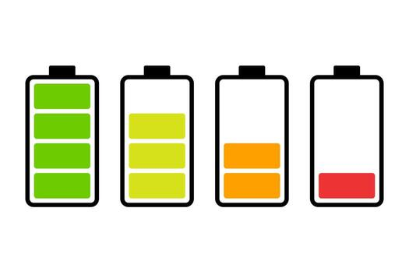
What happens when your phone or computer hits 1%? There’s a sense of urgency. You look for a charger. You switch to low-power mode. You close the apps draining the battery. Because without power, your device simply can’t function the way it’s designed to.
Now imagine our College community as a phone battery. Every student, staff member and family represents a percentage point. When everyone contributes, we’re at 100%. We are connected, energised and functioning as we should. But when people disengage or feel unheard, it’s like small portions of the battery begin to disappear. Over time, the whole system runs low.
We all want belonging. We want support. We want spirit at carnivals and events. We want people to show up for us. But a phone doesn’t stay alive on its own, it has to be plugged in. Being “plugged in” isn’t always convenient. It can look like staying back to stack chairs, picking up rubbish you didn’t drop, encouraging someone who is struggling, volunteering when it would be easier to stay quiet, or offering kindness or humour when someone needs it. These actions may not always feel exciting, but they recharge our community. When everyone does a little, the responsibility doesn’t fall on the same few people over and over again. And just like a phone, being at 100% individually means little if we’re not connected to the system around us.
This is where our Pulse Program comes in. Each week, we intentionally check the “battery level” of our College. We use Linewize Pulse (formerly Educator Impact), a short wellbeing check-in of seven questions that takes less than two minutes to complete. It provides a real-time snapshot of how students are feeling, what’s energising them, what’s draining them, and where support may be needed.
Without this information, it can be difficult to identify what may be impacting wellbeing, address concerns early, provide the right support at the right time, and strengthen areas of connection and belonging. Pulse is simply our "battery check". It gives students a voice and allows us to respond thoughtfully and proactively.
If we want our College to run at its best, we all need to plug in. For students, that means taking a few moments to reflect and complete Pulse honestly. For families, it means encouraging participation and reinforcing that student voice matters. When everyone contributes, even in small ways, our community stays charged, connected and strong. Together, we can ensure our College remains a place where every percentage point counts.
Jessica Edwards
Director of Wellbeing