Year 5/6 News
Radhika and Precious
Year 5/6 News
Radhika and Precious
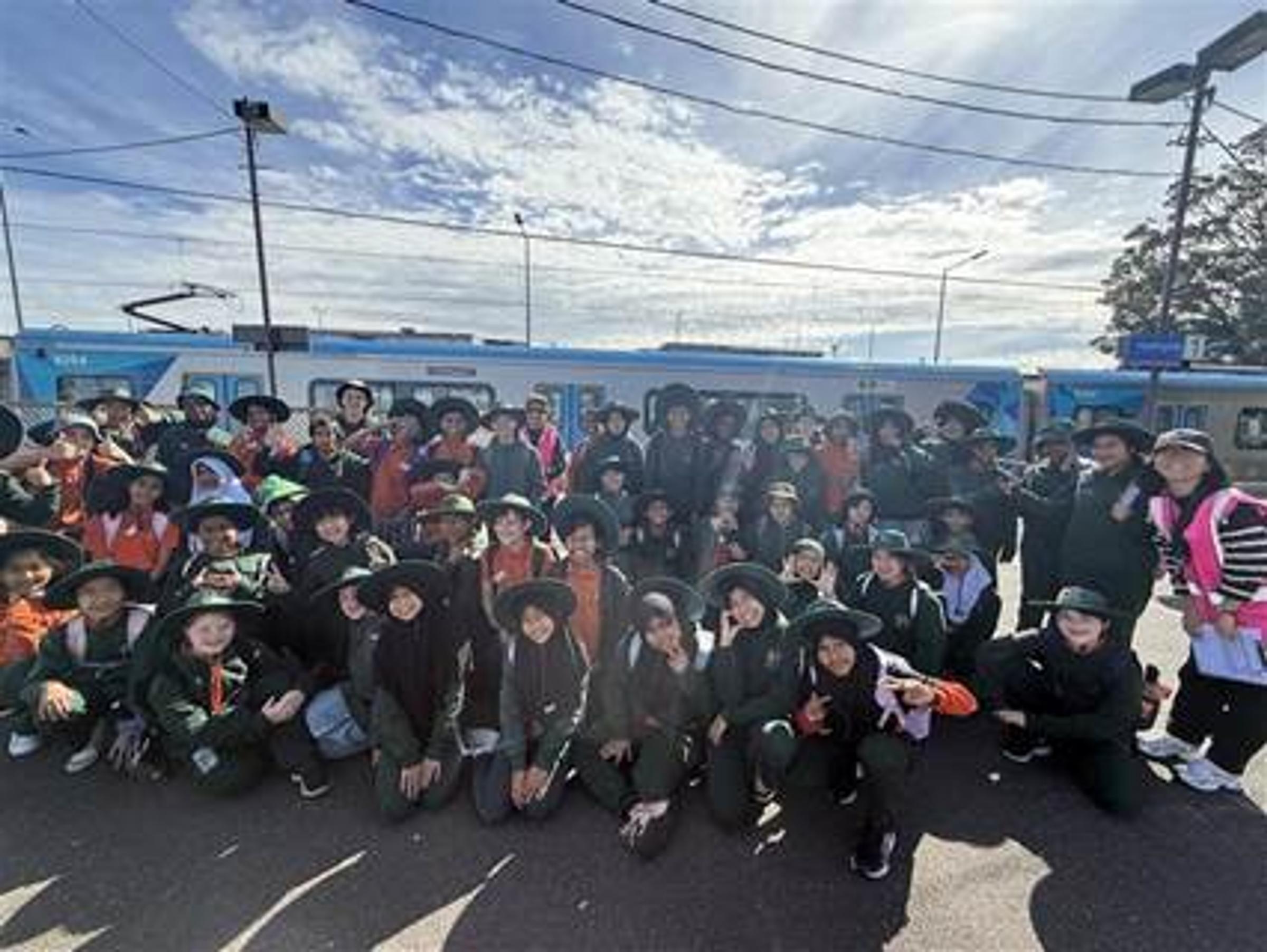
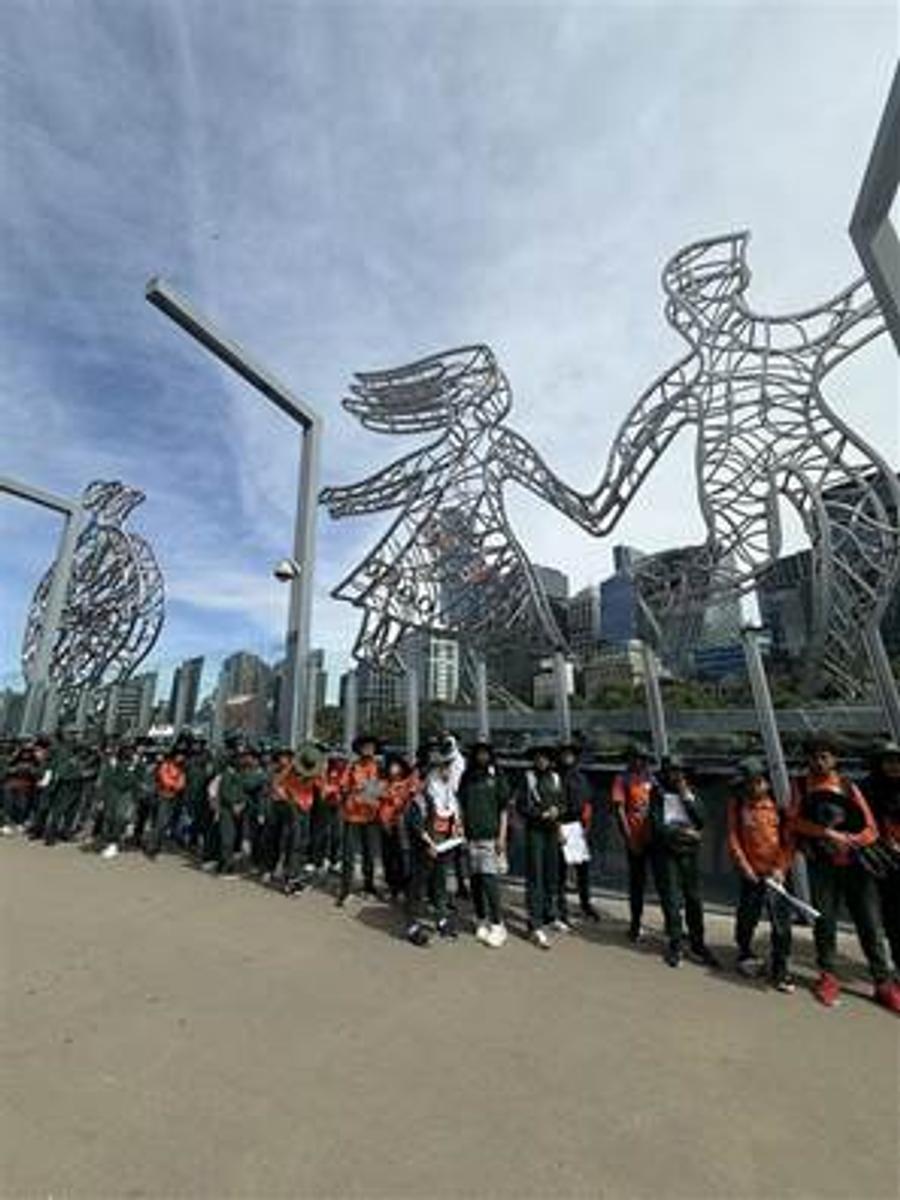
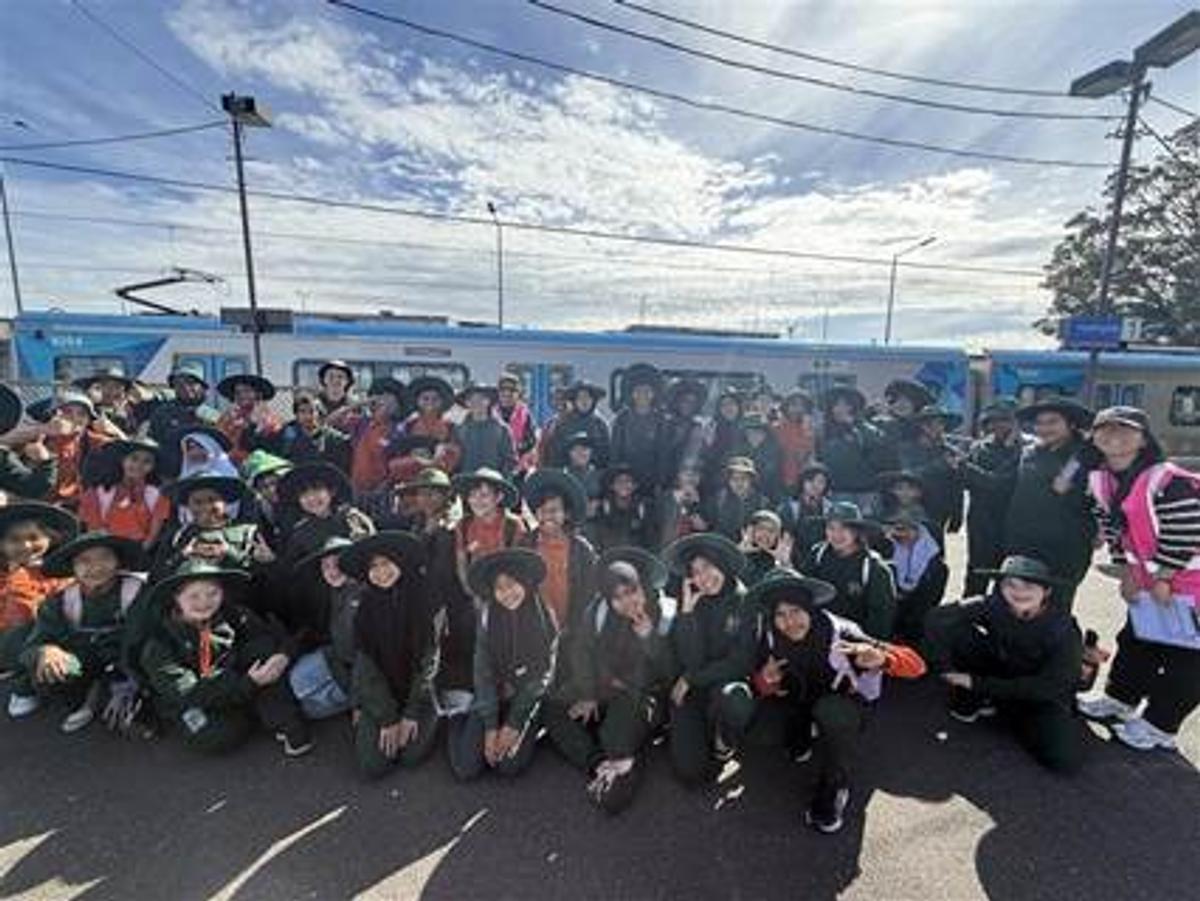
Our Year 5 and 6 students recently explored the Melbourne CBD as part of their inquiry into how cities are shaped by their history and design. Their journey included visits to Sandridge Bridge, Flinders Street Station and Federation Square, where they observed key features of architecture, transport and public spaces that contribute to the identity of a modern city.
A highlight of the day was the visit to the Koorie Heritage Trust. Students learned about the deep cultural history of the First Peoples of the Kulin Nation and discovered how Indigenous stories, artefacts and traditions continue to influence the land we live on today. This experience helped students understand the importance of acknowledging the past when creating new spaces for the future.
Throughout the excursion, students reflected on how cities grow and evolve, and what makes a community connected and inclusive. They returned to school inspired and ready to apply their new knowledge as they continued designing their own cities in class.
Our Year 5 and 6 students recently spent a wonderful afternoon working with their Foundation buddies on a creative Maths activity. Together, they explored addition by drawing colourful flowers.
The activity encouraged our older students to guide their younger buddies through early number concepts while building confidence and positive learning habits. Foundation students enjoyed practicing their addition skills in a fun and visual way, and the drawing element helped them express their ideas clearly.
This buddy session not only strengthened Maths understanding but also strengthened relationships across year levels. Both groups finished the activity proud of their work and excited to continue learning together throughout the year.
Our students recently enjoyed a visit from Life Ed and the much loved Healthy Harold as part of their wellbeing program. The session focused on helping students understand the importance of respectful relationships, both with the people around them and with themselves. Through interactive activities and guided discussions, students explored what kindness, empathy and positive communication look like in everyday situations.
Healthy Harold helped students recognise how their choices and actions can affect others, and how showing respect can build stronger friendships and a more supportive school community. Students also learned about self respect, including how to listen to their feelings, make safe decisions and look after their own wellbeing.
The incursion was engaging, informative and filled with meaningful learning moments. Students left the session with a clearer understanding of how respectful relationships contribute to a happy and healthy life, and many shared how excited they were to continue practicing these skills at school and at home.
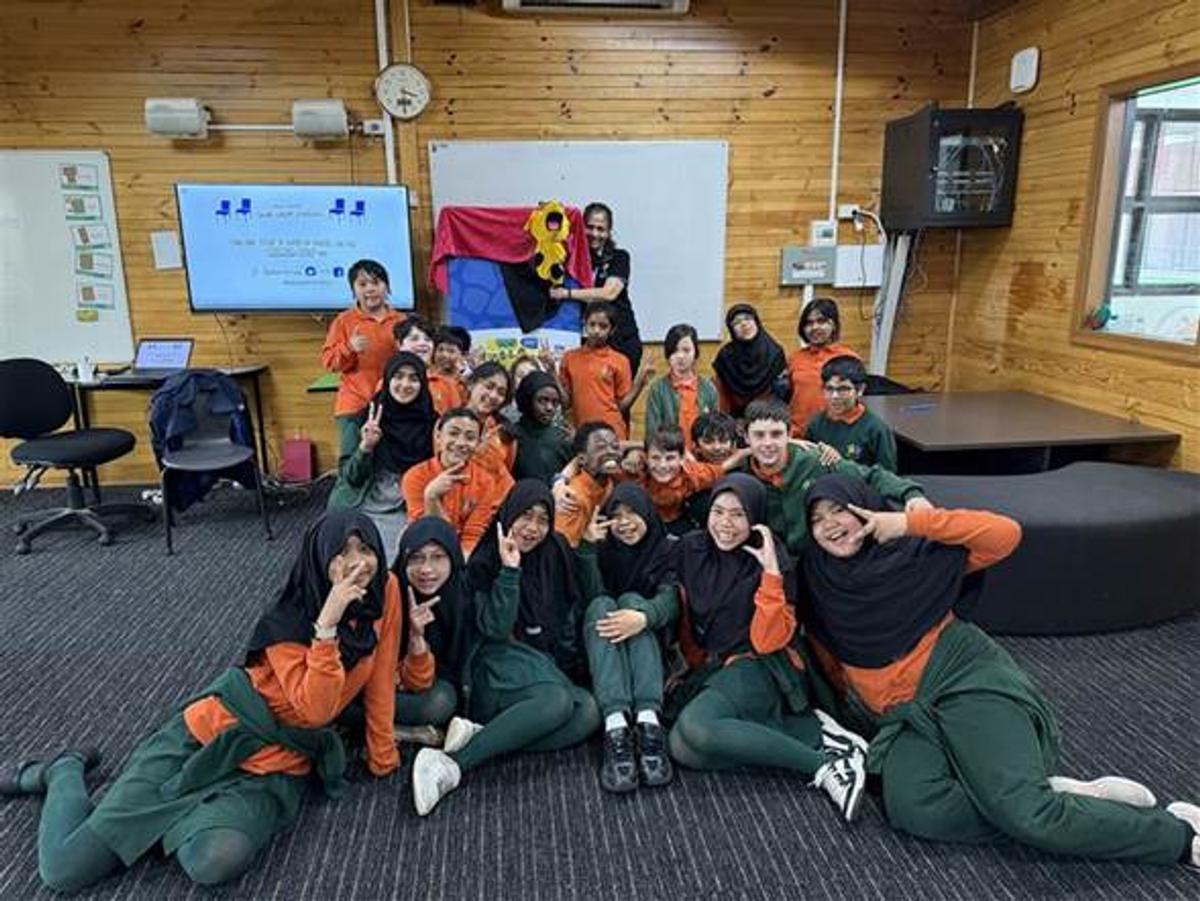
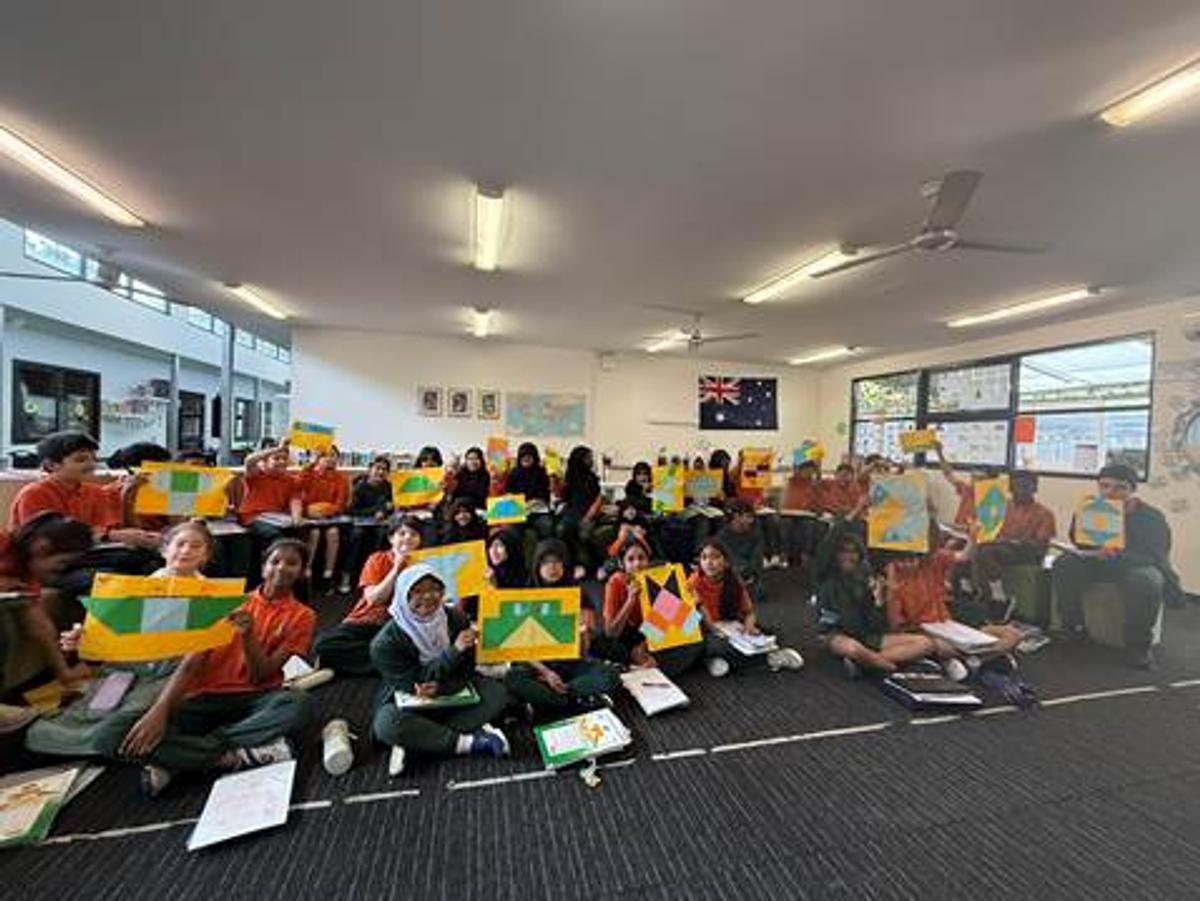
The senior school students have been diving into geometry by creating artwork inspired by the properties of shapes. Using different polygons, they focused on identifying edges, angles and symmetry while arranging shapes to form unique geometric designs. This hands on task helped students apply mathematical language and recognise how shapes can be combined, transformed and used creatively.
Alongside this, students have been reviewing areas identified in their NAPLAN data. Through targeted mini lessons and practice tasks, they are revisiting key skills such as identifying angles, working with coordinates and describing the features of two dimensional and three dimensional shapes. These sessions are supporting students in strengthening their understanding and filling in any gaps from earlier learning.
The combination of creative work and focused revision has boosted both confidence and engagement in Maths. Students are showing improved accuracy, stronger reasoning and a clearer understanding of geometric concepts, preparing them well for the next part of their learning journey.
The students have been learning how rhythm shapes the flow and mood of narrative poetry. To build this understanding, they explored the beats in familiar songs and practiced clapping, tapping and counting the strong and weak beats. This helped them recognise how patterns in sound can guide a reader through a poem in the same way music guides a listener through a song.
Students then applied this knowledge to their writing by experimenting with line length, repetition and word choice to create a steady rhythm in their own poems. They discovered that rhythm can make a story more memorable, add emotion and bring their ideas to life on the page.
This hands on approach has made poetry feel fun and accessible, and students are already showing greater confidence in crafting narrative poems with rhythm and purpose. They are excited to keep developing their writing skills as they continue exploring the musicality of language.