
Year 2/3

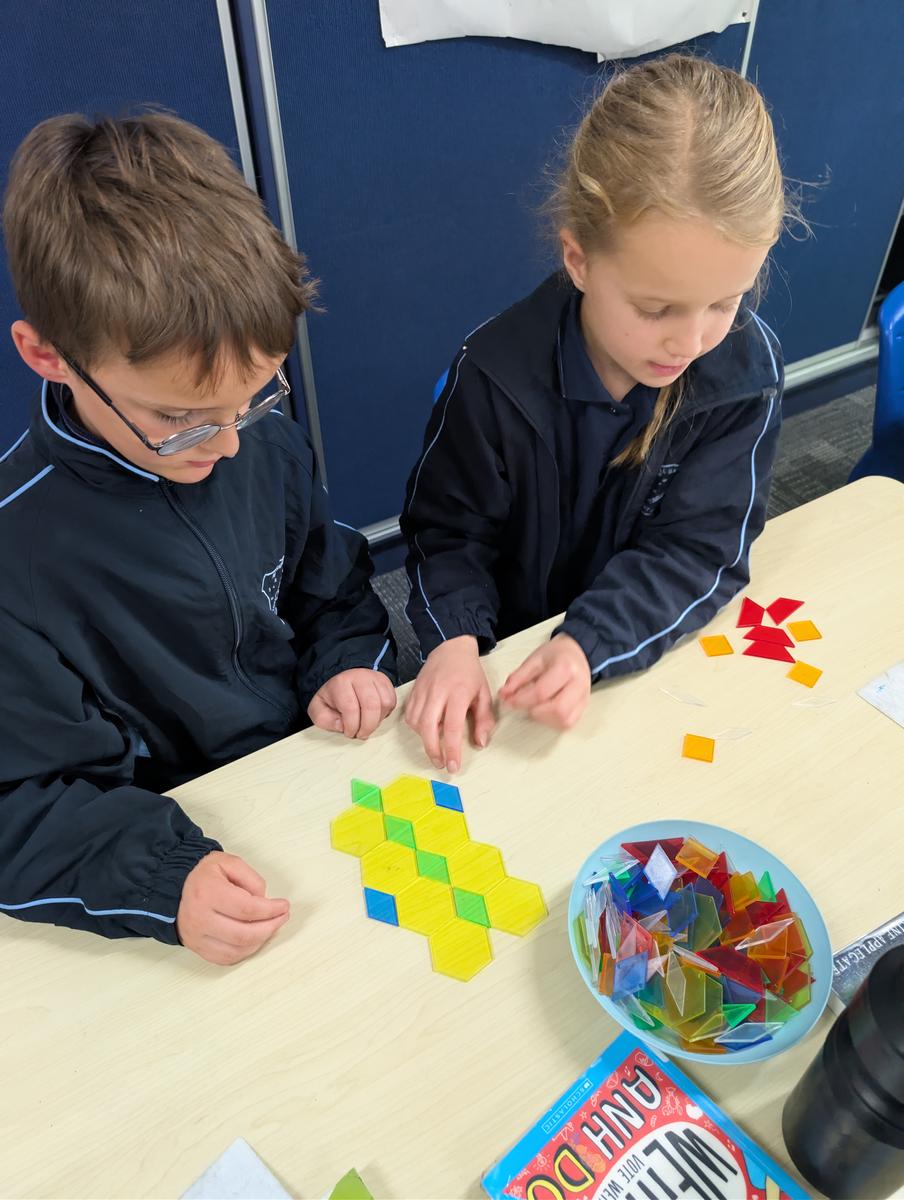
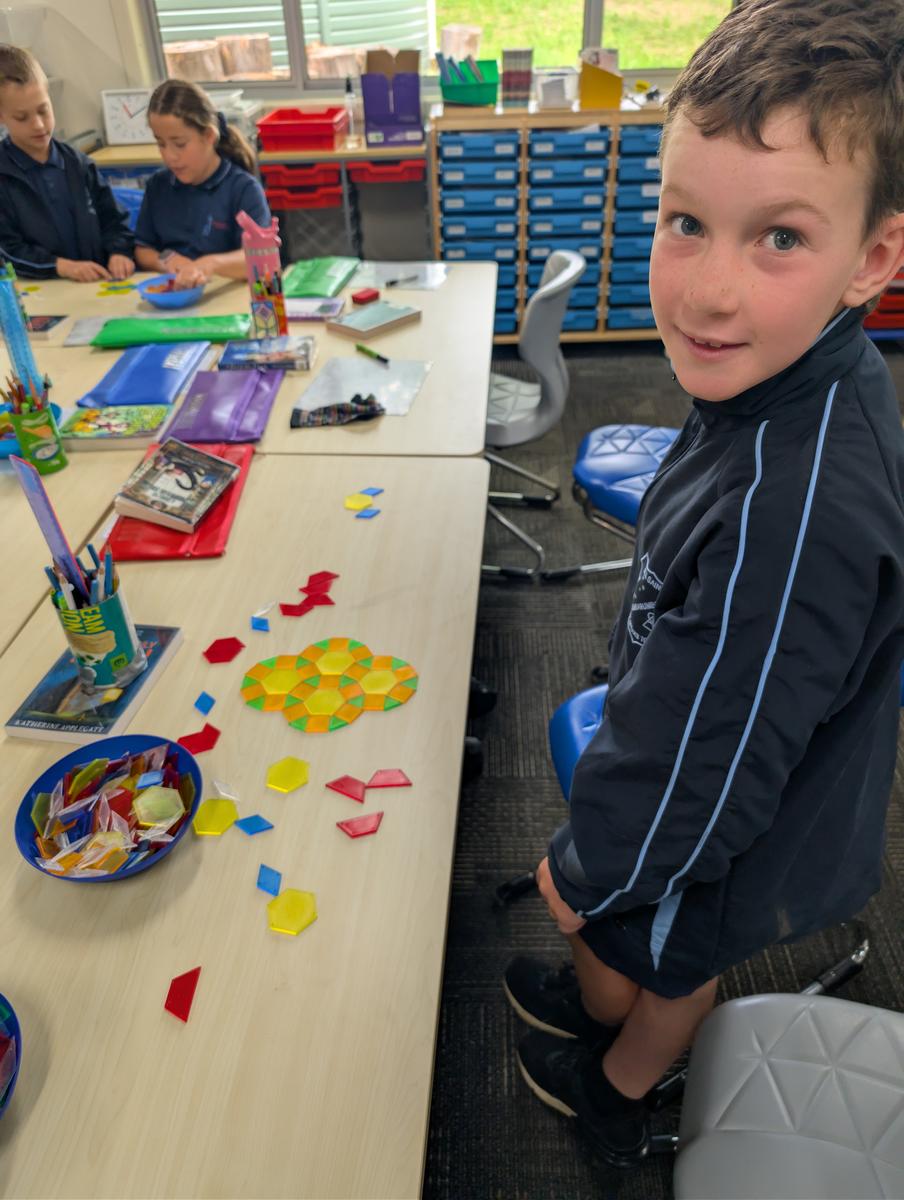
In Mathematics, our students have been exploring 2D shapes and their attributes. They are learning how to describe and classify shapes by examining features such as the number of sides, angles, and lines of symmetry. Through hands-on activities, students are developing their ability to use mathematical language to explain what makes each shape unique.
Building on this understanding, students are now investigating transformations, such as translation (sliding), rotation (turning), and reflection (flipping). Using these transformations, they are creating patterns and tessellations (repeating designs made from shapes that fit together without gaps or overlaps). These activities help students recognise geometry in everyday life, from tiles and artworks to nature and architecture.
This unit encourages creativity as well as problem-solving, allowing students to apply their mathematical knowledge in fun and practical ways.
This learning connects to the NSW Mathematics K–6 Syllabus outcomes:
- MA1-2DS-01: recognises, describes and represents shapes including quadrilaterals and other common polygons
- MA2-2DS-02: performs transformations by combining and splitting two-dimensional shapes
We encourage you to support your child’s learning at home by looking for patterns or tessellations in your surroundings and discussing how shapes are used in their design.