Learning & Teaching
Learning and Teaching encompasses the following areas: Student Outcomes, Curriculum, Assessment, Reporting, Principles and Pedagogy.
Learning & Teaching
Learning and Teaching encompasses the following areas: Student Outcomes, Curriculum, Assessment, Reporting, Principles and Pedagogy.

The 2025 School Concert recording is now available for families to order!
The recording captures all the fantastic performances from the night and is a great way to relive the memories with your child.
Families can order their copy through the link below. The concert will be provided on a USB drive, allowing you to view it easily on your home devices.
Order here: St Fidelis concert:
https://www.villagegreenfilms.com.au/product/st-fidelis-concert-usb-stick/
Don’t miss the chance to keep this special memento of our students’ impressive performances!
PLEASE NOTE THE DATE CHANGE FOR OUR CELEBRATION OF LEARNING - It will now be held on Thursday, December 4.
We are excited to invite you to our upcoming Celebration of Learning, where students from Prep to Year 6 will showcase their creativity, curiosity and problem-solving skills through the lens of geography and design.
This event showcases the remarkable learning that has occurred across all year levels, with students applying the design process to explore how people interact with and care for the world around them.
Parents are welcome to attend and see the wonderful learning from 8:30 to 9 am and 3:30 to 4:45 pm.
We are looking forward to seeing you all there.
Over the past few weeks, students have been participating in a range of literacy assessments that support both accurate reporting and effective planning. These include PAT-Reading, spelling assessments, reading comprehension checks, and the ongoing InitiaLit and MiniLit screening and cumulative assessments. Together, these tools give teachers a clear picture of each child’s progress and achievement.
Teachers have also been meeting to review and moderate students’ writing pieces. During this process, teachers compare samples against the Victorian English Curriculum to ensure consistent and accurate allocation of progression points for reporting. This collaborative approach helps maintain fairness and consistency across the school and ensures families receive a clear understanding of their child’s learning.
These assessments form our end-of-year summative assessment process. They provide a comprehensive snapshot of each student’s learning and growth across the year and contribute directly to their end-of-year reports. This ensures families receive an accurate reflection of student achievement as we celebrate their progress and plan for the year ahead.
Continuing from last week’s focus, one of the most effective ways to improve comprehension is through retelling. Retelling helps children remember key details, organise their thoughts, and deepen their understanding of the story. You can easily support this at home.
Tips for retelling at home
Questions to ask
What part of the story did you like best and why? Can you make a connection to something in your own life?
Fun idea: Have your child draw a story map or create a comic strip to show the main events.
Retelling at home strengthens comprehension and helps your child become a confident, thoughtful reader.
This week’s optional Creative Corner task invites students to explore persuasive writing. A persuasive text tries to convince the reader to agree with a point of view.
Persuasive texts usually follow this structure:
Introduction – say what you think
Start by clearly telling the reader your opinion. For example, “I think families should have a screen-free evening once a week.” Make it clear from the beginning what your side is.
Reasons in paragraphs – explain why
Give 2 to 3 strong reasons to support your opinion. Each reason should go in its own paragraph. Try to elaborate by adding examples or details so the reader understands why you think it’s a good idea. For example, ‘Screen-free evenings help families spend time together playing games or reading, which makes everyone happy.’
Conclusion – say it again
Finish by repeating your opinion and reminding the reader of your main reasons. This helps your argument feel strong and complete. For example, ‘Because screen-free evenings help families have fun and spend quality time together, I think every family should try it.’
Students can use persuasive language such as strong statements I believe…, We should…, emotive words, and questions that make the reader think.
Suggestions for writing prompts
Should families have a screen-free evening once a week?
How parents can help
Encourage them to give examples and explain their ideas.
Parents can support by helping children brainstorm reasons for and against the chosen topic.
Once both sides have been explored, encourage your child to choose one side and begin writing their persuasive piece using the structure above. Parents can assist by discussing ideas, helping organise reasons into paragraphs, and supporting students to elaborate on each idea with examples or explanations.
Once your child picks a side, they can start writing. I’m sure children will have some very creative, thoughtful, and persuasive arguments for any of these topics.
Happy writing!
Aaron Blabey is a bestselling Australian author, illustrator, and former actor. Born in Bendigo, Victoria, he moved from acting to writing, bringing his love of humour and storytelling to children’s books. His stories are full of funny characters, exciting adventures, and important lessons about friendship, kindness, and family.
He is best known for popular series like The Bad Guys, Pig the Pug, and Thelma the Unicorn. The Bad Guys has even been made into an animated movie, and his books have sold millions of copies worldwide. Aaron’s work appeals to children of all ages, combining humour, heart, and bold illustrations that make reading fun.
Some favourites to check out
SCHOLASTIC BOOK CLUB
Orders due back by Friday, 28th November.
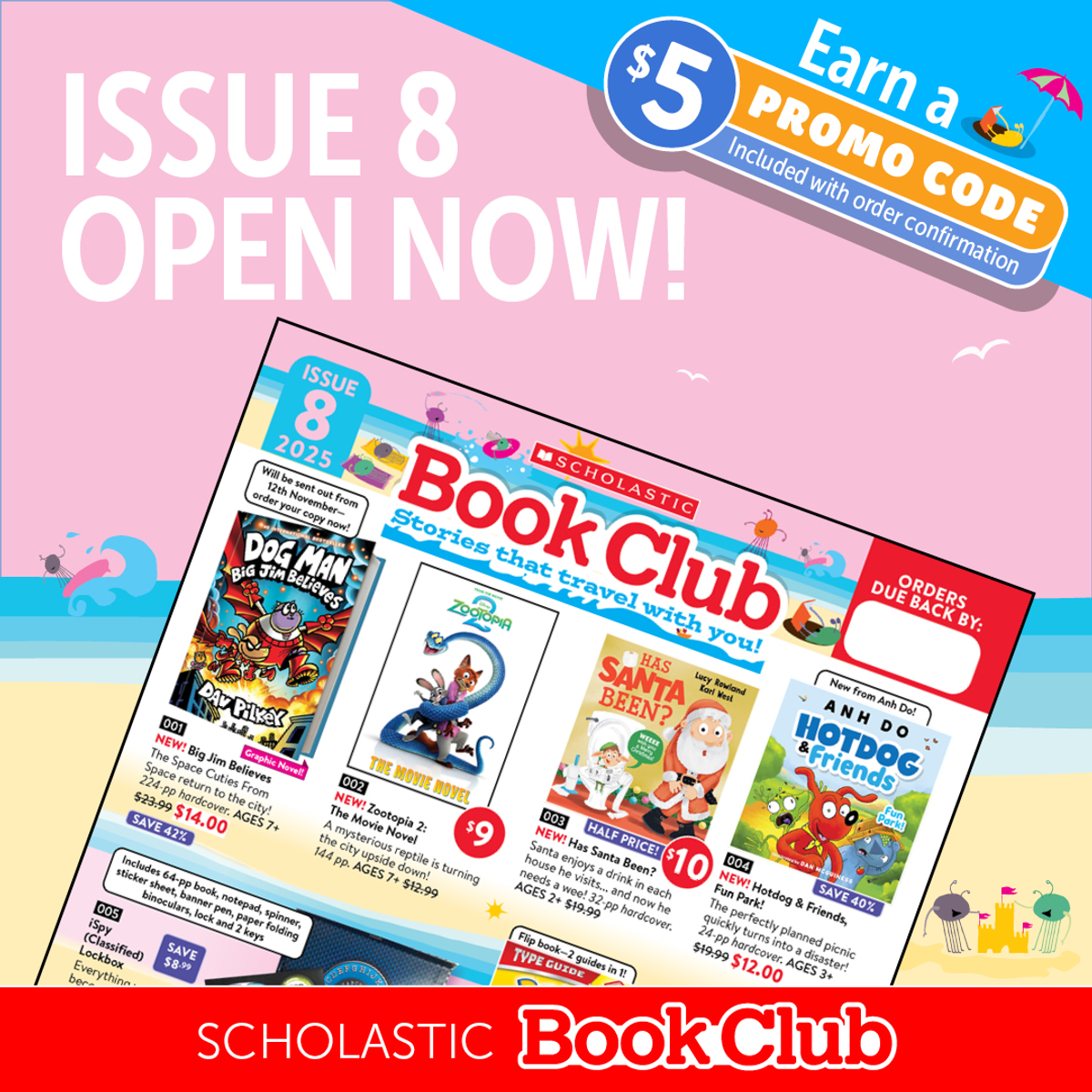
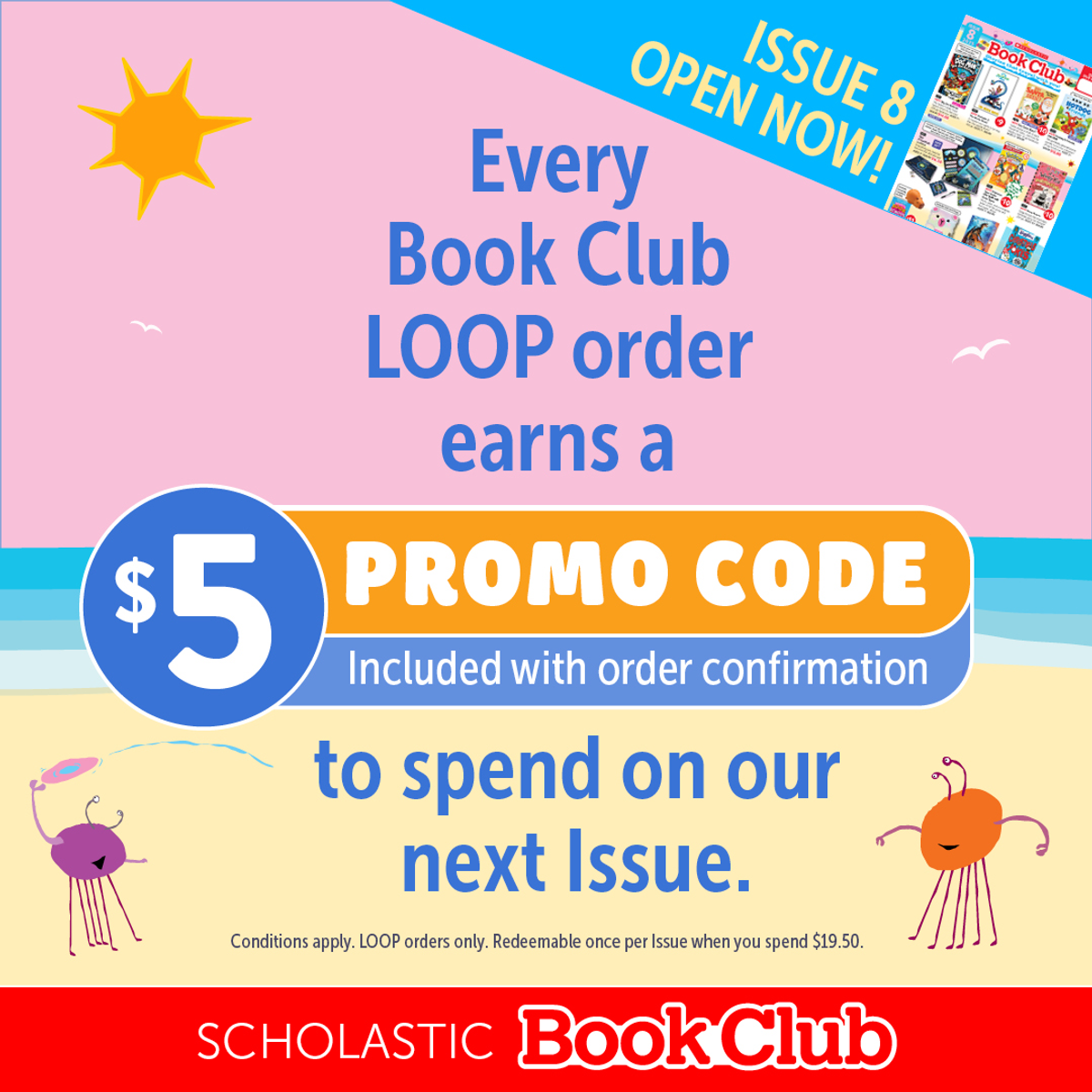
Issue 8 is here, themed “Stories That Travel With You”, and it’s packed with great titles perfect for Christmas shopping and school holiday reading!
In this issue:
Plus, every LOOP order earns a $5 promo code for Issue 1, 2026! There’s also a $5 promo code from Issue 7 ready to redeem now.
I hope these literacy tips and stories inspire students to read, write, and explore new ideas every day.
Bernadette Parnis
bparnis@sfmoreland.catholic.edu.au
Congratulations to Lilly Cheatley for receiving this week’s Maths Award!You consistently bring a positive attitude to every morning maths session and approach your work with focus and determination. Well done on your wonderful effort and enthusiasm!
REMINDER : Grade3/4 Games Day, Tuesday, 18th November, all welcome to come along.
Build Confidence Through Encouragement
Maths success starts with confidence! Children learn best when they feel safe to have a go, try different strategies, and learn from their mistakes. At home, you can help create a positive maths environment by keeping maths fun, relaxed, and part of everyday life.
Encouraging effort, not just answers
Praise your child for trying different strategies and thinking hard, even if they don’t get it right straight away.
Making mistakes a learning opportunity
Talk about how mistakes help our brains grow and that even adults make them.
Using everyday maths
Cooking, shopping, measuring, and playing games all involve maths - and show children that it’s useful and fun.
Keeping it relaxed
A calm, positive tone helps reduce maths anxiety and builds confidence.
Here are some fun, age-appropriate ways to build maths confidence at home.
Foundation – Year 2
Spot numbers on letterboxes, clocks, or supermarket aisles.
Years 3 - 4
Build with blocks or LEGO and talk about shapes, area, and symmetry.
Years 5 – 6
Budget together. Plan a pretend shopping trip or save for something special by comparing costs.
When children feel supported and safe to take risks, they develop a growth mindset and become more willing to tackle challenges, a key step to becoming confident mathematicians.