
Wellbeing
SELF-CARE TIPS FOR THE HOLIDAYS
Exercise (or movement)
Did you know that 9 in 10 young people in Australia don’t move enough? Young people should do at least 60 minutes of vigorous exercise every day for optimal health. Exercise has social, emotional and health benefits, including reduced risk of diseases, increased concentration, increased confidence, and reduced aggression. Exercise shouldn’t be a chore or punishment and doesn’t have to be about weight loss or muscle gains to be beneficial. It’s important to find ways to move your body that work for you and that you enjoy. You could try…
- Playing sport
- Swimming or surfing
- Doing an at-home workout
- Doing chores
- Dancing
- Walking the dog
Riding a bike or walking to destinations
Moving/doing exercise mimics our fight/flight response and triggers a ‘calm down’ response. Exercise is also as effective as antidepressants in treating depression.
Nutrition (diet) and mental health
Diet is a tricky thing to talk about because what you eat isn’t always a choice. Lots of things affect what you eat – and even whether you can get enough to eat. Our brain needs a lot of energy to function – and nutrients (from food) are its primary fuel. 20% of the nutrients we eat are used by our brain as energy.So, what should you eat for good mental health? The current Australian Government guidelines are to do your best to eat a wide variety of nutritious foods (e.g. ‘eat the rainbow’ of fruits and vegetables) and to limit ‘discretionary foods’ (foods that contain saturated fat, added salt, added sugars and alcohol). The latest research suggests that you should be eating a minimum variety of 30 different plant based whole foods a week (regardless of what diet you eat) for optimum physical and mental health.
Sleep
Lack of sleep can contribute to mental health issues. You need about 8-10 hours of sleep per night. That amount of sleep is harder to get than it sounds, because the ‘body clocks’ of teens and young adults naturally keep them up late at night and make them want to sleep in until mid-morning. Having a smartphone, feeling anxious, etc. can all impact on falling asleep and quality of sleep. While many things can impact mental health, including lots of things we can’t control – such as genetics – sleep is one thing we can control.
Why is sleep so important for mental health?
Your body can heal through rest – but your brain can only heal through sleep. Sleep is essential for cleaning out toxins that build up in your brain. Sleep deprivation allows these toxins to build up, which can contribute to mental ill-health. As you get older, sleep becomes the only time your brain can make new brain cells – which are essential for good health and wellbeing. Cell death/reduced cell numbers in certain parts of your brain have been associated with depression and other mental health issues. Did you know that deep sleep (when you have ‘delta’ brainwaves – the slowest brainwaves) is also the main time your body heals itself?
Why should you make sleep a priority?
There are some really good reasons why it's important! The neocortex (your ‘thinking brain’) doesn't work so well when you're tired, which means you're more likely to make risky or emotional decisions. This is one reason why there are increased incidents of cyberbullying, car accidents, drug use, self-harm and suicide at night. People feel more anxious at night. This is because the limbic system (your 'emotional brain') fires up late at night, causing more intense negative emotions. (This is meant to happen when you're asleep, when it will have less of an effect on your mental health). Sleep is essential for cleaning out toxins that build up in your brain. Accumulation of these toxins can impact on brain and mental health. Being sleep-deprived can raise your overall anxiety levels in your everyday life.
Article credit #Kids Helpline
-----------------------------------------------------------------------------------------------------------------------------
SUPPORT LINKS/CONTACTS
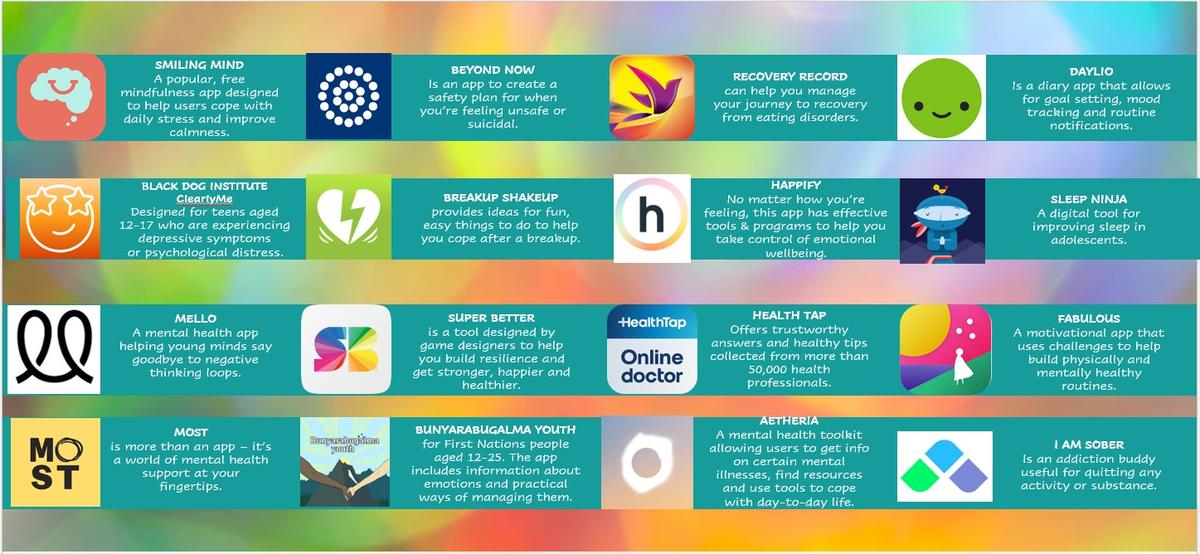
While the holiday season is often associated with joy and celebration, it's important to remember that for some, this time of year can present its own challenges and emotional struggles. Below are lists of contacts, links and apps for support services to connect with if you, or someone you know, are experiencing a difficult time over the holiday break.
EMERGENCY (Police, Ambulance, Fire) - 000
|
Bairnsdale Police Station - 5150 2600
|
Kid’s Helpline – 1800 551 800 or visit Kids Helpline | Phone Counselling Service | 1800 55 1800
|
Lifeline – 13 11 14 or visit Lifeline Australia - 13 11 14 - Crisis Support. Suicide Prevention.
|
Beyond Blue – 1300 224 636 or visit 24/7 Support for Anxiety, Depression and Suicide Prevention. - Beyond Blue
|
Headspace – 5141 6200 (Bairnsdale Office) or visit Connect with a mental health clinician 1-on-1 | headspace
|
Reach Out - A Safe Place to Chat Anonymously, Get Support & Feel Better | ReachOut Australia
|
QLife (LGBTQAI+ support) – 1800 184 527 or visit QLife - Support and Referrals |
Alcohol and Drug Foundation – 1800 250 015 or visit The Alcohol and Drug Foundation - Alcohol and Drug Foundation
|
Youth Central (information about jobs/careers, money, study, wellbeing, rights, safety and more) - Youth Central
|
1800 RESPECT (Sexual Assault and Domestic Violence Hotline) – 1800 737 732 or visit Home | 1800RESPECT
|
SANE Support Services – 1800 187 263 or visit SANE Australia
|
Suicide Callback Service – 1300 659 467 or visit Mental health counselling | Suicide Call Back Service
|
Health Direct – 1800 022 222 or visit Trusted Health Advice | healthdirect
|
The Orange Door – 1800 512 358 The Orange Door | orangedoor.vic.gov.au
|
Gippsland Centre Against Sexual Assault (GCASA) – 1300 806 292 - Home - GCASA
|
Mensline Austalia – 1300 789 978 or visit Free help, referrals & counselling for men: MensLine Australia
|
Men’s Referral Service (Advice for men about Family Violence – 1300 766 491 or visit NTV | Men’s Referral Service
|
Department of Families, Fairness & Housing AND Child Protection – 1300 555 526526 After Hours Emergency – 13 12 78
|
Department of Families, Fairness & Housing (Bairnsdale Office) – 5150 4500 |
WATER SAFETY AT HOME
Stay active and learn swimming, lifesaving, CPR and First Aid from your home!
Life Saving Victoria (LSV) has developed The Water Safety @ Home series which provides online, practical sessions for kids to stay active, and learn water safety, CPR, first aid, swimming and the lifesaving Nippers program – all from home or classroom. There are sessions for age ranges from early childhood through to upper primary-school age, as well as Water Safety Watch & Learn videos and resources that align to the Victorian curriculum.
Water Safety @ Home - Life Saving Victoria
ADDITIONAL TIPS FOR STAYING SAFE AROUND THE WATER THIS SUMMER
(Royal Life Saving Australia):
KNOW YOUR SWIMMING ABILITIES - Don’t overestimate your or your loved ones’ swimming abilities. Choose locations that match your skills and always prioritise safety. If you’re not a confident swimmer, stay out of the water.
ALWAYS SUPERVISE CHILDREN AROUND WATER - Supervision is the single most important thing you can do to keep your children safe around water. We all know how busy things can get and when you’re trying to do many things at once, this is when you can get distracted. Children can wander away unnoticed while parents attend to other tasks. Remember to always Keep Watch and to keep within arm's reach
AVOID ALCOHOL AROUND WATER - Alcohol and water don't mix. Alcohol consumption can significantly increase the risk of drowning. Leave the alcohol until safely away from the water, look out for your family and friends and pull them into line if they’re under the influence and thinking about going into the water. Alcohol reduces coordination and can impair a person’s judgement and reaction time, reducing inhibition and distorting the perception of risk.
WEAR A LIFEJACKET - Make sure all the family are wearing lifejackets before heading out for a fun day on the water. Lifejackets are one of the most important pieces of safety equipment when boating. There is a lifejacket for every activity and every body. With the modern comfortable design of lifejackets there is really no excuse not to wear a lifejacket.
KNOW THE CONDITIONS - Unfamiliar swimming, boating, and fishing spots increase the risk of drowning. Sandbars, rips, unpredictable currents, debris below the water surface and swiftly changing local conditions are all often well-known to locals, but harder to spot by visitors. Stay safe by:
- Checking weather alerts before and during your trip. Conditions can change rapidly especially out on the water.
- Telling someone where you are going and when you will return.
- Knowing your own limitations – if you’re in any doubt, stay out.
AVOID GOING ALONE - No matter your skill level and confidence, avoid going alone. Thinking ‘it won’t happen to me’ is too often the call made – our research shows that poor decision making can lead to tragedy. Swim with a friend or with family. If you do go alone, make sure you swim at a patrolled beach or a pool with lifeguards on duty.
SWIM AT A PATROLLED BEACH BETWEEN THE RED AND YELLOW FLAGS - The Red and Yellow Flags on the beach show safe places to swim, and where lifesavers and lifeguards watch people to keep them safe.If there are no flags on the beach, this means there are no lifeguards on duty and swimming at the beach is not recommended, especially if you are unfamiliar with the area and have limited swimming ability or experience.
Water Safety | Royal Life Saving Society - Australia
-------------------------------------------------------------------------------------------------------------------------------------