
Level 3: Connect
Kylie Clarke 3A, Jenny Dare 3B, Carmen Leal and Isabella Nocera 3C

Level 3: Connect
Kylie Clarke 3A, Jenny Dare 3B, Carmen Leal and Isabella Nocera 3C
NAPLAN begins next week on Wednesday and Thursday (Wk7)
Parent Consent to be completed ASAP. The form includes permission for your child to participate in the Kitchen Garden program, spend time with Murphy, and Media consent.
Homework Week 7 and 8
Dear Level 3 Parents and Caregivers,
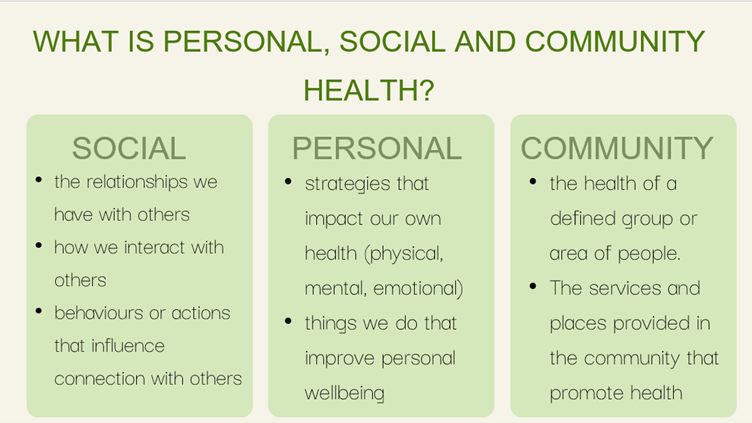
We have been learning to understand how health is a combination of physical, mental, and social factors and how we can identify and practise strategies to support our health.
Students have been exploring the concept of health and how personal, social, and community health is impacted. Students will be engaging in discussions to analyse how actions and behaviours influence their own health and the health of others, as well as understanding how different strategies support different areas of health.
Learning About Apostrophes!
This week, our class has been exploring apostrophes—those tiny punctuation marks that make a big difference in writing!
What Is an Apostrophe?
An apostrophe ( ’ ) is a punctuation mark used to
1. Apostrophes for Possession
We use an apostrophe to show that something belongs to someone or something.
Examples:
2. Apostrophes in Contractions
A contraction is a shorter way of saying two words. We use an apostrophe to show where letters have been left out.
Common Contractions
| Full Form | Contraction | Missing Letters |
| do not | don’t | o |
| cannot | can’t | no |
| I am | I’m | a |
| they are | they’re | a |
| we will | we’ll | wi |
Warm regards, The SEPS Level 3 Team
Specialist Timetable
| Class | Tuesday | Wednesday | Thursday | Friday | |
|---|---|---|---|---|---|
| 3A | PE, Art, Science | Library | |||
| 3B | Art, PE, LOTE | Library | |||
| 3C | Library | Science, Art, PE |
While we have been preparing for NAPLAN, we have also been focusing on strengthening our number fluency skills in the classroom. Number fluency refers to a student’s ability to work confidently, accurately, and efficiently with numbers. It includes skills such as recognising number patterns, recalling basic number facts, understanding place value, and choosing efficient strategies to solve problems.
Strong number fluency helps children:
When students are fluent with numbers, they can focus more on problem‑solving and reasoning rather than getting stuck on basic calculations.
A little practice can make a big difference! Here are some simple, fun ways to support number fluency at home:
Games such as Uno, Yahtzee, Monopoly, or simple card‑based addition games help children strengthen mental maths skills in a fun, engaging way.
Ask questions like: