Literacy Update
Spelling, Reading and Writing
Spelling is closely linked to both reading and writing. When children understand spelling patterns, it strengthens their ability to decode words while reading and encode words while writing.
In simple terms:
- reading is breaking words apart;
- spelling is putting words together.
Both rely on understanding sounds, patterns and word structure.
For example, if a child understands the base word help, they can more easily read and spell helpful, helping and helpless. One word becomes many connected words. This builds vocabulary and confidence.
You may notice your child attempting to spell more challenging words in their writing. Sometimes these attempts are not yet correct and that is okay.
When children have a go, they are:
- listening carefully;
- applying known patterns;
- taking risks as writers.
Why are sounds and letters important?
The English language has 44 phonemes, sounds. These sounds are represented by letters and groups of letters.
When children know their letters and the sounds they make, they can:
- read unfamiliar words;
- spell words more accurately;
- write with greater confidence;
- build a stronger vocabulary.
Learning letters and sounds
Knowing letters and the sounds they make is an important step in reading and writing. This knowledge helps children recognise words when reading and spell words when writing.
Children learn best when they:
- hear sounds clearly;
- practise matching sounds to letters;
- blend sounds together to read words, e.g. c-a-t → cat;
- break words apart to spell them, e.g. d-o-g;
- recognise spelling patterns, such as ai in rain, train, paint;
- learn common word endings, e.g. ing, ed, s;
- understand how words are built
You can support your child at home with simple activities such as:
- practising letter names and sounds together;
- playing “I spy” with sounds. For example, I spy something that starts with /b/.
- looking for letters and sounds in books, signs, or food packaging
- saying the sounds in simple words together, e.g. c-a-t, d-o-g.
Spelling development is a gradual process. Children often move from writing what they hear, to recognising patterns, to applying more complex spelling rules. Short, regular practice helps build confidence in reading and writing.
Mistakes are part of learning. They help teachers understand what children know and what they are still developing. Most importantly, they show that children are thinking.
How you can help at home
You can support your child by:
- practising letter names and sounds regularly;
- reading together every day;
- asking your child to stretch out words when spelling. For example, “Listen to the sounds in frog: f-r-o-g.”
- playing simple word games, rhyming games, finding words that start with the same sound;
- talking about word families. For example, play, playing, played.
- praising effort and independence, not just correct spelling.
Short, regular practice makes a big difference.
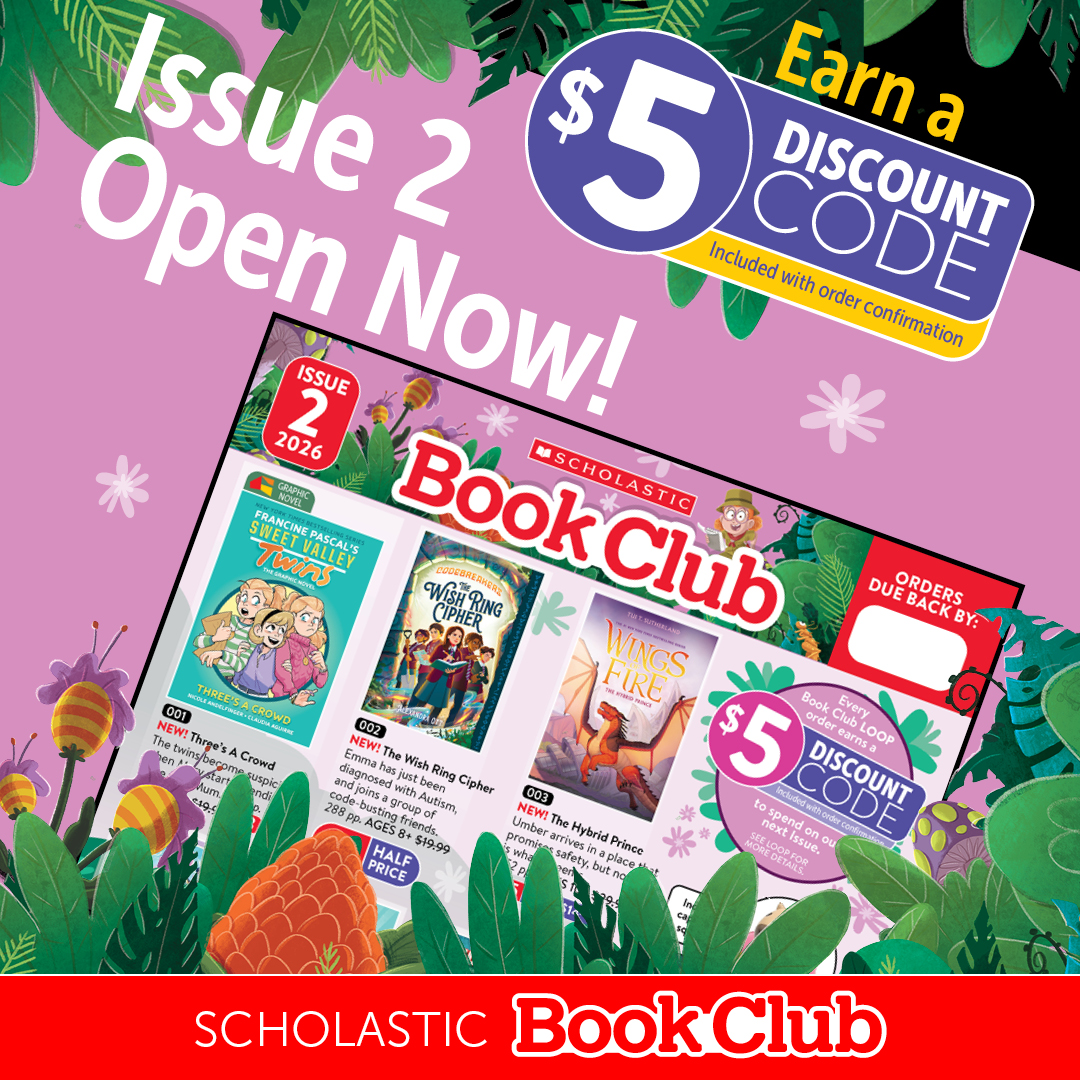
SCHOLASTIC BOOK CLUB
Book Club Issue 2 has arrived!
Keep an eye out for the catalogue in your child’s schoolbag.
There are many great books to enjoy this issue, and every order helps support new resources for our school library.
If you would like to place an order, please complete online by Friday, 20th March.

If you have any questions, please feel free to contact me.
Bernadette Parnis