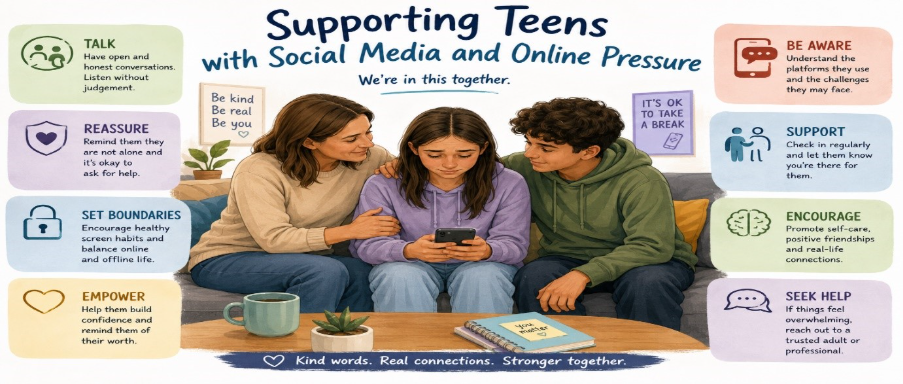
Supporting Young Adolescents to Navigate Social Media and Online Pressures

Recent research continues to highlight the growing impact of social media and online pressures on the wellbeing of young adolescents, particularly students in Years 7 and 8. As students transition into high school, they are developing their sense of identity, friendships, confidence, and independence while also navigating increased exposure to online content and peer influence.
Studies have found that excessive social media use can contribute to heightened anxiety, sleep difficulties, friendship conflict, reduced self-esteem, and increased emotional dysregulation in young teenagers. Early adolescents are especially vulnerable to comparison culture, online drama, and the pressure to maintain constant social connection. Many students report feeling worried about being excluded from group chats, judged online, or needing to respond immediately to messages and notifications.
Research also suggests that disrupted sleep linked to device use is becoming increasingly common in this age group. Reduced sleep can significantly impact concentration, emotional regulation, learning engagement, and resilience at school.
Families can support young people by:
Encouraging balanced screen time and regular device-free periods,
Maintaining open and calm conversations about online experiences,
Supporting healthy sleep routines and limiting devices before bedtime,
Encouraging involvement in offline activities, hobbies, and social connections,
Helping young people develop critical thinking around online content and comparison.
At school, we continue to support students through wellbeing education, positive relationship building, emotional regulation strategies, and digital wellbeing conversations. Encouraging help-seeking behaviours and maintaining strong school–family partnerships are important protective factors for young people during early adolescence.
If families have concerns regarding their child’s wellbeing, emotional regulation, friendships, or online experiences, we encourage them to make contact with the relevant Head of Year for initial support and triage to the wellbeing team.