
First Aid
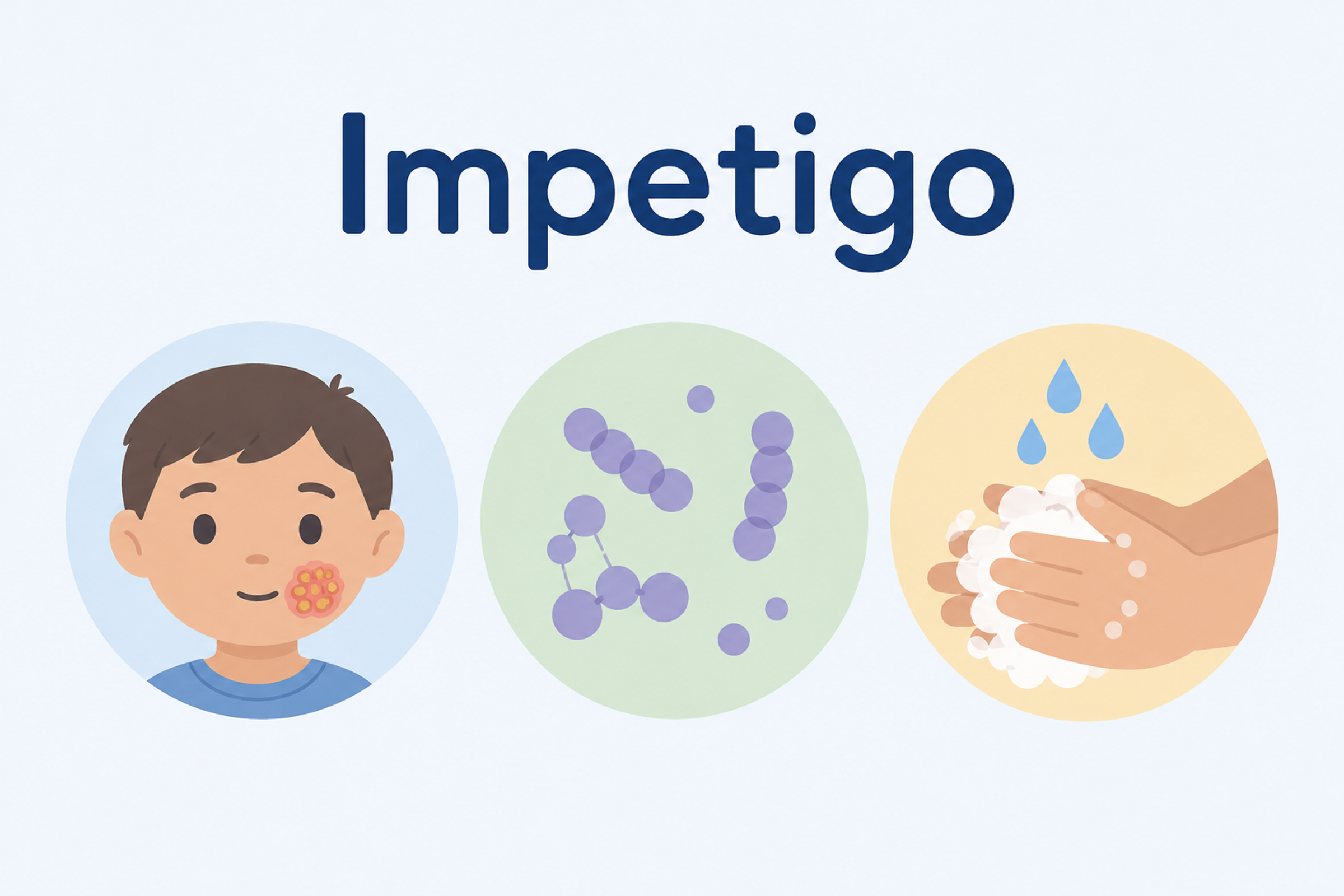
What is impetigo (school sores)?
Impetigo (im-pet-eye-go) is a skin infection caused by Staphylococcus (staph) or Streptococcus bacteria. Some people call it ‘school sores’ because it is most common in school-aged children and causes skin sores that easily spread from one child to another.
In most cases, impetigo develops when bacteria get into the body through a scratch, bite, or due to another condition that affects the skin, such as eczema. Occasionally, it can affect people with healthy skin.
Although impetigo can look quite serious, it is usually a mild infection that is easy to treat and tends to clear after a few days of treatment. It generally will not get better on its own and can spread quickly.
Signs and symptoms of impetigo
Most cases of impetigo follow the same pattern:
- One or more sores appear on the skin; they often look like blisters and feel itchy.
- The sores turn red and burst, weeping liquid.
- When the sores stop weeping, the liquid dries and leaves a tan or yellow-coloured crust, as if they are covered in honey.
- Other spots may appear around the first ones and spread outwards.
The sores can grow anywhere, but the most common places are around the mouth and nose, or arms and legs. As they are itchy, children may want to scratch them – this can spread the infection to the surrounding skin and other parts of the body.
Children with impetigo do not usually have a fever (temperature of 38°C or more) or feel unwell.
Reducing the spread of impetigo
Impetigo is very contagious. It usually spreads through skin contact with the fluid or crusts of an impetigo sore, which contain the bacteria. For example, by touching a sore directly or things that have been on a sore, such as clothes or towels.
An impetigo sore can be infectious for as long as it is weeping. It will usually stop being infectious about 24 hours after starting antibiotic treatment, once it has started healing.
It usually takes between one and three days for a sore to develop after contact with fluid or crusts from someone with impetigo.
If your child has impetigo:
- Wash their clothes, towels, and bed linen separately from the rest of the family.
- Use hot water and dry everything in the sunshine or in a hot tumble dryer.
- Clean all toys using a mild disinfectant.
Put all dressings from impetigo sores in a bin with a lid as soon as you take them off and wash your hands with soap.
When to see a doctor
Take your child to see their doctor if you think they have impetigo. They may prescribe antibiotics in the form of a cream, ointment, tablets, or syrup. Give these to your child as directed, and make sure you continue the treatment until all sores have healed
Common questions about impetigo
Is impetigo a sign of poor hygiene?
Impetigo can occur even when the skin is kept clean and healthy. It is not a sign of poor hygiene.
Will my child’s impetigo sores leave scars?
If your child does not scratch the sores and cause them to bleed, they will usually heal without leaving any scars.
Can adults get impetigo?
Adults can get impetigo because it is very infectious. However, they are less likely to get impetigo than children, as they have stronger immune systems.
How long does impetigo last?
Your child’s impetigo should improve quickly once you start treatment. In most cases, the sores clear completely within ten days.
Can impetigo heal on its own?
As impetigo is very infectious and caused by bacteria, it will not usually heal on its own. It should heal quickly with antibiotics.
My child keeps getting impetigo. What should I do?
If your child keeps getting impetigo, their doctor may do a nose swab to test for bacteria in the nose. They may need special nasal antibiotics to prevent further impetigo infections.
It may help to give them regular bleach baths, manage any existing skin conditions, and keep their fingernails short and clean.
How long do I need to keep my child away from school or kindergarten?
Keep your child home from childcare or school until 24 hours after starting antibiotics. Your child is safe to be around other children again after this time if you completely cover all their sores with dressings. While their sores are still weeping, they are contagious.
Can my child go swimming with impetigo?
Your child can swim 24 hours after starting antibiotics. The bacteria that cause impetigo can spread in swimming pool water, so your child should not swim without treating the condition first.
Should my child avoid contact sports with impetigo?
It is best for your child to avoid contact sports such as football while they have impetigo, unless you can cover their sores. This is because impetigo is spread through skin contact with the fluid or crusts of sores.
RCH fact sheet https://www.rch.org.au/kidsinfo/fact_sheets/impetigo_school_sores/