
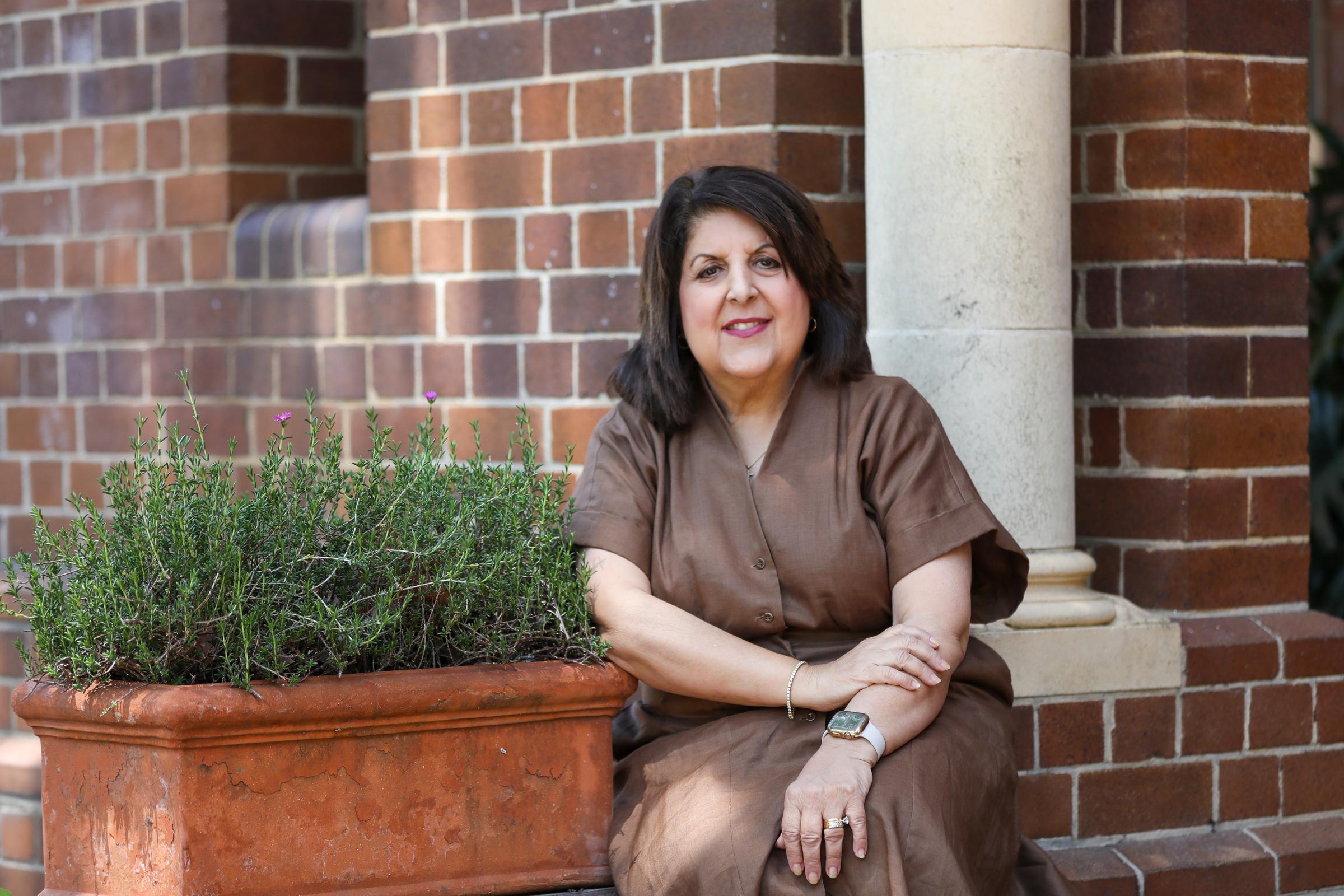
Principal
Assembly Reflection – 20 February 2026
“You should not risk everything… but sometimes taking a risk is everything.” –
Stephen Coniglio, AFL Player
Our Assemblies on Friday, 20 February, began with this powerful quote from Stephen Coniglio.
Mr Coniglio presented at our Prefects' Afternoon Tea to the group of young leaders gathered from many schools in the area. He was invited to the College by Francesco Mazza, College Captain.
The statement Stephen Coniglio made has guided his career and framed an important conversation with the boys about the difference between reckless risk and courageous risk — and how learning to distinguish between the two is central to their growth as young men.
Reckless Risk vs Courageous Risk
We explored the reality that not all risks are equal.
Reckless risks are impulsive, ego-driven and often harmful. They prioritise attention, popularity, or short-term gain, and can compromise safety, integrity, and future wellbeing.
Courageous risks, however, are thoughtful and value-driven. They involve stepping outside one’s comfort zone in ways that promote growth, strengthen character and contribute positively to others. Examples discussed included:
Putting a hand up in class despite uncertainty
Trying out for a team or leadership role
Apologising first
Seeking help when struggling
Standing up for someone who is excluded
These are the risks that build resilience, confidence and integrity.
Why Boys Avoid the Right Risks
We acknowledged that many meaningful risks are not physical but social and emotional. Fear of embarrassment, failure or judgment can prevent boys from stepping forward.
Students were reminded that growth begins where comfort ends. Confidence is not something one simply possesses — it is built through effort, persistence and the willingness to try again.
Grounded in the Edmund Rice Tradition
Importantly, the message was situated within our Catholic identity and the Edmund Rice tradition.
We reflected on how Blessed Edmund Rice himself took courageous risks — leaving comfort and security to educate young people on the margins. His decisions were not reckless; they were guided by faith, justice and purpose.
The discussion was framed through our Four Touchstones:
Gospel Spirituality – Jesus models courageous love: speaking truth, showing mercy and standing with the excluded.
Liberating Education – Authentic learning requires intellectual risk-taking and perseverance.
Justice and Solidarity – Doing the right thing, even when unpopular, is often the greatest risk.
Inclusivity – Creating belonging may require stepping beyond familiar social boundaries.
What Not to Risk
The boys were also reminded of clear boundaries. They should never risk:
their safety
their values
their integrity
their future.
If a “risk” requires compromising who they are or what they stand for, it is not courageous — it is careless.
The Challenge
Students were challenged to identify one courageous risk they need to take this term — something aligned with their values and growth. For some, that may mean academic application. For others, it may mean seeking support, reconciling a friendship, or demonstrating leadership in small but meaningful ways.
As parents, your encouragement of thoughtful risk-taking — balanced with wisdom and moral clarity — plays a significant role in shaping this mindset. We are committed to forming young men who are not reckless but brave in the right way: men of faith, integrity and service.
Sometimes, one right risk truly is everything!
Entering Lent: A Time to Slow Down and Look Within
As we enter Lent, it can be helpful to reflect on the word's origins. The old English word lent meant “springtime,” and in Latin lente means “slowly.” Put together, Lent becomes an invitation to slow down as a new season begins—an opportunity to pause, reflect, and take stock of our lives.
Traditionally, people think of Lent as a time to give things up—like treats or entertainment—to prepare for Easter. One of the strongest biblical images for this is the desert. Scripture tells us that Jesus spent forty days in the desert before beginning his ministry. During that time, he fasted, faced temptation, lived among the “wild animals,” and was cared for by angels.
Lent invites us to follow that example in our own way. The “desert” isn’t a literal place for us—it’s the inner space where we encounter the parts of ourselves, we usually avoid: our fears, insecurities, stresses, jealousies, doubts, or the things we struggle to talk about or face honestly. Everyday busyness often protects us from noticing these things. Lent encourages us to strip some of that away so we can meet what’s inside us with honesty and courage.
Think about what happens when you turn off your phone for a while—no notifications, no scrolling, no noise. At first, it might feel uncomfortable or even boring. But after a bit, you start noticing things you usually miss: your own thoughts, your feelings, maybe even some worries you haven’t had space to acknowledge.
That “quiet space” is a lot like the Lenten desert. By giving up something small—like screen time before bed or a favourite snack—you make room to listen to what’s going on inside you, and to let God meet you there.
In many cultures, heroes spend time in the ashes before they rise to something greater. Think of Cinderella—whose name literally means “the girl in the ashes.” Before the celebration comes humility, stillness, and waiting. That’s why Lent begins with ashes: a reminder that growth starts from a grounded, honest place.
Ancient traditions described certain periods of life as “sitting under Saturn”—a time of heaviness, reflection, or melancholy. These moments weren’t seen as failures but as necessary seasons where the soul deepens. Lent gives us a purposeful space to slow down and let important inner work happen.
Some old stories speak of tears as a way of reconnecting with the “water of life.” Tears, like the ocean, contain salt, reminding us that all life began in the sea. In this way, tears can be cleansing, renewing, and life-giving. During Lent, allowing ourselves to feel deeply—rather than rushing past emotion—can open us to new strength and understanding.
Across cultures and traditions, one truth appears repeatedly: you can’t reach what is uplifting without passing through a time of challenge or reflection. Before a feast comes a fast. Before Easter joy comes a season of honesty, quiet, and growth. Lent invites us into that journey—one that leads us toward renewal, depth, and ultimately, hope.
Dr Vittoria Lavorato
Principal
SPC boys can do anything!
**except divide by zero