What to expect this term
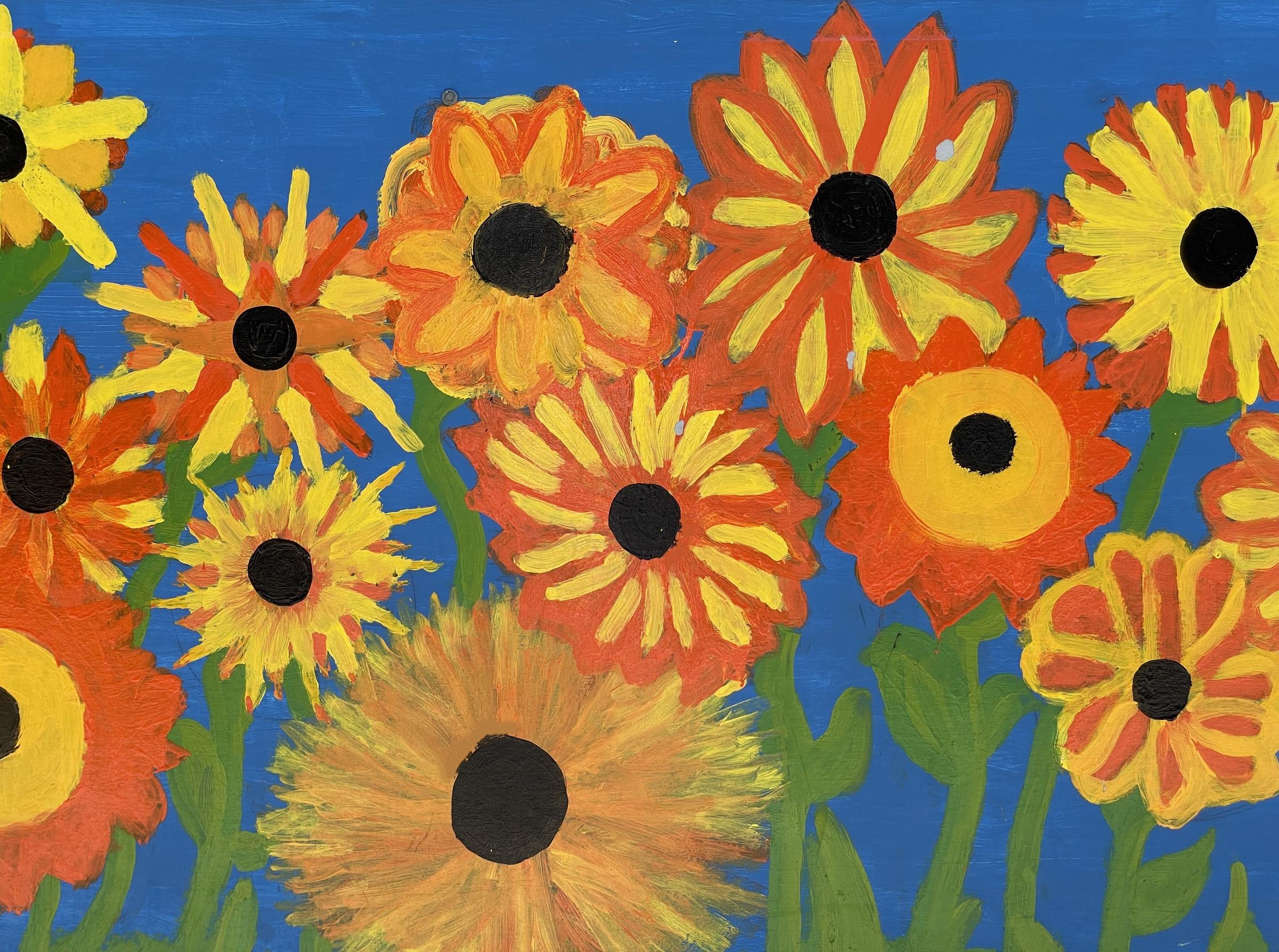
Year 2 news – what lies ahead!
This newsletter outlines the term’s learning for your child’s year group. We hope that this provides you with a picture of what is ahead.
This newsletter provides an overview for your child’s learning this term, which fits within our approach to:
Welcome to term one in Grade 2!
Welcome back! We’ve enjoyed getting to know your children during the first few days and have been working hard to establish positive school-wide routines and help your child gain confidence in their new learning environments.
Year 2 teachers
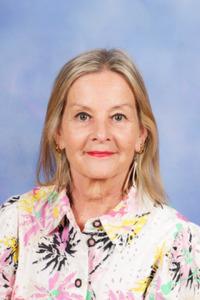
2A - Michele
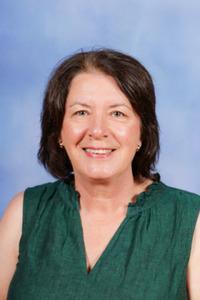
2B - Elise
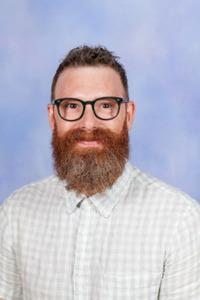
2C - Brendan
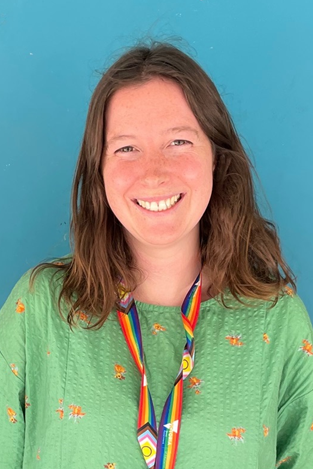
2D - Emily
2A - Michele
2B - Elise
2C - Brendan
2D - Emily
Start up program
We have been following a start up program for the first two weeks of the year. This program aims to nurture a sense of belonging, help students establish familiarity with each other and the learning environment and introduce clear expectations and learning routines.
We have been exploring expectations from our SWPBS (School Wide Positive Behaviour Supports) and procedures to support this work. These include:
- How to enter and exit the classroom effectively.
- How to be a successful independent learner during working time.
We’ve been very impressed with how quickly students have navigated their new learning environments and procedures and their amazing enthusiasm for working in their new learning communities.
A typical day
Usually days start with a Literacy block and then are followed by work in Mathematics. Inquiry units and other lessons are often taught in the afternoon. Specialist and library times may affect this order. These timetables have been communicated via Compass.
There are many things to look forward to over the course of the year including units of work on History, Geography and Design & Technology, the Learn to Swim Program, excursions, writing narratives and information reports and much more.
Literacy block – Reading
Students begin each literacy block session by reading mentor texts. Through this shared reading, we focus on vocabulary, comprehension and building fluency.
Vocabulary
Some of the words we have learnt so far include, ‘fierce,’ and ‘haul’. Students have learnt the definition of these words and how to use these words independently in sentences.
Comprehension
We will also review the reading comprehension strategies of predicting, connecting, and questioning.
Fluency
To practise fluency skills, students read to a partner focusing on expression, accuracy, and paying attention to punctuation.
Students will consolidate their reading skills through daily independent reading and reading activities.
Learning phonics
As a part of our literacy program, we will focus on learning about the sound parts in words. As a class, we focus on several activities which strengthen their phonemic awareness, spelling, recognition of high frequency words, fluency, and decoding skills.
We will be using the Sound Waves program to explicitly teach spelling. Students will review blends, phonemes (sounds), graphemes (letter representations), word-building and suffixes.
To encourage a passion for reading you can:
- Encourage your child to read a book at home and remember to change the book regularly. Students will soon have access to take home readers, but also can read library books.
- When reading with your child, focus on suffixes such as the ‘ing’ in ‘running’ or the ‘ed’ in 'hummed’.
- Ask your child questions about the story they have just read, or stories that you have read to them. Good questions can activate specific comprehension strategies.
Below are some examples of questions and the area of comprehension that they promote.
- Prior knowledge: Do you already know anything about [the topic of the book]? Did you learn anything from this book?
- Summarising: What was the story about? What happened first, next, and then?
- Connections: Did it remind you of any other stories you know?
Predictions: I wonder why the character…? ‘I wonder what is going to happen next?
Literacy block – Writing
This term we are focusing on writing recounts and poetry. We will develop the students' understanding of these texts by exploring the language and structural features. Students will also practise forming lowercase and uppercase letters correctly using Victorian Modern Cursive Script.
Recount writing is the retelling of past events or experiences in sequential order. Recount writing consists of:
- Orientation (who? where? when?)
- Sequence of events (what?, first, then, next, after)
Conclusion (personal comment)
Poetry follows specific patterns, rhythms, structures, and/or rhymes to express ideas and emotions. Students will be supported to explore and understand the importance of vocabulary and word choice to enhance the meaning of their poems.
In order to enhance their general writing skills, students will examine sentence structure and types, and focus on using full stops, capital letters, and exclamation marks consistently.
To encourage a passion for writing you can:
- Create a special ‘writing box’ to store your child’s pens and pencils to help them see writing as an important activity.
- Encourage student to keep journals or write about areas of interest.
- Create an ‘ideas bag’ or ‘ideas folder’ to use as a writing prompt. To inspire writing ideas, collect objects such as photographs, pictures cut from magazines, brochures, movie tickets, or any other found item.
- Encourage your child to also create pictures, drawings or collages that visually represent their ideas.
- Encourage your child to read their writing aloud. Encourage your child to write in all kinds of real-life contexts.
- Help you child gain proficiency in forming lower-case letters, using spaces between words and identifying words that need capital letters.
- Celebrate plausible attempts at spelling and give feedback on one goal at a time i.e.: using the ‘tr’ instead of ‘ch’ in some words.
- Read poetry aloud with your child.
Mathematics
This term our focus in Number is counting and place value.
- Counting is an essential skill that underpins the understanding of number and algebra. Students should be able to count forwards and backwards by 2s, 5s, and 10s.
- Place value is the ability to know the value of each digit in a number; e.g. 24 is 2 tens and 4 ones. This is an essential skill that supports addition, subtraction, multiplication and division. Students should be able to read, write, order and compare numbers up to or beyond 1,000, using concrete materials to support their understanding.
To support this learning at home:
Counting
- You may count the letter box numbers to count by 2s (e.g. 22, 24, 26). Identify the odd and even mailboxes.
Play a game such as ‘Beat Your Score’. Students choose a counting pattern to count by. They count for one minute and record their counting. When the timer goes off, reset the timer and students count by the same counting pattern; trying to beat their previous score.
Place Value
- Hunt for larger numbers around the house/neighbourhood. Encourage your child to read 3-digit numbers on a calculator.
- Use playing cards to make two, three or four digit numbers and ask your child to read the number and say the value of each digit. For example 27 is 2 tens and 7 ones, or 27 ones. You could extend this by asking them to find the number that would be 10 more/10 less.
- Play ‘Guess My Number’. Choose a secret number, and students have to guess the number using place value to describe the number. For example, “Is there a 2 in the hundreds place?”
- Make the largest/smallest number using dice. Students can roll 2, 3 or 4 dice to make 2-digit, 3-digit or 4-digit numbers. They should rearrange the digits to make the largest number possible and the smallest number possible. Ask your child what the value of each digit is. For example; in the number 345, the 4 represents 4 tens.
Specialist subjects
French
Students will be practising classroom routines. They will revise personal information by asking and answering questions about their name, age, address, and favourite colour. Students will also revise and extend their knowledge of greetings.
Performing Arts
We will be establishing a routine embedded in our expectations found in FPS’s School Wide Positive Behaviour System (SWPBS) through Performing Arts as a lens. We will also be revising our knowledge on Solfege in music creating shapes with our bodies in dance and improvisation in drama.
Physical Education
Students will be revisiting the expectations and the procedures used in PE. They will play a number of movement games in which they will be gaining greater control of their locomotor skills. To further develop balance and locomotor skills students may use equipment such as balance beams or balance boards.
Science
This term, students will be focusing on chemical science. They will explore how materials can be combined in a variety of ways for particular purposes, and how the properties of objects and mixtures can differ from the properties of the materials from which they are made.
Visual Arts
Indigenous landscape artist Albert Namatjira and his great grandson Vincent Namatjira, a contemporary portrait artist will be the spotlight for study this year.
Initially, students will be decorating their art folios and Visual Art journal. They will then be focussing on the art element colour, expressing it through paint. They will continue to develop their colour mixing skills, being challenged to making new colours and classifying them as hot or cold.
... and finally
We look forward to all of the amazing things that we will achieve this year and working together to support your child’s learning.
Kind regards,
Elise, Michele, Brendan, Emily & the Specialist teachers