Every Day Counts
Attendance Matters
Every Day Counts
Attendance Matters
No matter how hard parents try, some students may be reluctant to go to school. Here are some ideas which may assist you to support a child or teen who is reluctant to go to school and may even be school refusing. Addressing attendance issues promptly and setting up good attendance patterns can lead to future success and can help students feel more engaged and connected at school.
Did You Know?
Patterns of late arrival at school or missing classes are early warning signs of disengagement from school
Missing one day of school each week adds up to 2 months missed over a year
Each day of absence has an impact on skill development and social connections
Poor attendance may be associated with future unemployment, criminal activity, substance abuse, and poorer health and life expectancy.
Some of the more common causes of school problems are underlying learning difficulties or learning disabilities or behavioural or emotional issues.
School factors might include:
bullying or cyberbullying
feeling isolated at school
disliking, or not feeling connected to, the school culture or environment
falling behind on school work or feeling overwhelmed about keeping up
disliking school subjects, not liking the choice of subjects, or not feeling challenged by the work
poor school or academic support, especially in relation to heavy workloads
not getting along with teachers or other students at school
competing demands on time, such as extracurricular activities
not feeling understood and fully accepted by peers or teachers
cultural acknowledgement and understanding
Personal factors might include:
chronic illness
intellectual or cognitive disability
behavioural or developmental difficulties or disorders
mental health issues such as depression or anxiety
history of abuse and neglect
poor self-concept or self-esteem
poor communication skills
poor social skills
poor sleep habits
difficulty with listening, concentrating or sitting still
generational trauma
Family factors might include:
parents who aren’t involved in their child’s education
a home environment that doesn’t or can’t adequately support a young person’s learning
family problems such as relationship breakdowns
competing family or social responsibilities, such as caring for family members, or working outside school hours
cultural differences with the school culture and environment
Generally:
Act early if you are concerned
Talk about the importance of showing up to school every day, make that the expectation.
Regular attendance at school sets up good behaviours for regular attendance at future workplaces and other life commitments
Don’t let your child stay home unless genuinely sick. Complaints of headaches or stomach aches may be signs of anxiety
Reward appropriate behaviour and don’t unintentionally reward unwanted behaviour by letting children who stay home have access to their devices and the internet
Be sure to set a good example – how you meet your commitments impacts on how they will meet theirs
Daily Routines & Sleep
Help your child maintain daily routines such as finishing homework and getting a good night’s sleep.
Primary school aged children need about 10 to 11 hours sleep. Teenagers need an average of 8-9 hours of sleep to be healthy and alert.
You may also need to monitor your child’s use of the Internet, mobile phone and TV at night to ensure they are not staying up too late or being disturbed while sleeping
Consider how your child is sleeping – is their room cool and dark and have all devices, including TVs and mobile phones, been removed?
Talk About School
Talk to your child. What are their feelings about school? What interests them at school? Are there any difficult situations?
For teens, it helps if you open these discussions in a relaxed way so that your teenager knows you are demonstrating concern, not authority. It’s often a good idea to have these conversations while doing something else together such as driving, preparing dinner or going for a walk. If your teen doesn’t want to talk right then, let them know you’re ready to listen whenever they’re ready to talk
For younger children, talking about the school day shows your interest. Ask simple, positive and specific questions about parts of the day e.g. What was fun? Who did you play with today? Did you help anyone today?
Extracurricular Activities, Social Connections & Part-time Work
Encourage meaningful extracurricular activities that your child enjoys, such as sports and clubs, to develop positive relationships and experience success outside of a classroom setting. These activities can help your child feel part of the group, important to the school, and more motivated
For teens, try to be aware of your child’s social contacts. Peer influence can lead to skipping school, while students without many friends can feel isolated
Set clear parameters around part-time work. Make sure that the hours your teenager is working do not impact on their ability to go to school the next day, or interfere with school assessment expectations or exam preparation. Most schools recommend no more than 10 hours per week.
Family Holidays & Appointments
Try not to schedule hair, dental or medical appointments during school hours. Arrange family holidays during scheduled school holidays so that students don’t miss out on classes and feel left behind.
If it is necessary to be absent from school for an extended period, arrange with your school for a Student Absence Learning Plan.
School Policies & Monitoring Attendance
Familiarise yourself with the school’s attendance policy. This can help when trying to reason with a child or teenager who is resisting going to school
Monitor your child’s attendance and school performance. Periodically check with their teachers to find out how things are going. If you find it difficult to contact several different teachers by phone, try email. Alternatively, the year level coordinator may be a helpful point of contact in relation to specific issues.
School refusing children experience significant emotional distress not only when going to school but also at the thought of going to school; they may be absent from school for weeks or even months at a time. School refusal differs from truancy as children generally stay home with the knowledge of the parents and despite their best efforts to encourage their child to go to school.
School refusal can be very distressing for parents who can find it very difficult to manage and address; it can cause conflict in the home and disrupt routines.
Identifying the cause of school refusal can be difficult; there may be a number of complex causes. Early intervention is essential as prolonged absences from school can greatly affect a child’s social and emotional development, academic achievement and vocational opportunities.
Sometimes you may need assistance from professionals who can help anxious children. Discuss your concerns with relevant teachers or wellbeing staff at your child’s school. They can help address any school-based issues, refer your child to school counselling services and make recommendations about professional support.
Alternatively, you could seek support from your GP who can assist with a referral to mental health professional such as a psychologist, psychiatrist or therapist. They can help your child overcome their anxiety using mindfulness, improving self-confidence and self-esteem and helping children change the way they think about difficult situations.
Schools want to work in partnership with parents – act early if you have any concerns by contacting your child’s school and asking for advice and support
Remember that every day counts
There is no safe number of days for missing school – each day a student misses puts them behind, and can affect their educational outcomes and their social connectedness
Talk positively about school and the importance of attending every day
Open and prompt communication with your child’s school about all absences is a good idea
Avoid making routine medical and dental appointments during the school day or planning family holidays during the term
Seek help from your school if you are concerned about your child’s attendance and wellbeing. Schools want to work in partnership with parents to support student attendance and wellbeing
Kids Matter: www.kidsmatter.edu.au
Youth Beyond Blue: www.youthbeyondblue.com.au
Headspace: www.headspace.org.au
Reach Out: www.reachout.com
Raising Children Networ: www.raisingchildren.net.au
Kids helpline: 1800 55 1800
24 hours a day, 7 days a week or web counselling
Parentline: 1300 30 1300
(8am to 10pm seven days a week)
web counselling Tue and Thur 11am - 2pm
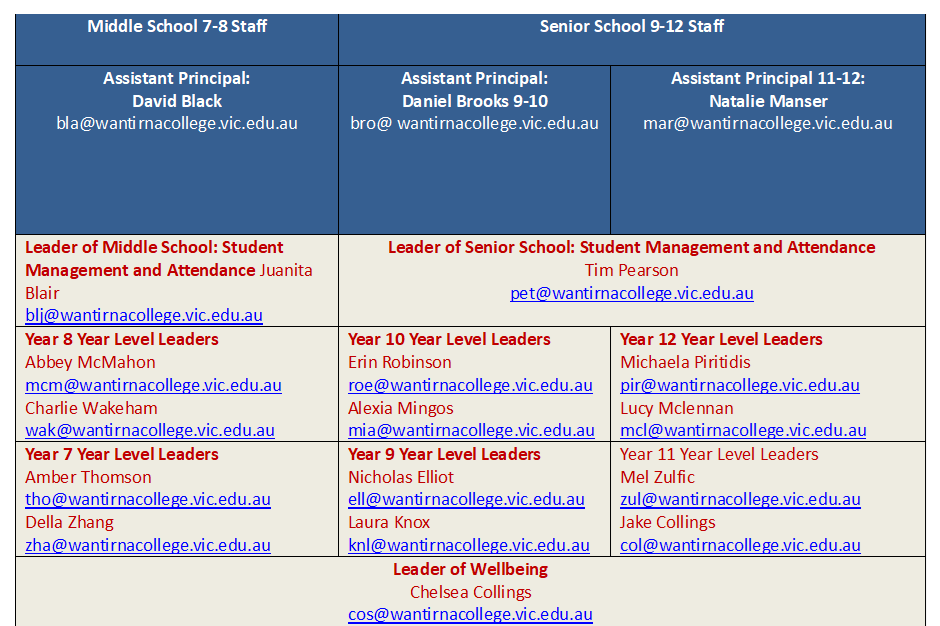
Please reach out to any of the school staff below at your earliest convenience: