Mental Health & Wellbeing Students/Parents/Carers Support
Articles, Videos & Resources

Mental Health & Wellbeing Students/Parents/Carers Support
Articles, Videos & Resources
Ripponlea Primary School continues to place a strong emphasis on student wellbeing as a foundation for learning. In 2026, we are pleased to further strengthen this work through the Mental Health in Primary Schools (MHiPS) initiative, a Victorian Government program designed to build the mental health capacity of schools and support the wellbeing of all students.
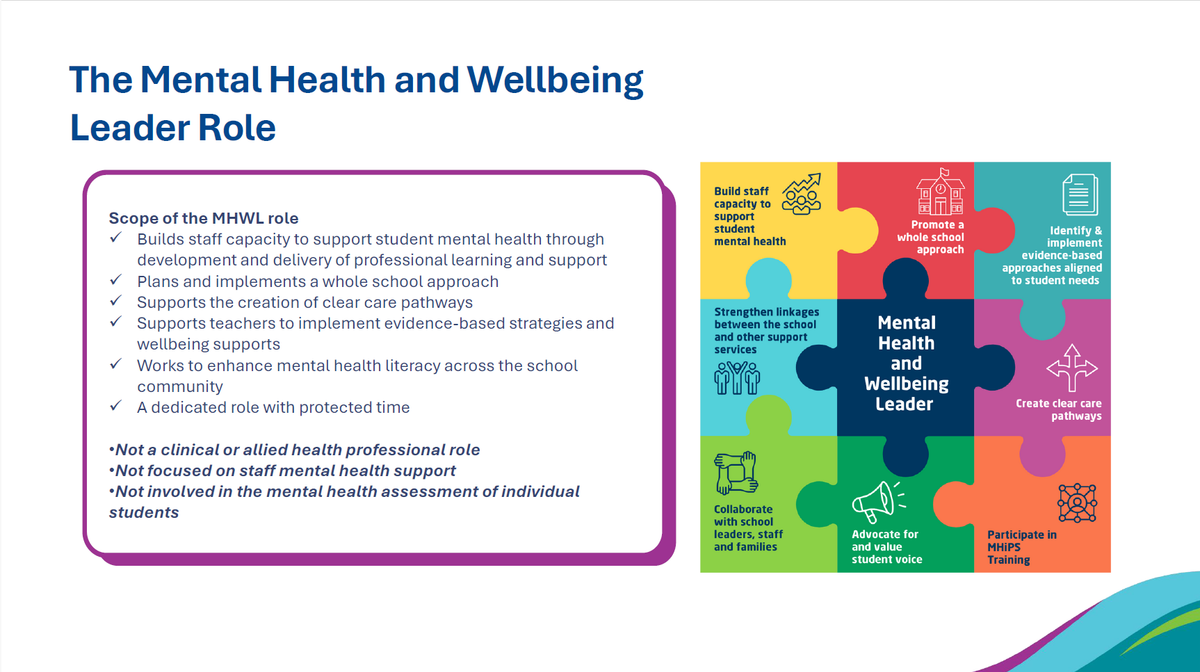
As part of this initiative, Nikki Olsen continues in her role as Ripponlea’s Mental Health in Schools Leader (MHiPS Leader). This important role focuses on supporting staff to build their knowledge and confidence in promoting positive mental health and wellbeing across the school.
The MHiPS program is designed to help schools:
In 2026, Ripponlea Primary School is also partnering with Murdoch University, which delivers professional learning and training for the program. Through this partnership, two additional staff members, Casey Trotter and Hayden Broadbent, will undertake formal MHiPS training during the year.
This professional learning will provide staff with deeper knowledge in areas such as:
By expanding our trained team, Ripponlea continues to build a whole-school approach to student wellbeing, ensuring that our teachers and leaders are well equipped to support the emotional and mental health needs of our students.
This work aligns closely with our commitment to creating a safe, inclusive and supportive learning environment, where every student feels connected, valued and ready to learn.
You could be forgiven for looking at some contemporary classrooms and interpreting what you see as a step back in time. Calmer walls, desks in rows, teacher at the front… more structured lessons… children sitting, listening, practising, thinking.
From the outside, it can look like a case of ‘back to basics’. How school used to be. Older practices resurfacing under new names.
Many families are starting to ask questions, and there is an uncomfortable ‘rumbling’ going on in the background
“What has happened to the joy and creativity?”"
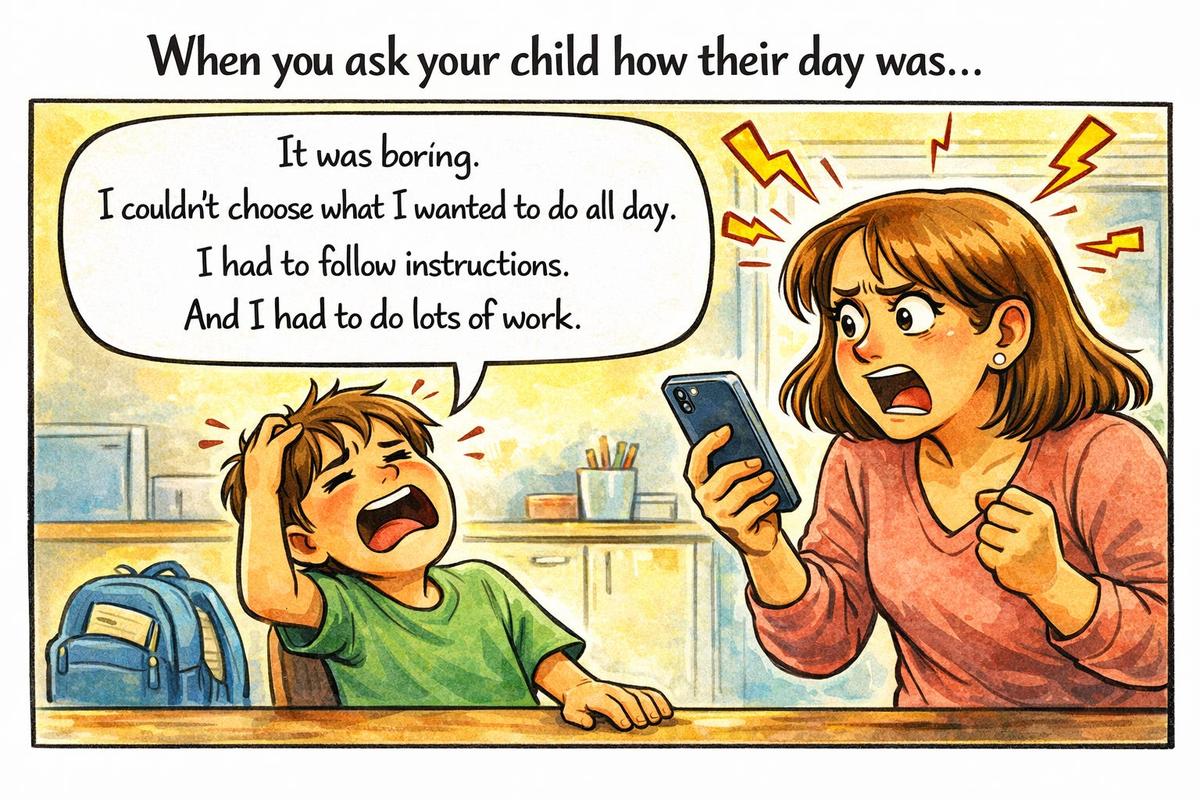
“My child says school is boring.”
These reactions are understandable. They deserve to be taken seriously.
For teachers, this moment can feel particularly vulnerable. Many of the visible signals once used to communicate care, such as colourful displays, flexible layouts, and constant activity, are being replaced with something quieter and less immediately reassuring.
Without explanation, that quiet can easily be misread. So let us be clear. What you are seeing is not a step backwards. It is a step forward, informed by what we now understand about how children learn.
When children say they are bored, it is tempting to assume something has gone wrong. Research suggests something more nuanced.
In Why Don’t Students Like School?, cognitive scientist Daniel Willingham explains that people do not dislike learning. They dislike thinking hard. Thinking requires effort. It draws on working memory, which is limited. When thinking is unavoidable, sustained, and structured, it can feel uncomfortable at first.
So when a child says, “School is boring,” what they are often really saying is:
That is not disengagement.
That is cognitive effort.
Explicit instruction, when done well, reduces unnecessary distractions so students can direct their mental energy toward learning itself. Effortful thinking does not always feel enjoyable in the moment, particularly while students are still learning what is expected of them.
As routines become familiar and skills strengthen, learning often becomes more fluent, more confident, and more rewarding.
It is also important to say this plainly. Some family concerns are understandable.
When routines and expectations are new, classrooms can feel more structured and, at times, even rigid. From the outside, this can look like an overemphasis on rules or compliance. It is reasonable to wonder whether this signals a narrowing of learning or a loss of warmth.
Let us reassure you. This is not about creating a generation of robots.
Clear routines, rules, and expectations are essential conditions for learning. They reduce uncertainty, minimise distractions, and create the cognitive space students need to concentrate, practise, and think deeply. When students know what is expected, they can devote more mental energy to learning itself rather than working out how to behave, where to sit, or what comes next.
These structures are not the end goal. They are the foundation.
By establishing predictable routines, teachers create the space to build rich knowledge, stretch thinking, and engage students in meaningful discussion. Structure supports learning so that creativity, inquiry, imagination, collaboration, and play, particularly in the early years, have something solid to rest on.
That said, this phase can feel wobbly at first.
Teachers are adjusting alongside students. As classroom practices shift, teachers’ cognitive load increases. They are thinking carefully about lesson sequencing, attention, routines, expectations, and student understanding all at once. In the early stages of adjustment, classrooms can appear less relational, not because connection is no longer valued, but because teachers are building the systems that will ultimately protect it.
This is where we need to extend some grace. These routines are not designed to reduce connection with students. They are designed to create more space for it.
Over time, something important happens. When classrooms are calmer and more predictable, teachers spend less energy reacting to constant interruptions, low-level behaviours, and repeated resets. Less time is spent managing the room, and more time is freed for teaching and for connecting.
This creates more time for settled beginnings, meaningful interaction, rich discussion, and dynamic, responsive teaching that emerges once strong structures are in place, allowing teachers to engage deeply with students’ thinking and respond in the moment to stretch and support them toward their best potential.
For families wondering where the connection has gone, the reassurance is this: Connection has not disappeared. It is being protected.
By reducing the daily friction of persistent low-level behavioural issues that drain both teachers and students, we are making room for deeper, more dynamic relationships to grow.
Dear families… while your child’s classroom may look quieter than you expected, and the routines may feel more structured or even rigid at first glance, we want to reassure you that something important is happening.
At a deeper level, these changes reflect more care, not less.
They signal a refusal to accept the status quo. Australian schools have let too many children down for too long by quietly accepting that some will fall behind, fall through the cracks, or be written off as needing something ‘different’ instead of being taught to read, write, and work confidently with numbers. We are no longer willing to accept that. All children deserve the opportunity to develop deep knowledge, strong literacy, and numeracy, and to think critically, reason carefully, learn from history, and understand the complex systems shaping the world they are growing into.
These are not optional extras. They are the foundations young people need to become informed citizens, creative thinkers, problem solvers, and leaders in a complex future.
So while the walls may look calmer and the routines more deliberate, there is real magic happening beneath the surface. Knowledge is being built. Thinking is being stretched. Ideas are forming, connecting, and deepening. Your child is learning how to concentrate, how to persist, and how to make sense of the world.
And when we understand that the conversation changes. Instead of asking why this looks different, we begin asking how we can support children as they adjust, practise, and grow.
That is a conversation worth having. Together.
Thanks for reading Knowledge Nest - by Jo Griffin!
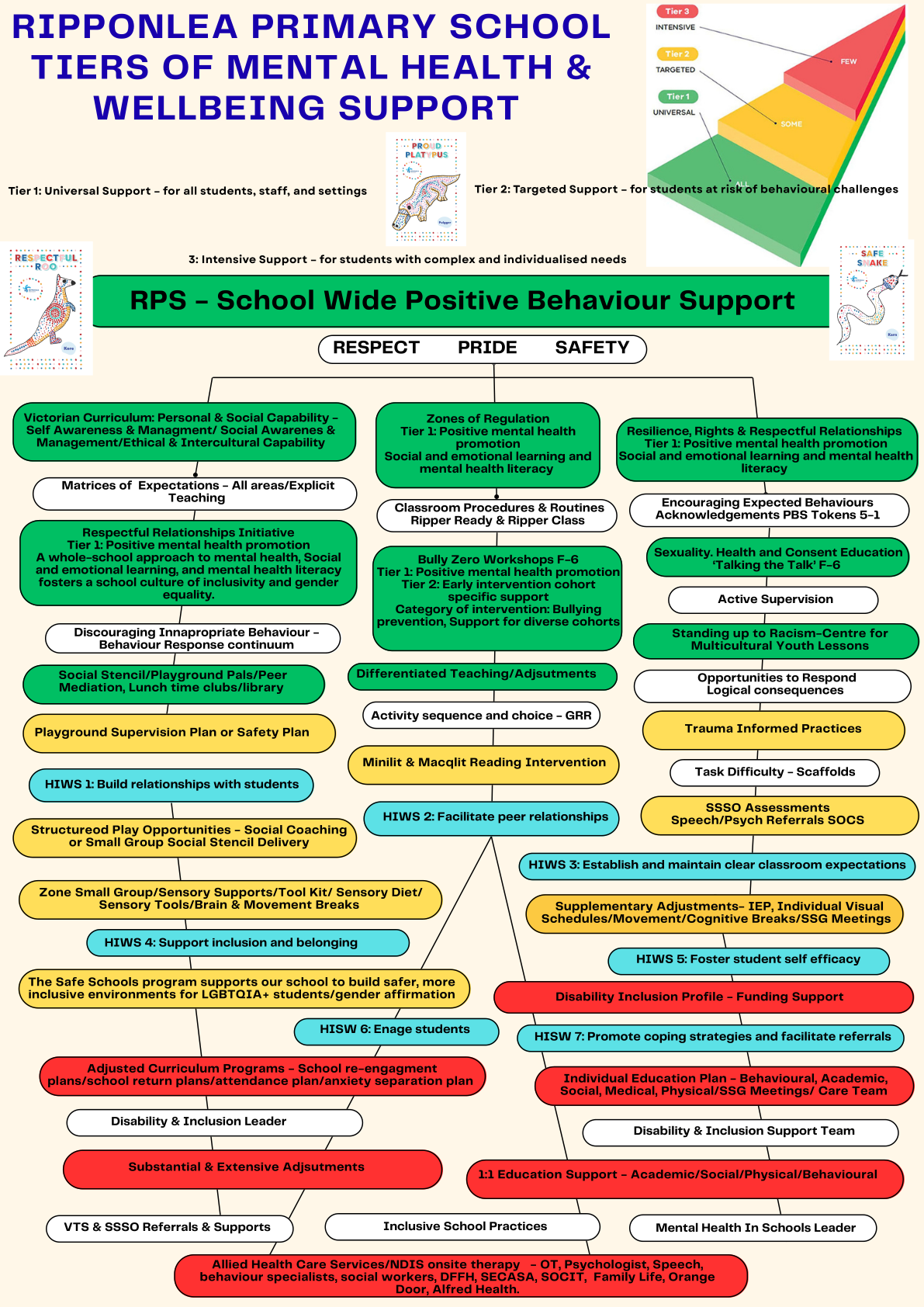
For the past seven years, Ripponlea Primary School has proudly implemented a School Wide Positive Behaviour Support (SWPBS) framework. This is not a program we “add on”; it is the foundation that guides how we build culture, relationships, expectations and support systems across our school.
At RPS, student wellbeing and learning are inseparable. When students feel safe, valued and supported, they thrive academically, socially and emotionally.
Over the coming months, we will be sharing step by step how our wellbeing and engagement practices work, what curriculum we teach, and how we ensure every student is supported through a structured, evidence-based approach.
In simple terms, MTSS means:
'Every student receives the support they need when they need it'.
Think of MTSS as a three-layer support system:
Our MTSS model is not a single program. It is a whole-school system that connects:
It ensures that support is layered, proactive and responsive.
This is the foundation of our school.
At Tier 1, all students receive:
Approximately 80–90% of students thrive with Tier 1 supports alone.
Some students may need additional support at certain times.
Tier 2 can include:
These supports are designed to be early, preventative and responsive.
A small number of students may require more intensive, personalised intervention.
This may involve:
Tier 3 ensures no student “falls through the cracks.”
Our School-Wide Positive Behaviour Support (SWPBS) framework sits at the heart of Tier 1.
It ensures:
SWPBS is why students can articulate:
MTSS means:
✔ We do not wait for issues to escalate
✔ We respond early
✔ We use data, not guesswork
✔ We provide layered support
✔ We partner with families
✔ We maintain high expectations with high support
This framework allows us to balance compassion with accountability, ensuring students feel safe, capable and responsible.