
English - Showcasing Student Writing
Following on from the previous newsletter update highlighting some of the outstanding writing produced across our junior school, we are proud to showcase three exceptional pieces from our senior students - a dual-perspective Gothic fiction piece, a passionate speech exploring the rights of women in Iran, and a hypothetical letter welcoming a refugee into our school community.
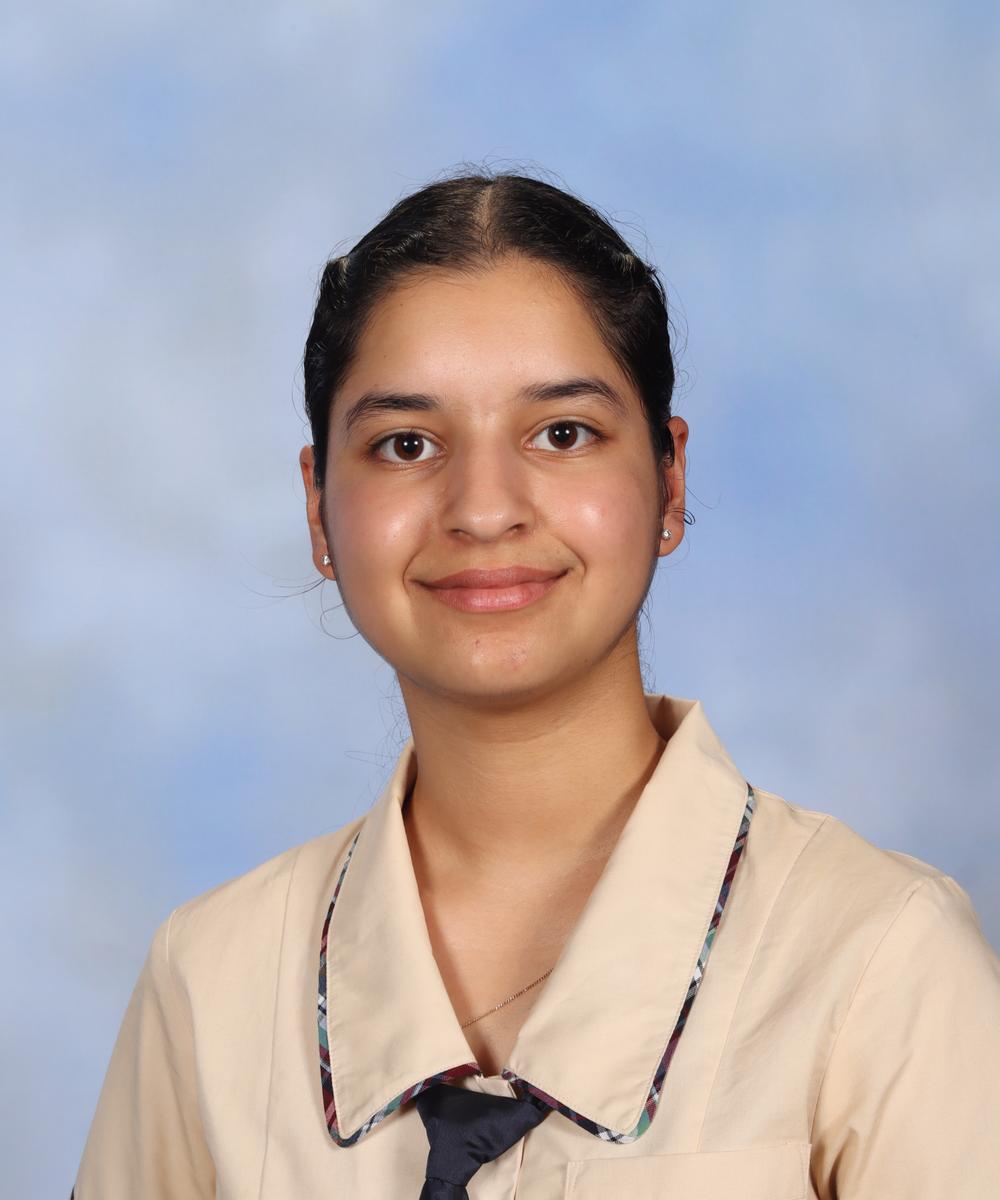
Year 10 – Creative Writing
Supreet Kaur
"Love Knows No Bounds"
Han Yuri:
I stand at the grand gates and look up with weary eyes to read what’s left of the unstable letters, covered in rust, “Welcome to Ammokchon Village — where the moonlight brightens the darkness”.
The wind murmurs whispers as it rustles the leaves on the countless dark Ebony trees that tower over me menacingly.
Hanging black lamp posts line the sidewalks — rusty and old — as if they hold the village’s history and reputation. I feel a faint tremor run through my lean frame as I remember my parent’s words when they abandoned me at the orphanage. We can’t take care of you Yuri; you’re ruining our image. You’re too soft. This is the best option for you. For us. A cut that always bleeds.
The wind grows stronger and I snap out of my thoughts, reluctantly stepping through the colossal gate. The air suddenly feels different as I enter Ammockchon.
Colder.
I speedwalk through the village, looking out for my aunt’s house, the shadows chasing me. I arrive at my aunt’s traditional Korean Hanok, and it stands intimidatingly; its wood dark and worn out by time.
My aunt greets me with a faint smile that doesn’t quite reach her eyes. I know she only took me for the money offered to her by the orphanage. But she still doesn’t really want me here. The next morning, I find myself in front of Heungrim High.
I hear loud noises coming from around the corner, so I peek around cautiously.
Then I see him.
A boy lays motionless on the floor as a group of bullies kick him around.
“Stop.” I say, my voice soft but firm.
Nishikawa Riki:
I catch a glimpse of her as I look up from the cold floor — she looks like an angel, nothing like anyone I’ve ever seen in Ammokchon.
After some commotion, the boys move away, snarling like pigs in a pen. She walks towards me and kneels beside me, helping me sit up.
I avoid Yuri’s gaze; her touch burns against my ice-cold skin. I haven’t been treated with care in centuries.
“Are you alright?” She asks with a voice as soft as a teddy bear, feather light.
“I’m fine. Don’t get involved with them, they’ll turn your life into a nightmare.” I reply flatly. My eyes lock onto Yuri’s gaze with an unreadable expression, almost as if I’m trying not to soften.
“I… I’m used to it… my life’s no better than a nightmare.” She admits under her breath, looking down.
Han Yuri:
Rain drizzles lightly as I walk back home alone today. Riki said he’s staying back to talk to the teacher. His absence beside me feels quaint and I miss him already.
My mind replays the memories of the past few months. I no longer feel alone and for the first time in forever, I feel as if I have someone by my side.
However, as our bond strengthens, I can’t help but notice that he never eats or drinks at lunch, instead saying he ate at home.
I recall the day I defended him from those bullies; his skin was like ice.
When we walk home together, I notice how he walks back in the direction of the impervious forest that looms over the village.
When someone gets too close to me, I notice the slight shift of colour in his eyes. His eyes go from a black that is as dark as a hole to a crisp crimson that changes back in less than a second.
Just being in his presence wraps me with a blanket of protection.
Nishikawa Riki:
I rush to the boy’s restroom before my fangs extend and lock myself in a cubicle. Why does her blood smell so intoxicating as if it’s calling for me. If I harm her, if I can’t control myself, I’ll be breaking a major taboo. Vampires are forbidden from forming attachments with humans; but I’ve been too careless and let it happen.
I can’t live a day without seeing her. But I can’t risk the wrath of the coven, either. I must leave.
Forever.
Han Yuri:
The next tenebrous morning, I find a note in my locker. My heart races as I recognise the impossibly neat and beautifully cursive writing as Riki’s. It reads: Meet me at the rooftop at 8 tonight – Riki.
Nishikawa Riki:
I wait at the top of the rooftop.
The moon smiles down upon us, like it knew something she didn’t.
I speak, my voice raw with emotion. “Yuri, we can’t do this, you don’t know what I am.”
It dawns on me: she doesn’t care what I am.
“I’m a monster. Your blood intoxicates me, and I don’t know if I can control myself Yuri,” I admit, ashamed and guilty.
“You’re not a monster Riki. I love you.
”I freeze at her words.
“Riki… please let me stay with you forever.” She desperately grabs my arm.
I step back, her touch burning through me like a truth I could never hold. “I’m sorry Yuri, but this could never end well. I’m a vampire.”
She flinches but she refuses to believe me. I take her hand off me and step back until the distance between us is unbearable.
“Yuri, this is the best for you. For us.” I turn away, glancing back with quarrelled expression and I disappear into the shadows.
Forever.
Han Yuri:
My hands reach out weakly and I collapse as tears flood the floor; his words echo in my mind; the same words I’ve heard before — This is the best for you. For us.
Nishikawa Riki:
I secretly return to Ammokchon village one uneasy night. It’s been fifty years, yet everything seems just as it was back then.
I freeze.
It can’t be.
Yuri is sitting by a window in her bedroom, looking ahead into nothingness with dazed, unfocused eyes.
She hasn’t aged.
I remember her clearly – how could I forget? Realisation washes over me as I take a shaky step back.
The village itself is a curse.
She’s no longer fully human — she’s trapped in time.
My undead heart aches as I take another step back, stepping on a twig. The twig cracks under my weight and the sound breaks the silence. Yuri snaps her head towards me and her lips curve into a distant and unsettling smile.
Her whisper is carried on the wind to me.
“You came back.”
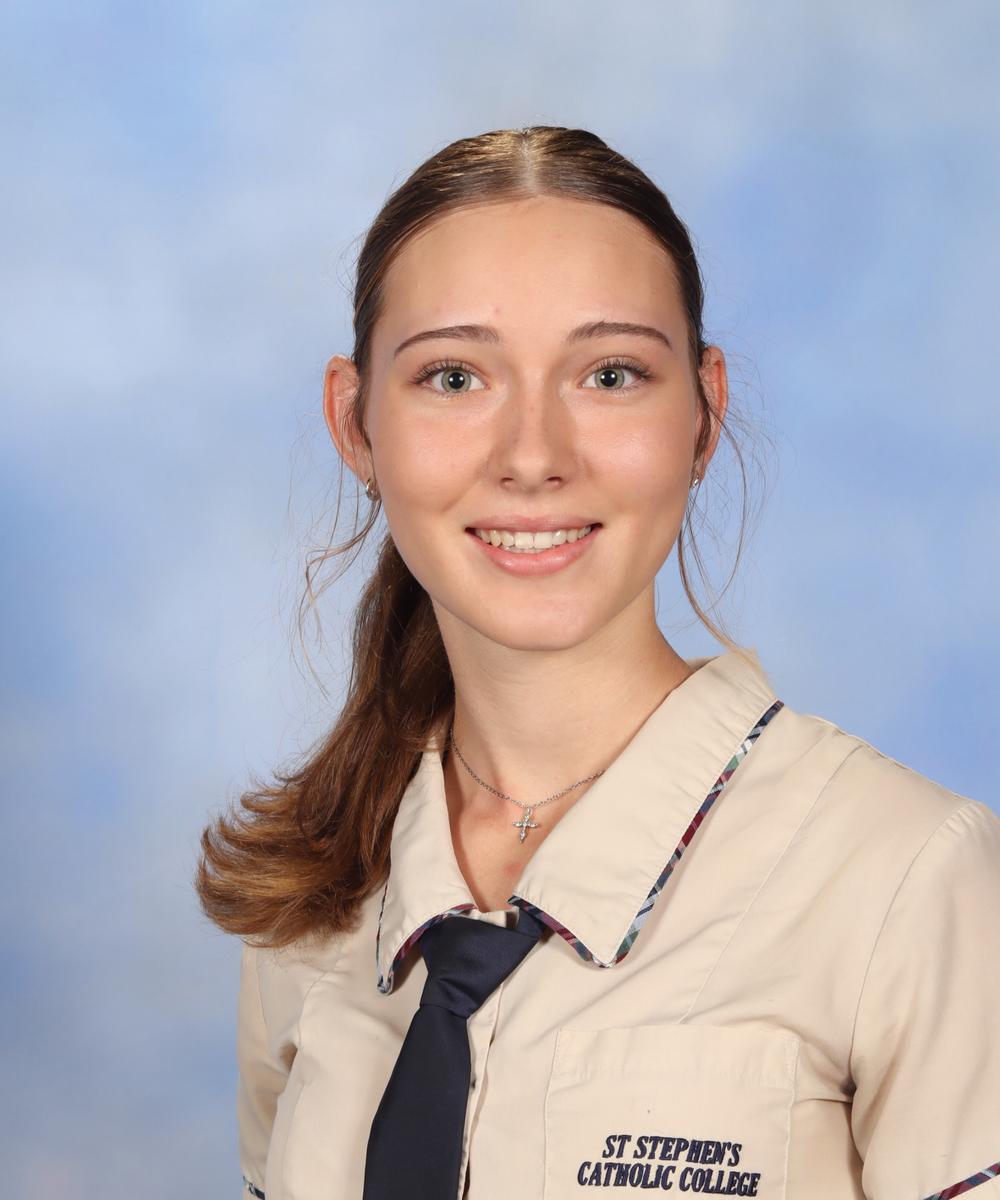
Year 11 – Persuasive Speech
Amber Johnston
"Rage Against the Regime"
Women, life, freedom!
These may seem like just words, but in reality, they are so much more. These were cries of defiance shouted by Iranian women who risked their lives to step into the streets and stand against the Iranian regime during the 2022 protest. Despite being faced with arrests, armed officers and violence, they used these words to stand up and unite against the forces that scrutinised and belittled them. Iran’s Women's Freedom Resistance reported that, by the end of the protests, approximately 30,000 people were arrested, and an estimated 750 were killed. Good morning, attendees at the Australian Social Enterprise Youth Forum. I am Amber Johnston, and today I will expose how gender apartheid in Iran continues to oppress women systemically, and challenging it is crucial to achieving global gender justice. Sharia -based laws in Iran control women and restrict their autonomy, while the legal system reinforces male dominance by denying women equal rights. Together, these patriarchal structures suppress women’s freedom and silence their voices, further deepening oppression. Sharia -based laws do not help or protect; they act like a chain restricting freedom and rights, incarcerating Iranian women in cells forged by ideals of silence and submission.
While some could argue that Sharia Law provides a moral framework for living that benefits society, in reality, they are tools used to strip Iranian women of their free will and independence. The British Broadcasting Corporation declared that in the early 1980s, wearing a headscarf or hijab became mandatory for all women in public to “enforce Islamic law and preserve traditional gender roles.” However, women do not see it this way, and, wouldn’t you agree, that when the issue affects them directly, their opinions are the only ones that matter? In the ABC’s recent Four Corners episode, Rage Against the Regime, a young Iranian woman was asked about wearing a hijab. She responded, “Controlling what you wear is the closest you can get to controlling everything in one person.” In the case of Vida Movahed, she bravely risked her safety by standing on top of a utility box in a busy street in 2017. She removed her white headscarf and waved it around on a stick in silent protest against the compulsory hijab law. Authorities arrested and fined her, charging her with promoting corruption and, get this, prostitution! Despite this, her act did not go unnoticed. According to The Arab Weekly, Movahed inspired a nationwide women's rights movement and became known as the girl of Revolution Avenue. Together, these examples demonstrate how the Iranian regime’s use of Sharia Law restricts women by controlling their bodies and choices rather than protecting them. This control lies at the heart of gender apartheid, tightening the chains that confine Iranian women to lives based on compliance.
Now, imagine being in a custody battle over your newborn baby with your abuser. Instead of receiving support, you are neglected, solely because you’re a woman in a country whose laws ignore domestic violence to uphold and glorify male dominance… This was Azam’s reality, a speaker interviewed on the Four Corners episode, Rage Against the Regime. She was a 21-year-old pregnant Iranian woman whose future was shattered when she spoke out against her husband's horrifically harsh temper. He lashed out, hitting her in the stomach and causing a near miscarriage, leaving her in an isolated hospital for five days without visitors. When she went to a lawyer seeking help, she was turned away because she had no witnesses. Apparently, hospital records were insufficient to hold a male accountable under Iranian law. Moreover, Azam’s experience wasn’t an isolated injustice but part of a wider pattern where laws favour men and marginalise women. An Iranian associate notary officer, Fatemeh Sara Naderi, highlighted how Iranian family law automatically grants authority over custody, divorce and guardianship to paternal members of the family, undermining and disempowering women. Supporters of Iran’s legal framework believe that these laws reflect their country's cultural and religious values. This belief has contributed to the Australian assumption that the issue is not our problem because it's happening on the other side of the world. However, this contradicts international human rights, which are not conditional on religion or culture; they should be granted to every individual, regardless of country, beliefs, traditions, values and, most of all, gender. Thus, these cases demonstrate how Iran’s legislation perpetuates gender-based injustices and entrenches female inequality, adding new links to the chain that binds women to a state of enforced degradation.
Ironically, I am standing here freely speaking out against a global issue and expressing my thoughts and opinions; women in Iran are not given the same opportunities as patriarchal legal restrictions silence them and limit their freedom. Were you aware that for over four decades, Iranian women have been prohibited from solo singing, dancing or performing publicly? Supporters of these restrictions claim that they promote modesty, when, in reality, they strip women of creativity and expression, enabling male control by removing their ability to use their voices. Additionally, as the Centre of Human Rights in Iran addressed, women are now banned from participating in or watching sporting events in stadiums. On September 9th, 2019, Sahar Khodayari set herself on fire outside the Revolutionary Court in protest of these constraints, after she was sentenced to prison for attempting to enter a football stadium. She died days later in the hospital, with her death becoming a powerful symbol of female oppression. Now remembered as ‘the Blue Girl’, after the colour of her favourite football team, which she was never able to openly support, (The Lancet, 2022). Her tragedy and the laws around it emphasise how patriarchal structures continue to subjugate, silence, and suppress Iranian women, forcing acts of desperation simply to exercise their autonomy. As a result, the chain around them grows heavier, reinforcing the limits of their freedom.
Ultimately, to achieve global female equality, we - as a society - must challenge gender apartheid in Iran. Stemming from Sharia-based laws that remove the ability to have independence and free will, women face significant restrictions on their autonomy. The lack of equal rights in the legal systems and patriarchal structures further silences their voices.
Gender apartheid can no longer be ignored. If you want to eliminate this issue as much as I do, and you should, join the 87,094 people advocating for change by signing the ‘cut the oppression’ petition launched by the Centre of Human Rights in Iran on the Change.org website. 10,000 Iranian citizens marched in protest in 2022. If they could actively risk their lives to stand up for themselves, the least we can do is support them, because each act of resistance weakens a link in the chain that constrains every Iranian woman today. Thank you.
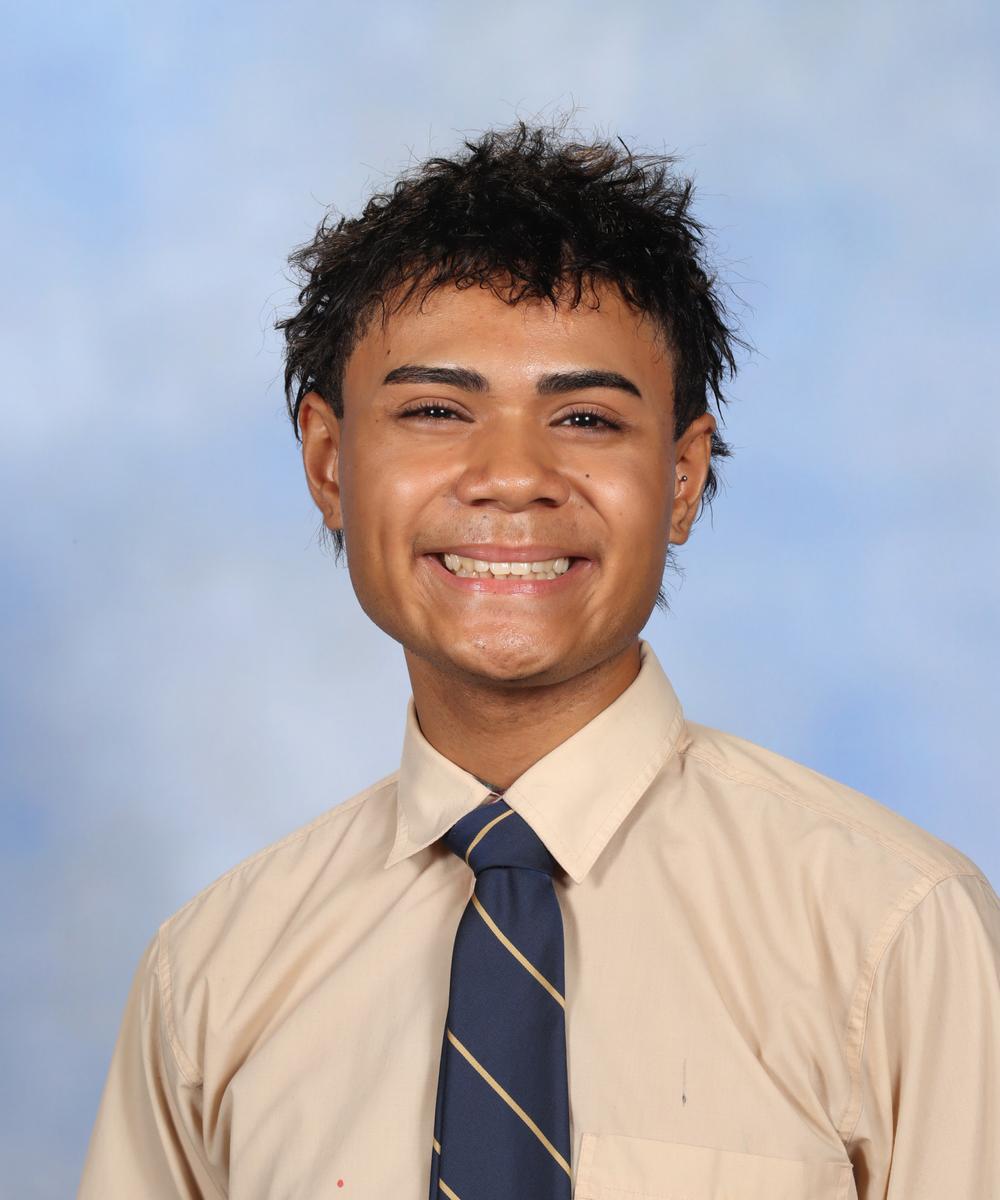
Year 12 - Letter
Rafael Lalabalvu
A Person with Your Best Interest at Heart 32
Byrne St, Mareeba, QLD, 4880
Everypearl College, Lake St, Mareeba, QLD, 4880
Dear Future Friend,
你好 !很高興認識你!I hope this letter finds you in great health and that you are settling into our school community smoothly. I am so glad to have the pleasure of writing this letter of acceptance and comprehension for you as I have been selected by our school leadership panel to help direct you throughout your academic journey here and make you feel comfortable in your new home.
Firstly, I understand your current and past circumstances that have been abundant of turmoil, war, and tragedy. I commend you on all the sacrifices taken by you and your loved ones in hopes of being embraced with love, compassion, and dignity, to which I hope can become your future here at Everypearl College. You do not have to fear of any persecution for your faith at this College as we have students from numerous backgrounds where its ethnicity, religion, gender, or social status and I can’t wait for you to add to the diversity! I mean, our school motto is ‘Diversity Serves All” and it only makes sense to stay true to that. I think this is a very important opportunity to not only enlighten you with the way our world works, but also take the time to learn about you and what life was like for you in your home country (you don’t have to go too into detail, if you don’t want to). Take your time, immerse yourself in the new environment, and to avoid doubting yourself because who you are now is what has allowed you to come this far.
In regard to your subjects, all students in year 12 must take an English and Mathematics class. Yes, English is the main, not official, language of Australia, so it may be a bit intimidating considering how vastly different it is to Chinese Mandarin, but I am partnered with you in every class to ensure you’re not left behind. Learning English will really help you get by in future paths, and you may be able to teach your family a thing or two! We have many different departments that foster all kinds of interests such as Film and Media, Music, Science, Engineering, Philosophy, Ancient History, Visual Art, the list goes on! Besides the S.T.E.M (Science, Technology, Engineering, and Mathematics) subjects, the artsy subjects are mainly Western-focused, but do not be afraid to hint any Eastern or Chinese influence in your pieces.
I’ve always wondered what the schooling system is like in China. How many years of schooling do you do? When does school start and end? How do you write essays with such an intricate writing and reading system? Of course I’ve googled these, but I want an authentic answer. You don’t have to answer these questions, but an answer would very much be appreciated because I’ve always wanted to travel or even work in your home country. Maybe we could hang out after school and go to the mall! I have been told that you have never travelled outside of your hometown…Moreso, have never had the opportunity to, but I will make it my duty, as your new best friend, to show you the wonders of the Western world.
Many people may not understand what you have been through, but that is okay because there are people like me who do. You’ll always have a home in Australia and do not be afraid to pop by my place for a visit. I can’t wait to see you when the new school year begins, see you settle in, and become part of a community grounded in resilience, service, and humility! Hope to hear from you soon and get ready for an ultimate culture shock. 再見!
Yours Sincerely,
A Person with Your Best Interest at Heart.
Kind regards
Mrs Ambre Paolacci | Middle Leader English