
Respectful Relationships
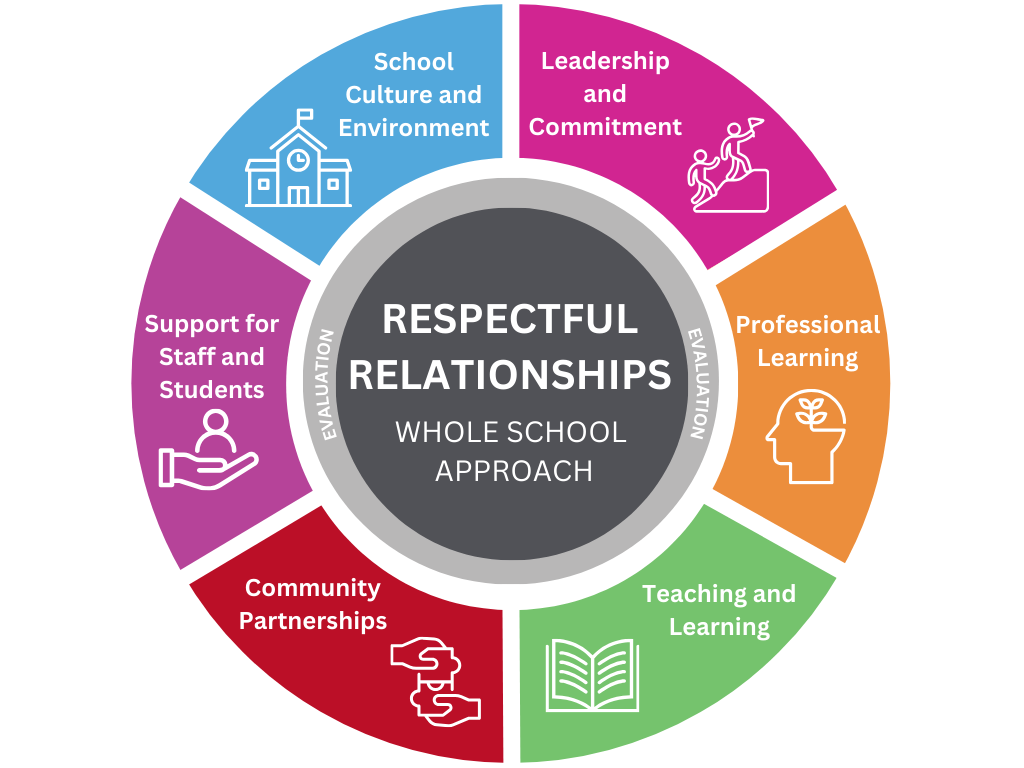
Respectful Relationships at Karoo Primary School
In the classroom
Across each year level, students participating in Resilience, Rights and Respectful Relationships (RRRR) have been exploring:
Topic 5 – Stress Management.
Please read below for the aims for each year level
In Foundation, student activities within this topic area will assist students to:
• recognise and identify their own emotions
• describe situations that may evoke strong emotions
• recognise and identify how their emotions can influence the way they feel and act
• develop self-regulation strategies.
In Year 1 and Year 2, student activities within this topic area will assist students to:
• identify and describe personal coping skills and explain how these contribute to family and school life
• discuss how they can use self-calming strategies to manage themselves in stressful situations.
In Year 3 and Year 4, student activities within this topic area will assist students to:
• describe the influence that people, situations and events can have on their emotions
• explore strategies to manage physical, social and emotional change
• describe and apply strategies that can be used in situations that make them feel uncomfortable or unsafe
• explain the value of self-discipline and goal-setting in helping them to learn and to cope with change and challenge
• describe personal strengths and identify coping strategies that they can applyto help them cope with change and challenge.
In Year 5 and Year 6, student activities within this topic area will assist students to:
• identify some causes of stress and strategies that can be used to reduce stress.
Topic 6 – Help - Seeking
Please read below for the aims for each year level.
In Foundation, student activities within this topic area will assist students to:
• identify situations that feel safe and unsafe
• identity when they may need to seek help and who they could approach for help
• discuss the importance of seeking help when dealing with problems that are too big to solve alone
• practise seeking help from adults and peers.
In Year 1 and Year 2, student activities within this topic area will assist students to:
• practise solving simple interpersonal problems
• identify ways to care for others, including ways of making and keeping friends
• discuss the importance of seeking help when dealing with problems that are too big to solve alone
• practise seeking help from adults and peers.
In Year 3 and Year 4, student activities within this topic area will assist students to:
• practise communication skills that enhance peer support and help-seeking
• identify a range of help-seeking strategies to negotiate positive outcomes to problems
• discuss the concept of peer support and identify situations where it is appropriate to adopt this role
• describe and apply strategies that can be used in situations that make them feel
uncomfortable or unsafe.
In Year 5 and Year 6, student activities within this topic area will assist students to:
• identify situations where they should seek help in working through problems
• identify a list of trusted people to seek out when needing help
• normalise and destigmatise help-seeking behaviour
• contribute to groups and teams.
Respectful Relationship Myths
Myth: Respectful Relationships teaches radical gender theory
Fact: Respectful Relationships does not teach radical gender theory. It is a primary prevention initiative to reduce family violence.
Respectful Relationships promotes respect and gender equality and helps students learn how to build healthy relationships. It prepares students to face challenges by developing problem-solving skills and building resilience and confidence.
Schools involved in the Respectful Relationships initiative are building a culture of respect and gender equality, by looking at their practices and policies to drive meaningful change.
The Victorian Royal Commission into Family Violence recommended Respectful Relationships be introduced to all government schools (Recommendation 189). Evidence presented to the commission showed that family violence is the most pervasive form of violence perpetrated against women in Victoria.
Myth: The Resilience, Rights and Respectful Relationships teaching and learning materials aren’t based on evidence
Fact: This is untrue.
The Resilience, Rights and Respectful Relationships teaching and learning materials have been developed by experts from the University of Melbourne’s Graduate School of Education, based on evidence from reputable research bodies and leading authorities including:
- UNICEF
- VicHealth
- Australian Bureau of Statistics
- Office of the UN High Commissioner for Human Rights
- Australian Institute of Health and Wellbeing
- UNESCO

RRRR information is available on the Arc platform. Please scan the QR code above.
Keep an eye on future newsletters to learn more about what your child’s year level is exploring through the RRRR curriculum.
Mrs. Karen Corrales